
Author: Admin account

  • Miguel Rodriguez Hernandez

    Miguel is an Achí Maya farmer living in the village of Chup, Baja Verapaz, Guatemala. He was born September 30, 1958 and feels that in his 63 years he has been able to achieve progress for himself and his family. His principle occupation is farming, but in addition he is a leader in his community, serving as secretary of the COCODE, the Chup development committee, and as a local health promoter. He is currently secretary of his church council and, given that he can read and write, he has held several positions within his church. He states that these community responsibilities are a way to give thanks to God and fulfill the Creator’s teachings.

    As a child Miguel was able to study only through 6th grade. He remembers having to walk an hour to school without shoes. The school in the neighboring village of Patzocón was constructed of wooden poles and adobe mud and had 40 children of various grades in the one small classroom. The teachers were very strict, punishing any misconduct. Miguel feels he learned there to be very disciplined. When he wasn’t in school he worked at his father’s side growing corn, beans, and coffee. At this young age he learned basic agricultural skills, many of which he continues to use today.

    When Miguel was 16 years old the family’s corn harvest was not sufficient to last the year, and they did not have enough to eat, Manuel and his brothers decided to go to the plantations on Guatemala’s Pacific coast to find work to sustain the family. There Miguel worked planting sesame, picking coffee, and cutting sugar cane. Cutting and carrying sugar cane was arduous labor in heat over 100 degrees. He was paid $1 per day for 12 hours of work, earning $30 a month.

    After the death of his father, he married Manuela who has been his companion for life. Together they have 5 children. Presently he dedicates himself to cultivating corn and beans, helping Manuela with her large vegetable garden, and taking care of their chickens, pigs, and cows. Their farming gives them a sustainable food supply, plus some money for other purchases. He is working towards having a hillside of coffee trees. He has a small coffee tree nursery and he hopes to plant his coffee seedlings there next year.

    Miguel said with conviction, ‘I believe that while we have life there is hope.’ He has struggled all of his life to succeed as a farmer and to be a responsible father and community member. HIs dream is that the members of his community will plant the seedlings he is growing on the mountainsides around his village and continue to care for them and that this will improve the environment for his community.

  • Manuela Avila Velasquez

    Manuela has the important role of midwife in her community. She gives instruction to women who are pregnant and maintains prenatal and postnatal controls. She says she puts her heart and all her experience into giving guidance to the women of her community, and after assisting a birth, she provides instruction on both newborn care and postpartum care for the mother. Manuela has received workshops on midwifery and women’s leadership. Currently she participates in a local committee of women organized to defend the rights of indigenous women and encourage their money making projects. Her prayer is that God will give her more years of life to continue the work of accompanying the women of her community.

    Manuela gets up early to take the nixtamal (corn cooked with lime) to the mill, returning home to make the tortillas and prepare the other foods for the day. She feeds the farm animals and then goes to work in her vegetable garden. For most of the vegetables and herbs she cultivates, she has learned how to harvest and save their seeds for the next planting. If a village woman goes into labor, she drops everything and goes to assist in the delivery, which she understands as her community responsibility.

    Manuela is excited to be involved in this tree planting project because she believes that if things continue as they are, in a few years there won’t be any trees left on the hillsides.

    She and her husband hope that their tree nursery will help to preserve the ecosystem of their community, but she realizes that this is a constant fight. She believes that she and her community must fight to prevent the springs that provide all their water from drying up. She says that planting just one tree has a great significance for her as a woman and a mother. She wants a future where the children and grandchildren of her community will be able to enjoy what she and her husband have enjoyed, a healthy and dignified life, from their own agriculture.

  • Supporting Boys Coming of Age

    Supporting Boys Coming of Age

    Over the past year, parents have approached Mennonite Men about what we might offer for boys coming of age. Parents recognize that current activities—such as sports, clubs, and Scouts—are not the only ways to support their sons’ development. As an organization and through our JoinMen committee, we are considering how we can best serve parents, leaders, and boys who are maturing into adulthood. Are there particular Anabaptist approaches that can be modeled?

    From what I observe, Anabaptists are becoming increasingly aware of the value of rituals—marking time with events or ceremonies. We see ritual traditions such as bar mitzvahs or quinceañeras in particular cultural and religious contexts. Men’s rites of passage events are also gaining popularity. Could this kind of ritual become more widely practiced in a Mennonite context?

    Mennonite Men wants to respond to the needs of parents with boys. This would be an invitation, not an obligation, for boys and their families. Before we move forward as an organization, our board members need time to gather information and explore possibilities.

    For perspective, I spoke with Jesus Cruz, a Mennonite Men board member who serves on the JoinMen committee. I have enjoyed hearing him share about his own formative experiences as a boy coming of age in the Bronx, New York. When he was young, Jesus and his brother attended a Bible club program across the street, led by Mennonites. One day, two women from Fox Street Mennonite visited his mother to tell her about a summer camp at Camp Hebron, located many hours away. They encouraged her to let Jesus and his brother attend, and the church offered assistance to make it possible. She agreed. Jesus was 11 years old when he first attended camp. The experience profoundly shaped him, and he returned for many years, later becoming a counselor and serving at camp with his wife. He went on to become a pastor and served with Mennonite Education and other boards. Today, Jesus is a member of East Chestnut Street Mennonite Church in Lancaster, PA, where he has mentored boys through his congregation. He continues to be sought after for speaking engagements, leadership, and service.

    Jesus and other board members are asking important questions about how to support boys. Jesus asks, “What are parents looking for regarding their boys? How do we help parents, mentors, or other interested community members take initiative?” He wonders if supporting boys and resourcing parents could become a new initiative of Mennonite Men and asks how the board should approach this. “We need to bring more people into the conversation, and board members should be actively involved in this discussion. What role does culture play in supporting boys coming of age? Is Mennonite Men shifting toward a greater focus on young men and boys?”

    These and other questions will be explored at our upcoming in-person board retreat in late March. Additionally, Mennonite Men has submitted a workshop proposal for Follow Jesus ’25 Convention to report findings from an online survey about supporting boys coming of age. We hope this proposal is approved! Regardless, be on the lookout for an online survey on our website, which we will also promote through our listserv and future issues of Engage. Responses to this survey will help Mennonite Men discern ways to support boys coming of age in Anabaptist communities, as well as to support parents, fathers, mentors, and leaders of boys.


  • Tree planting as a hopeful solution in DR Congo

    Tree planting as a hopeful solution in DR Congo

    Many of us in North America do not rely on wood for cooking or shade trees for cooling. In contrast, millions in the Global South depend on trees for life-saving shade, livestock fodder, cooking fuel, and building materials. As deforestation continues worldwide, people and the environment suffer.

    Mennonite Men is committed to addressing deforestation and caring for God’s creation. Historically, our JoinTrees grants funded projects in the U.S. and Canada, but we now support initiatives in Honduras, Guatemala, Mexico, Angola, Benin, and the Democratic Republic of Congo (DRC). These projects help mitigate climate change by planting trees that absorb carbon dioxide. We are also evaluating how to support tree planting for firewood alternatives, recognizing the complexities of deforestation globally.

    A recent news report on violence in DRC led me to reconnect with Ndunge Sefu, a seminary friend, for insights. Ndunge and his wife, Micheline Ilonga, who have lived in DRC and other African countries, offered valuable perspectives. They expressed gratitude that the world is beginning to notice DRC’s struggles, but as Ndunge noted, ‘If an issue doesn’t touch the interests of superpowers, the world doesn’t hear about it.’

    The eastern DRC faces severe violence, with tens of thousands dying monthly due to armed rebel groups. Over 120 rebel factions operate there, many profiting from ‘mineral wars’ over coltan, a metal vital for electronic devices. These conflicts result in child labor, environmental devastation, and human suffering. People flee violence, trees are burned, and forests are depleted as displaced communities seek firewood.

    Wildlife also suffers. Unique species like the okapi and mountain gorilla are vanishing due to habitat destruction. ‘War affects nature, too,’ Micheline said. Even in areas without conflict, people cut trees for firewood without replanting due to a lack of awareness. ‘You can plant a tree. This side of the conversation is missing.’

    The discussion turned to solutions. Micheline asked, ‘How can you think about trees when you have an empty stomach?’

    Ndunge suggested, ‘People can farm trees instead of cutting indigenous forests.’ Micheline added, ‘Many women farm in Congo. Growing fruit trees can provide them with income. The land is fertile, and trees will grow.’

    This conversation reinforced our commitment to tree-planting initiatives in DRC and Angola. Supporting our African brothers and sisters in these efforts is part of our call to love our neighbors and participate in Christ’s mission of reconciliation.

    To date, Mennonite Men has only provided half the funding needed for these projects. We need financial support to complete them. These efforts create livelihoods, inspire communities, and offer sustainable alternatives to deforestation while providing ecological benefits.

    Join us in planting hope by supporting these tree-planting projects in DRC and Angola. Your contributions will help restore forests, empower communities, and protect creation for future generations.

    To learn more about JoinTrees projects and how you, your company, your men’s group, or your congregation can get involved, visit mennonitemen.org/jointrees.


  • Faith and Forestry in the Great Plains

    Faith and Forestry in the Great Plains


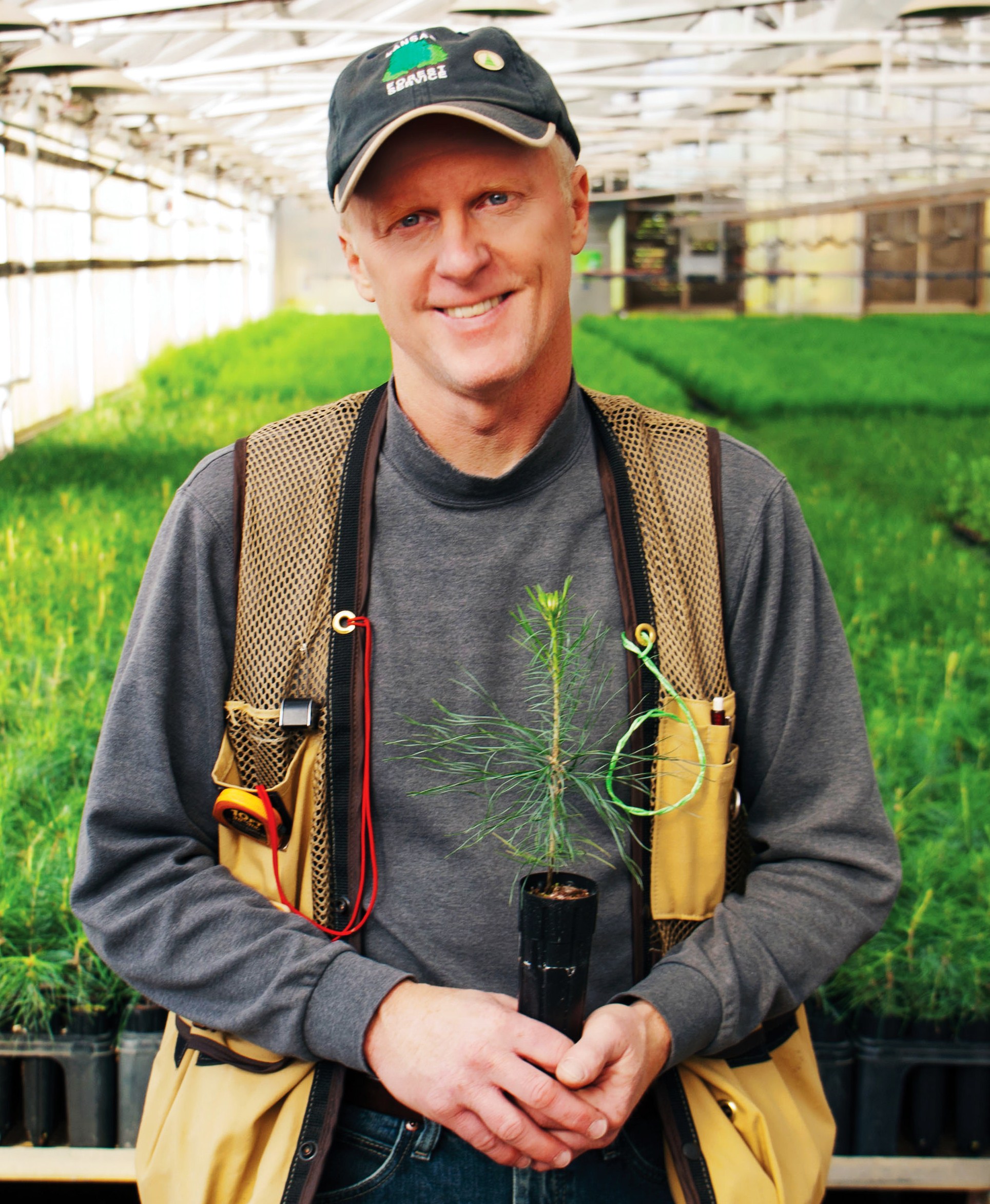
    Forestry runs in my family. As a second-generation forester in Kansas, my father served as an Extension forester at the Fort Hays Experiment Station. Dad helped farmers plant and care for windbreaks. He worked with towns and communities when Dutch elm disease arrived in ’57 killing thousands of American elms. My spouse Melissa Atchison also has a forestry degree, and after raising kids and attending the Associated Mennonite Biblical Seminary, she now serves as pastor of Manhattan Mennonite Church. Faith and forestry find common ground in our family.

    I spent most of my career working for the Kansas Forest Service at Kansas State University, in Manhattan. Like my father, I worked with Kansas farmers and landowners interested in planting and caring for trees. These were usually people who genuinely cared for God’s creation and literally sowed the seed or planted the trees that benefit the next generation.
    During my career I have seen the value of planting trees in the Great Plains come into question. Woody encroachment into grasslands of eastern red cedar, and honey locust both indigenous to Kansas, and other non-native trees, threaten our precious grasslands and the wildlife that require prairie to survive. Even so, I continue to advocate for agroforestry and forestry in Kansas and here’s why: trees continue to provide the same important benefits they have always provided to Kansans and woody encroachment is a land management issue that will always need to be addressed. Eastern Kansas is what ecologists describe as an ecotone, where the central hardwood forests of the United States transition into the tallgrass prairies. Historically there has always been changes in vegetative types in this transitional zone.

    Kansas trees provide wildlife habitat to threatened and endangered species, and without them the American Bald Eagle would still be listed. They reduce streambank erosion improving water quality and slowing the sedimentation of our water supply reservoirs. Trees add to the quality of life providing shade and wind protection to our homes. They sequester carbon, add beauty to our landscape with spring and fall colors, and turn carbon dioxide into the oxygen we breathe. Trees provide value even to a prairie state, but they must be managed and contained to appropriate landscapes.

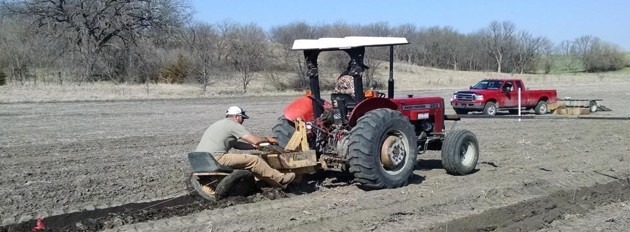
    During my forestry career, tree planting often served as an act of prayer for me. I remember times when I sang hymns while sowing oak seed in early spring. God invites us to sow the seeds of the kindom on this good earth and to take joy in the gifts it yields. When we plant trees thoughtfully, we show respect and gratitude for the creation God has given us, and love to the generations that follow.

    My interest in tree planting and forestry have now connected with another issue where I try to practice my Anabaptist faith: peace and justice in Israel and Palestine. Working to seek peace and understand the violence in Israel and Palestine became important to me after participating in a Christian Peacemaker Team delegation to the West Bank in 1998. Since that time I have worked on the issue in a variety of ways and currently chair the Mennonite Palestine Israel Network (MennoPIN), serve on the Steering Committee for Mennonite Action and chair the Western District Conference Task Force on Israel Palestine.

    In Palestine, olive trees symbolize Palestinian identity, resilience, and most importantly connection to their land. They are an important source of income and food for many Palestinian families. Olive trees represent Palestinian resilience because of their ability to grow in poor soil conditions, survive droughts, and in some cases produce fruit for thousands of years. For these reasons and the expansion of Israeli settlements, the destruction of olive trees has been a common experience in the West Bank and Gaza. According to the Applied Research Institute in Jerusalem, 800,000 olive trees have been destroyed by Israeli Settlers and the Israeli army since 1967.

    Tree planting can indeed be an act of peace and there are many excellent tree planting initiatives to consider supporting. The Mennonite Palestine Israel Network (MennoPIN) and Mennonite Men’s JoinTrees initiative are working collaboratively to plant olive trees in Palestine. The JoinTrees campaign has a goal to plant one million trees by 2030, targeting climate change. Their goals include mitigating global warming, resilient ecosystems, preserving biodiversity and supporting vulnerable communities.

    There are a variety of ways to participate in the JoinTrees initiative. For more information check out their web site at https://mennonitemen.org/jointrees or call them at 574-202-0048.


  • Self exploration through Mens’ Rites of Passage

    Self exploration through Mens’ Rites of Passage


    ‘You should seriously consider doing the men’s rites of passage (MROP) with Illuman someday, Jon. If you decide to go, I’d even help make that happen,’ a good friend told me. I knew in my gut that someday I’d follow through on his invitation and sign up for such a journey. It took me about five years after that conversation, but in September of 2024, I finally went to the four-day gathering in the mountains of western Virginia. Having been through the COVID19 pandemic, years of work stress, and finishing a seminary degree program, the timing finally felt right. I was also hearing about the MROP experience from several guys in my life, including Mennonite Men Executive Director Steve Thomas and Mennonite Men board member and pastor Phil Schmidt.

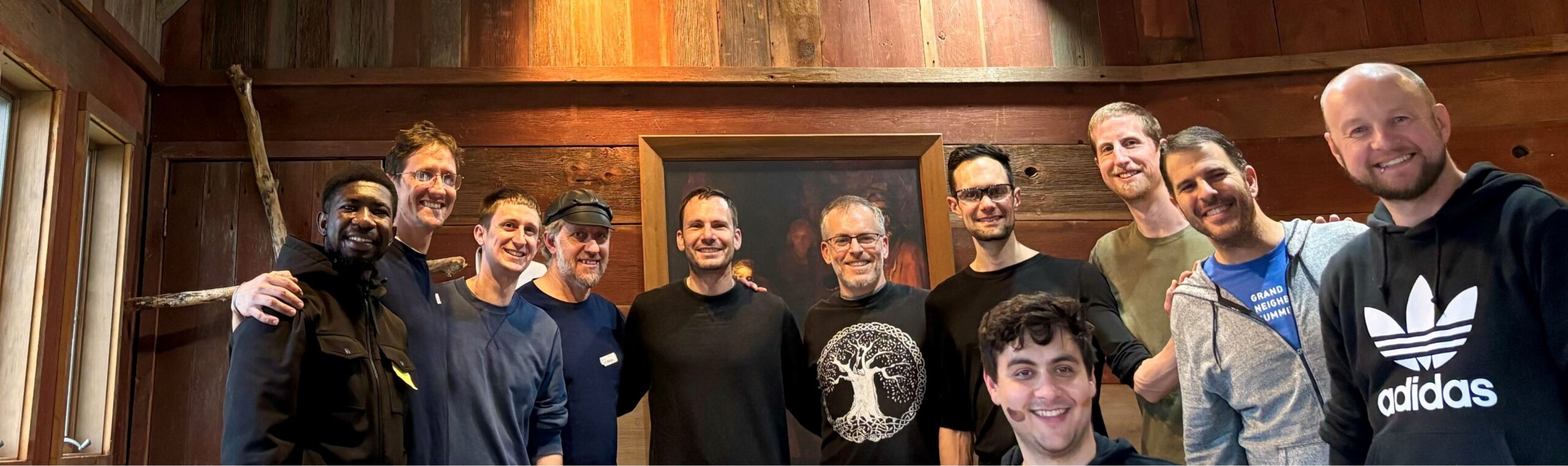
    Jon Zirkle, center above, serves as US co-director for Mennonite Men

    I had my own reservations and perhaps a bit of cynicism before going. Would this be an over-the-top woo-woo experience or worse yet, four days loaded with one-size-fits-all portrayals of masculinity I find uncomfortable? Turns out, my experience was neither of these things, and almost every guy I met also had questions and doubts coming into the experience.

    I didn’t know anyone there when I arrived, agreed to not use my phone for our days and left work behind. I met men from eastern Canada, Maine, Ohio, Massachusetts, D.C., North Carolina, and Alabama, representing a wide range of life experiences and faith traditions. Ranging in age from 29 to 81 years old, 49 of us came for rites of passage, and 42 who’d previously done the rites of passage were present to support the gathering and to pray for us initiates. Yes, 90 total! I can’t recall ever being in an all-male gathering with men willing to get vulnerable, find healing, and go deep.

    Months after my MROP, I still remember the large painting displayed in the pavilion each time the full group gathered: an image of Christ hanging on the cross, eyes looking out, and a diverse depiction of others who witnessed his suffering. As a Mennonite Christian, I’m not that used to seeing huge painted depictions of Jesus’ crucifixion. I’ve seen plenty of images of Jesus on the cross before, but this particular image of Jesus—naked Jesus, looking straight ahead at me—was both searing and healing. I had the time and permission to sit with the excruciating pain I could only fathom Jesus felt as his flesh tore. Deep learnings were etched in me: suffering and pain are unavoidable. I’m not alone on that journey. ‘I see you, and you see me,’ it seemed he said to me.

    Like other memorable spiritual experiences I can recall in my life, the MROP was not just an individual experience. It wasn’t just about me and my personal journey. Rather, it was other guys I met who made the biggest mark on me. Through this four-day experience, I made friends. Soul brothers. We spent time in the woods together, witnessed vulnerable confessions, prayed and cried silently and aloud, participated in powerful rituals, sang, and even danced. Every man was assigned to a smaller ‘council’ group of 5 or so guys, guided by a group leader. My council was incredibly important to my experience, and we’ve stayed in touch after three virtual gatherings together. I do not and will not forget these brothers.

    It wasn’t just about me and my personal journey.
    Rather, it was other guys I met who made the biggest mark on me.

    The Illuman Men’s Rites of Passage is not for everyone. For me it was transformative and continues to help me on my faith journey and in approaching life with greater wisdom, honesty, and deep friendships. I am left with a new sense of freedom and courage, peace about my own limitations, and more compassion for myself and from God. I am also filled with gratitude that Mennonite Men also promotes the MROP on our website and that several Mennonites encouraged me to pursue this.

    I pray more men find the permission, resources, and experiences to grow deeper in their faith, relationships, and sense of God’s belovedness. Whether it’s doing MROP, attending Mennonite Men retreats, joining or starting a men’s group, or checking out our online resources for men, there many ways for me to take a next step.


  • Giving and receiving: Chin Emmanuel Church, Houston

    Giving and receiving: Chin Emmanuel Church, Houston

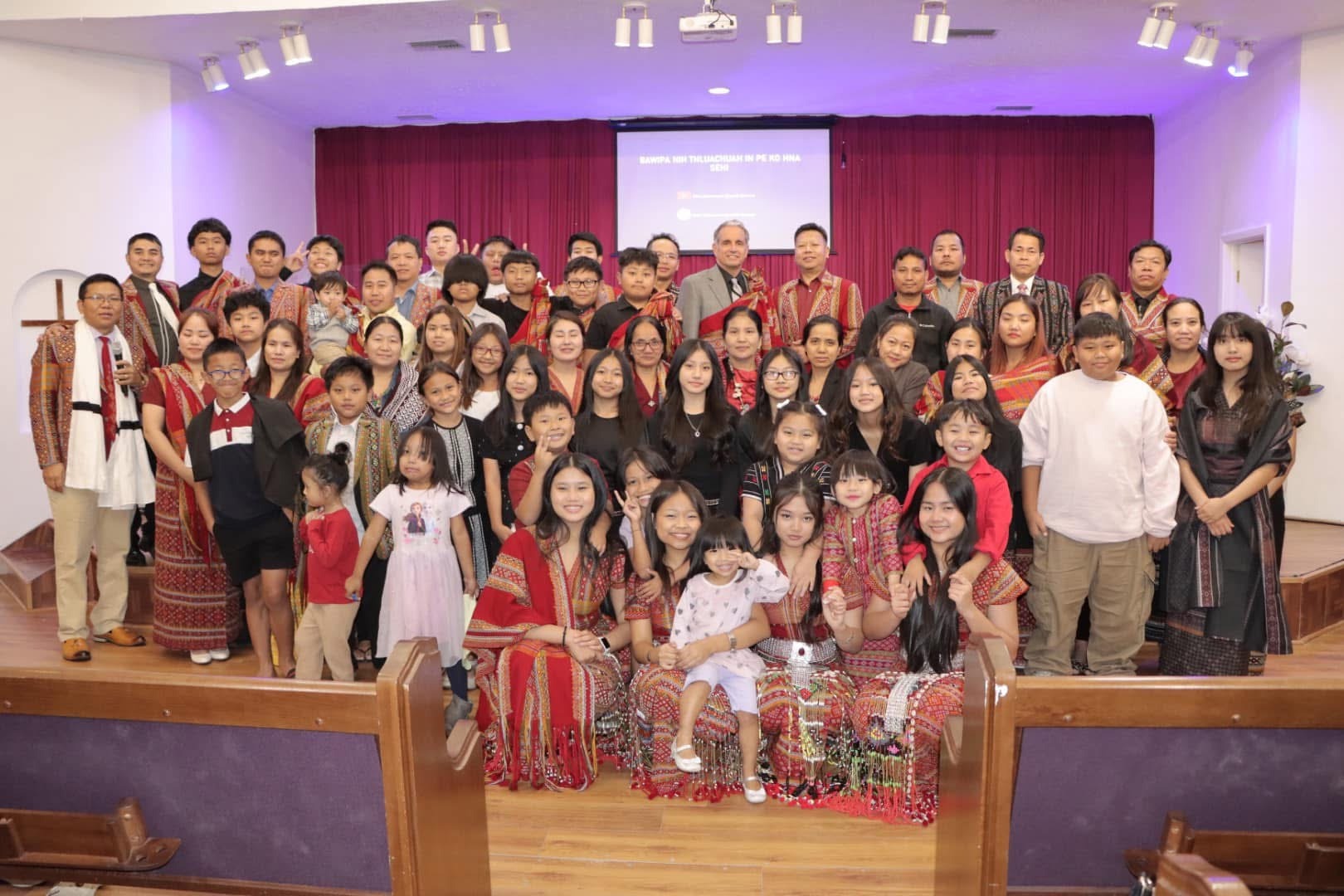
    While we provide support to churches, we also receive much in return. As I listened to stories of the suffering these Chin people have endured due to ethnic and religious persecution in Myanmar, I was deeply moved by their remarkable resilience. God’s Spirit has clearly shaped in them a character of long-suffering. As they stay connected with family and friends still suffering in Myanmar, they offer meaningful support and encouragement. Many of them must also show resilience in balancing two jobs to make ends meet.

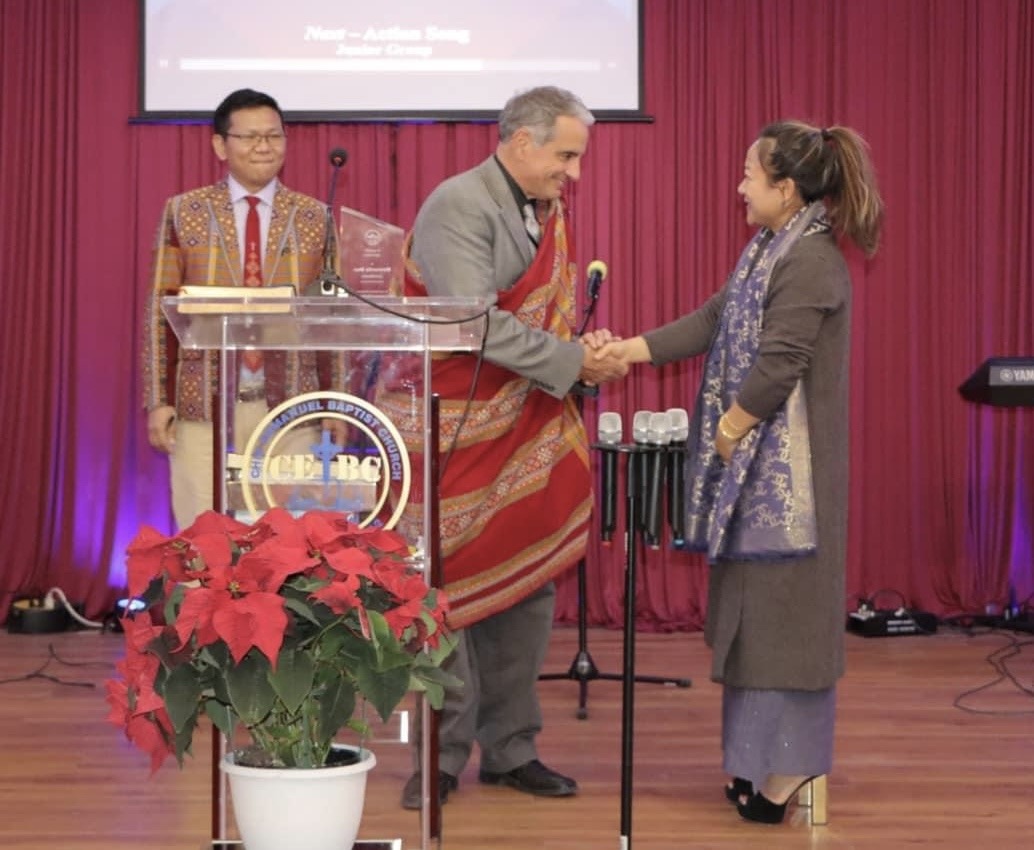
    In worship, the congregation gave a powerful witness to the joy they find in God and their dedication as followers of Jesus. I was personally touched by their spiritual enthusiasm. For our worship, the Chin congregation contributed ‘Zisuh nih a zultu hna sinah (Peace Be With You! Jesus Told His Friends),’ #165 in Voices Together.

    They also offer a practical example of how to engage youth in worship. Pastor Simon shared his concern about retaining youth, a challenge faced by many churches today. In response, he encourages all youth to learn a form of music, which they eagerly do. The youth play an active role in worship, leading and contributing music with joy. Their worship truly reflects the sense of community central to their faith practice.

    This Chin congregation, like the Mennonite Chin in Omaha, Nebraska, extends their support beyond the church by helping refugee families adjust to life in a new country and culture. They are as passionate about mission as they are about worship, eager for others to experience the abundant life found in Christ. After I presented the Mennonite Men JoinHands grant, they graciously gave a sum of money to be used to assist another church with their building project—a beautiful example of generosity and community spirit.

    In all these ways, they have much to offer the broader Mennonite Church.

    Postscript
    This is the second grant we have made to Chin congregations joining Mennonite Church USA. These congregations are a prominent part of the new church movement within our Mennonite family. Approximately half of all new MC USA congregations come from ethnic-racial backgrounds, including African American, Hispanic, Native American, and Asian groups. This trend reflects the church’s growing racial and ethnic diversity, particularly in urban and immigrant communities, where congregational growth has been most pronounced.

    Thanks to the generosity of our donors, we have provided over $2.5 million to 93 new congregations to support their building projects. In the past twelve months, Mennonite Men distributed $91,500 through JoinHands grants to four Mennonite churches.


  • Regenerative Agriculture with Maguey

    Regenerative Agriculture with Maguey

    ​

    In the last decades, deforestation, monoculture, and large corporate agriculture interests have devastated native landscapes and dried up watersheds for local small-scale farmers in Tlaxcala, Mexico. Maguey, a traditional feature of Mexican landscapes, has been cleared from ecosystems, seriously affecting local biodiversity. In response to this, the Vicente Guerrero group is supporting communities in Tlaxcala to restore their ecosystems, as well as mitigate and adapt to the changing climate patterns which are already impacting livelihoods.

    The Vicente Guerrero group is a small NGO with national and international reach. With forty years of experience spearheading agro-ecological techniques to support food security and sustainability, their newest challenge is restoring local biodiversity and adapting to the climate crisis. Their innovative approach is to focus on recovering ancestral agricultural practices and encouraging community members to become custodians of their lands.

    Farmers in Tlaxcala need to adapt to longer periods of drought, add moisture to their soil, capture carbon in the atmosphere, and cultivate species that can be commercialized or consumed in times of resource scarcity. To meet these needs, the Vicente Guerrero group is now engaged in a project of transplanting 20,000 Maguey (Agave atrovirens) seedlings (grown with the support of JoinTrees in 2022-2023), plus reproducing an additional 20,000 Maguey plants and 10,000 Mexican Pinyon Pine trees (Pinus cembroides). These two species are planted together using an ancient indigenous agriculture system called Metepantle, which is an agroforestry system in which a variety of species are intercropped. In this project, and in all of the program’s regenerative agriculture work, the Vicente Guerrero team is promoting interventions that will restore native biodiversity, increase soil fertility, and further natural solutions to the climate crisis.

    Ancestrally, Maguey is known as the wet nurse of Mexican ecosystems. The first archaeological evidence of Maguey cultivation dates to 6,500 years ago. The core of the plant, known as the ‘heart’, holds up to ten liters of water, sustaining moisture on the land. The whole plant serves as a haven for pollinators and small fauna. According to research carried out by the Vicente Guerrero group, the soil where Maguey are growing remains just as fresh or cooler than the topsoil of nearby forests. There have been studies that state that this species is also as efficient as trees at capturing carbon. In fact, some studies suggest that Maguey might even be better than trees, given that Maguey’s carbon capture continues into the night, while trees do so during daylight hours.

    By incorporating Maguey into the farming practices of local communities, it will be possible to restore the ancient indigenous agricultural technology called Metepantle. In a Metepantle system, a variety of species are grown together on the same field. In Nahuatl, ‘metl’ means Maguey or Agave and ‘pantil’ means division or flag. This ancestral agricultural system has an successful track record of over 2000 years. It is particularly effective in regions with sloping fields, steep hillsides, or mountain ranges where it prevents erosion. The Maguey are placed on terraces as living fences or are inserted between rows of trees, such as Pinyon Pine (Pinus cembroides) or Tejocote (Crataegus mexicana). Within these living fences, native corn is planted (Vicente Guerrero has a seed bank of over 58 species), alongside a variety of beans (Phaseolus Vulgaris, Phaseolus Coccineus, Vicia faba L.), Chiles (Capsicum spp.), and various species of squash (Cucurbita ficifolia, Cucurbita pepo L.). This mix of plants is enriched further with edible Nopal Cactus (Cactus opuntia), and a variety of edible and highly nutritious greens called ‘quelites’. Some Metepanles also include medicinal herbs. The result is a field which can provide highly nutritious food for vulnerable communities while also encouraging biodiversity, mitigating climate change and regenerating the soil as its fertility is increased.

    The Metepantle system being promoted by the Vicente Guerrero program will include the Native Pinyon Pine, as it is also a species that prevents erosion and it connects its roots to underground aquifers providing further moisture to the soil. Recent research suggests that this Mexican variety of Pinyon Pine also has significant carbon capture abilities.

    The Vicente Guerrero Group has now grown and cared for 30,000 Magueys that are mature enough to be transplanted into their permanent locations. More small Maguey and 10,000 Pinyon Pine seedlings are growing in their nursery. The team members have been sharing with 100 farm families the virtues and importance of Maguey and Pinyon Pines and reintroducing Metepantles for the local ecosystem. The Vicente Guerrero team visits the families and their farms, answering any questions the families might have, and supporting the design of each individual Metepantle system. In parallel to this process of farmer to farmer educational exchange, they have now begun to transplant Maguey onto newly created Metepantle fields.


    The objective of the program is to expand these agroforestry actions, recovering bio-diversity and ancestral regenerative agricultural practices on 800 small scale farms. This will translate into between 200 and 300 hectares of restored lands. The goal is that these actions will serve as an example to others in the country who wish to mitigate climate change, restore local biodiversity, and mitigate food insecurity.


  • Initiation! Adventure through wilderness and water

    Initiation! Adventure through wilderness and water

    As a congregational pastor, I was in the middle of a three-month sabbatical. What a gift! I had abundant time to be with family, to camp and spend time out in creation, to rest and renew… and yet the cycles of anxiety and anger within me remained. In fact, with so much time to think, the anxiety was actually getting worse. I was feeling stuck, tired, frustrated and ready for something new.

    In early August I journeyed from my home in Goshen, Indiana to Pilgrim Park Camp near Princeton, Illinois for the Men’s Rite of Passage (MROP) sponsored by the Illinois chapter of Illuman. Steve Thomas had encouraged me to attend this formational experience, and it is something that Mennonite Men has been encouraging for a while. As a Mennonite Men board member, I was also interested in attending to see how it might help me focus on men’s work in the future.

    I left home uncertain of what lie ahead. I was aware that the five-day MROP had been originally designed by Richard Rohr, someone whose wisdom I trusted. I knew there would be several other men there. I knew the experience would include fasting and time in the wilderness. But a lot of what I would experience remained a mystery.

    When I arrived at camp, I was welcomed warmly along with 23 other initiates. Additionally, several elders were there the whole time to guide the process and hold the space for us to do deep soul work. We didn’t wade into the work slowly; The expectation was participation and vulnerability, and all of us brothers dove right in.

    Over the next days, we kept diving deeper into our soul work through learning, ritual, time alone, and time in small groups. We explored our mortality, we grieved, we practiced contemplation and we celebrated. Through the experience, I dove deeper into myself than I had before. I discovered inner wounds and lies of my false self. I discovered that my constant anxiety and anger had been churning from those wounds for a long time.

    I discovered that the patterns and mindset of my
    first half of life just weren’t working anymore.

    Throughout the deep dive experience, I also encountered God’s love at my core, energizing my true self. While fasting and sitting alone in the wilderness, I contemplated the presence of a caterpillar and later a butterfly. I began to know in my gut the transformative realities that God is love, that God’s abundant love is within me, and that through God’s love I am interconnected with all things. During this time of awareness, I sat with some deep truths: Life is hard; I am going to die; I am not that important; I am not in control; My life is not about me. With each truth that on the surface sounded negative, I discovered joy and freedom. And in that joy and freedom, I began to discover within myself a new way of being, countering the churning anxiety, connecting with my true self and the divine spark within me and all things. I also experienced an ongoing call to work not only with men in their spiritual journeys, but also to encourage boys in their journey toward authentic manhood.

    Now I am home again. Sabbatical is over and ‘normal life’ has resumed. But somehow I am different on the inside: in my mind, heart, and gut. Yes, anxiety and anger will still be companions on my journey, but they are no longer my guides. I am a beloved son of God, initiated as a man into my second half of life. The journey still lies ahead and the challenges are still real. But instead of fearing the journey, I embrace the path of descent and seek to live one moment at a time, contemplatively centered on the truth of God’s abundant love.

    I’ll end with a few invitations as well as another Haiku

    • To my brothers who have not yet attended an MROP: if you find yourself feeling stuck and discouraged in life, I strongly encourage you to consider attending one. It will help guide you on the journey of transformation.
    • To my sisters and other siblings, if you know a man who is stuck, searching for meaning in life, struggling with his false self, I encourage you to mention the MROP to him.
    • To those who have already been initiated through the MROP experience, may we continue the journey of contemplation, soaking in and overflowing with the love of God.


    Every little thing
    A true piece of God’s Shalom
    Interconnected!


    I, Phil, am a beloved Son of God. I am in my late 30s, am married to Mary, and
    we have two sons, Ethan (10) and Noah (8). I enjoy running, biking, hiking,
    camping, and spending time with my family, including coaching sports my
    boys are involved in. I work as a congregational pastor at Belmont Mennonite
    Church in Elkhart, Indiana. I also serve on the board for Mennonite Men.

  • Good intentions aren’t enough

    Good intentions aren’t enough

    Men can dismantle patriarchy with actions that support women in leadership


    Three years ago, when I started my practice as a process consultant, I wondered if I could ever shake free of the Anabaptist World article that potential clients often found when they googled my name.

    The article reported on my resignation as superintendent of a Mennonite school, in which I cited the patriarchal assumptions of a group of people in the school community that became abusive and made my leadership unsustainable.

    Image: Jeanne Zimmerly Jantzi and Joel Gaines (joining virtually) lead a seminar on ‘The Messy Struggle of Antiracism’ at the Mennonite Church USA convention in Cincinnati in 2021.

    Before taking the role at the school in 2017, my husband and I had served internationally with Mennonite Central Committee since 1989. During those years, I’d observed the effective leadership of women in the countries where we lived. We’d worked under a woman’s leadership. After living outside of the United States for so long, I naively assumed that in my home community any questions about women’s ability and calling to lead had been settled long ago.

    I assumed my generation was having a different experience than my mother’s. She lived through a time of squelched dreams for women who felt called to lead. As a child, I remember leaning forward between the seats of our VW hatchback to hear her vent to my dad on the way home from church.

    The 1963 Mennonite Confession of Faith, Article 14, stated: ‘[I]n the order of creation God has fitted man and woman for differing functions; man has been given a primary leadership role, while the woman is especially fitted for nurture and service. Being in Christ does not nullify these natural endowments, either in the home or in the church.’

    This was the Confession used by the Mennonite Church. By 1995, theConfession of Faith in a Mennonite Perspective — used at that time by the Mennonite Church and General Conference Mennonite Church and now by Mennonite Church USA and Mennonite Church Canada — reversed that way of thinking, at least on paper.

    Article 6 states, ‘The rule of man over woman is a result of sin (Genesis 3:16) and is therefore not an acceptable order among the redeemed (Galatians 3:28; 1 Corinthians 7:4; 11:11-12).’

    Article 15 states, ‘The church calls, trains and appoints gifted men and women to a variety of leadership min- istries on its behalf.’

    Women alone cannot change the historic ranking system that places men at the leadership pinnacle. Men need to be committed to dismantling patriarchy.

    Revised wording in a Confession of Faith cannot bring down a deeply engrained culture that stratifies wom- en (and other intersecting identities) below men. Many men would say that they fully believe in women’s leader- ship. The lack of tangible evidence of this support may be unintentional.

    Still other men continue to affirm the sentiments found in the 1963 Mennonite Confession of Faith. The intent or motive is irrelevant when experiences of patriarchal behavior diminish a woman’s ability to lead.

    Men’s privilege in the workplace is so familiar and unquestioned that it may not even be recognized. Take something as simple as asking questions. When a male leader asks a question, it can be seen as a helpful coaching tool, or a way to get people to explore a new idea. When a female leader uses a question to engage thinking, men often assume she is asking because she doesn’t know the answer. Her teaching device is assumed to be an invitation to launch into a lengthy explanation.

    From a position of unquestioned privilege, men have confidently written many books explaining how to lead. Few books by men recognize the variable in the leadership context if the leader is a woman.

    There are men who want to learn about their blind spots and to change. My husband is one. We job-shared as co-leaders for 24 years in cultures that traditionally assumed the man would lead. We continuously analyzed our roles, giving and receiving feedback and striving to learn and grow.

    I’ve also had opportunities to work with and observe men in the school context and in my other circles who work hard to support women’s leadership. They don’t always get it, but they want to keep learning to do it better.

    I share the following suggestions for men who want to do better. The list began with a blog post I wrote and expanded with suggestions from other women’s experiences.

    1. Sit down. Consider whether this is the time to make space for a woman to step up in leadership instead of you. Are you ready to be in the No. 2 role? What changes would you need to make to support a woman leader?
    2. Notice who is taking up the talking time in a meeting. Create space for a woman leader by turning to her and asking, ‘What do you think?’
    3. Stop interrupting. You might not even notice when you do it. Be aware. Ask for feedback. Apologize. If a man and a woman speak up at the same time, encourage the woman to go first. Don’t accept her deferring to you.
    4. Steer the conversation back to a woman if she is interrupted and the topic shifts off track. Intervene on her behalf. State to the group the facts what just happened: ‘Sarai was speaking, and Michael interrupted. Let’s go back to Sarai.’
    5. Reinforce what a woman leader says if the man in charge ignores her point. Make sure the woman gets the credit for her contribution.
    6. Refer to and defer to a woman leader. Outsiders may assume the man is in charge. Correct their mistake imme- diately. Introduce the woman as your leader. Use titles in the same way it’s done for men. Sometimes you may need to leave the room to reinforce the woman’s leadership.
    7. Quote what women leaders have said or written and publicly give them credit for it. Elevate and promote women’s voices, including famous people and your colleagues. What they have to say is worthy of atten- tion.
    8. Pay attention to the optics. In public, note whose name is listed first. It matters who comes to the podium and who communicates publicly. Notice who sits in what chair. Step back, even if moving forward comes naturally to you.
    9. Encourage confidence and affirm women in their leadership. Privately, let a woman colleague know if you notice her apologizing for her input or being tentative when she clearly knows what she is talking about.
    10. Base your promotion and hiring practices on substance rather than on style. Women’s leadership does not need to follow a male mold to be effective and powerful.
    11. Stop protecting women leaders. It undermines a woman’s leadership when you withhold information that you assume will be too emotionally distressing. It disempowers a leader when you assume her plate is too full and you step in to handle what she should address.
    12. Learn history. Recognize how men have shaped culture in ways that ben- efit men by disempowering women. Honor the ways women are rejecting this historic injustice.
    13. Unlearn your tendency to take charge or to feel entitled to lead. Recognize that you’ve been shaped by a patriar- chal system and that it’s possible to disrupt that system.
    14. Engage in your own inner work to recognize that your value does not depend on being higher than a woman in our cultural caste system. A man with healthy self-confidence and
    15. self-respect will accept that a woman in leadership is not an attack on your value or masculinity.
    16. Believe women when they tell you about their experiences of sexism. When they point out disempowering behavior or patriarchal assumptions by you or others, be curious rather than defensive. Don’t try to explain the ‘harmless’ intent. Find out how it could be done better.
    17. Join in women’s justified anger when their leadership is not respected. Let a woman see your anger at the injustice. Use the energy of righteous anger to learn, and carry that learning forward to help other men learn.

    Good intentions aren’t enough. Men can learn to do better and call upon other men to change their hearts and actions. That’s the workload they carry. Women have their own work to do to thrive as leaders.


    This article originally appeared in Anabaptist World, May 2024. Read or download a PDF of this article HERE.