Author: Admin account

  • Blessing the Trees at Greencroft

    Blessing the Trees at Greencroft

    Submitted by Anne Birky

    In the fall of 2021 the small and new Greencroft tree committee started to correspond with Steve Thomas  in response to concerns about a high, piercing chirp (think one chirp from an very angry crow every 8  seconds, 24/7 except on Sunday mornings) from a foundry behind the Greencroft Oak and Maple courts.  Steve was then the US director of Mennonite Men. Also included in those conversations was the  supervisor in the forestry operations at NIPSCO (our local source for electricity), the wildlife biologist for  Indiana’s Department of Natural Resources, a persistent and frustrated resident in one of the courts who  had been in conversations with the foundry manager regarding noise abatement, the Goshen city forester  and Greencroft’s director of Resident Life Services. 

    Steve submitted a grant proposal that fall of 2021 to Mennonite Men JoinTrees, it was approved and the  money was set aside. It appeared to those of us living here that there was no substantial progress for a  sound & visual barrier made of trees. Our dreams and hopes for managing the foundry’s noise faded.  Residents had been complaining about the noise for at least 50 years. An untended, wild hedgerow had  grown up; it muted the noise a little bit but not enough for a legal limit in a residential setting.  

    After 2021, things changed: the director of Resident Life Services retired, the supervisor of forestry  operations at NIPSCO took another job, the Greencroft tree committee disbanded, mostly due to health  issues and a new tree committee formed. The chirping from the foundry continued, day in and day out.  Fortunately for us, Steve, the city forester and Greencroft’s director of facilities and plant operations really,  really wanted this project to come to pass. They kept our dream alive!  

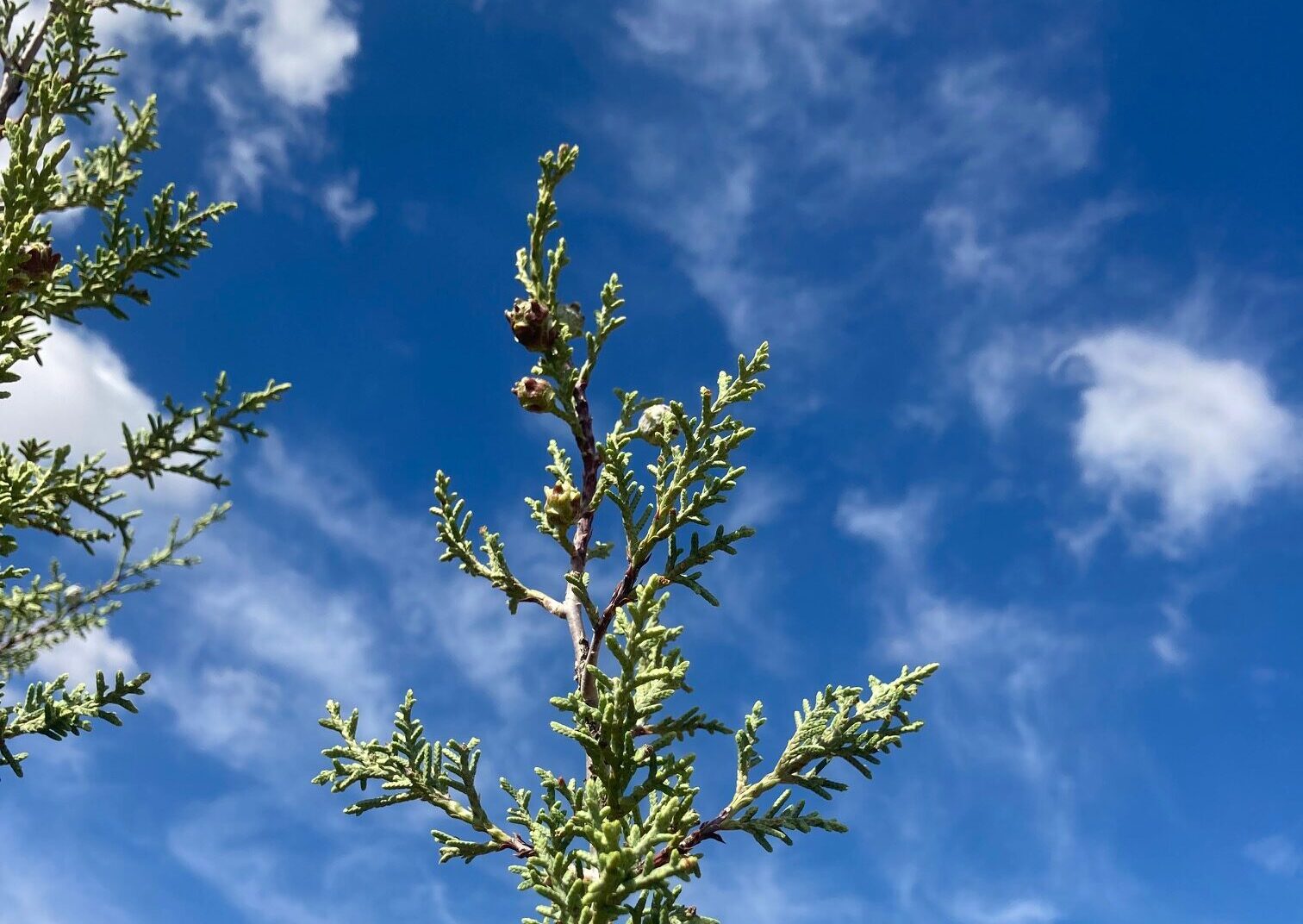
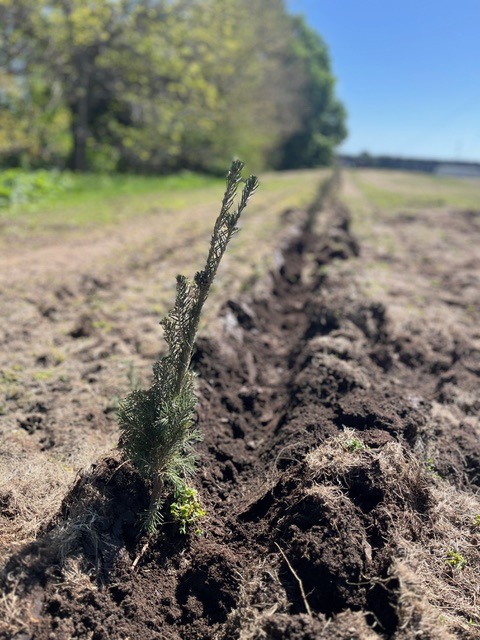
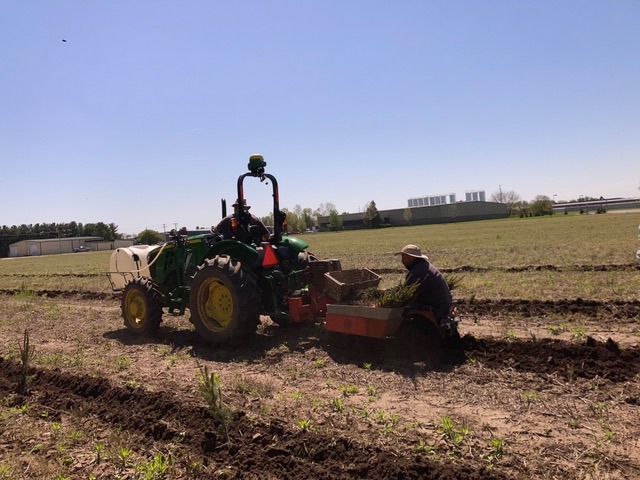
    Steve revisited the proposal again in 2025 to plant 400 Norway Spruce and 215 Eastern Red Cedar trees  on land north of the foundry and in the bean field just south of the Greencroft boundary. Steve  established a good relationship with the plant manager and within 10 minutes, he helped Steve obtain  official permission from the landowner in New York to plant on the land. Steve arranged for a tree  company to plant the trees with their tractor; they planted over 600 trees on 2 1/2 acres in 2 1/2 —3  hours. It was impressive and fun to watch the planting!  

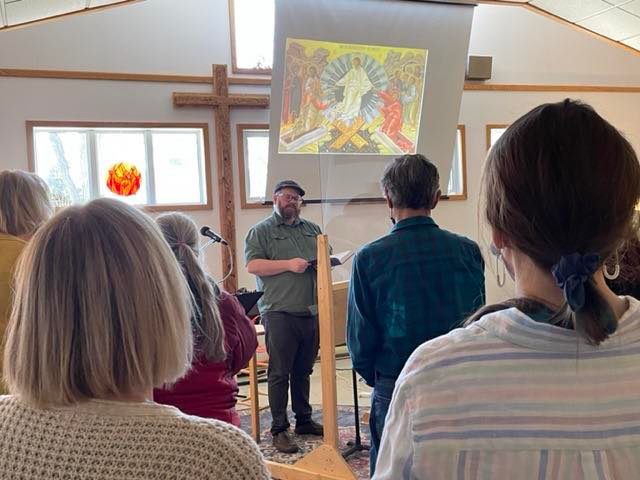
    About 15 of us gathered to bless the trees about 9 days after they were planted. A former Greencroft  CEO (now a resident) was there; Steve Thomas came; the city forester attended. Most of the members of  the first tree committee were there and quite a few of the watering volunteers came too. Some grateful  residents from the courts who listen to the constant chirping attended.  

    Steve reminded us that the ancestors of these trees are our elders; they have been on this earth longer  than we have. He asked us to consider what we can learn from them.  

    The city forester thanked us—his elders— for planting & caring for these trees. He told us he’s 52 and  when he retires here in 20 years, these trees will be just great! 


    BLESSING THE TREES 

    Norway Spruce and Eastern Red Cedar trees, we give you our blessings.  

    May you grow well—roots down, leaves up. May you care well for each other and for Greencroft  residents. 

    We give you thanks for doing what trees do: stay in one place, grow, provide a place for the birds to  build nests, inspire us, show us how to wait, (pause while others offer specific thanks). We thank you, trees, for your wisdom of photosynthesis. We thank you too for your shelter for us.  Especially right now we thank you for the sound barrier you will eventually provide from the noisy factory  nearby.  

    May we water in anticipation of our children, our grandchildren and others who will come to live at  Greencroft.  

    We give you thanks, Creator of our universe, for our planet which is our home. We are grateful for our  little corner of the world.  

    We give thanks to you, Sacred Mystery, for light, for the sun, water, oxygen, for your breath of life, (pause  while others offer specific thanks).  

    We give thanks, Creator God, for these trees and we give thanks for our energy to prepare this land for  the people who will come here after us.

  • Windsor Mennonite Fellowship

    Windsor Mennonite Fellowship

    JoinHands: A Story from Windsor Mennonite Fellowship

    Mennonite Men has given out dozens of JoinHands grants to new congregations throughout Canada, the United States, and in countries all over the world who wish to acquire a building where they can worship.   Many people have been blessed by owning a church building with help from JoinHands grants.  Church buildings can make it possible not only for folks to gather for worship and study, but also as spaces to share meals, host community conversations, build relationships, and bear witness to God’s Kin’dom and wide welcome.  And we celebrate the many ways that congregations gather.  This doesn’t always involve use of or owning a building.

    I recently followed up with Windsor Mennonite Fellowship (WMF), a congregation in Windsor, Ontario who received a JoinHands grant from Mennonite Men back in 1993.  Though pastor Riley was away at the time, I was thrilled to get an e-mail response from an elder named Nate Hope to share updates about the congregation more recently.  Nate came from a Pentecostal background and had worked in construction but now is a church elder at WMF and a full-time social work student working for the Downtown Windsor Community Collaborative.  I thoroughly enjoyed meeting Nate and catching a glimpse of Windsor Mennonite Fellowship, a Mennonite Church Canada congregation just miles from Detroit in the US.   

    “Our church building was once a laundromat in the neighborhood,” Nate explained.  “The congregation was able to purchase and renovate this structure.  We created a sanctuary, a nursery, and a kitchen and dining area in the back.  It’s a small space, but we’ve made it work.  Space is even becoming tight now.” 

    Nate shared that WMF shares the space with an Eritrean congregation called Shalom Worship and Healing Centre.  This sister congregation worships on Sunday afternoons, also utilizing the building for a prayer service and choir during the week.  Both congregations take turns with the space, requiring scheduling.  There have even been times when WMF held their elders meeting at another congregation’s building because their sister congregation was using the space. 

    Windsor Mennonite Fellowship has experienced a good deal of change in recent years, especially around the time the COVID-19 pandemic set in.  A new pastor came.  The congregation developed a statement to become an inclusive and welcoming congregation.  Also before the pandemic, many congregants came from Mennonite backgrounds.  Many families who moved back to smaller communities where they’d grown up decided to stay in those smaller communities when the pandemic subsided.  Meanwhile, many newer folks in Windsor began attending WMF.  

    “When our current pastor Riley came, he was well-known in town, and a number of new folks began attending who were new to a Mennonite faith.  But they felt comfortable coming here, and Riley and others made them feel welcome.  Like many churches during the pandemic, we began offering online services and changed our worship format to include 15-20 min sermons and the same amount of time devoted to sharing dialogue afterwards.  We have keep that format, which folks appreciate,” Nate shared.

    Thank you to all supporters of Mennonite Men’s ministry of helping new congregations purchase a worship space.  Pray for Windsor Mennonite Fellowship, for its collaborative sharing of space with another congregation, and the future relationships being deepened throughout Windsor, Ontario and throughout the wider church.  If you know of a new congregation looking to purchase a building, inform them about our JoinHands grant program.  We continue inviting your support for future grants to new congregations.

  • Following Jesus as Males in 2026

    Following Jesus as Males in 2026

    Submitted by Jon Zirkle

    The Christian Bible gives us four accounts of Jesus.  We see different angles of Jesus—Jesus as a baby, as an adolescent, and as an adult man. Jesus appears to his disciples after his death.  Stories describe his birth and his brutal execution, his adult experiences of escaping to wilderness for prayer, walking long distances, healing sick people and casting out demons, crossing boundaries and facing taboo head-on, feeding others, riding on donkeys unarmed.  As a male Jesus had a life full of experiences that involved risk.

    Here in 2026 living on the North American continent, displays of masculinity constantly confront us in the media, online, at sporting events, and in politics.  Boys and men daily see images of men who dominate on the field, in the bedroom, and in the workplace.  Often the images in ads are of men alone, solo heroes.  We see men who refuse to admit wrong-doing, men who abuse and steal without consequences, men driving big trucks through rivers and over huge boulders, men worshipped for their chiseled bodies.  Men are portrayed as above reproach, measured by their financial worth, have things under control and are in control. 

    These images are vastly different than what we hear in the stories of Jesus.  The Jesus I witness was a man who forgave others, a man who left behind a normal way of life in order to share good news and help others who suffer, a man who wept openly and cried out to God, centered love and service, could express joy and took time to celebrate with friends, and regularly depended on a group of men.  The Jesus I read about was not married with children, did not own a house or many possessions, was bullied and taunted and threatened, and didn’t retaliate towards enemies.  He was obedient to that which was beyond him, to his Creator.  He believed in the power of prayer.  He was willing to publicly die in a humiliating way. I can only imagine the kind of bullying, name-calling, and taunting Jesus would experience if living in 2026. 

    Are we—am I—ready to follow Jesus?

    Following Jesus as a male in 2026 in North America is feeling pretty radical.  Let’s be real.  We—myself included—are continually tempted to believe that we don’t need help from others, that work and making money are more important than offering love and service, that “our” time is better spent working out than in prayer and fellowship.  Porn, fierce competition, displays of unfiltered anger and violence, and celebrations of war and military service abound.  This can all feel overwhelming.  I believe we men need support, a healthy sense of self, a commitment to prayer, and vulnerable brotherly community to follow Jesus’ alternative path. 

    If you identify as male and you’re reading this right now, I hope you know that you are not alone if you are struggling to resist the forces that bombard us as men.  I hope you know that your life, your story, your gifts, your body, the person that you are really matters in this life and beyond.  I hope you can hear God’s voice that calls your name, that you feel permission to lean into the messages of Jesus, rejecting false idols of empire and domination. 

    I hope you’ll join other men who want to try to follow Jesus.  If you (or another male in your life) do not have community, consider attending a men’s retreat or to join or start a men’s group, which could be an online group.  Identify a friend, family member, co-worker, therapist, pastor, or another mature person you trust who might help you connect or might even join you in your search for fellowship.  Reach out to us at Mennonite Men by e-mail for ideas. Explore our resources, books, and videos found at https://mennonitemen.org/joinmen/.  Brothers, you are in our prayers.

  • Malleable Men: A Mennonite Men Retreat at Camp Friedenswald

    Malleable Men: A Mennonite Men Retreat at Camp Friedenswald

    By: Jon Zirkle

    On the first full weekend of March, twenty-eight men gathered at Camp Friedenswald in southern Michigan for a Mennonite Men retreat. The COVID-19 pandemic and other reasons had led to a pause in this annual retreat for several years, and many celebrated its return. Rarely, if ever, had this retreat been offered in the spring during the Lenten season. One never knows if early March in the Midwest could bring snowstorms, thunderstorms, or heavy rain, all capable of canceling a retreat. But despite a nearby tornado on Friday afternoon, weather did not cancel this long-anticipated gathering. Praise God!

    The theme, Becoming Malleable Men: Practicing Faith and Being Formed, was shaped largely by Mike Martin, Executive Director of RAWtools. Unfortunately, Mike came down with the flu days before and was unable to travel from Colorado. Nonetheless, gifted camp staff and his already-prepared content allowed the retreat to proceed, one where we truly practiced malleability together. All arrived safely, even those coming from as far as Wisconsin and Colorado.

    Throughout the weekend, God’s creation provided rich symbolism for unpredictability, beauty, and adaptability. Heavy rain and thunder on Friday night moved our campfire indoors, where the fireplace and acoustics drew us together beautifully for prayer and singing. Several men jumped into icy Shavehead Lake on both Saturday and Sunday morning, a real bonding experience. Saturday’s mild weather allowed a hike to see thousands of young native trees planted through a Mennonite Men JoinTrees grant, and camp staff Amy Huser and Jonathan Fridley shared about land management and creation care.

    Saturday afternoon was a highlight for many. Optional activities included disc golf, cutting invasives, archery, forging metal, and chopping wood as service to camp. The evening closed with popcorn and fireside singing at Mosquito Hollow, a long and beloved camp tradition.

    A focal point of the weekend was forging metal pieces brought from home alongside decommissioned weapon parts from RAWtools’ peacemaking programs. Volunteers Jerry Martin and Abenezer Dejene guided us as we worked in pairs, each altering their partner’s forged piece in some way. Letting others shape our work physically teaches us to learn from one another rather than compete for control.

    On Saturday night, we forged in the dark by headlamp, then reflected in small groups. Mike Martin’s words have stayed with me: “The transformation I see at the anvil has so much carry-over into our transformation throughout life. It connects to conflict and harm and repair and reconciliation. We have plenty of good things that have shaped us as well.”

    Sunday morning brought bird watching led by college student Peter Moser, then outdoor worship in glorious sunshine. We sang hymns as we attached our forged pieces to a tree-like sculpture, left at camp as a lasting memory of our gathering. We ended in a prayer circle, new bonds formed.

    Abenezer put it well: “At the Mennonite Men’s retreat, I had an opportunity to fellowship with other men from diverse walks of life. We shared stories about the individuals who have influenced our lives, and took part in forging a piece of gun into something beautiful. The retreat provided a chance to test whether I had forgotten my blacksmithing skills and to reflect on my malleability as one shaped in the likeness of Christ. The fellowship and experience at the Mennonite Men’s retreat were a time of learning and reflection on how we can be shaped to serve others.”

    A question many often ask: do men really need to gather?

    My answer: yes! As brothers and participants in God’s kin-dom, we need each other. Our stories matter. This was echoed by male retreat participants in their evaluation forms. They noted that the vulnerable sharing, small group time, singing, and sharing aloud “I Am From” poems we wrote were the highlights of the weekend.

    Frankly, it’s rare to find sacred spaces where male sharing is deep and personal, where there is trust and respect even when our male experiences and realities differ. Building trust, becoming malleable, and listening well to one another takes practice. We can look to biblical stories of Jesus and the disciples for examples.

    These are challenging times for men in the US, in Canada, and all over the world. I hope you find other men to connect with, be it one-on-one for coffee, in a small group, or at a retreat. Stay tuned for the next Mennonite Men retreat, or reach out if you want to organize a retreat in your neck of the woods.

    Photos by Jon Zirkle and Camp Friedenswald

  • New Building and Thriving Community

    New Building and Thriving Community

    By Jon Zirkle

    On Sunday March 15, Eastside Church in Harrisonburg, VA celebrated its 16th anniversary as a congregation.  While on a Mennonite Men visit to Virginia, I had the pleasure to see the building firsthand and later had a conversation with one of the pastors about Eastside past and present.

    For many years the congregation rented worship space, and as many can attest, renting worship space can present some challenges and constraints.  “I don’t know what we would have done during COVID if we were still worshipping in a school,” said pastor Peter Eberly.

     In November 2021 Eastside Church moved into its current building, having raised enough money to purchase the building and secure a loan.  Among several sources of funding, Mennonite Men’s JoinHands program awarded the congregation a $40,000 grant, representing about 10% of the funds Eastside needed to make the purchase possible.  Skipping ahead to 2026, the congregation just paid off one of its loans this week, perfect timing for a celebration. 

    I asked pastor Peter Eberly what impacts the new building has had on the life and mission of the congregation.

    “First of all, our current church building’s location is near a busy intersection.  I estimate that 25% of our current congregation has started attending since we moved into this space.  People see our sign when driving by and decide to check us out,” said Eberly.

    Current attendance at Eastside is approximately 200 people on a given Sunday.  Pastor Eberly noted the remarkable variety of groups and activities now filling the building.

    “Upstairs we have two tenants who pay rent to use space.  On Friday nights, we have over 100 college students come to use our space through Young Life.  On Saturday we have a training for Isaiah 1:17 House, an organization providing physical and emotional support for children awaiting foster placement.  On Sunday mornings we have Haitian folks who come for worship, and after the service many of them stick around for prayer.  All of this is possible because we have space,” says Eberly.  

    I could tell from our conversation that Eastside is a unique congregation and has taken deliberate action to meet people on their faith journey and articulate an Anabaptist commitment.  I could also sense this when reading about them on their website, which states:

    We are firmly in the Anabaptist tradition, but do not find our value or identity within denominationalism. We strive to translate Anabaptist faith to this generation by lowering cultural hurdles, speaking God’s truth to political powers and setting our sights on the Kingdom of God. 

    Join us in praying for Eastside Church and for congregations throughout the U.S., Canada, and around the world who are trying to build their ministry, live out their faith as followers of Jesus, and secure a safe place for worship.

    Mennonite Men’s JoinHands grant program continues to accept applications for new Anabaptist congregations pursuing the purchase of their first worship space.  We hope to receive applications from congregations in 2026, and also want to raise additional funds to bolster this ministry program.  Access to funding for purchasing a building can be challenging for new congregations, and we want to help, continuing Mennonite Men’s long tradition of helping grow the church.  To learn more or to donate to this ministry, visit https://mennonitemen.org/joinhands/ today. 

    Photo credit: Eastside Church

  • Confronting Israel’s Occupation of Palestine

    Confronting Israel’s Occupation of Palestine

    By Steve Thomas

    Photo credit: Steve Thomas

    Our joint peace and tree-planting delegation of 25 people, representing Mennonite Men and the Mennonite Palestine-Israel Network, recently returned from Palestine. We heard firsthand reports of the brutal reality of Israel’s occupation: a history of ethnic cleansing, concentration of families into refugee camps, random acts of violence to terrorize Palestinians, the demolition of homes and schools, the seizure of farmland, the choking restriction of movement. All of this is designed to make life miserable, to push Palestinians off their land or to provoke resistance so Israeli military can unleash greater violence against them.

    Illegal Israeli settlements and outposts are spreading like a cancer across Palestinian land. While we could not enter Gaza, we are acutely aware of the horrific genocide occurring there since October 7, 2023. Despite this suffering, we were deeply moved by the resilient spirit of the Palestinians we met and the creative, nonviolent ways Christian and Muslim peace organizations continue to resist.

    Why This is Our Concern

    Our delegation’s mission aligns directly with the aims of Mennonite Men: “standing with marginalized people for diversity and inclusion” and “transforming oppressive systems for freedom and justice” as we seek to “live into God’s shalom.”

    As Americans and Mennonites, we cannot remain silent for several reasons:

    • Complicity: Our tax dollars enable the occupation through billions in military aid.
    • Connection: Many Israeli settlers and soldiers are U.S. citizens who were recruited by Israel.
    • Theology: “Christian Zionism” in U.S. churches endorses Israel’s occupation in God’s name.

    Greater actions of political witness, accompaniment, boycott, and divestment could influence the United States government to withdraw its military support for Israel. This would drastically limit Israel’s ability to continue its oppression and expansion in Palestine.

    The Expanding Occupation and “Greater Israel”

    Maps of the region illustrate a devastating loss of Palestinian land. Since 2012, settlement expansion has accelerated; today, over 350 illegal settlements and outposts house more than 700,000 Israelis on stolen land according to international law.

    Source: Palestine Portal

    There is a growing fear that this expansion will not stop at Palestine’s borders. During our return flight, an Arab Christian shared with me the widespread fear among Jordanians that Israel intends to invade Jordan, citing Israel’s invasion of southern Lebanon and the “Greater Israel” plan. This vision, originally mapped by Theodor Herzl, encompasses not only Israel, the West Bank, and Gaza, but also Jordan, Lebanon, and parts of Syria, Iraq, Egypt, and Saudi Arabia.

    This “Greater Israel” ideology relies on a literal interpretation of biblical covenants (such as Genesis 15:18–21) for a Jewish state stretching from the Nile River in Egypt to the Euphrates River in Iraq. This is no longer a fringe idea:

    • Prime Minister Benjamin Netanyahu expressed strong support for this vision last August.
    • US Ambassador Mike Huckabee recently suggested it would be “fine if they [Israel] took it all.”

    Confronting the Roots: Zionism as Colonialism

    To achieve peace, we must confront the underlying Zionist ideology. Dr. Mazin B. Qumsiyeh explained to our group that Zionism drives displacement-based settler colonialism like the colonization of the Americas. This confronts us with our history and also calls us to act in solidarity with with Indigenous peoples in pursuit of justice.

    We also met with Dr. Munther Isaac, a Palestinian pastor and theologian known for his “Christ in the Rubble” message. Isaac defines Jewish Zionism and Christian Zionism as ideologies of supremacy and racism that dehumanize Palestinians. His research highlights several critical points:

    • Tribal Deity: Zionism makes God a “racist tribal deity” favoring one ethnic group over others.
    • Bad Theology: It falsely equates the modern secular State of Israel with biblical Israel.
    • Tool of Empire: Zionism serves as a colonial project and a tool of Western empire, using “divine mandate” to sanctify ethnic cleansing, political crimes, and apartheid.
    • Call to Repentance: Isaac calls for Christians to repent for their complicity in the “genocidal project” in Gaza and proposes an alternate theology where the Holy Land is “God’s Land”—intended to be shared by all, not possessed exclusively by one (illustrated in photo below).

    On February 15, worshipping in a church in Bethlehem, we sang God of Grace and God of Glory. Let these words be our prayer and our call to action against the “warring madness” of our time:

    “…Grant us wisdom, grant us courage, lest we miss thy kingdom’s goal, lest we miss thy kingdom’s goal.”

    Postscript

    The day after I completed this report in February, the United States, together with Israel, bombed Iran. This, like Israel’s war in Gaza, violates international law and has unleashed violence against countless innocent lives. With world attention focused on the larger region, Israeli settlers and soldiers have escalated violent aggression against innocent Palestinian communities.

    Photo credit: Omar Al-Qattaa/AFP

    For more…

  • JoinMen: A conversation with Isaya

    JoinMen: A conversation with Isaya

    By Jon Zirkle

    A few weeks ago, I was in downtown Goshen for a midday meeting and encountered high school students marching to the Goshen courthouse square.   I was moved to see so many young people taking prophetic public action.  Many of them were youth I recognized from nearby Mennonite congregations. 

    One of the youth was Isaya Magatti, a high school junior I know from church who is part of the Mennonite Youth Fellowship (MYF) group.  The next day I saw him and several other MYF members in photos from the march included in our congregation’s weekly prayer and sharing email.  On a number of occasions, I’ve had a chance to hear Isaya read Scripture aloud and make announcements in Sunday morning worship.  His maturity, sincerity, prophetic voice, and heart for justice are noteworthy.  It being Black History Month, I felt it could be a good opportunity to hear from a teenager who identifies as a Black male and possibly write an article for our Mennonite Men newsletter.  I reached out to Isaya’s father, Tobias, to see about interviewing Isaya, and I was grateful that he and Isaya agreed. 

    Meeting up with Isaya for a conversation was both a good opportunity to hear about his experiences and to share about Mennonite Men.  First, we talked about the MCUSA convention back in July that we both attended and its theme, “Follow Jesus”.  I asked how that theme and phrase lands for him.

    “’Follow Jesus’ encompasses faith, following Jesus’ example and his radical approach to making good in the world.  It makes me want to do good in the world, too.”

    When I shared our Mennonite Men mission statement—engaging men to grow, give, and serve as followers of Jesus for God’s shalom—with Isaya, I was moved to hear his reflections. 

    “The last part of Mennonite Men’s mission statement, “…for God’s shalom,” is a good reminder of the end goal, of why we give, grow, and serve, and why we try to follow Jesus”, says Isaya. “It’s for God’s shalom.”

    I asked Isaya what feels significant to him about Black History Month and why it is important to him personally.  Sharing that his mom is from the U.S. and his dad is from Tanzania, he expressed there is a difference for him in relating to Black History as a first-generation American and as someone with an African father.  At times he feels more connection to the words “African” and “American” separately.

    “I don’t feel all that connected to the history of Black culture in the U.S.   That said, the reason I even exist is due to the Civil Rights movement and the legalization of interracial marriages, which is only about 60 years old.  That’s not that long ago.  So, I do feel a really direct connection to the Civil Rights movement.”

    Our conversation wove between topics of what it’s like having brothers, service trips for youth and young people, and how masculinity shows up in everyday life.  Isaya had important points to make and questions pertaining to how Mennonite males can show up online. 

    “How do we follow Jesus in online spaces?  How do we cultivate community in our online age?” he asked. 

    “Part of being people of faith is being in right relationship with other people.  This includes how we interact with others online.  Masculinity portrayed online is usually communicated as taking control, not being weak, and making sure you can dominate situations.  I wonder how we as Mennonites can discuss masculinity online with other men, including with those who fully believe in a masculinity of domination.”

    “There is relationship happening online, both good and bad.  It’s also important to build community outside the online world,” he concluded.

    Men having authentic and respectful conversation with other men of differing life experiences, ages, and racial identities can be a powerful and transformative experience.  I believe that Christ can show up in our midst as we relate in this way.  Though not always the case, we men might also experience greater trust, curiosity, solidarity, joy, and friendship with each other as well.  These are gifts of the Spirit.

    Join me in praying for Isaya and other young Black male Mennonites who strive to follow Jesus and usher in the kin-dom of God by building relationships.  I look forward to ways Mennonite Men can encourage, deeply listen to, and act on the questions, ideas, and leadership gifts of our Black brothers in the Mennonite Church and beyond. 

  • Jesus Embodies Solidarity and Nonviolence

    Jesus Embodies Solidarity and Nonviolence

    Back in July at Follow Jesus 2025 in Greensboro, I had the pleasure of meeting Michael Martin, a Mennonite man from Colorado Springs, CO. He was staffing an exhibit hall table for RAWTools, an organization he founded in 2013. Walking up to the table, I saw a display of incredible tools and pieces of art made out of transformed weapons. As someone who uses garden tools for a living, I was drawn in immediately. Suddenly, I remembered attending a RAWTools event in my hometown years ago where Shane Claiborne gave a talk and Michael was present in a support role. I did not get a chance to talk to Michael at that event, but I am very grateful to be getting to know him now.

    RAWTools’ work of turning donated firearms into garden tools and works of art generates searing visual symbols and powerful emotions. But their work goes much farther and deeper than forge and blacksmithing activities. In my observation and in talking to Michael, the work of RAWTools is rooted in a commitment to walk with people who want to experience healing and who want to turn away from violence. The organization seeks to unleash creativity, foster dialogue across divides, and teach new ways of peacemaking and problem-solving.

    On their website, RAWTools asks the question, “What if we made a commitment to solve our problems without guns and violence?”

    Are you asking this question, too?

    I talked by phone with Michael the other day to ask him more questions about his unique ministry and his story. He told me more about the evolution of his unfolding ministry as a movement chaplain and how he was recently ordained by Mountain States Mennonite Conference. We also talked about his roles as a spouse and a father of sons, about living in the West, and about being a Mennonite Christian. What immediately stood out to me was Michael’s willingness to step out of either-or thinking, step out of entrenched divides and stereotypes, and step out of church walls to witness and encounter the Spirit’s transformative power in people’s lives. I was also struck and refreshed by hearing how his ministry brings together people whose backgrounds we might not expect to intersect: gun owners and survivors of gun violence.

    We talked about walking with people who have experienced fear and trauma, and about walking into public spaces with courage. Quite naturally, we started talking about Jesus. Referencing the Mennonite Men mission statement, I asked Michael what it means to him to follow Jesus for God’s shalom.

    “Jesus embodied solidarity with people who are being harmed. I think Jesus is calling people to risk something in this. Fellow Jesus followers—including men—are called to put their bodies between people being harmed. We are being called to put our reputations on the line. People in positions of power need to be vulnerable,” he responded.

    I asked Michael about the nature of RAWTools’ work and where he experiences God there.

    “A lot of RAWTools’ work happens iteratively. It’s Spirit-led. We work with folks who are survivors of gun violence. They’ve always been the guiding light. In those moments, I feel God’s presence the most,” he shared.

    That said, saying yes to this calling is no cakewalk for Michael.

    “In getting into this work with RAWTools, I had to work through the traumas of my own life. I’ve had to wrestle with my own sense of belovedness. Once I’d done some of that personal work, I felt more comfortable continuing to invest in where I felt God was moving.”

    If you or other men in your circles want to learn more about Michael’s ministry and his faith journey, visit the RAWTools website and consider coming to an upcoming men’s retreat in southwest Michigan. Mennonite Men is fortunate to have Michael as the speaker at its upcoming Men’s Retreat, Becoming Malleable Men, which runs from Friday night, March 6, to Sunday morning, March 8. Online registration can be found at https://friedenswald.org/retreats/.

    Photo credits: RAWTools.

  • Tree Planting is Climate Action to Protect our Planet

    Tree Planting is Climate Action to Protect our Planet

    Our JoinTrees campaign targets climate change, an existential threat to life on our planet. By increasing tree and forest cover, one of our goals with tree planting is to help mitigate global warming.

    Does “existential threat to life” overstate the problem? Not according to what is happening on our planet.

    The Intergovernmental Panel on Climate Change (IPCC) of the United Nations finds that climate change is widespread, rapid, and intensifying, with increasing temperatures, forest fires, hurricanes, sea levels, drought, and desertification around the world.

    The report documents that human-induced climate change is already affecting every region across the globe and that approximately 3.3 to 3.6 billion people live in contexts highly vulnerable to climate change. Vulnerable populations who contributed the least to emissions are disproportionately affected by this environmental injustice. The report projects that global warming is likely to exceed the threshold of 1.5°C in the near term (around 2030–2035) across almost all considered scenarios, increasing the risk of abrupt and potentially irreversible changes in Earth systems. Once past this tipping point, there is an elevated risk of abrupt ice sheet loss, large-scale forest dieback, and other dire natural disasters that will accelerate suffering for most forms of life.*

    These environmental changes will lead to humanitarian crises, with food insecurity, scarce resources, health issues, and other population stresses. The National Security, Military, and Intelligence Panel on Climate Change in Washington, D.C., and other security analyses project that these conditions, together with population growth, will contribute to political insecurity, with increasing conflicts, violence, and mass migrations as desperate conditions prompt desperate reactions. Just within the United States, the Fifth National Climate Assessment reports that the U.S. now experiences, on average, a billion-dollar weather or climate disaster every three weeks. Add to all this the loss of biodiversity and the increasing rate of species extinction. All of God’s community of creation is truly threatened.

    To counter these threats, we need a range of solutions to reduce greenhouse gas emissions, especially reducing the use of fossil fuels and consuming less meat (which drives forest conversion to agriculture). At the top of natural solutions is protecting forests and planting trees. In a study of 21 distinct natural climate solutions in the United States to increase carbon storage and avoid greenhouse gas emissions, reforestation had the single largest maximum mitigation potential. Other studies have also found that restoration of trees and forests is among the most effective, if not the best, means to help draw down CO₂, slow global warming, and thereby mitigate climate change, because in terrestrial ecosystems, trees account for most of the carbon capture and long-term storage.

    Recognizing the role of trees in moderating climate, protecting forests and planting trees are critical—especially to offset continuing deforestation, the second-largest source of climate-warming CO₂, second only to emissions from burning fossil fuels. Since humans began cutting forests, the number of trees on Earth has fallen by about 46 percent. While the rate of forest loss has slowed significantly, global assessments still estimate net forest loss on the order of millions of acres per year. According to recent UN forest resource assessments, the world’s net forest loss is roughly 10 million acres—or nearly 16,000 square miles—per year. What is especially alarming is that some tropical forests that were once a major carbon sink have become a net source of CO₂ in the atmosphere, as they are lost from harvesting and conversion to agriculture to produce beef, soybeans, and palm oil. This contributes to drought, insect infestation, and fires, all of which reduce forest biomass and weaken hydrologic cycles, atmospheric cooling, and carbon sequestration.

    Considering what trees do to protect our planet, many forest restoration programs and tree-planting campaigns have been undertaken around the world.

    Within Mennonite Church USA, JoinTrees is our tree-planting campaign to protect God’s Earth and the community of creation.

    We are roughly one-third of the way toward reaching our goal of planting one million trees. We are grateful for the support we receive to fund and carry out our projects with local communities in the United States and seven other countries. Individuals, congregations, organizations, and businesses make JoinTrees possible.

    Some supporters who pay attention to their carbon footprint and seek to make offsets with contributions to JoinTrees are interested in knowing the actual values of tree-planting projects. To help us with this, the Economics of Sustainability class, led by Professor Jerrell Ross Richer, with the assistance of Bill Minter at Goshen College, will calculate the environmental and economic values of some of our projects. We will report on this in a future issue of Engage.

    Look for an announcement of our next tree-planting projects with Mennonite partners, and partner with us as we seek to do our part to protect our planet and God’s community of creation.

    *Read the latest climate reports:
    Fifth National Climate Assessment (2023) and Intergovernmental Panel on Climate Change (2023)


  • Walking Together: An Invitation to Men

    Walking Together: An Invitation to Men

    One afternoon back in 2021, I crossed paths unexpectedly with a guy from church when we both pulled into the church parking lot about the same time, arriving before a gathering started. He was alone in his vehicle, head tilted back and looking exhausted. I went over to his van and we started catching up. To my surprise he told me he had just lost his job and his son was getting out of control at school and at home. After that conversation we started making more regular time for hanging out, usually around a backyard fire ring once his kids were put to bed. Our hangouts led to some humbling discoveries and confessions, as we both had really difficult personal stuff going on. The idea of forming a men’s group emerged. Would other guys in our congregation want to have deep conversations like we were having, to find ways to grow spiritually and encourage each other?

    The answer was yes!

    It’s now been three years since our men’s group formed, and the gathering has transformed how I feel about church, male friendship, and myself. For one thing, this gathering is not for talking sports, weather, or gossip. Each time we gather, there is time for each man to check in about what’s going on in his life. We ask for volunteers to help facilitate and bring food, one man shares deeply from his life (or leads a teaching of sorts), and we open and close with prayer. We have ground rules that help structure our sharing and listening, and we read aloud words that remind us all that we are welcome and in God’s presence.

    Three years later, I still need this group. Why? Because it’s raw and unpolished. We confess and ask for help. We laugh. We sometimes say the wrong thing and hurt each other and have to apologize. We break bread together. In short, we are walking together. And it takes practice.

    I write not to brag, but to offer permission for guys to spend intentional time with other guys. Many men out there—including those within church communities—are lonely and don’t know how to find male friends and community. There’s no formula for how to start friendships with other guys or how to start a men’s group. Sometimes it starts with a simple text, phone call, email, or ‘Hey, how’s it goin’?’ when running into one other guy.

    Mennonite Men seeks to engage men to grow, give and serve as followers of Jesus for God’s shalom. We care about men, we pray for men, and we want to offer resources to men. Here are a few ideas and invitations—not a list of ‘shoulds’—for you or men in your life during this dark time of the year and as the new year approaches:

    • Revive contact with friends past and present. You might be surprised that guys you haven’t talked to in a while may be in the same boat: they mean to reach out, but haven’t gotten around to it. If someone takes initiative, it could lead to a great connection. Many people—including men—have a hard time during the holidays.
    • Seek support (beyond friends) if you need it. If you need to talk to someone who is trained to listen well and be a supportive resource, talk to a pastor, a therapist, a spiritual director, or a friend who might refer you to someone they recommend. This could include joining a men’s group or a support group. If you’ve got the energy, consider starting a group that has some sort of clear focus. Mennonite Men would love to be a sounding board if you want ideas (check out our website).
    • Spend time outside of our own bubble, encountering men in everyday situations where we can interact and bear witness as followers of Jesus. For me, joining a local gym creates opportunity to interact with other guys in the community I wouldn’t otherwise meet. Perhaps the Spirit may lead me to strike up conversation with brothers there who are struggling.
    • Go on a retreat, getting away from the fast-paced and technology-driven rhythms of daily life and work. Contact a retreat center near you. Check out Iluman’s website and their upcoming online or in-person men’s retreats. And if you haven’t heard, Mennonite Men is offering a men’s retreat at Camp Friedenswald March 6-8, 2026, with guest presenter Michael Martin of RAW Tools (registration is open).
    • Offer yourself in some form of in-person service to others. Maybe this looks like volunteering in the community, becoming a mentor at church or in a local school, visiting elders who are often alone, or doing repairs or yardwork for someone who just had surgery or a family emergency.

    We celebrate the birth of Jesus, who came to us as a child born into a dangerous world. And we anticipate a new year coming. Lean in. May you find ways to join with other men, and may you find that, in doing so, you discover new ways to connect with yourself, with Christ, and with God.