Category: JoinTrees

  • Planting and Prayer for the Earth

    Planting and Prayer for the Earth

    Not everyone reading this article lives in a place filled with forests or has an affinity for appreciating trees. For those living on the open plains, in the desert, parts of many cities, and on wind-swept islands, trees may feel out of place. This may be true for you.
    Regardless of whether trees are part of your landscape, the benefits of trees reach all of us in daily life. Take a deep breath or read words printed on paper—you just involved the work of trees. Walk into a restroom and you might be surprised that tree products are likely in your toothpaste, soap, shampoo, and cleaning products, not just in that toilet paper and facial tissue. There’s a decent chance you started your day with coffee or tea—using filters, opening a kitchen cabinet—or ate baked goods containing tree nuts. Maybe today you drank orange or apple juice, sprinkled cinnamon on toast or oatmeal, or ate bacon or lunch meat smoked with apple or hickory wood. Are you sitting in a wooden chair, at a desk or table, or have wood-framed photos nearby?

    Almost unknowingly, our days are blessed by trees.

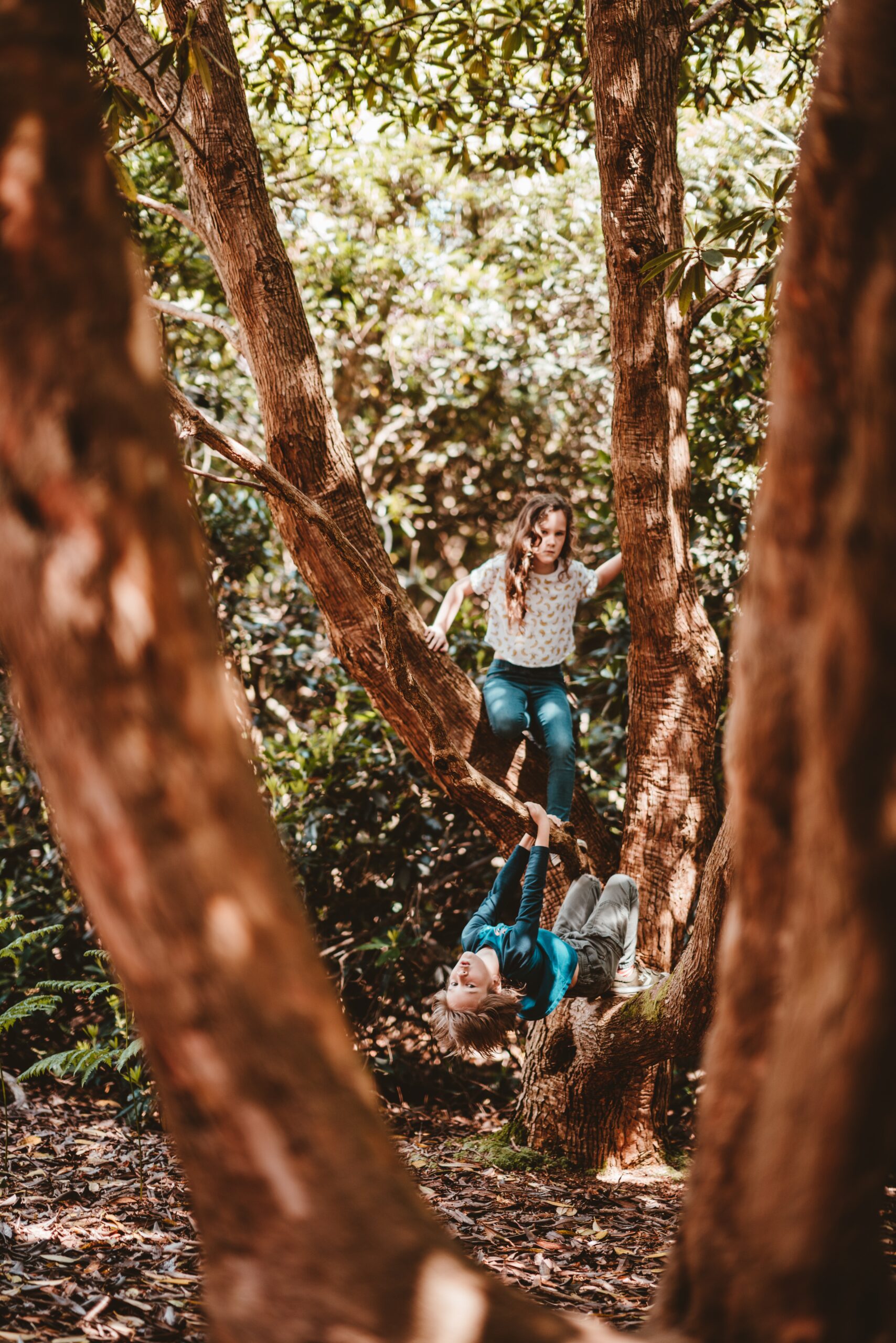
    When talking about appreciating trees, I think of children and my own childhood experience of trees. As a kid when my family went to parks for hiking or to my great grandma’s woods for camping, I could spend hours exploring, hunting, and pretending. When the adults from church played softball on Sunday nights, we kids would play hide-and-seek in the nearby woods and catch jars of lightning bugs, sometimes getting poison ivy and chiggers. Me and my friends would make shelters out of sticks and branches in the woods, pretending to be surviving in the wilderness. I’m sure it wasn’t just me. Children in many parts of the world also see living trees as a place to play, climb, and find shade, protection.

    Not all children are blessed with nearby trees that are living and protected. Trees are also an economic means for survival. Children may be sent out to search far and wide for firewood for the necessities of cooking, boiling water, and staying warm. Communities desperate for income may feel forced to cut the trees around them to sell as timber or for artistic creations to sell at market. Such efforts may not even generate much income. In other cases, communities are becoming more treeless as hungry herds of livestock devour bark and foliage or as large companies clear forests to make way for commodity crops or cattle ranches. As forests get cleared, microclimates change. Tropical soils bake and crack in the sun. When torrential rains come, these barren areas cleared of trees experience devastating floods that wash away soil, crops, livestock, homes, and entire communities.

    We know that deforestation of millions of acres of forest each year is contributing to climate change. Many of us grieve over such suffering and the terrible realities we read and hear about. The future can feel bleak, and many of us younger folks wonder what our future world will look like in 20 and 50 years.

    What can people of faith do in response to the desperate realities of climate change, deforestation, and poverty nearby and in faraway places? I believe the example of Jesus as seen in the Gospels can teach us two important responses: 1) lament, 2) offering our resources and our service out of a deep sense of care.

    First, we can lament. Lament may be unfamiliar in many North American churches and Christian traditions today, and it can be hard work. But lament is a practice we can learn and lean into. When feelings of sadness and guilt fester quietly within us, the end results can be overwhelming, sending us into depression and despair. Not only can we turn to the vast body of Psalms and words of the Old Testament prophets to witness lament, Jesus also shows examples of lament. He wept over Jerusalem, and he called out injustice. Have you ever wept over the losses and destruction to the land you see and hear about? Indeed, lament is cathartic for our souls, but so is public witness. And this public witness gets political, too. Our lament can be an avenue for changing hearts and minds, inspiring advocacy for policies that slow the effects of climate change.

    Praying with words can fall short. Words don’t always come. Rituals—in private, in worship, in public spaces—can also express lament. We have much to learn from Jewish as well as indigenous traditions on how rituals can release sadness, anger, and dismay. As Christians we can also pledge our intent to believe in God’s goodness and care for the Earth. I encourage you and your congregation to explore lament—lamenting over the destruction of the Earth—as a faithful and Biblical act. Be creative.

    After offering lament for the destruction of the Earth and fostering a connection to that destruction, we can take direct action by giving resources and through our service. Direct action, giving and service perhaps feel natural to many Anabaptists. Sure, giving resources and service is exceedingly important, but so is explicitly naming the wrongs done, confessing our complicity, and turning to God who is greater than our human efforts alone. I think a combined commitment is critical.
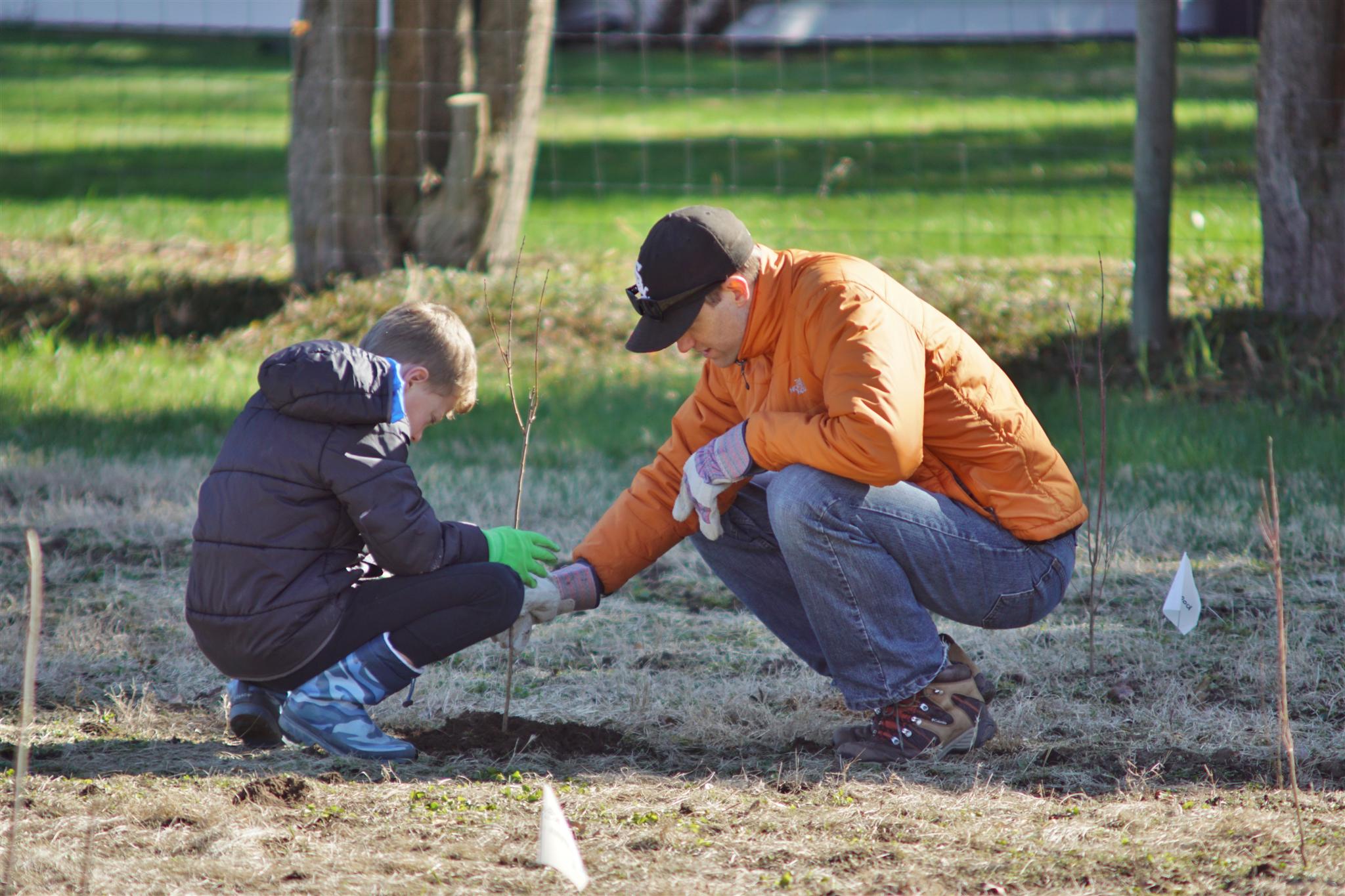
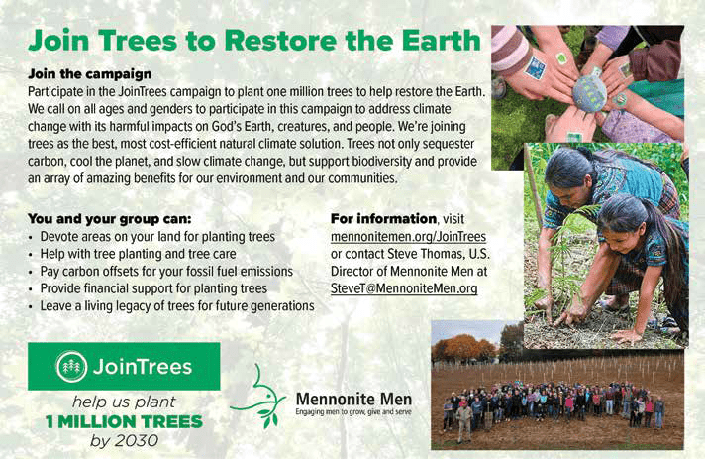
    Mennonite Men’s JoinTrees project to help restore the Earth has a tangible opportunity for individuals, congregations, companies, and groups to take direct action by funding tree planting efforts around the world. Up until now, JoinTrees has enabled the planting of more than 180,000 trees, mostly with Mennonite communities in North and Central America. Recent applications are coming from Anabaptist communities in Benin, Angola, Democratic Republic of Congo as well. Once these new projects get funded, JoinTrees could help facilitate more than 121,000 more trees being planted. Our wider goal is to help plant one million trees by the year 2030.

    In many of these approved JoinTrees projects, resources are needed for more than just the trees themselves—these projects need tree caretakers and supplies to ensure trees get watered and not destroyed by wildlife. Some projects reforest 14-28 hectares and could make huge impacts in communities struggling with deforestation. In some of the project applications, the trees planted will be fruit and nut trees or trees that later could be thinned or trimmed for firewood, thereby reducing pressure to cut down intact forests. Trees can be grown in rows, allowing other crops or even livestock to be raised in between. In short, these projects could be vital to sustaining and inspiring communities, and this bit of hope may catalyze others to follow suit. We need your help to fund such projects.

    I hope and pray you, your congregation, and your contacts will consider engaging JoinTrees and these incredible partners throughout North America and around the world. Consider offering a fundraiser or inviting representatives of Mennonite Men to speak to your congregation or company about JoinTrees. Pray with us. Plant with us. Support us. May you be transformed by the act of tree planting as a form of prayer for peace and new life, a prayer of hope for communities in need, a prayer to the living Christ who is transforming and healing the Earth, one community and one tree at a time.


    Jon Zirkle is a Mennonite Men board member and on the JoinTrees sub-committee. He directs a farmland conservation non-profit called Wood-Land-Lakes RC & D, as well as educational farm Bushelcraft Farm. Prior to this work, Jon was farm manager and an educator at Merry Lea Environmental Learning of Goshen College where he taught college students and helped design a five-acre agroforestry project. Jon is a part-time student at Anabaptist Mennonite Biblical Seminary and part of the Rooted & Grounded conference (September 2023) planning committee. Attending Assembly Mennonite and Southside Fellowship, he and his wife live in Goshen, IN and enjoy their backyard garden, chickens, and fruit trees.

  • Grants approved for 121,000 trees

    Grants approved for 121,000 trees


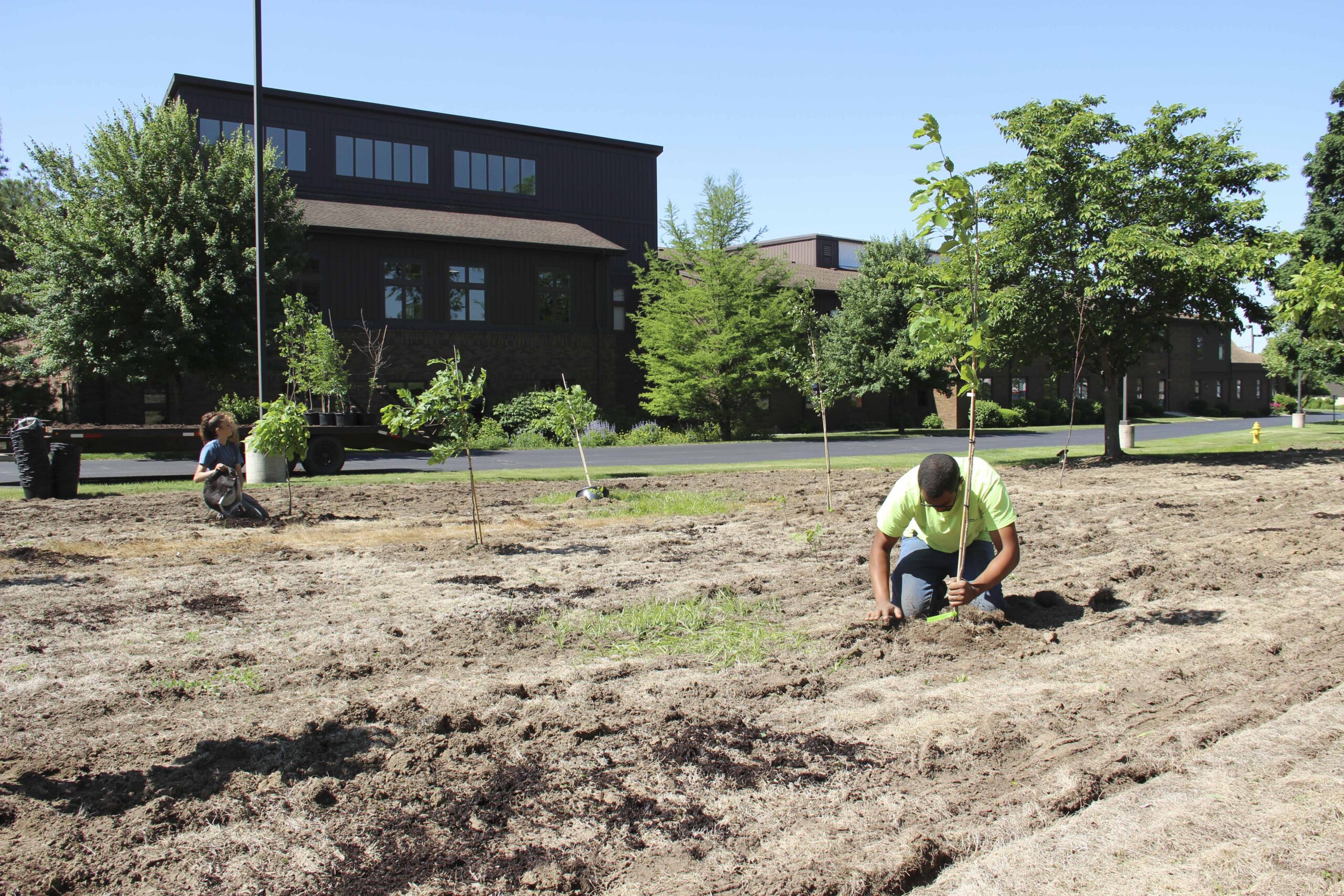
    At its semi-annual meeting, the board of Mennonite Men approved $121,000 for eleven grants to support tree-planting projects.


    Among those receiving grants are two congregations in the U.S.: Blooming Glen (PA) and Harrisonburg (VA) Mennonite Churches. Both projects will reforest areas of these congregational properties.

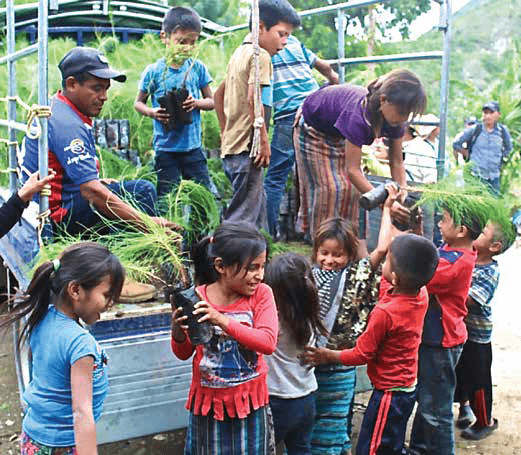
    Nine grants were awarded to Mennonite community projects outside the US: Commune of Allada (Benin), Kalonda Mission (DR Congo), Kwilu Provice (DR Congo), Mpukinsele Village (Angola), Muala Village (Angola), Sambo Communie (Angola), Tshilenge Territory (DR Congo), Quipindi Village (Angola), and Mukedi Community (DR Congo). Most of these international projects will provide seedlings both for long-term reforestation efforts and for short-term economic support of local communities that will learn sustainable forestry practices while earning income from the trees through fruit and charcoal-production (to reduce cutting trees in intact forests).

    Once planted, trees from these 11 projects will bring the JoinTrees project to 301,373 trees planted in total, nearly 1/3 of its goal of one million trees by 2030.

    ‘We weren’t expecting this level of demand for funding of tree-planting projects,’ noted Steve Thomas, U.S. Coordinator of Mennonite Men and a certified arborist. ‘We’re excited there is so much interest, especially internationally. Now we need to get to work raising funds for these important projects.’

    The goal of the project is to plant one million trees by 2030 to help restore God’s Earth. Individuals, congregations, and businesses are invited to contribute to this project with funding or by initiating their own planting projects. Visit mennonitemen.org/jointrees for more details.


  • Trees of Life: Hope for God’s Earth

    Trees of Life: Hope for God’s Earth

    To promote creation care and climate action this spring, we invite your congregation to use these worship resources focusing on trees of life. This is part of our JoinTrees campaign to plant one million trees to help restore God’s Earth.

    The first and last chapters of the Bible feature the “tree of life” as a critical part in the community of God’s creation. While the Christian calendar does not have a special day to celebrate trees, the Jewish calendar does on Tu BiShvat or Tu B’Shevat, a holiday for ecological awareness and planting trees.

    The United States has Arbor Day on the last Friday in April each year. This time in spring is a good opportunity to celebrate and plant trees for creation care and climate action. Trees are the best, most cost-efficient natural climate solution. Trees not only sequester carbon, cool the planet, and slow climate change, but support biodiversity and provide an array of amazing other benefits.

    Please forward this packet of four attachments to pastoral leaders and worship planners to consider for a future service.

    For assistance, please contact Steve Thomas at SteveT@Mennonites.org or 574-202-0048.


    Resources:

    Worship Resource Guide for Trees of Life

    JoinTrees Brochure

    Article: A Forest of Faith by Aaron Kingsley

    Article: God Save the Earth by Steve Thomas


  • 9,000 Trees

    9,000 Trees

    ​An unfolding story, made possible with the vision and support of many, including camp staff Jonathan Fridley and Amy Huser.

    The best time to plant a tree was 20 years ago. The second best time is now. – Chinese proverb

    . . . and the leaves of the trees are for the healing of the nations. – Revelation 22:2


    A number of years ago we entered into a land trade with a neighbor to the north of Camp Friedenswald. In exchange for a portion of land off Union Road (near Round Lake), Camp Friedenswald received 37 acres of land adjacent to Main Camp, just north of the Allan Hill campsite. The trade opened up possibilities, including the chance to steward more of the rare prairie fen habitat, home to the federally endangered Mitchell’s satyr butterfly. We hoped that having more direct access would help us to better steward the land, reduce the flow of chemicals into the wetland, and hopefully increase the butterfly’s chance of survival.


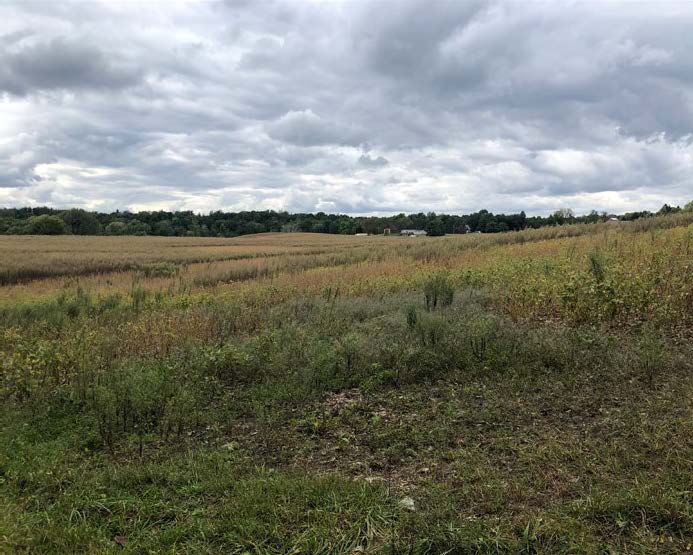
    While one portion of the land is wetland and other is forest, approximately 17 acres of land has been conventionally farmed for decades. In acquiring this land, we knew there was something more that needed to be done – something that would align with our values of sustainability and stewardship and our commitment to the work of repair. After dreaming about possibilities, we decided to transition most of the land from conventional farmland to forest, enrolling the land in the Conservation Reserve Program (CRP), with the goal of increasing habitat for wildlife. Camp will receive financial support for this transition for the next fifteen years.


    We are excited to partner with Mennonite Men in their JoinTrees campaign to plant one million trees by the year 2030 by planting 9,000 trees on this land next spring (2023). This initiative targets climate change by increasing tree and forest cover with the goals to help (1) mitigate global warming, (2) promote climate justice, and (3) sustain biodiversity.


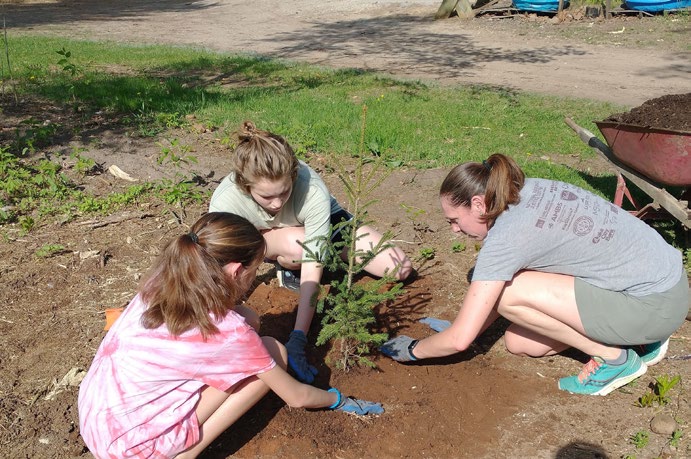
    Photo captions: (Top) A ‘before’ photo taken in fall 2022 of the farmland that is to be converted to forest. (Bottom) In spring 2022, volunteers from Assembly Mennonite Church (Goshen, IN) assisted with planting 50 trees across Camp. Next spring 9,000 trees will be added to that count.


    The trees will consist of a variety of oak, hickory, cherry, and walnut trees, among others, and will be planted with the help of experienced foresters and a few of our own staff. In time, this new forest will aid in sequestering carbon, providing habitat for wildlife and contributing to the overall resilience and health of the natural communities in this area. Someday, campers might even walk under its canopy.


    If the best time to plant a tree was twenty years ago, and the second best time is today, we hope that the third best time will be the spring of 2023. And with each of the 9,000 trees planted, we pour our prayers for the leaves that have yet to unfurl. May the leaves of the trees be for the healing of the nations.


    If you, your congregation, or an organization you’re part of are interested in learning more about the JoinTrees campaign contact Steve Thomas at SteveT@mennonitemen.org or visit mennonitemen.org/jointrees


  • A Forest of Faith: Planting an acre of trees, Indiana congregation adds a second sanctuary

    A Forest of Faith: Planting an acre of trees, Indiana congregation adds a second sanctuary

    ​This article originally appeared in Anabaptist World, August 26, 2022


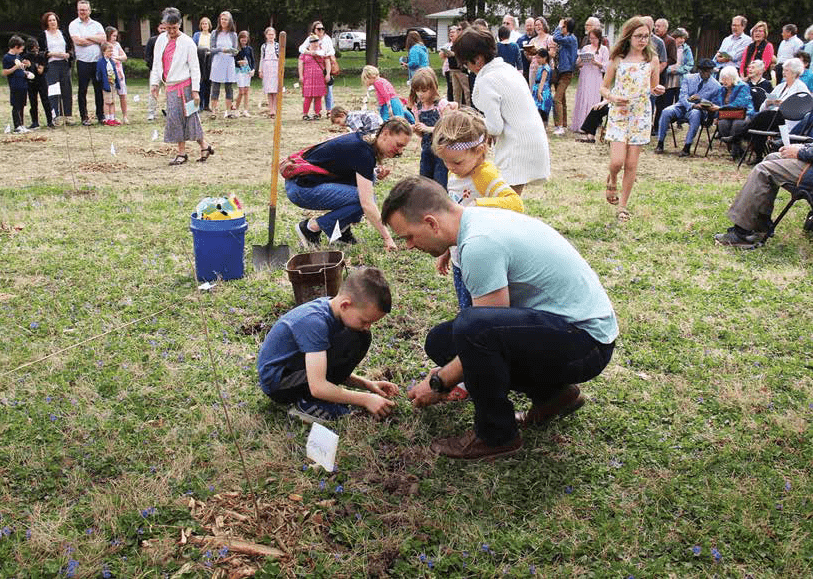
    On Good Friday, congregants and friends of Berkey Avenue Mennonite Fellowship in Goshen, Ind., began planting trees on an acre of land behind the church building. Bare-root seedlings, not more than 2 years old, were placed in the soil. Each vulnerable tree touched a person as it went into the ground. By the end of the Easter weekend, 700 trees, representing 17 species, were in the earth.


    This bit of ground was part of a three-acre plot the church purchased in 2007. Some of it was used to create a large community garden. Another portion was seeded to wildflowers. The back acre was left to be mowed.

    The land is surrounded on two sides by residential development and on a third by farmland.

    At one time, this land must have been farmed, too, along with the rest of the neighborhood. And before that, it would have held forest, wetland and forested wetland.
    And now an acre is being returned to trees.

    Why?

    James Yoder, who attends the church, saw an opportunity. While the garden and wildflowers represent- ed certain aspects of church life and church values, something was missing. A committee to develop a memorial garden plan on the south end of the three-acre space was already in place. But how could the entire space be used as an outdoor sanctuary, consistent with the congregation’s mission of being a welcoming place to its neighbors?
    In 2020, with the onset of the coronavirus pandemic, Berkey Avenue moved worship services outdoors. They felt fortunate to have green space to do this. By August 2021, the congregation decided to create a long- term plan for the entire three acres. They envisioned a memorial garden, outdoor worship space, community garden, wildflower meadow, prayer labyrinth and woods.
    How could the entire space be used as an outdoor sanctuary?

    By the spring of 2022, funds were raised and the Berkey Outdoor Sanctuary Committee formed, led by Ruth Miller Roth, Bryan Heinz and James Yoder, to carry out the plan. Yoder’s role was to give leadership to the woods.

    Site preparation for the memorial garden and outdoor worship space began this summer. The columbarium was scheduled to be delivered in mid-August. By late fall they hope to have everything completed, including connecting paths, plantings and a pergola marking the entrance into the sanctuary space.

    The vision for planting the back acre to trees — reforesting a small portion of land — was a way to act out long- term care and hope. The trees will communicate something about who is welcome. Yoder imagined people in the surrounding neighborhoods would be drawn to the emerging forest as a place to walk and relax or play and explore — a sanctuary from everyday routines.
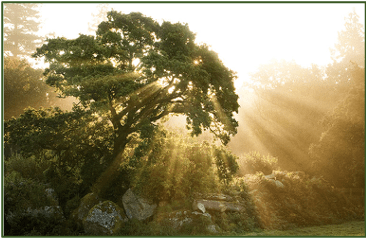
    The woods will take on a broader sanctuary-life as animals are drawn to it. These nonhuman brothers and sisters will find their way back to the land some of their ancestors once inhabited. This ground will become a meeting place for a fuller chorus of the creation, reflecting a more diverse, truer aspect of the Creator.

    Yoder began attending online seminars to learn about reforestation and scaled-up planting. He consulted with Steve Thomas, director of the Men- nonite Men JoinTrees campaign, and Ben Wilson, a district forester, about tree species appropriate for northern Indiana and the space available at the church. He talked with members of the congregation to gauge and engage interest. With a charismatic smile, Yoder helped others to see the rightness of giving some land over to a wooded sanctuary. The vision caught.

    The JoinTrees tree-planting campaign committed funding and expertise. The City of Goshen’s goal to double the tree canopy by 2045 became part of the motivation. The growing awareness of the important role trees play in land stewardship helped the congregation pull together the pieces.

    A planting plan was developed and mapped. Trees were ordered from the Indiana Department of Natural Resources State Nursery. A planting date was selected, and the word was spread. The ground was prepared, and a spot for each tree was marked with a flag identifying the species.

    The Sunday before planting, Yoder encouraged fellow attenders to consider planting a tree as a symbol of hope and resurrection.

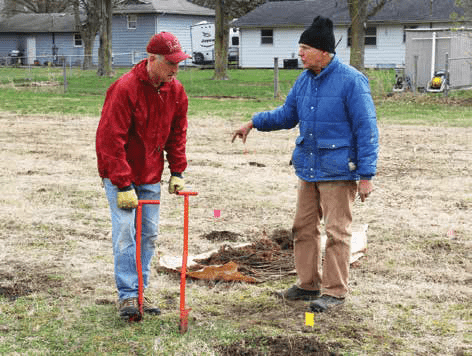
    On Good Friday, lots of people showed up with shovels and hand augers. There were demonstrations of proper planting: correct depth, making sure roots are respected. Crews were organized, family groups were instructed, and trees were planted.

    By the time I arrived shortly after noon, Yoder needed to slow things down to make sure there were enough trees for the youth group to plant the following day. Indeed, by Easter, a small forest was planted.

    Any planting requires faith. It takes work and maintenance. But, as anyone who has planted a garden knows, there is only so much a person can do. The actual growing is up to the intricacies of germination, nutrition, photosynthesis, cell division, molecu- lar biology — things that merge toward mystery, where control is relinquished.

    When a church plants trees — or anything — it is a signal of living faith. It is demonstrating a release of control (fertilizer, irrigation, mowing) and acting on trust that the Earth is capable of beauty, growth and grandeur well beyond human design.

    When a church surrounds itself with trees, it is giving time and space to something much larger than itself in an act of faith that God’s good Earth is exactly that — God’s and good.

    Trees are an expression of a tithe, or even jubilee — the idea that land should return to its original owner or state. When trees are present, we put aside ideas of practical use, optimal efficiency, maximum productivity. We content ourselves with a slow unfurling of bounty, which can test our faith and strengthen our trust.

    Deepened trust is good for all of us.


    Aaron Kingsley is director of the City of Goshen’s Department of Environmental Resilience and the city forester. He lives in Goshen with his wife and three children. This article is expanded from an article first published in The Goshen News.


  • My prayer: God save the Earth

    My prayer: God save the Earth

    This article first appeared in the August 26, 2022 issue of Anabaptist World.


    To cool the planet, plant a tree. Together we can plant a million.


    As a child, I loved being in nature. While I don’t recall what I noticed one day, I remember feeling
    worried. I wrote a message, placed it in a corked bottle and floated it down the creek.

    My message?

    “God save the Earth.”

    As climate change worsens, many people make this prayer. I now realize, however, that God doesn’t answer prayers like this while we stand by and wait. God answers our prayers with our cooperation.

    As St. Teresa of Avila said, “Christ has no body now but yours. No hands, no feet on Earth but yours.”

    God wants to cooperate with our own actions to answer our prayers. Yes, we may pray, but we must act. And now.

    We see in the news people suffering the loss of their homes, food supply or clean water. All of this is projected to worsen as extreme heat, storms,
    flooding, fires and droughts increase in frequency and intensity with climate change.

    The last report of the United Nations’ Intergovernmental Panel on Climate Change is disheartening. It finds climate change is widespread, rapid and intensifying. These changes will lead to humanitarian crises — food in- security, scarce resources, health issues and other population stresses.

    And, according to last year’s report of the National Security, Military and Intelligence Panel on Climate Change, these conditions will contribute to political insecurity — increasing conflicts, violence and mass migrations.

    As followers of Jesus, we must respond. But we often don’t act until we experience the problem or feel the heat.

    In Indiana, I’m rather insulated from these impacts. What really gets my attention is our grandchild, Lily.

    Around the time of her birth, I read in The New Yorker: “If you’re younger than 60, you have a good chance of witnessing the radical destabilization of life on Earth — massive crop failures, apocalyptic fires, imploding economies, epic flooding, hundreds of millions of refugees fleeing regions made uninhabitable by extreme heat or permanent drought. If you’re under 30, you’re all but guaranteed to witness it.”

    I worry about our grandchildren and all God’s creatures. I imagine our grandchildren asking two questions about climate change: “Did you know? What did you do?” I hope to answer with, “Yes, I knew about global warming, and here’s what we did about it…”

    I’m worried, but hopeful enough to act.

    What can we do? We must use less fossil fuel, turn to renewable energy and adjust our diet, to name a few ac- tions. Protecting forests and planting trees are also among the most critical actions we must take.

    As the best means to sequester carbon dioxide, trees are the most essential natural solution to mitigate global warming. With their unparalleled capacity to capture and store carbon, protecting and increasing tree cover are front-line actions to mitigate catastrophic climate change.

    And yet, global tree-cover loss continues at a rate of 11.6 million acres per year, adding to the 46% loss of the Earth’s tree cover since humans began clearing land and logging.

    Annual per capita wood consump- tion in the United States is 640 pounds — equal to a white pine tree 43 feet tall, one foot in diameter. With decreasing forest cover and increasing carbon emissions, rising temperatures will continue to create greater crises.

    Mennonite Men, the men’s organization of Mennonite Church USA and Mennonite Church Canada, is responding to this global crisis with our JoinTrees campaign to plant one million trees.

    The campaign is rooted in biblical wisdom and scientific knowledge, with the aim to restore the Earth.

    The first and last chapters of the Bible feature trees of life, revealing their importance in God’s design for the Earth. The woodland garden of Eden in Genesis represents what its Creator intended on Earth: beauty, biodiversity and abundance, where trees give life with God. The last chapter of Revelation presents the tree of life again as a central part of the new Earth for healing.

    In Genesis 2:15 we read that God put the human creature in the garden to serve and protect it as its steward. This stewardship includes planting, tending and protecting trees so they may serve their critical role in the ecology of God’s creation.

    A Jewish midrash (ancient commentary on Scripture) says that after God made the first human, God led him around all the trees of the Garden of Eden and said, “See my works, how beautiful and praiseworthy they are. Be careful not to spoil or destroy my world, for if you do, there will be nobody after you to repair it.”

    Ancient wisdom recognized the importance of trees, as does modern science. Trees have benefits far beyond beauty, shade, wood and food.

    Trees capture and store carbon, cool the planet and moderate the climate. Trees improve water and air quality and stabilize soil. Trees support biodiversity, which is endangered, by providing food and shelter.

    Trees reduce storm water runoff, cool urban heat centers and curb energy use. Trees promote commu- nity interaction and reduce aggres- sion and crime. Trees have personal health benefits.

    Trees provide a great return on investment. According to iTree (based on USDA Forest Service research), each $1 invested in urban trees returns $3.93 in Goshen, Ind., $6.09 in Indianapolis and $5.80 in New York City.

    While all these benefits are significant, our JoinTrees campaign focuses on establishing trees as a natural solution to mitigate global warming. The campaign involves planting trees on private, business and church properties, marginal farmland set aside for afforestation, public rights-of-way and interna- tional projects.

    We especially focus on large-scale tree planting and agroforestry in the Global South, where trees have the greatest impact to cool the planet, restore degraded land and support vulnerable populations.

    We call on communities of faith to participate in JoinTrees. People can:
    • Plant trees and report these to us.
    • Devote land for afforestation projects.
    • Help with planting and caring for trees.
    • Provide financial support for planting trees.
    • Make carbon-offset contributions to JoinTrees.
    People are looking for ways to be carbon-neutral or carbon-positive for the good of God’s Earth and future generations. Individuals, churches, schools and businesses can calculate their carbon use with the Center for Sustainable Climate Solutions’ Carbon Tax Calculator (sustainableclimatesolutions.org/carbon-tax-calculator-full) and submit carbon-offset contributions for large-scale tree projects to JoinTrees. For this and to participate in this campaign, go to mennonitemen.org/jointrees.

    Thanks to strong participation and support, since our campaign began in 2020, nearly 90,000 trees have been planted or funded. And we have pro- posals to plant at least 34,000 more trees in our next grant cycle.
    Let’s take action with God to answer prayers to save the Earth. Let’s do our part for a healthy, thriving planet.


    Steve Thomas is the U.S. director for Mennonite Men. A certified arborist and graduate student in urban forestry, he is coordinating the JoinTrees campaign to plant one million trees with the larger church.


  • New Life at Living Light of Peace

    New Life at Living Light of Peace


    An idea germinated within our congregation when we received a newsletter from Mennonite Men highlighting their JoinTrees campaign with a goal of planting 1 million trees by 2030. That spring challenge came about the same time that our congregation began our annual search for someone to mow our 1.5 acres consisting of mostly weeds. And it came as the reality of climate change hit closer to home with increasing temperatures and wildfires consuming entire neighborhoods in nearby cities. We wondered if our congregation could use our small plot of land to benefit our community.

    Our pastor reached out for more information from the US Coordinator of Mennonite Men, Steve Thomas. Steve encouraged us to be in contact with local experts to determine what trees would grow best in our Colorado climate. He suggested also planting a variety of climate-appropriate shrubs and flowers. And he reminded us that volunteers from the community are often available to help with a new project.


    We began to envision how our 1.5 acres could be an oasis in our Denver suburb of Arvada. We used our monthly potlucks as forums for brainstorming: planting trees, wildflowers and herbs, installing beehives, expanding our current community garden, creating walkways, maybe even developing a solar farm. Instead of an annual headache, our yard became a source of dreams.


    Of course there were voices of caution. We’re a small, older congregation. Do we have the energy to take on an ambitious project? Who will do the initial work and who will provide continuing care? As it turned out, the experts and the volunteers we needed were already onsite!


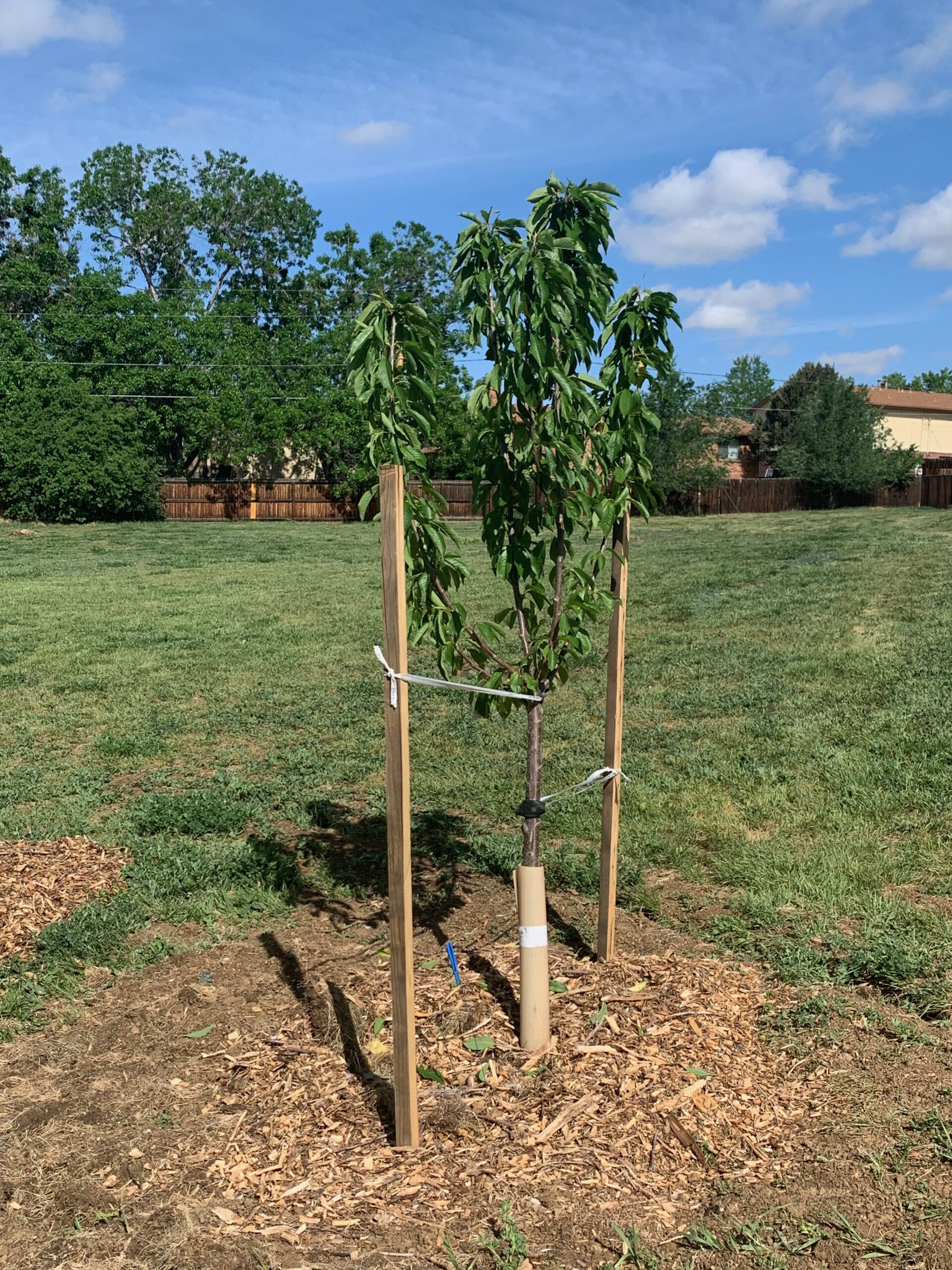
    For many years there has been a community garden managed by Denver Urban Gardens (DUG) on a portion of our land. We learned that they were eager to expand that garden with their Food Forest Initiative.** Staff members facilitated a neighborhood meeting, complete with a translator, for our mostly Russian and Ukrainian neighbors. Many of these families already have plots in our community garden. We learned that they especially wanted sour cherry trees. Last spring DUG volunteers planted twenty trees and assorted bushes adjacent to the garden. They are providing the initial care for the trees and have identified volunteers in the neighborhood for continuing care. In a few years our orchard will provide our neighbors with apples, peaches, pears, and hazelnuts in addition to sour cherries. Any extra produce will be donated to the local food bank and a nearby day shelter.


    We are happy to add our first twenty trees to the 90,000 that Mennonite Men will have planted by the end of this year, on their way to 1 million by 2030. And this is only the beginning of our land transformation! We still have room for wildflowers, herbs, beehives, and more trees. Hopefully, each year will bring an expansion of climate-friendly uses.


    For more information about the JoinTrees program of Mennonite Men, visit https://mennonitemen.org/jointrees.


  • Local farmers participate in huge reforestation project in Guatemala

    Local farmers participate in huge reforestation project in Guatemala

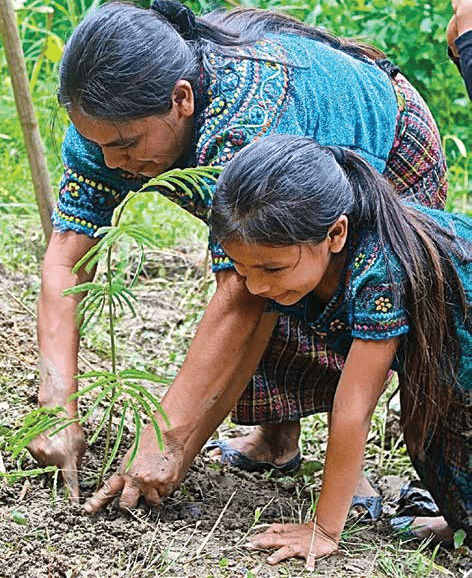
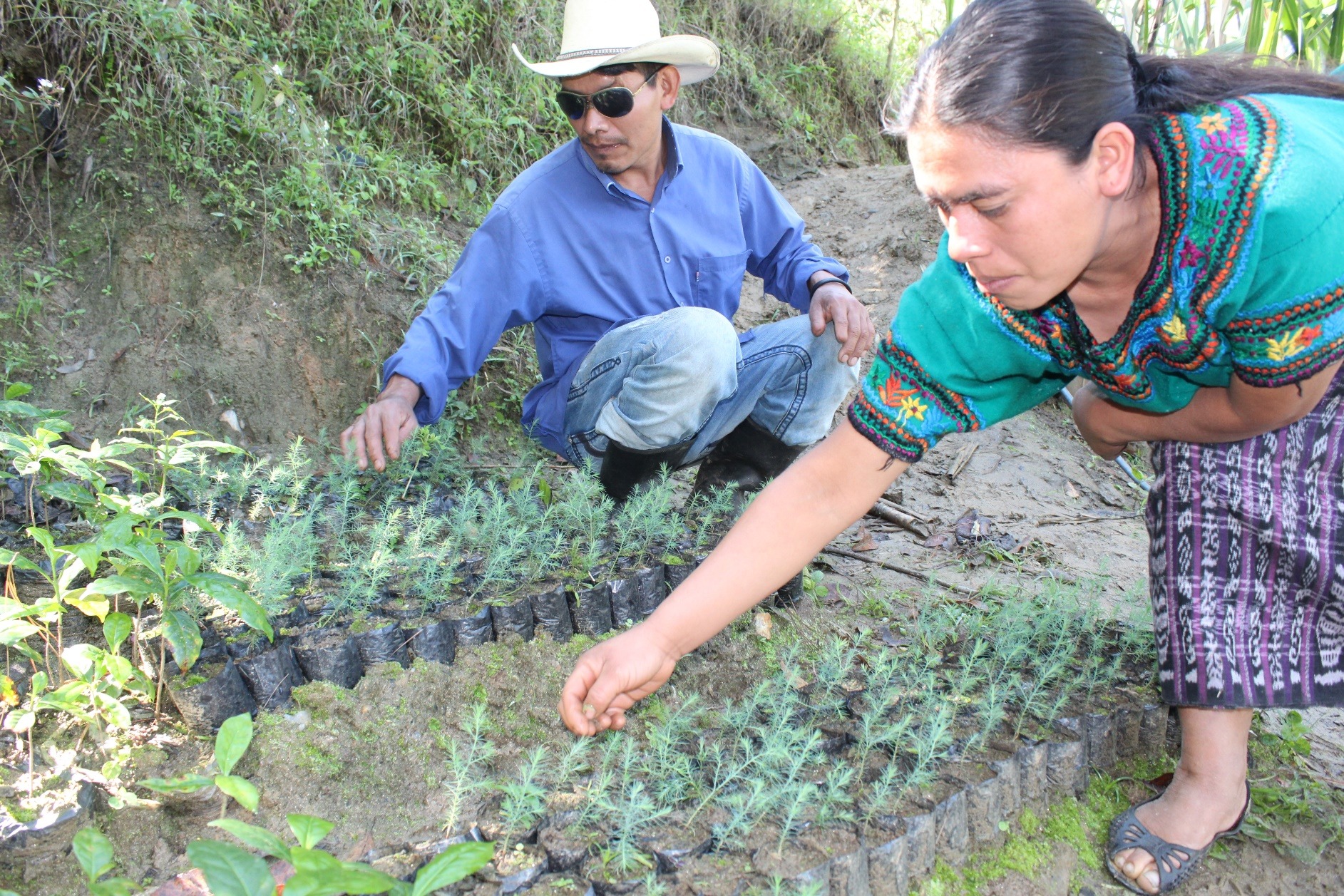
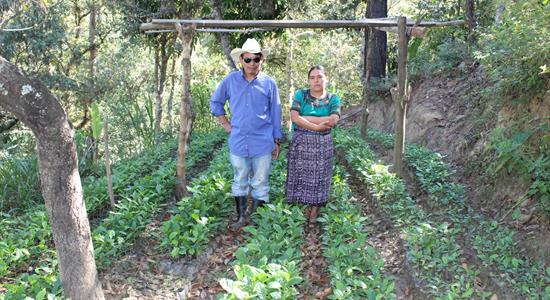
    Don Antonio and Doña Hermelinda are farmers from the village of Patzocon, in Baja Verapaz, Guatemala. Antonio, 45 years old, and his wife Hermelinda, 37 years old, have created a farm` growing a wide diversity of crops which gives them food for their daily consumption. They are the father and mother of 5 children for whom they have been able to provide care through their hard work. Their goal has been that their children do not grow up in the same conditions of scarcity in which they lived years ago.

    Don Antonio is the oldest of his siblings. He only remembers growing up with his mother, since his father died when he was just four years old. He remembers that his mother did not have the economic resources to allow him to go to school, although his greatest desire when he was a child was to study.


    At the age of 7, he helped with the chores around the house, and on some days he worked as a day laborer in the corn fields of the neighbors’ farms near his home. When Antonio reached the age of 9 years, he had to begin migrating to work in the coffee plantations of the south coast of Guatemala to be able to help support his mother and younger siblings. His job consisted of using a machete to cut the weeds around the coffee trees, and in the months of the coffee harvest he picked coffee. In addition, he was entrusted with other jobs such as fertilizing the coffee trees and cutting pacaya (an edible palm). For 10 years he made regular trips to the coffee plantations, his only company being the group of day laborers from his own community. He mentions with a discouraged voice ‘going to the coffee plantations was good because one got to know other places, but at the same time, one hardly earned anything, one always ate very little and we didn’t sleep well…. The salary was not fair, because the plantation owners only paid what they wanted to pay you’. However, Antonio is more encouraged now because he and his wife can work their own improved farm growing a diversity of crops. This has permitted them to be able to experiment with the planting of a wide variety of vegetables, grains and fruits which has improved the profitability for their family farm. Additionally, because he doesn’t need to migrate to the plantations for work, he has more time to be with his family.


    However, Don Antonio and Doña Hermelinda face a problem that plagues their community: the deforestation of the forests that surround their village of Patzocón. For several years, the commercialization of wood has been a means of subsistence for many local families, who have no other cash income for their necessities. However, the logging problem increased drastically when a new access road was built, which made illegal logging by companies much easier. Antonio and Hermelinda expressed concern that they see that the streams where there used to be sufficient water have now diminished considerably, to the point that in the dry season, some water sources have dried up completely. This situation has affected many of the crops on their farm, including the corn and beans, because they used the water from these streams for a miniirrigation system. Antonio continues to grow some sugar cane to make panela, using a traditional method taught him by his grandfather. It is a special brown sugar used to sweeten coffee and other drinks. For years they have used the streams of the village to supply water to the sugarcane. However, now he is planting less sugarcane due to the lack of water. Selling the various sweets that they made from sugarcane in the local markets has been a source of cash income for the family.
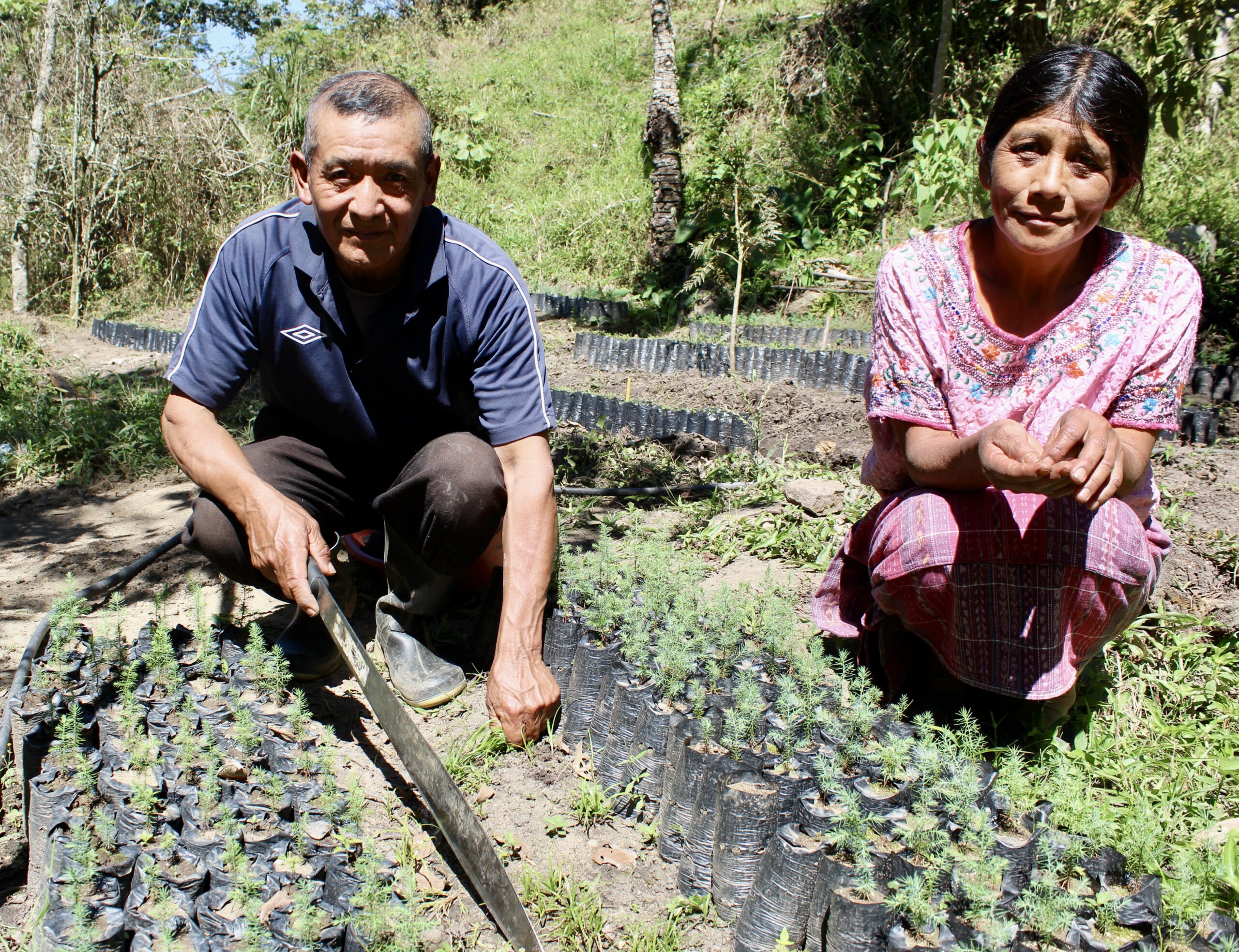

    In early 2022, Don ‘Tono’, as he is affectionately called in his village, together with Doña Hermelinda and their children, created a forest tree nursery to replant the deforested areas surrounding their community. This year they intended to plant 5,000 forest trees of different varieties, among them: cypress, jacaranda, cuje, and pine. With the participation of their neighbors, the technical assistance of the Baja Verapaz Program, and the collaboration of EPIC and Mennonite Men, they are working to achieve their goal of rebuilding the plant life and ecosystem of their village. They state that the fruit of what they are now cultivating will be seen in the future, benefiting their children and grandchildren who will be able to take advantage of the effort they are making today.


    The work of Don Antonio and Doña Hermelinda is only part of the reforestation project being organized by EPIC and the Baja Verapaz Sustainable Agriculture Health Education Program. Their goal for this year was to plant 20,000 trees with assistance from a JoinTrees grant from Mennonite Men. Epic recently reported that they were able to greatly exceed this goal by planting 35,385 trees this year, with the help of local communities and families.


  • Guatemalan Couple contribute to reforestation

    Guatemalan Couple contribute to reforestation

    JoinTrees has formed a partnership with the Guatemalan non-profit FUNDAMARCOS, legalized 1996. The Baja Verapaz Sustainable Agriculture and Health Education Program of FUNDAMARCOS has taken on the commitment to plant 20,000 forest trees in cooperation with Mennonite Men-JoinTrees. Because of this program’s excellent track record of working in reforestation, a regional government nursery will provide 10,000 small trees (2+ feet tall) for the project.

    To arrive at the goal of planting 20,000 trees, the Baja Verapaz Program has recruited two families who will each grow 5,000 trees from seed in tree nurseries on their farms. These two families have been selected for their leadership in their communities, which will be essential for organizing the members of their communities to actually carry the small trees to the mountainsides, dig the holes, and plant the trees at the beginning of the rainy season, a busy time for farmers but important for the long-term success of the transplanted trees.

    The following stories describe one of these couples. Join Trees pays for all the motivation, organization, and instruction involved between a tree seed and getting 20,000 small trees planted on the hillsides of Cubulco, a deforested mountainous region of Guatemala. It also pays the transportation costs of taking trees from the government nursery and distributing them in many remote villages.

    Armando Tomás, Baja Verapaz Program director, interviewed Miguel and Manuela for these personal stories. Click the link below to read more about Manuela and Miguel

    Manuela Avila Velasquez

    Miguel Rodriguez Hernandez


  • Planting for an Outdoor Sanctuary

    Planting for an Outdoor Sanctuary

    ​The JoinTrees project of Taftsville Chapel Mennonite Fellowship


    On May 7th, Green Up Day Vermont, members of Taftsville Chapel Mennonite Fellowship in Taftsville, Vermont turned out for a tree planting project on church grounds, transforming lawn into an edible forest garden. Thirty fruit and nut trees and shrubs were planted on this initial work day plus a row of raspberries. Mennonite Men’s Join Trees initiative supported the project with a grant which provided a financial contribution towards each tree planted. Additional grant support was awarded from the Green Mustard Seed Fund administered by the Mennonite Creation Care Network. Without a line item in the annual church budget, grant funding was critical to bring vision to reality.


    Taftsville Chapel had established 4 permaculture gardens in 2017 (shade garden, pollinator garden, apple guild, and blueberry row) and were thinking about expanding when they heard about the JoinTrees project. A focus group from the congregation was engaged with Andrew Hudson, an AMBS divinity student and intern with JoinTrees, around how churches relate to land. Conversations with Andrew were thought provoking and evoked desires around the church land.

    ‘We saw an opportunity to rewild our property with native plantings that provide hospitality to all God’s creation, human and other species alike,’ reports Heather Wolfe, the church’s creation care liaison. ‘Less lawn means less mowing. More native plants mean more habitat and food. Planting a mini orchard of fruit and nuts will create an edible forest garden that honors what the land wants to naturally be while providing sustenance so all creation can flourish,’ she adds.

    At the same time as the congregation became aware of the JoinTrees initiative, they also learned of the Rewild Vermont campaign sponsored by 350Vermont to plant 100 thousand trees across their state by the end of this year. With their one tree planting project, Taftsville Chapel was able to participate in both JoinTrees and Rewild Vermont initiatives. As a result of the forest garden expansion, Taftsville Chapel has applied to be part of the Sacred Grounds program

    through the National Wildlife Federation (NWF). Earlier this spring they became a certified wildlife habitat through the NWF. As part of this designation the children helped to install a birdhouse on the church land for Earth month and are delighted that a bluebird is nesting in it! The newly planted trees and shrubs are largely native plants that will provide food, cover, and places to raise young for wildlife.


    The way the planting area was designed, as the trees grow, the space will increasingly feel like an outdoor sanctuary. Taftsville Chapel also hopes that neighbors will feel welcome to come enjoy this green space within the residential hamlet. They have added a picnic table and bench to encourage human visitors to stop and enjoy the space, to be still and know God the Creator by immersing themselves in creation.


    The JoinTrees campaign of Mennonite Men aims to target climate change by planting one million trees by 2030. Learn more about the campaign and grants available at mennonitemen.org/jointrees or send a report and photos of your own tree planting project to info@mennonitemen.org. The vision of the JoinTrees campaign is a healthy, thriving planet where God’s abundant life of shalom is enjoyed by all from generation to generation.