Category: JoinTrees

  • Tree Planting is Climate Action to Protect our Planet

    Tree Planting is Climate Action to Protect our Planet

    Our JoinTrees campaign targets climate change, an existential threat to life on our planet. By increasing tree and forest cover, one of our goals with tree planting is to help mitigate global warming.

    Does “existential threat to life” overstate the problem? Not according to what is happening on our planet.

    The Intergovernmental Panel on Climate Change (IPCC) of the United Nations finds that climate change is widespread, rapid, and intensifying, with increasing temperatures, forest fires, hurricanes, sea levels, drought, and desertification around the world.

    The report documents that human-induced climate change is already affecting every region across the globe and that approximately 3.3 to 3.6 billion people live in contexts highly vulnerable to climate change. Vulnerable populations who contributed the least to emissions are disproportionately affected by this environmental injustice. The report projects that global warming is likely to exceed the threshold of 1.5°C in the near term (around 2030–2035) across almost all considered scenarios, increasing the risk of abrupt and potentially irreversible changes in Earth systems. Once past this tipping point, there is an elevated risk of abrupt ice sheet loss, large-scale forest dieback, and other dire natural disasters that will accelerate suffering for most forms of life.*

    These environmental changes will lead to humanitarian crises, with food insecurity, scarce resources, health issues, and other population stresses. The National Security, Military, and Intelligence Panel on Climate Change in Washington, D.C., and other security analyses project that these conditions, together with population growth, will contribute to political insecurity, with increasing conflicts, violence, and mass migrations as desperate conditions prompt desperate reactions. Just within the United States, the Fifth National Climate Assessment reports that the U.S. now experiences, on average, a billion-dollar weather or climate disaster every three weeks. Add to all this the loss of biodiversity and the increasing rate of species extinction. All of God’s community of creation is truly threatened.

    To counter these threats, we need a range of solutions to reduce greenhouse gas emissions, especially reducing the use of fossil fuels and consuming less meat (which drives forest conversion to agriculture). At the top of natural solutions is protecting forests and planting trees. In a study of 21 distinct natural climate solutions in the United States to increase carbon storage and avoid greenhouse gas emissions, reforestation had the single largest maximum mitigation potential. Other studies have also found that restoration of trees and forests is among the most effective, if not the best, means to help draw down CO₂, slow global warming, and thereby mitigate climate change, because in terrestrial ecosystems, trees account for most of the carbon capture and long-term storage.

    Recognizing the role of trees in moderating climate, protecting forests and planting trees are critical—especially to offset continuing deforestation, the second-largest source of climate-warming CO₂, second only to emissions from burning fossil fuels. Since humans began cutting forests, the number of trees on Earth has fallen by about 46 percent. While the rate of forest loss has slowed significantly, global assessments still estimate net forest loss on the order of millions of acres per year. According to recent UN forest resource assessments, the world’s net forest loss is roughly 10 million acres—or nearly 16,000 square miles—per year. What is especially alarming is that some tropical forests that were once a major carbon sink have become a net source of CO₂ in the atmosphere, as they are lost from harvesting and conversion to agriculture to produce beef, soybeans, and palm oil. This contributes to drought, insect infestation, and fires, all of which reduce forest biomass and weaken hydrologic cycles, atmospheric cooling, and carbon sequestration.

    Considering what trees do to protect our planet, many forest restoration programs and tree-planting campaigns have been undertaken around the world.

    Within Mennonite Church USA, JoinTrees is our tree-planting campaign to protect God’s Earth and the community of creation.

    We are roughly one-third of the way toward reaching our goal of planting one million trees. We are grateful for the support we receive to fund and carry out our projects with local communities in the United States and seven other countries. Individuals, congregations, organizations, and businesses make JoinTrees possible.

    Some supporters who pay attention to their carbon footprint and seek to make offsets with contributions to JoinTrees are interested in knowing the actual values of tree-planting projects. To help us with this, the Economics of Sustainability class, led by Professor Jerrell Ross Richer, with the assistance of Bill Minter at Goshen College, will calculate the environmental and economic values of some of our projects. We will report on this in a future issue of Engage.

    Look for an announcement of our next tree-planting projects with Mennonite partners, and partner with us as we seek to do our part to protect our planet and God’s community of creation.

    *Read the latest climate reports:
    Fifth National Climate Assessment (2023) and Intergovernmental Panel on Climate Change (2023)


  • Working Together for Creation Care

    Working Together for Creation Care

    Collaboration among organizations brought energy and encouragement to potentially challenging ecological work on the Mennonite Central Committee campus in Akron, PA.

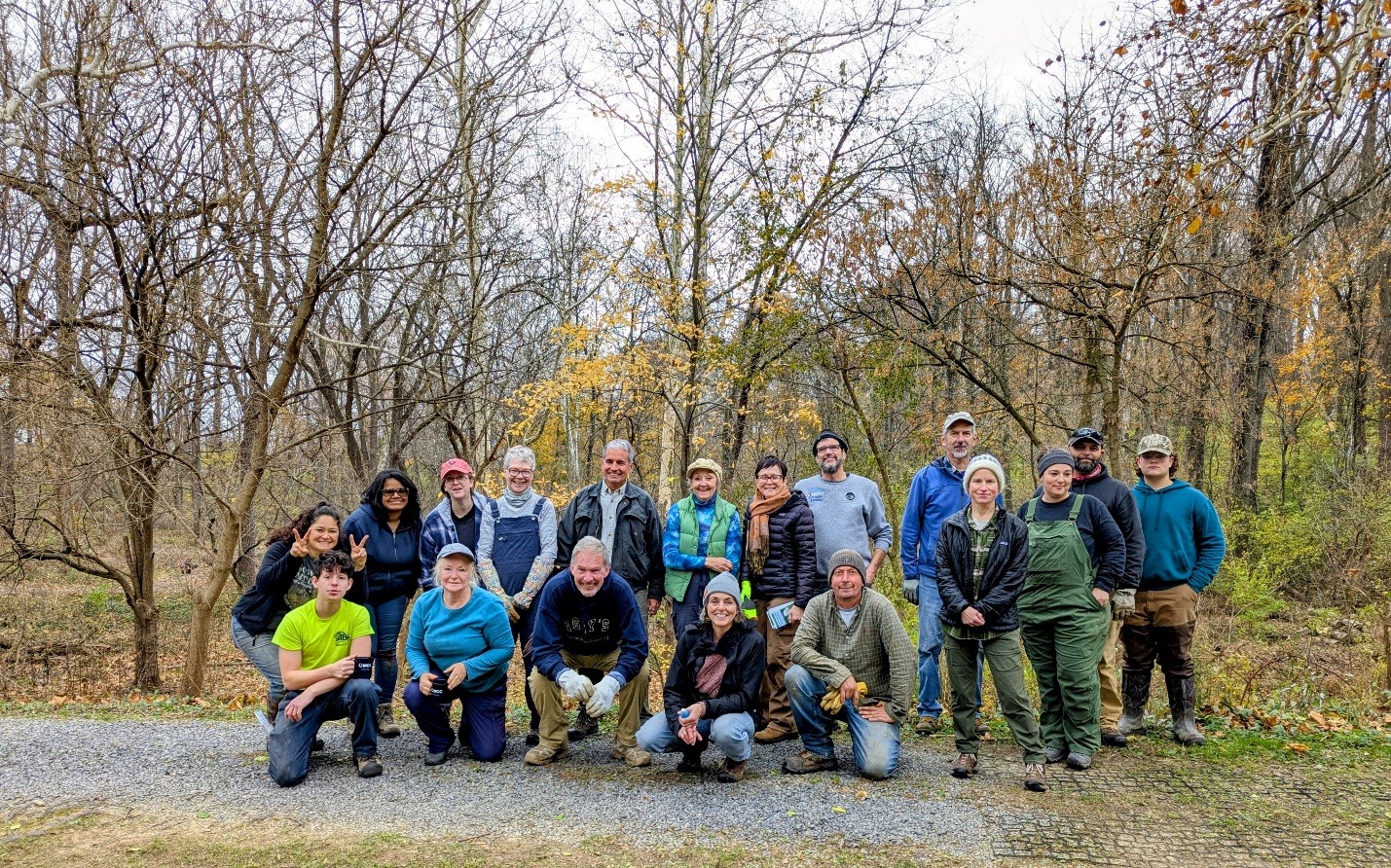
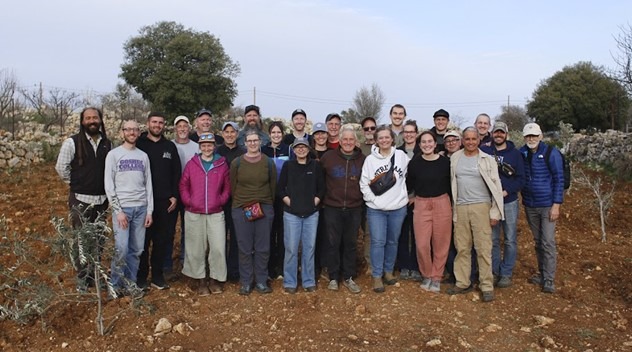
    MCC partnered with Mennonite Men and the nonprofit Let’s Go 1-2-3 for a creation care event in mid-November. A group of 20 people gathered to learn from two experts on the topic of woodland restoration and invasive plant removal using the MCC Akron campus woodland as a model. The weather was beautiful, and spirits were high.


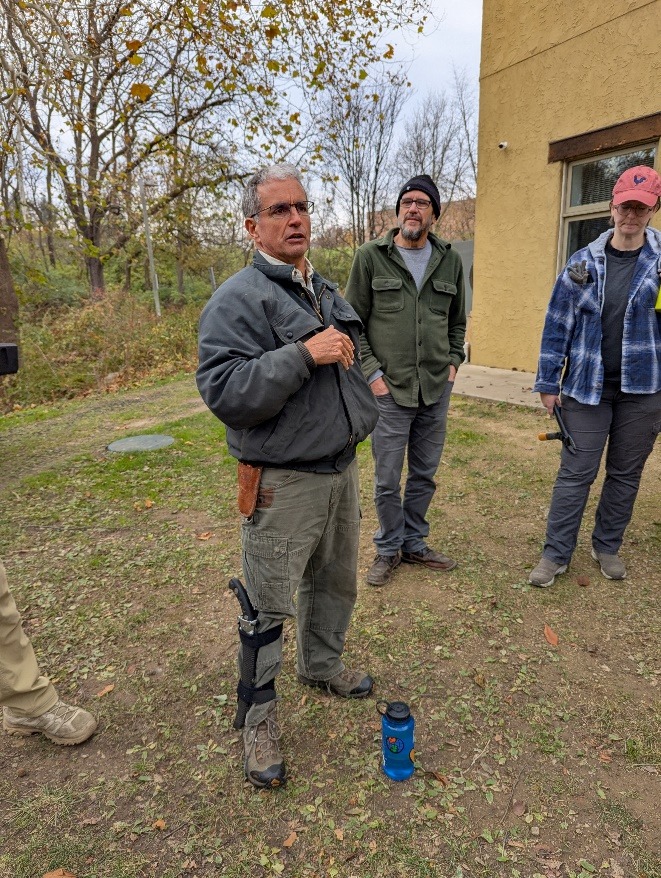
    Thomas, an urban forestry liaison in Goshen, Indiana, and co-director of Mennonite Men, represented the group and their work around the globe. Steve had been in communication with MCC since 2022 concerning the many invasive plants that had taken over the rear woodland and how our organizations can partner to educate the greater community on the topic of woodland restoration. Woodlands play a significant role in the health of the ecosystems in the Northeast.

    Lydia Martin represented Let’s Go 1-2-3, a small nonprofit in southeastern Pennsylvania, whose mission is to encourage youth and families in Philadelphia and Lancaster to participate in outdoor and nature-based experiences with a goal of long-term connection to the natural environment. Their programing and education are free in order to help remove barriers to outdoor experiences. Lydia and her husband Doug own Hidden Valley, a 7-acre restored woodland, wetland and meadow in southern Lancaster County which has been a labor of love and model of wildlife habitat restoration for the past 15 years. Lydia also served with various conservation organizations and currently serves as an ecological design consultant for MCC’s grounds as needed.

    After networking and donuts on the MCC Veranda, both leaders shared information on the work of their respective organizations. The group then moved down to the woodland to learn to identify the main invasive plants choking the MCC woods: multiflora rose, shrub honeysuckle, Oriental bittersweet vine and English ivy. Techniques for removal were shared with the group.

    In 2022, MCC received a grant from the Lancaster Sierra Club through the Huplits Foundation to remove much of the larger invasive multiflora rose, shrub honeysuckle, and Asian bittersweet vine, some of which were 8 feet tall. While native canopy trees like sycamore and black walnut were still standing strong, the rest of the area, including wetland, had been choked out by these three species.

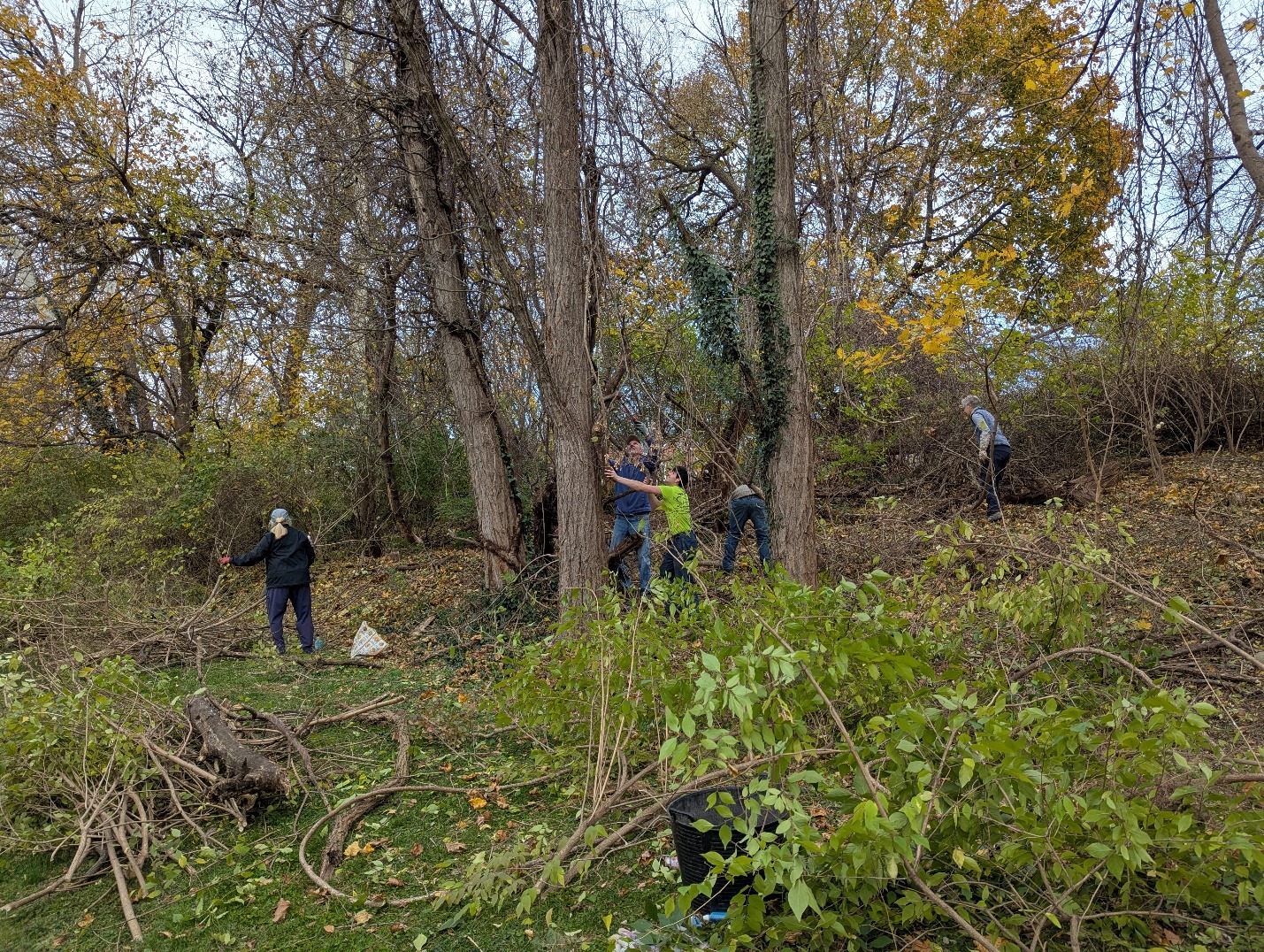
    Now several years later, smaller invasive shrubs which were previously missed, began being cleared out by groups of chatting volunteers, opening more areas for native tree replacements and overseeding. Clipping these small shrubs off at the base and dabbing the fresh cut with a focused herbicide in the fall removes the invasive plant while not disturbing the surrounding ground.

    While woodland work can be daunting, participants were reminded again of the satisfaction of bringing ecological health to an area like this one. Visitors from all over the world walk the MCC woodland loop yearly. Each person who walks through the woodland experiences a bit of transformation. Each of the participants involved in the November creation care event will take what they learned on the MCC campus back to the land they are stewarding personally, as well as teach others.

    Tannis Hudock, a 16-year-old who participated with his parents, took the skills he learned as well as the free dauber offered to participants at the end of the event, and immediately began removing invasive plants on his grandparents’ woodlot. His father Tyler, who manages large acreage on a local wildlife refuge, was interested in the techniques applied to small lots while offering advice on setting up wildlife cameras to observe the animals and birds making use of the area. Other participants learned skills and inspiration to apply to other local projects, including the Akron Mennonite Church’s Nature Preserve and the Lancaster Cemetery project in the city of Lancaster.


    During the summer, the MCC woodland is full of native annual jewelweed which often grows 5-6 feet tall. It fills the woods with a jungle. Hummingbirds drink from its impatiens-like flower, kids enjoy watching the seed propelled through the air, and adults love learning how jewelweed soothes poison ivy reactions. By mid-November, jewelweed dies back, opening the structure of the woodland once again. The plants not native to this region stand out in late fall as they often keep their leaves longer than native species. These invasive plants are easy to spot and remove in October and November, and the leaf drop makes it easier to move through vegetation. Birds are not nesting, and poison ivy is mostly dormant. Interestingly, most plants identified as invasive (from other ecosystems) will also send out green leaves a month earlier in the spring than the indigenous species on the East Coast. To learn more about invasive species in your state, visit U.S. Invasive Species | National Invasive Species Information Center https://share.google/CxQK6201NuUAiaQtt.

    Native replacements will continue to be planted to fill in and add biodiversity. Since much of the area is wetland, black gum trees and white swamp oak were selected as the main replacement canopy trees. Serviceberries and pawpaws were planted in the food forest. American hornbeam (Carpinus carolinana) has been added to the current understory since they are shade tolerant and enjoy high moisture levels. Other trees/shrubs introduced include sweet gum, yellowwood, big leaf magnolia, witchhazel, several viburnum species, pagoda dogwood and others.

    As biodiversity builds and matures in the future, those involved in this project expressed interest in continuing to watch the MCC woodland come to life in years to come.

    Katrina Lefever, MCC Sustainable Landscape Coordinator


  • JoinTrees for Creation Care

    JoinTrees for Creation Care

    We continue to receive inspiring tree-planting proposals from Mennonite communities worldwide. Recently, groups in Indonesia and Kenya submitted plans to address the climate challenges facing their regions. Before we can fund these, however, we must first complete our current projects in Angola, DR Congo, and this year’s U.S. project in Orrville, Ohio.

    The Ohio project is restoring 51 acres of farmland with 36,000 trees, while also repairing relationships with Indigenous peoples in central Ohio. After nearly three decades of service with Mennonite Central Committee in Africa and Asia, Jeanne Zimmerly Jantzi and Daniel Jantzi share, ‘We have been called more deeply into relationship with this land where we live. As people of faith, we have a calling to reconciliation and a restored relationship with the land and with the Indigenous people whose history is also on this land.’

    This future forest will:

    1. Restore farmland to forest, improving soil, water, and wildlife habitat.
    2. Build partnership with a Native American organization in Ohio for ceremonies, cultural preservation, and forest foraging.
    3. Create a place for local people to reconnect with the land and with God’s creation.

    Partners include Orrville Mennonite Church, Central Christian School, The Nature Conservancy, NRCS, Ohio State University, Killbuck Watershed Land Trust, and Mennonite Men. The Zimmerly Family has donated conservation rights for the entire farm to permanently protect this land. Read the full story here.

    To complete our seven projects in DR Congo and Angola and this Ohio project, we need to raise $78,470.


  • My Corner of the World

    My Corner of the World

    I wonder about this piece of land.

    What was it like before the European’s

    brought the axe and plow to alter forever

    the landscape of what was.

    Located in a transitional region between

    the eastern woodlands and the sweeping

    western prairies, was it densely wooded

    with maples, oaks and elm, or an open

    space with mixed grasses and wild

    flowers waving in the summer breezes?

    As a young man I knew it as a fertile

    field with rows of com, soybeans or

    waving heads of wheat, but dreamed of

    what it was before inspired by the

    arrows heads scattered in the soil, a

    reminder of the peoples who called this

    place home before me.

    So I made a choice and I chose to

    envision a forest. In the chill of early

    spring I set about with spade and

    seedlings to see if this vision could be

    fulfilled, row upon row of seedling, oak,

    tulip, pine, sycamore and locust gently

    pressed in slits in the soil between the

    decaying rows of last years corn.

    For many years I was not near to observe

    the slow evolution of this space, but

    visits revealed that change was taking

    place. Slowly what I had envisioned

    began to emerge, first saplings, then

    small trees along with nature’s natural

    repair of shrubs, briars, and other plants

    of the emerging ecosystem.

    Today, some fifty years past, as an old

    man, I stroll through this space with

    wonder at what I behold, a thick young

    forest of trees tall and straight in their

    search for light.

    Is it as it was long ago, I will never

    know, but I am graced and blessed by

    what is now and thankful for the vision

    of my youth.

    Steve Ramer

    November 2023


  • In Awe of God’s Creation: Mennonite Men Visits Oregon

    In Awe of God’s Creation: Mennonite Men Visits Oregon


    Back in March of 2025, I took Amtrak to visit parts of Western Oregon as a Mennonite Men representative. I wanted to build connection and witness what God is up to in the Pacific Northwest. One of the unifying experiences of the Northwest: trees! The train took me through Glacier National Park where snow still covered the trees before arriving to the hazelnut groves, Douglas fir, Oregon white oak, and cherry trees of the Willamette Valley.
    In advance of the trip, I made contact with the conference minister of Pacific Northwest Mennonite Conference, several area pastors, and some friends and others I knew personally. One of my known destinations from the outset was to visit Salem, Oregon and catch up with folks at Zena Forest Products, an inspiring company that practices sustainable forestry while making beautiful wood products. Mennonite Men’s JoinTrees program has awarded Zena and the Deumling family for their planting of Oregon white oak, a tree species that’s so important to forest health and ecosystems of the Northwest but has long been neglected or choked out in part by the overplanting of conifers. Though slow growing, Oregon white oak is stunning in its glory, its mature white oak trees often covered in moss and lichen.

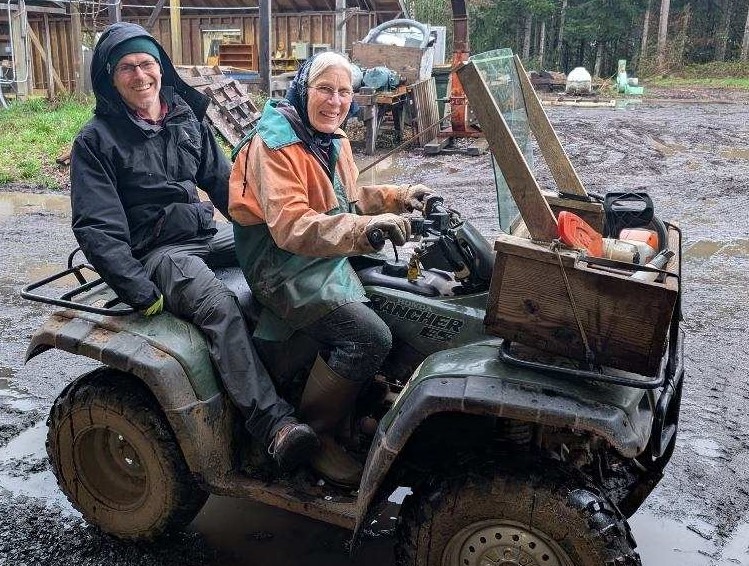
    Right: Jon Zirkle, author and Mennonite Men co-Coordinator, with Sarah Deumling

    The site visit to Zena Forest Products began early in the morning, and rain did not stop me from a complete tour. I was fortunate to see the woodshop, witness the sustainable practices used in the milling, meet founding family members Sarah and Ben Deumling, and ride on the 4-wheeler through the woods and hills with Sarah to see the young Oregon white oaks planted with support from JoinTrees. I enjoyed seeing the flooring products and wooden floor vents that Zena has become well-known for producing from sustainably grown and selectively harvested trees. Staff members were proud to inform me that their signature Zena EdgeGrain™ Oregon White Oak Flooring is installed at Portland International Airport and helps to educate many folks visiting the region about sustainable forestry and native trees.

    Sarah and Ben Deumling are visionaries. Every step of their process as a company prioritizes future generations and ecological care. In fact, Sarah has presented about Zena at Oregon State’s school of forestry to share the exceptional model of sustainable forestry and ecological restoration that Zena exhibits. After Sarah’s tour of the Oregon white oak plantings, it was abundantly clear how much her faith and vision informs how she approaches her life and the company. We talked about faith, books, Sunday school teachings, our fondness for trees, and land stewardship as well as our families, hopes and dreams and the planet’s wellness.

    I took Amtrak to Oregon not only to reduce my environmental impacts from travel, but also for the chance to arrive more slowly and see the scenery en route to Portland. The rest of the trip in Oregon only worked because of public transit, a borrowed car, and generous hospitality by folks at Portland Mennonite, Salem Mennonite, Zion Mennonite, Albany Mennonite, Drift Creek, and more. Thanks to Tony Kauffman and Chris Nord of Drift Creek (Executive Director and Board Chair respectively), I visited the raw Oregon coast and the towering trees of Drift Creek after enjoying profound conversations in the car. I met tree planter and Earth steward Joe Blowers of Portland Mennonite and learned about PMC’s men’s group, visited pastor Kristen Swartley and Luis Tapia Rubio’s new baby, and shared a meal with pastor Steve Bomar of Zion Mennonite. And I worshipped at Albany Mennonite, enjoying their coffee hour and seeing trees they planted onsite.

    Through visiting congregations, sharing about Mennonite men, and experiencing the land of the Northwest, I had the chance to appreciate the Earth, God’s first gift, and to feel what it’s like to be out on the edge of this continent, away from the Mennonite centers in the East and Midwest though surrounded by stunning and wild examples of God’s creation.

    I am deeply thankful for the many folks I met and was inspired by, for the majestic wild Oregon forests and coast, and the dedication to tree planting and native habitat restoration I witnessed firsthand. May the trees planted with help from JoinTrees continue to flourish and give life, and may the stories of God’s creation continue to inspire and offer hope.


  • Why Oak Flat Matters: A Mennonite Reflection on Sacred Land

    Why Oak Flat Matters: A Mennonite Reflection on Sacred Land

    In February I spent a week doing prayerful accompaniment at Oak Flat (Chi’Chil Bildagoteel) in Arizona, sacred land of the Western Apache. Sarah Augustine and the Coalition to Dismantle the Doctrine of Discovery encouraged Mennonite Men to pursue training to accompany Apache Stronghold as they advocate for the protection of Oak Flat and their religious freedom. I did the training and have served on the accompaniment team. This February I joined a Mennnonite teammate at Oak Flat for daily prayer walks, camping on the land, communicating with and supporting Apache Stronghold, and experiencing God’s creation firsthand.

    Each time I’ve gone to Oak Flat has been transformative. For a Midwesterner it has taken multiple days, multiple visits, and learning from the Apaches to get acclimated and begin to realize just how full of life this sacred land truly is. Even without verbal explanations, simply being at Oak Flat inspires gratitude, reverence, and prayer. That said, if Apache Stronghold had not shared history and background with me, I would not even begin to understand the depth of its sacredness.

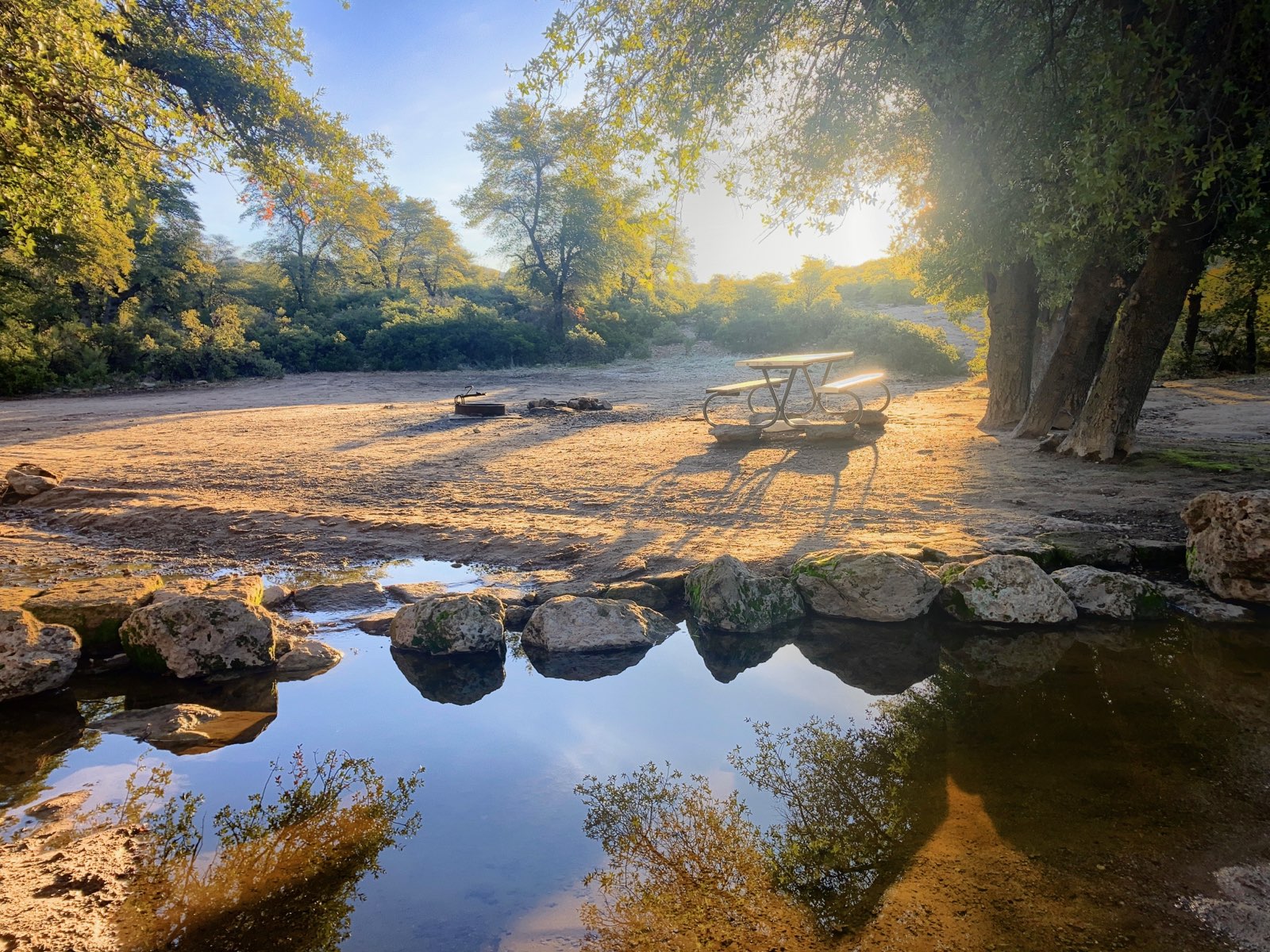
    Photo: campsite occupied by the author and other allies from The Coalition to Dismantle the Doctrine of Discovery. Photo credit: Tim Nafziger

    As a white male settler and a visitor, no one owes it to me to teach me all the facts, history, and symbolism of this place. I have been taught enough and have personally experienced enough to have my heart swell with love for God’s creation as experienced here. My heart breaks at the thought of this land being transferred to a foreign mining company, knowing this land would collapse into a crater and Apaches would be cut off from coming here. Oak Flat is considered by Apaches to be a female mountain, a source of water, food, medicine, shade, a home to many creatures and to angels. Ancestral remains are buried in this land. Ancient petroglyphs carved on canyon walls are still visible. Important ceremonies and prayers take place here, ceremonies where Apache creation stories are reenacted. Boys and girls come here for coming of age rituals to be oriented and welcomed into adulthood and more fully into their community. This is a place of storytelling, family reunions. If Chi’Chil Bildagoteel is destroyed, Apache religious practice is destroyed forever.

    Oak Flat contains low spots where water sometimes collects, allowing large Emory Oak trees to grow. Some of the tree trunks are three and four feet in diameter. Curved and wide-spreading branches hang low, inviting people and birds and other creatures to find respite in their shade. These trees are sometimes referred to as ‘grandmother oaks’ and said to be between 300 and 600 years old. I imagine the bumps, curves, and scars on their trunks have many stories to tell. In the summer these giant oaks produce acorns gathered by Apaches as a food source. I have had the pleasure of being offered delicious acorn soup made from acorns collected at Oak Flat. These abundant acorns not only feed people, they also feed acorn woodpeckers, orioles, jays, and javelina. I have thoroughly enjoyed seeing hawks, ravens, towhees, cardinals, finches, hummingbirds, and small lizards rest in their branches.

    Settlers like me may not have trees nearby that were alive for hundreds of years, providing food to feed our community. We likely don’t have trees under which our people gathered for dance, prayer, family reunions, and birthdays for hundreds of years. And, I would wager, we likely don’t have trees that our people intentionally let grow for hundreds of years without cutting down for lumber. We likely don’t fully understand the gratitude held by indigenous peoples, don’t regularly thank God for trees that give us food, shade, shelter, and home to birds. Our Apache sisters and brothers do.

    What if we Anabaptist Christians learned to view trees with a kind of reverence and kinship that led to protecting them, letting them live to old age? What might we learn about God by caring for oak trees, fine examples of God’s creation? Have we pondered the importance of trees named in the Bible?

    Join me, join Mennonite Men, join Apache Stronghold as together we consider the love of God the Creator shown by creation. May we learn that places, mountains, trees, people, places of flowing waters have meaning and significance beyond their utility, that God’s special places can’t be destroyed and simply recreated elsewhere.

    I hope we as Christians learn and tell stories about trees, find shelter under trees as a place to pray to God, and inspire children to enjoy trees.

    Join Mennonite Men in remembering Oak Flat. Pray for Oak Flat, its Apache defenders, and for the Supreme Court justices who are considering whether to hear the case of Apache Stronghold.


  • Faith and Forestry in the Central Hardwoods Region

    Faith and Forestry in the Central Hardwoods Region

    ​Growing up I had been provided opportunities to play and work outdoors in forested settings. Whether the oak-hickory forests of southern Michigan where my parents owned a cottage, or the forested slopes of the Four Corners Region of the Southwest where my family resided several times during my adolescent years. The latter experiences shaped my intention to pursue a professional forestry degree in the west and then work for public land agencies in the Rocky Mountain region.
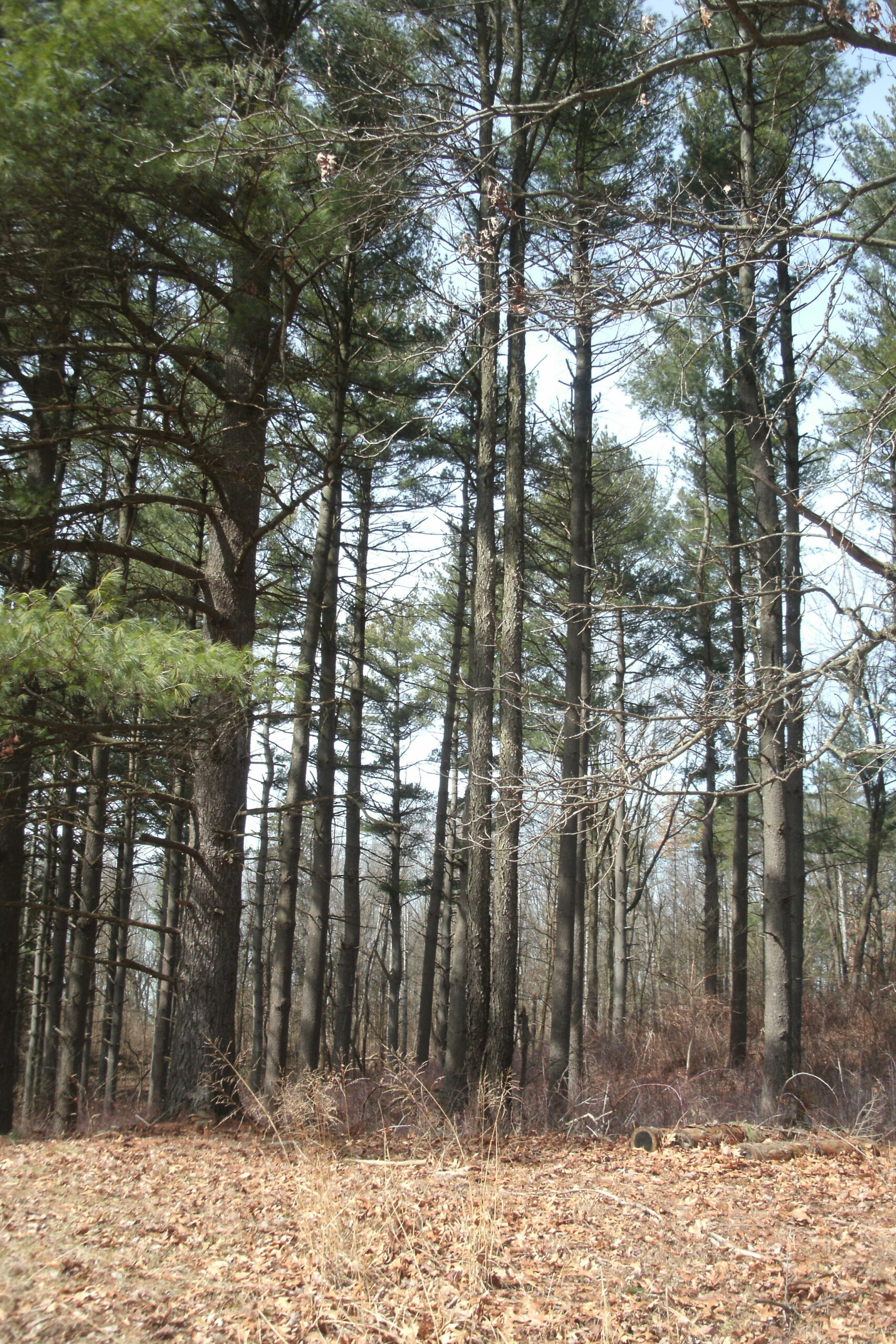
    During my undergraduate studies I worked for a federal land agency during weekends and summers as a temporary employee. The working experiences I had, while valuable, caused me to reassess by life goals and how my Mennonite Anabaptist values might play a role. As a result, I took a two-year break prior to my senior year to explore ways I might serve the church within the context of my future professional endeavors. This led me to working with Amigo Centre, a Mennonite-affiliated camp in southern Michigan, as their land manager. During this break from undergraduate studies in the late-1970’s, I had the opportunity to begin planting trees on a tract of land my family had acquired at the north end of Goshen, Indiana. Forty years later this tract became part of the Pathways Retreat. (Image right: 60-year-old white pine planting- Amigo Centre)

    From these early experiences emerged my life mission: ‘To show persons their integral relationship with the building of God’s kingdom and the dynamics of His Creation’. I pursued this mission by directing my vocation as a professional forester toward working with private landowners— both individuals and Mennonite organization-owned properties. This has included a forty-eight-year relationship with Amigo Centre stewarding their land—including a sixty-year-old white pine planting and, more recently, using forestry practices to rehabilitate their native oak-hickory forestland severely-damaged from a recent straight-line windstorm.

    I also had the privilege of providing forest resources education to adult audiences as a Michigan State University Extension forester, and to young adults as a Goshen College environmental sciences faculty member and Director of Land Management at its Merry Lea Environmental Learning Center. Now recently retired from Goshen College, I continue to stay active in pursing my life mission by doing consulting work with private landowners and Mennonite-affiliated groups that own land.


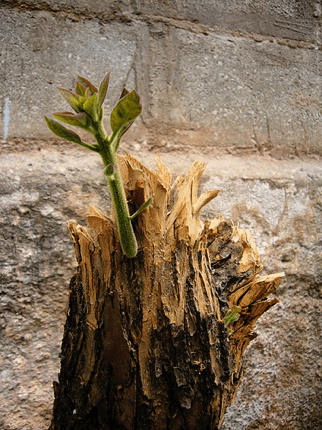
    As I reflect back on almost fifty years, I am grateful to witness the Mennonite Church more fully responding to ‘the Holy Spirit beckoning us toward the restoration of all things in Christ’. There are many emerging expressions of creation care by individuals and organizations within the broader church—much of which has been led by the younger generations. While we might struggle to differentiate between what is the work that is ours to do and what is the work that is God’s to do, I have great hope for the future. I have witnessed this hope when engaging with private landowners, college students and camp staff, and supporting initiatives such as Mennonite Men’s JoinTrees. More recently I was gratified to connect Camp Friedenswald, a Mennonite-affiliated camp in southern Michigan, to JoinTrees resources for the afforestation of 13 acres of cropland. (Image left: Adventitious sprout- Dominican Republic)

    So, in my experience, what has ‘hope’ looked like? During my graduate studies I spent time in the Dominican Republic (DR). As with many developing economies, native forest cover was being exploited for its wood to make charcoal for cooking. Mennonite Men’s JoinTrees campaign has been active in countries such as this to reforest degraded lands and support community agroforestry efforts. In the DR I captured an image that represented the ‘hope’ that can be found in the resiliency of nature—vegetative shoots on a tree that had been cut for charcoal production. These shoots developed from adventitious buds. They remind me of the hope found in the scripture commonly read during Advent…. Then a shoot will spring up from the stump of Jesse, and a Branch from his roots will bear fruit (Isaiah 11:1).


  • Manuela Avila Velasquez

    Manuela has the important role of midwife in her community. She gives instruction to women who are pregnant and maintains prenatal and postnatal controls. She says she puts her heart and all her experience into giving guidance to the women of her community, and after assisting a birth, she provides instruction on both newborn care and postpartum care for the mother. Manuela has received workshops on midwifery and women’s leadership. Currently she participates in a local committee of women organized to defend the rights of indigenous women and encourage their money making projects. Her prayer is that God will give her more years of life to continue the work of accompanying the women of her community.

    Manuela gets up early to take the nixtamal (corn cooked with lime) to the mill, returning home to make the tortillas and prepare the other foods for the day. She feeds the farm animals and then goes to work in her vegetable garden. For most of the vegetables and herbs she cultivates, she has learned how to harvest and save their seeds for the next planting. If a village woman goes into labor, she drops everything and goes to assist in the delivery, which she understands as her community responsibility.

    Manuela is excited to be involved in this tree planting project because she believes that if things continue as they are, in a few years there won’t be any trees left on the hillsides.

    She and her husband hope that their tree nursery will help to preserve the ecosystem of their community, but she realizes that this is a constant fight. She believes that she and her community must fight to prevent the springs that provide all their water from drying up. She says that planting just one tree has a great significance for her as a woman and a mother. She wants a future where the children and grandchildren of her community will be able to enjoy what she and her husband have enjoyed, a healthy and dignified life, from their own agriculture.

  • Tree planting as a hopeful solution in DR Congo

    Tree planting as a hopeful solution in DR Congo

    Many of us in North America do not rely on wood for cooking or shade trees for cooling. In contrast, millions in the Global South depend on trees for life-saving shade, livestock fodder, cooking fuel, and building materials. As deforestation continues worldwide, people and the environment suffer.

    Mennonite Men is committed to addressing deforestation and caring for God’s creation. Historically, our JoinTrees grants funded projects in the U.S. and Canada, but we now support initiatives in Honduras, Guatemala, Mexico, Angola, Benin, and the Democratic Republic of Congo (DRC). These projects help mitigate climate change by planting trees that absorb carbon dioxide. We are also evaluating how to support tree planting for firewood alternatives, recognizing the complexities of deforestation globally.

    A recent news report on violence in DRC led me to reconnect with Ndunge Sefu, a seminary friend, for insights. Ndunge and his wife, Micheline Ilonga, who have lived in DRC and other African countries, offered valuable perspectives. They expressed gratitude that the world is beginning to notice DRC’s struggles, but as Ndunge noted, ‘If an issue doesn’t touch the interests of superpowers, the world doesn’t hear about it.’

    The eastern DRC faces severe violence, with tens of thousands dying monthly due to armed rebel groups. Over 120 rebel factions operate there, many profiting from ‘mineral wars’ over coltan, a metal vital for electronic devices. These conflicts result in child labor, environmental devastation, and human suffering. People flee violence, trees are burned, and forests are depleted as displaced communities seek firewood.

    Wildlife also suffers. Unique species like the okapi and mountain gorilla are vanishing due to habitat destruction. ‘War affects nature, too,’ Micheline said. Even in areas without conflict, people cut trees for firewood without replanting due to a lack of awareness. ‘You can plant a tree. This side of the conversation is missing.’

    The discussion turned to solutions. Micheline asked, ‘How can you think about trees when you have an empty stomach?’

    Ndunge suggested, ‘People can farm trees instead of cutting indigenous forests.’ Micheline added, ‘Many women farm in Congo. Growing fruit trees can provide them with income. The land is fertile, and trees will grow.’

    This conversation reinforced our commitment to tree-planting initiatives in DRC and Angola. Supporting our African brothers and sisters in these efforts is part of our call to love our neighbors and participate in Christ’s mission of reconciliation.

    To date, Mennonite Men has only provided half the funding needed for these projects. We need financial support to complete them. These efforts create livelihoods, inspire communities, and offer sustainable alternatives to deforestation while providing ecological benefits.

    Join us in planting hope by supporting these tree-planting projects in DRC and Angola. Your contributions will help restore forests, empower communities, and protect creation for future generations.

    To learn more about JoinTrees projects and how you, your company, your men’s group, or your congregation can get involved, visit mennonitemen.org/jointrees.


  • Faith and Forestry in the Great Plains

    Faith and Forestry in the Great Plains


    Forestry runs in my family. As a second-generation forester in Kansas, my father served as an Extension forester at the Fort Hays Experiment Station. Dad helped farmers plant and care for windbreaks. He worked with towns and communities when Dutch elm disease arrived in ’57 killing thousands of American elms. My spouse Melissa Atchison also has a forestry degree, and after raising kids and attending the Associated Mennonite Biblical Seminary, she now serves as pastor of Manhattan Mennonite Church. Faith and forestry find common ground in our family.

    I spent most of my career working for the Kansas Forest Service at Kansas State University, in Manhattan. Like my father, I worked with Kansas farmers and landowners interested in planting and caring for trees. These were usually people who genuinely cared for God’s creation and literally sowed the seed or planted the trees that benefit the next generation.

    During my career I have seen the value of planting trees in the Great Plains come into question. Woody encroachment into grasslands of eastern red cedar, and honey locust both indigenous to Kansas, and other non-native trees, threaten our precious grasslands and the wildlife that require prairie to survive. Even so, I continue to advocate for agroforestry and forestry in Kansas and here’s why: trees continue to provide the same important benefits they have always provided to Kansans and woody encroachment is a land management issue that will always need to be addressed. Eastern Kansas is what ecologists describe as an ecotone, where the central hardwood forests of the United States transition into the tallgrass prairies. Historically there has always been changes in vegetative types in this transitional zone.

    Kansas trees provide wildlife habitat to threatened and endangered species, and without them the American Bald Eagle would still be listed. They reduce streambank erosion improving water quality and slowing the sedimentation of our water supply reservoirs. Trees add to the quality of life providing shade and wind protection to our homes. They sequester carbon, add beauty to our landscape with spring and fall colors, and turn carbon dioxide into the oxygen we breathe. Trees provide value even to a prairie state, but they must be managed and contained to appropriate landscapes.

    During my forestry career, tree planting often served as an act of prayer for me. I remember times when I sang hymns while sowing oak seed in early spring. God invites us to sow the seeds of the kindom on this good earth and to take joy in the gifts it yields. When we plant trees thoughtfully, we show respect and gratitude for the creation God has given us, and love to the generations that follow.

    My interest in tree planting and forestry have now connected with another issue where I try to practice my Anabaptist faith: peace and justice in Israel and Palestine. Working to seek peace and understand the violence in Israel and Palestine became important to me after participating in a Christian Peacemaker Team delegation to the West Bank in 1998. Since that time I have worked on the issue in a variety of ways and currently chair the Mennonite Palestine Israel Network (MennoPIN), serve on the Steering Committee for Mennonite Action and chair the Western District Conference Task Force on Israel Palestine.

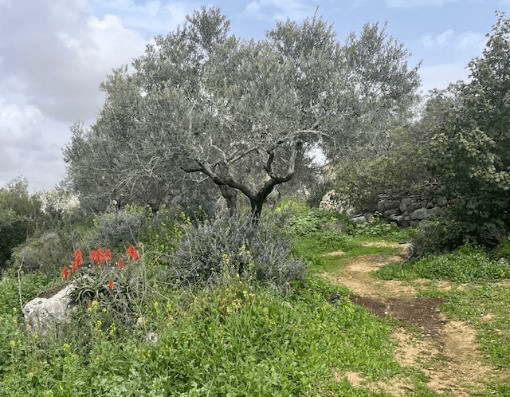
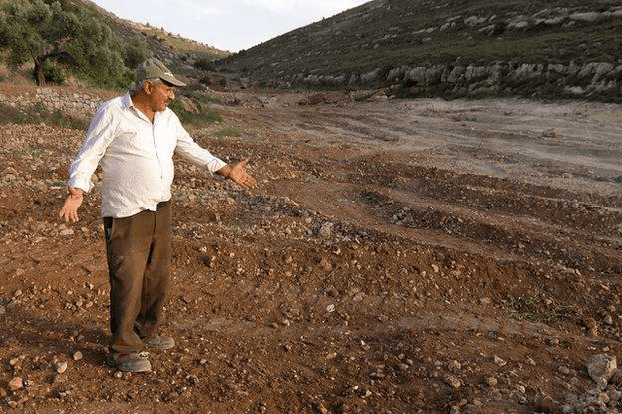
    In Palestine, olive trees symbolize Palestinian identity, resilience, and most importantly connection to their land. They are an important source of income and food for many Palestinian families. Olive trees represent Palestinian resilience because of their ability to grow in poor soil conditions, survive droughts, and in some cases produce fruit for thousands of years. For these reasons and the expansion of Israeli settlements, the destruction of olive trees has been a common experience in the West Bank and Gaza. According to the Applied Research Institute in Jerusalem, 800,000 olive trees have been destroyed by Israeli Settlers and the Israeli army since 1967.

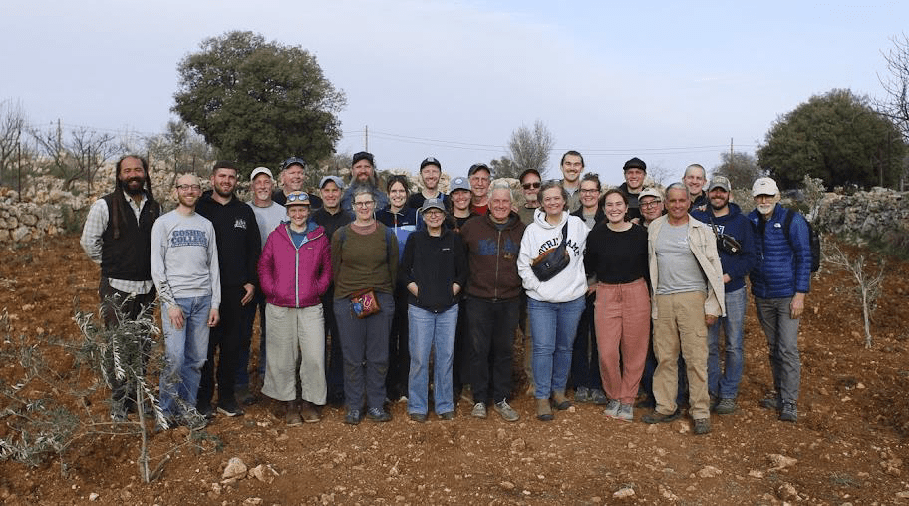
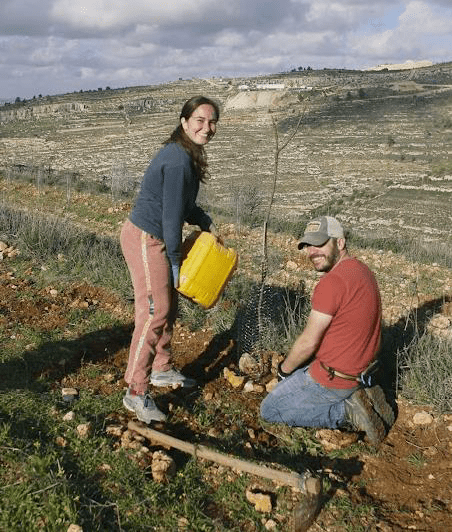
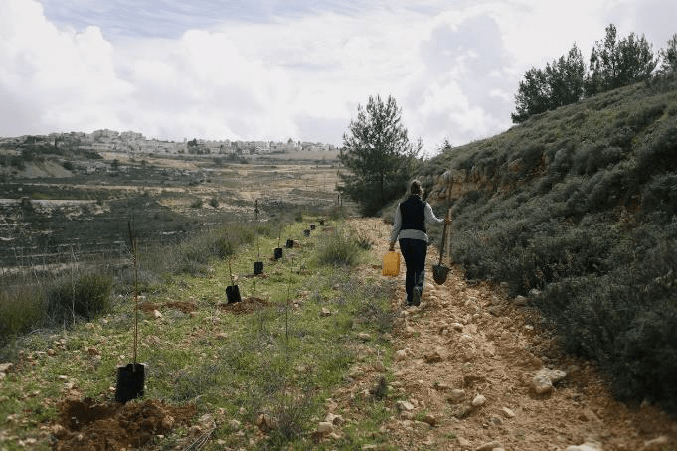
    Tree planting can indeed be an act of peace and there are many excellent tree planting initiatives to consider supporting. The Mennonite Palestine Israel Network (MennoPIN) and Mennonite Men’s JoinTrees initiative are working collaboratively to plant olive trees in Palestine. The JoinTrees campaign has a goal to plant one million trees by 2030, targeting climate change. Their goals include mitigating global warming, resilient ecosystems, preserving biodiversity and supporting vulnerable communities.

    There are a variety of ways to participate in the JoinTrees initiative. For more information check out their web site at https://mennonitemen.org/jointrees or call them at 574-202-0048.