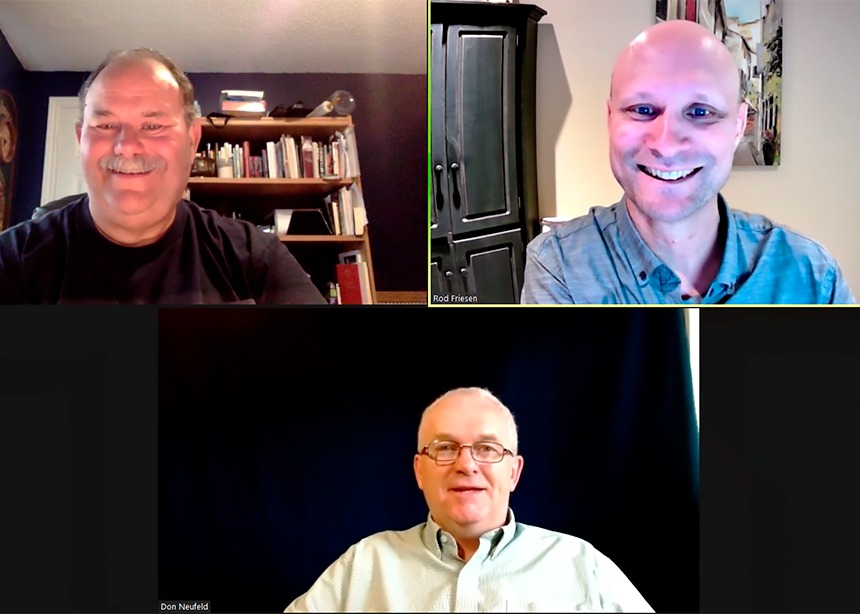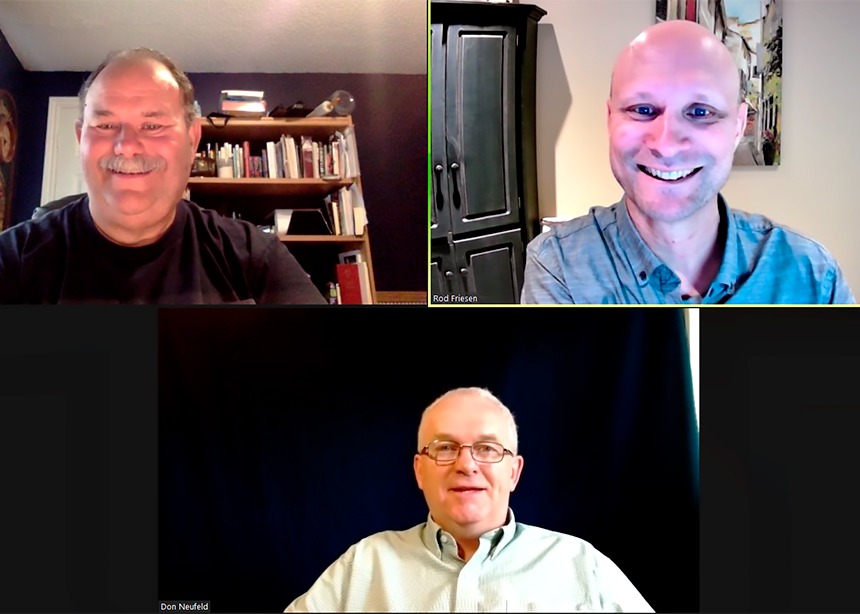
Clockwise from bottom, Don Neufeld, the editor of Peaceful at Heart; David Blow, Mennonite Central Committee
program associate, top left; and Rod Friesen, an MCC restorative justice program coordinator, plan their agenda for
week four of the online book club they facilitate dealing with healthy masculinity. (Screenshot by Rod Friesen)
Note: This story was originally published by Canadian Mennonite
For years Don Neufeld dreamed about providing a space where men could explore healthy masculinity from an Anabaptist/Mennonite perspective. During the month of June he co-facilitated an online book study for a diverse group of men, using a resource he co-edited with Steve Thomas, called
Peaceful at Heart: Anabaptist Reflections on Healthy Masculinity.
According to Neufeld, the online gathering of 11 participants and three facilitators, responds to the “depth of interest and need” for this kind of conversation.
Neufeld is a social worker with 30 years of experience. In his therapy practice, mostly treating men, he sees “how profoundly men are hurting,” how angry, insecure and confused they are. But when he looked for material to touch these “hurting souls” he did not find much that included a Mennonite peace perspective. So he decided to do something about it. He, along with Thomas, gathered a variety of voices into one book.
In
Peaceful at Heart, 16 men, including some from minority groups based on ethnicity, class and sexual orientation, address power, patriarchy, privilege, the Bible, peace, spirituality, community and discipleship. The chapters invite men into “difficult conversations” about healthy and unhealthy expressions of masculinity.
One of three women to contribute to the book is Carol Penner, assistant professor of theological studies at Conrad Grebel University College in Waterloo, Ont. She asks, “How can we talk about peace and masculinity without talking about intimate partner violence and child abuse,” which is “the elephant in the room that cries out to be acknowledged and addressed.”
Dan Epp-Tiessen, a semi-retired associate professor of Bible at Canadian Mennonite University in Winnipeg, wrote a study guide for the book, which includes a session on abuse, and suggestions about how to facilitate the heavy topic. The guide contains 10 other sessions, with detailed references to the book and plenty of questions to spark personal reflection, storytelling and conversations.
Mennonite Central Committee (MCC) Ontario, Mennonite Men, Mennonite Church Eastern Canada, MC Canada and the Be In Christ Church of Canada are all supporting partners of the project. Neufeld is the coordinator of Mennonite Men Canada, (the men’s organization for MC Canada) and Thomas is his counterpart for MC U.S.A.
Rod Friesen, who is also co-facilitating the current book study, is the restorative justice program coordinator for MCC Ontario. He saw the book as a useful tool for leading conversations in its Circles of Support and Accountability program. Since it is an important calling for MCC to build peaceful communities, Friesen also facilitated a pilot book study with his coworkers, which led to rich conversations.
As Friesen writes in the preface to the study guide, “We saw a need for resources that would encourage and foster conversations about masculinity in healthy ways—and point us to the author of our faith—Jesus.” It is an “overlooked area of study within our Anabaptist faith communities.”
Participant George Best says he appreciates how the facilitators create “a safe space for disclosure and trust within the group.” As someone who worked with men in the prison system, he was looking for insights into violence and the “dynamics of dominance and control” as related to the Mennonite community.
Neufeld and Friesen appreciate the sensitive nature of these topics. Friesen writes in the preface to the study guide: “Conversations around masculinity, especially what has become known as ‘toxic expressions of masculinity,’ have become incredibly polarizing.” It is a “courageous step for men to move into these uncomfortable conversations.”
Neufeld says, “I fully respect the passion and energy of naming centuries of injustice,” including sexism, racism and anti-LGBTQ+ attitudes, and “highly respect the need to privilege women’s voices in that context.” He suggests that the conversation can’t stop there. He wants men to be invited to the table, not to take over, but to expand the narrative on gender to include men’s stories.
He also wants to avoid the pitfall of men either “checking out” of these uncomfortable conversations because they feel judged, or “powering up” when they feel challenged. He hopes conversations around gender can “evolve into something more collaborative.”
The facilitators hope for positive ripple effects wherever the book is studied. Penner’s call in the book to go “from peaceful at heart to peaceful at home” inspires them. As Friesen writes, “These are critical peacebuilding conversations essential for creating safe, peaceable spaces in our churches, homes, workplaces, communities and society.”
They hope to mentor other men to lead study groups in the future. They are in the process of recording an audio book with Cedric Martin of Theatre of the Beat. And there are plans to develop a curriculum to engage young men.
Also, Thomas and Neufeld are just finishing another self-published resource called “Strong, loving and wise: Conversations for men,” which is a series of 70 shorter topic sheets that include questions to spark discussion.
For Friesen and Neufeld, normalizing conversations around masculinity requires humility and listening. Friesen writes, “The book is not necessarily an easy read, but it is an important one—perhaps even a life-changing one.”


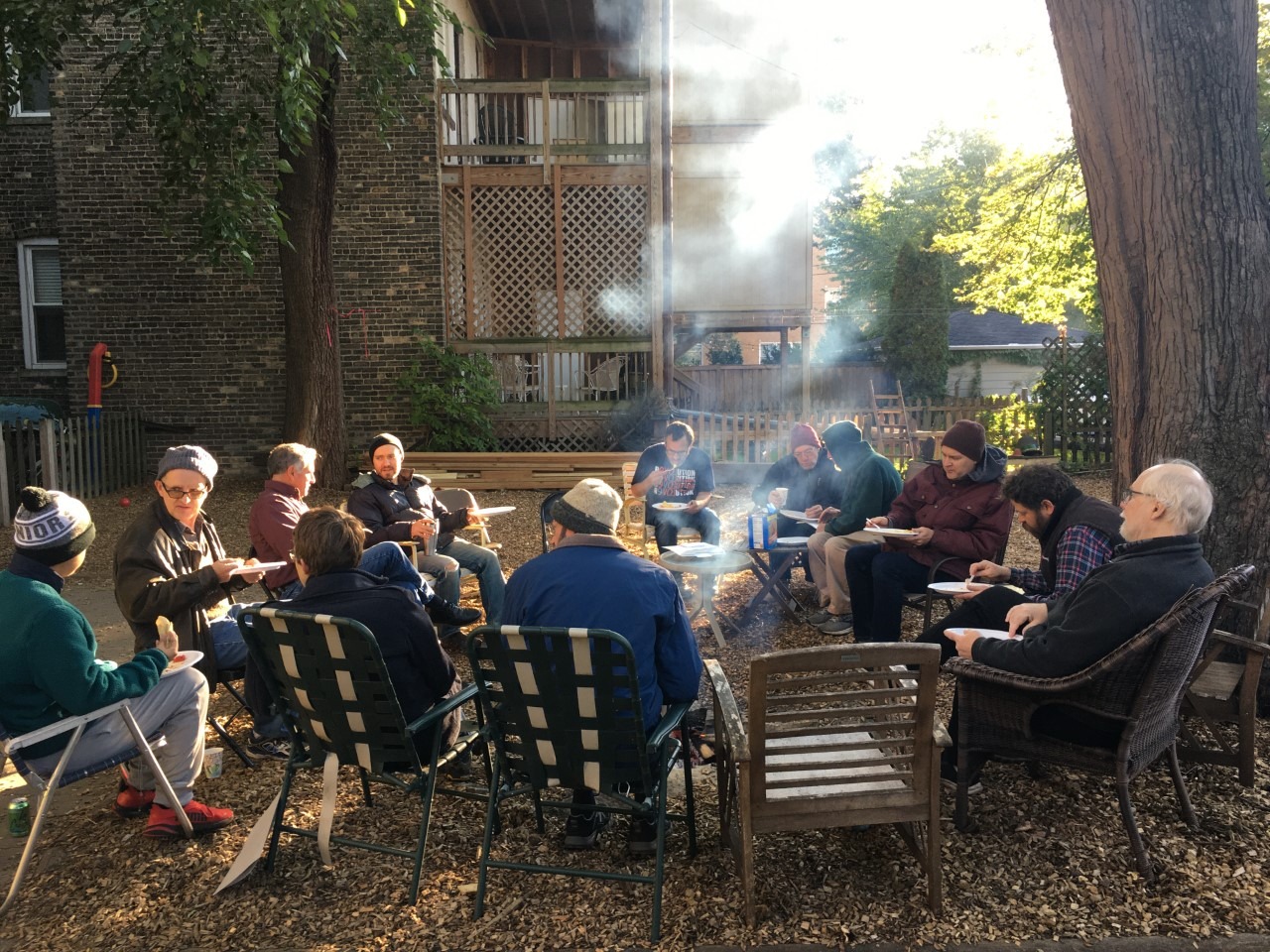
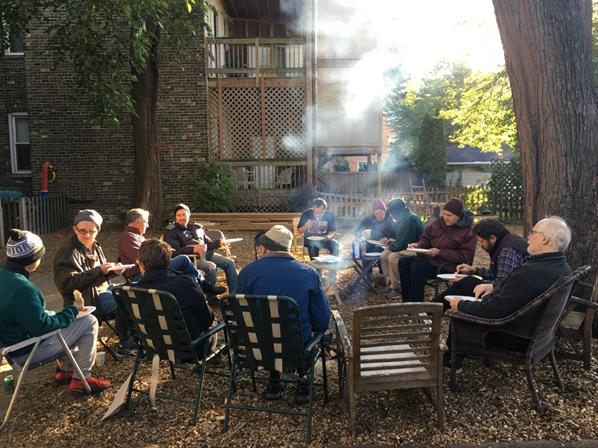
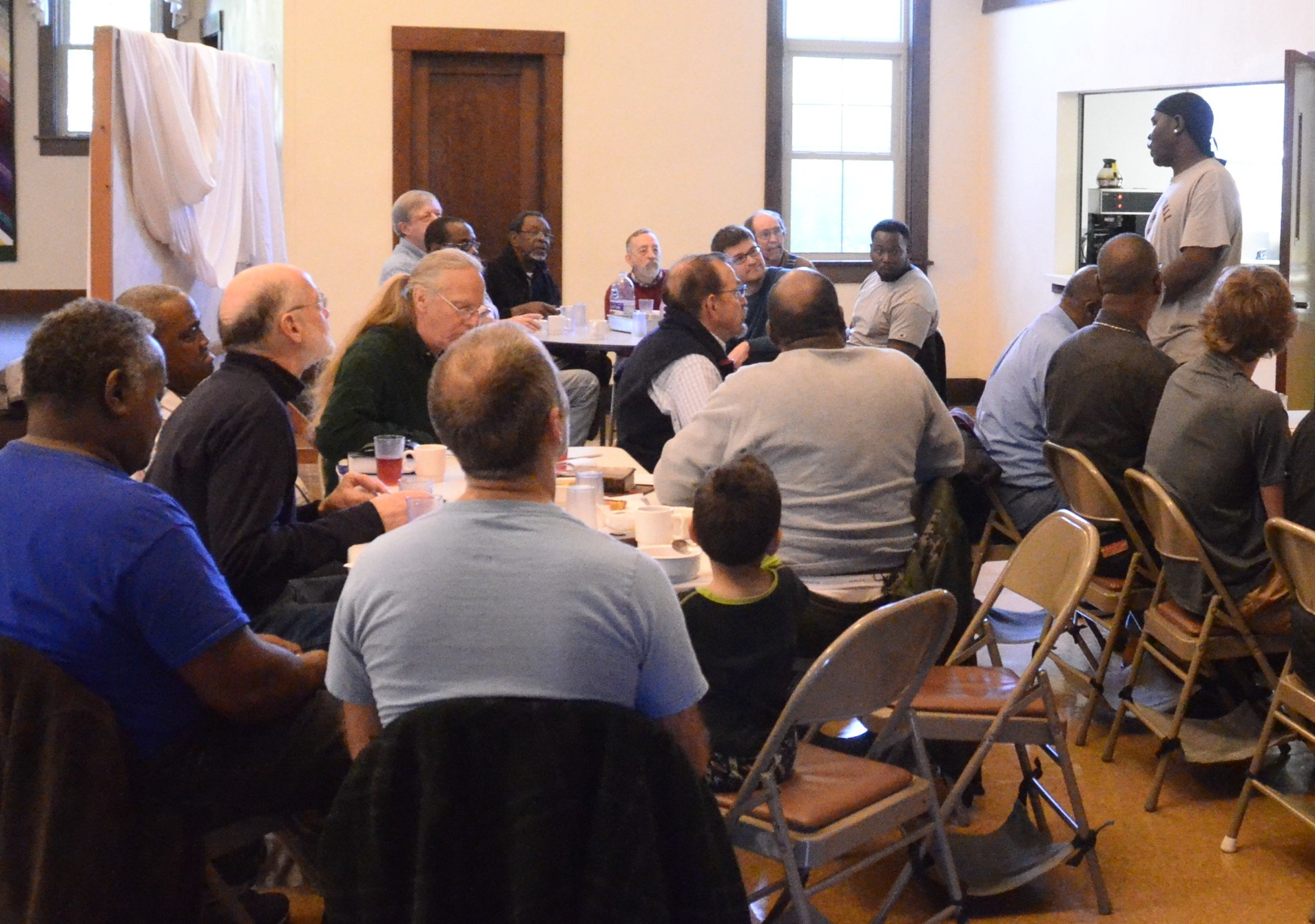
 Reba Place Church hosted a Men’s Retreat on October 22-24, 2021, and invited Steve Thomas, USA Director of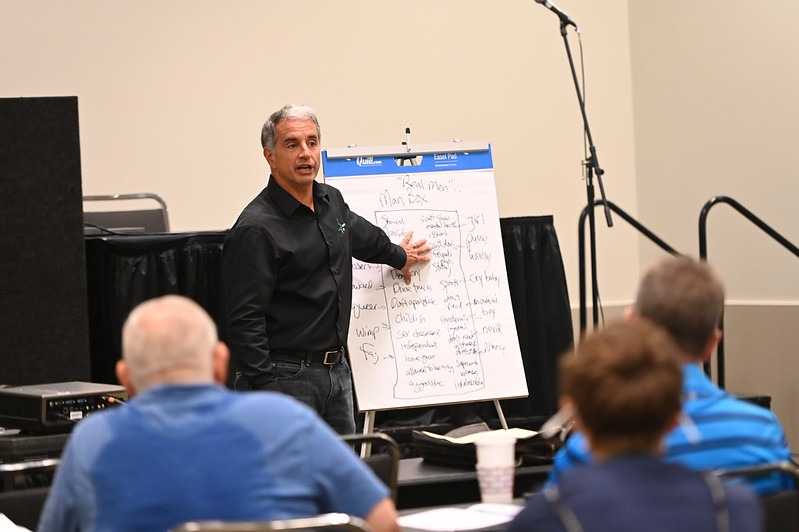
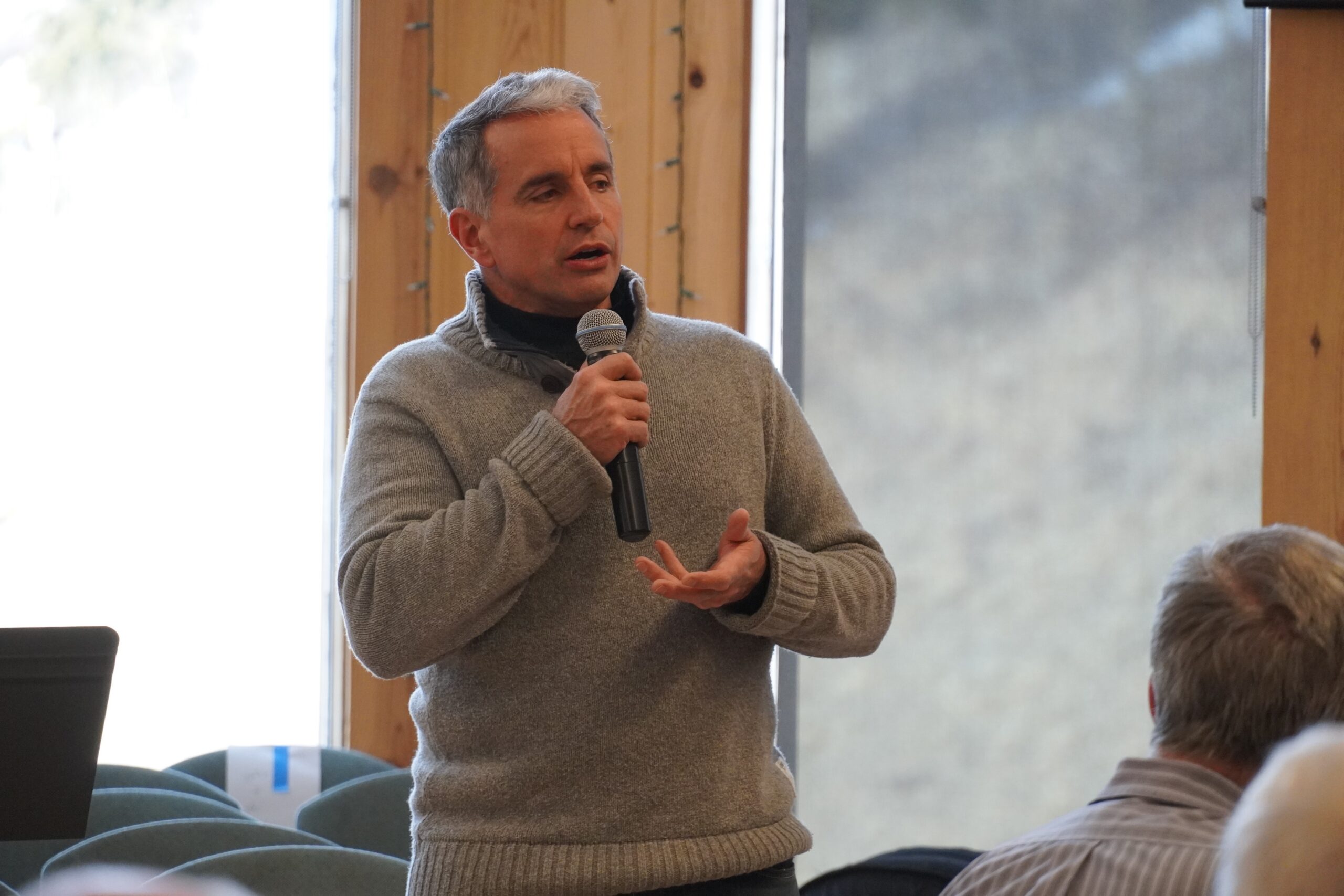
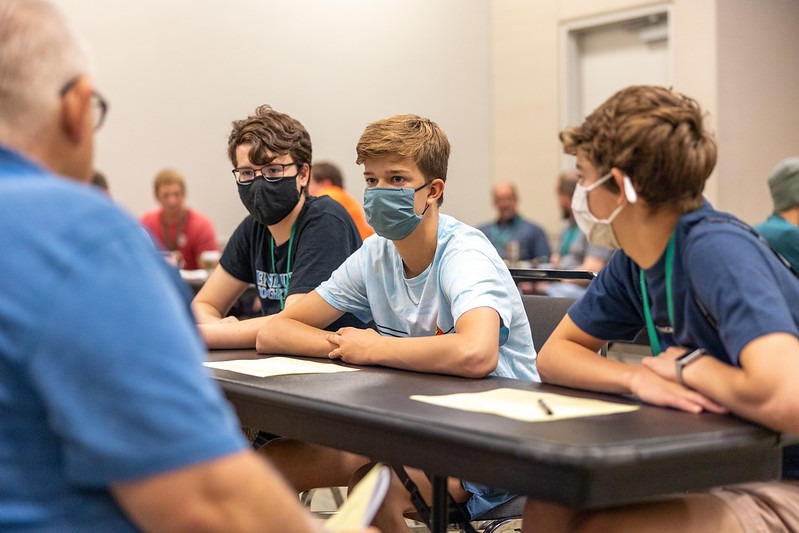 On Thursday, July 8, Thomas led a seminar discussing the phrase, ‘Be a man.’ While men and boys are often told to be a man, what does this mean? Thinking of conventional masculinity in American culture, participants responded that ‘real men’ are assertive, allowed to be angry, independent, strong, invulnerable, sex obsessed, don’t cry, don’t apologize, dominate, have guns, and drive truck, among other things. Participants examined what boys and men are called who don’t fit in the ‘man box’ and how this affects them. And they considered how this kind of masculinity impacts other genders. Thomas expressed that it was especially helpful to hear from women who were in this seminar.