Category: JoinMen

  • Living a Life That Matters: Reflections from Goshen College Men’s Retreat

    Living a Life That Matters: Reflections from Goshen College Men’s Retreat


    In patriarchal culture males are not allowed simply to be who they are and to glory in their unique identity. Their value is always determined by what they do. In an anti patriarchal culture males do not have to prove their value and worth. They know from birth that simply being gives them value, the right to be cherished and loved.

    -bell hooks
    ‘The Will to Change: Men Masculinity and Love’


    How do we, as men, live a life that matters? More importantly, how do we set a good example for future generations on how to answer this question. A first step is to reflect on how a patriarchal society assigns value to us, and then taking it a step further to reflect on how it impacts the value we assign to ourselves. After 12 years and hundreds of hours of facilitating challenging conversations on this topic, I believe it is clear value is assigned based on what men can provide or produce. Which in and of itself is not wrong, just shortsighted. I would argue that the very patriarchal culture that overwhelmingly benefits men in our society, simultaneously uses the concept of the ‘man box’ to prevent us from showing up for ourselves. Unpacking this ‘man box’ has shown me a way to expand how men find their sense of value, and thus begin to really discover how they define what matters to them.

    Doing this work with college men comes with a lot of barriers so I began reflecting on ways to overcome them. I realized that my male colleagues and I had not taken the opportunity to do this work together in order to better role model the lessons we were trying to get across. Thus I began looking for other resources to help us in doing that, and luckily I had become familiar with Menno Men a couple of years ago. I reached out and Steve Thomas was more than willing to develop a small retreat just for us.

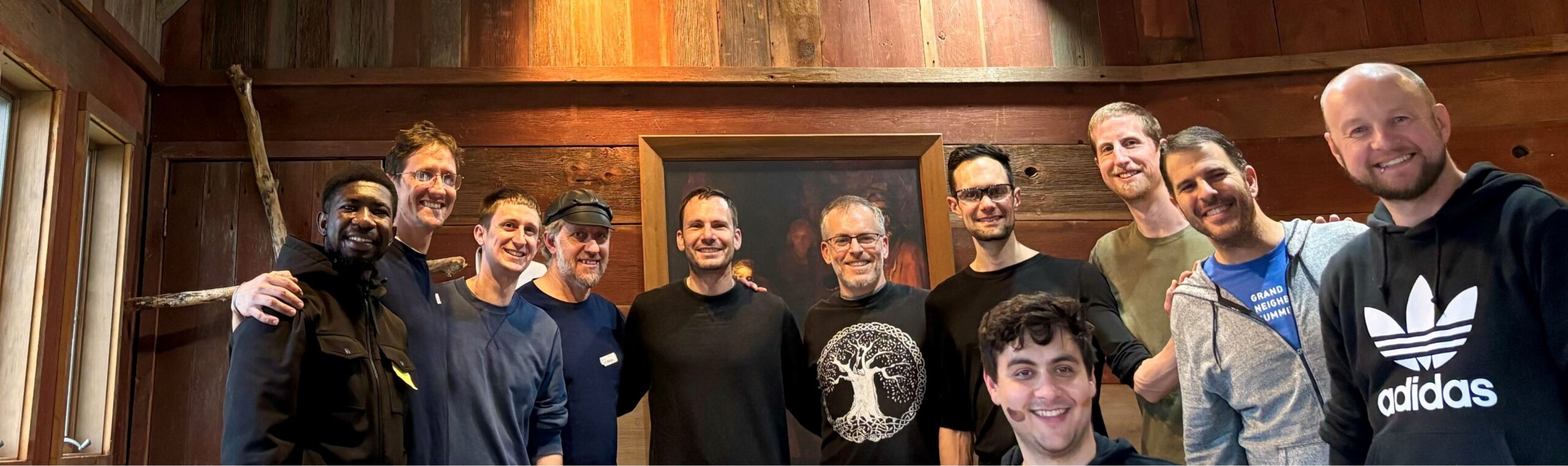
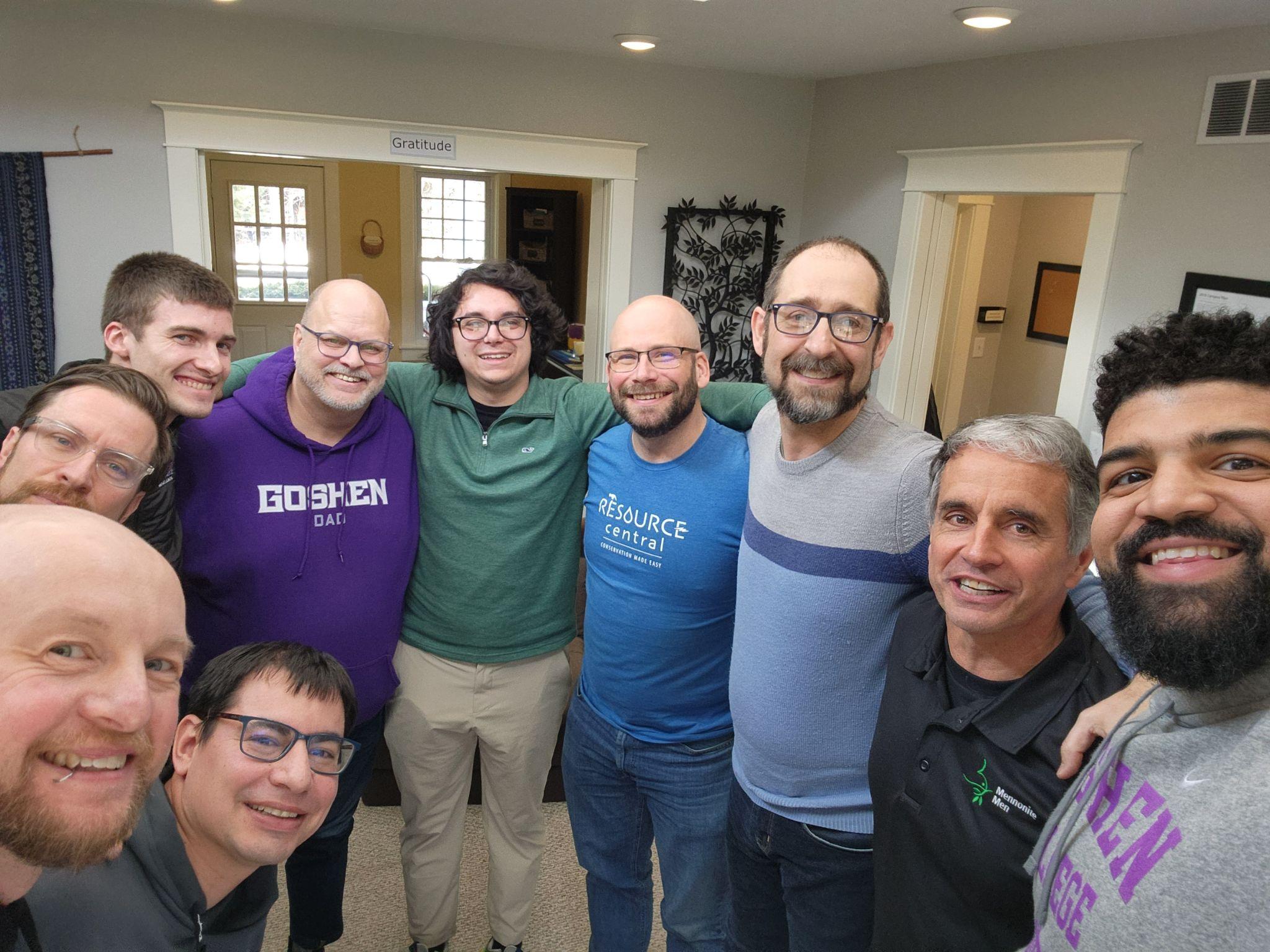
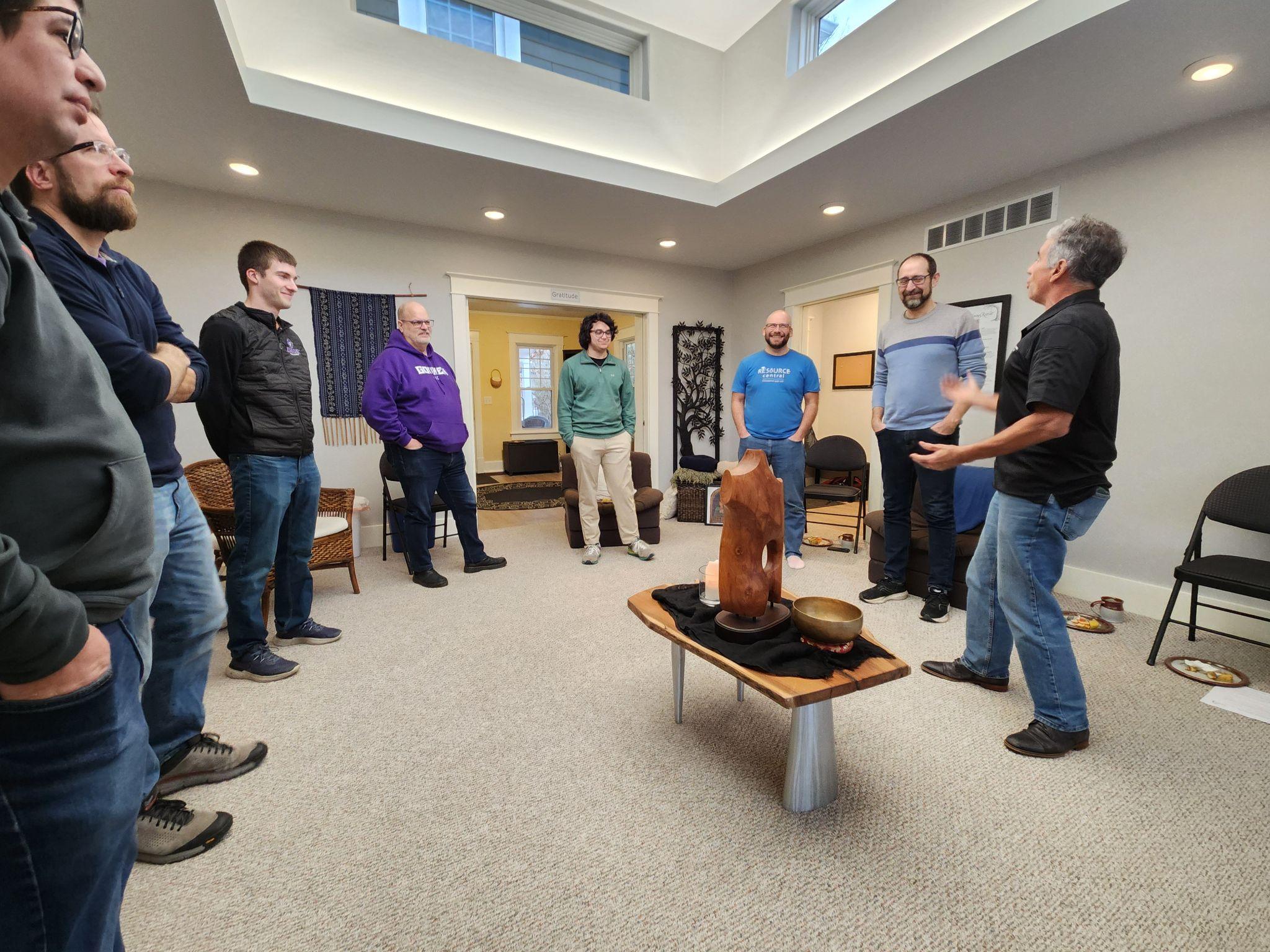
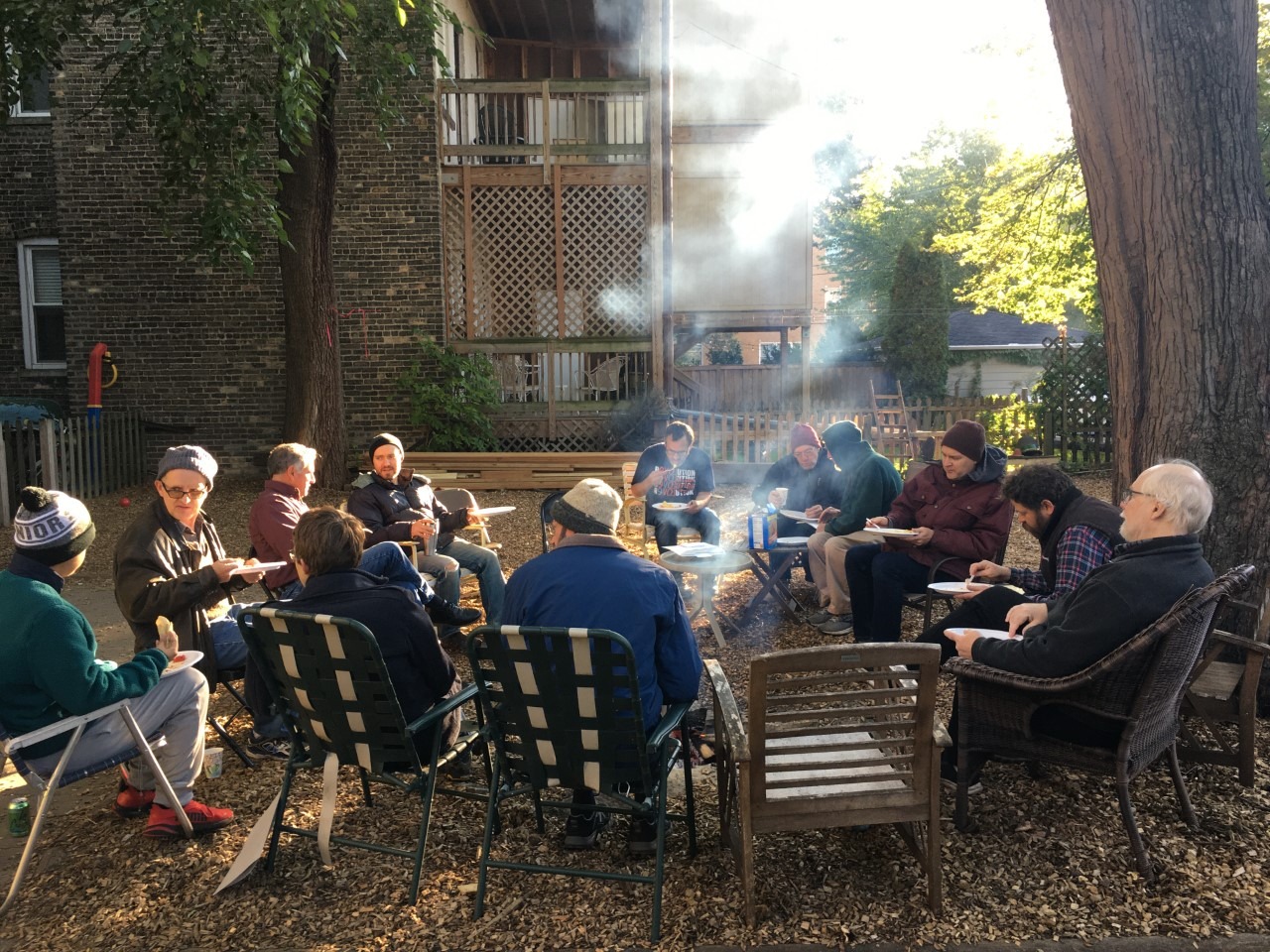
    Steve and I spent some time shaping an existing workshop to help us answer the question, ‘How does one live a life that matters?’ We spent the Saturday morning unpacking our own man boxes and envisioning how our campus could better support our students in this regard. The conversation was both challenging and supportive. It is important to acknowledge that we did not walk away with ‘the’ answer, as this work is never ending and always evolving.

    We all recognized this was not the end of the conversation as there are countless intersectional facets of the ‘man box’ to unpack, race being one. Jesse shared how that informed his decision to attend:

    ‘During our discussion, I had some questions about how men, especially men of color, are impacted (or not) by this work. I usually find myself surrounded by white men, Mennonites, or Latino/Hispanic individuals, so I wanted to gain insight into their perspectives on our current world, as well as their struggles and triumphs men face.’

    This gathering took place on February 3rd, 2024 at the Pathways Retreat Center in Goshen, and we are looking forward to continuing them on a semi-regular basis. This work is hard, but the immeasurable support of Steve Thomas, Pathways Retreat, and Mennonite Men makes it so much easier.


  • MC USA files new amicus brief in support of Apache-Stronghold

    MC USA files new amicus brief in support of Apache-Stronghold


    The Mennonite Church USA Executive Board and MC USA’s Pacific Southwest Mennonite Conference filed an amicus brief on April 25, 2024, in support of Apache-Stronghold’s petition for a new full-court hearing on the potential destruction of Oak Flat, a sacred Indigenous site in Arizona.

    Mennonite Men along with 18 additional churches and organizations also signed on as amici curiae, or friends of the court, including Mennonite Mission Network and numerous MC USA-affiliated congregations.

    Oak Flat is a sacred Indigenous site known to Apaches as Chi’chil Bildagoteel. It has been at the heart of a 20-year struggle by Apache and other Southwestern Indigenous peoples to prevent the federally owned site from being given to Resolution Copper, a Phoenix-based affiliate of British-Australian mining companies, Rio Tinto and BHP Billiton, for a new copper mine.

    In March 2024, a rare “en banc” panel of 11 judges from the Ninth Circuit Court of Appeals ruled in Apache-Stronghold v. United States that the federal government can transfer the sacred Oak Flat site to Resolution Copper. Apache-Stronghold, a non-profit Apache-led organization, appealed the decision and petitioned the court, arguing that “the en banc court got it wrong and that this error warrants a full court review.”

    The amicus brief supports Apache-Stronghold’s position as a right to religious freedom under the Religious Freedom Restoration Act of 1993 (RFRA). It draws from a previous amicus brief that was filed on behalf of MC USA and the Pacific Southwest Mennonite Conference in 2023. The new brief, however, focuses on the court’s expressed concern that ruling for the Apache-Stronghold would create a “slippery slope” for future RFRA claims about federal land, according to Eric N. Kniffin of Kniffin Law PLLC, Colorado Springs, Colorado, who wrote the new brief.

    “In this case, the Apache have an unparalleled historical connection to Oak Flat … and the government act they challenge would unquestionably destroy this sacred site,” writes Kniffin in the brief. “These characteristics are relevant to the RFRA analysis and would help courts, in appropriate cases, distinguish between the Apache’s RFRA claim here and other religious groups seeking access to federal land.” He notes that the Western Apache have been making pilgrimages to this spot since before the Mennonite tradition was founded in Switzerland in 1525 and even before William of Normandy invaded England in 1066.

    “Mennonites resonate with the Apache’s attachment to Oak Flat,” wrote Kniffin in the brief. “Like the Apache, caring for creation and receiving care from God’s natural world is woven into the Mennonite faith, from its heritage in rural farming to its practice of planting peace gardens at the sites of urban gun violence. Both traditions know God tends us through creation.”

    The brief also references the long support for Apache Stronghold offered by Mennonites who have ‘made the pilgrimage to Oak Flat to pray and learn – from the land and from Apache Stronghold.’ Several leaders of Mennonite Men attended a training offered by Community Peacemaker Teams and the Coalition to Dismantle the Doctrine of Discovery in 2023 and expect to be available for future presence and action in the region.


    Mennonite Church USA is an Anabaptist Christian denomination, founded in 2002 by the merger of the Mennonite Church and the General Conference Mennonite Church. Members of this historic peace church seek to follow Jesus by rejecting violence and resisting injustice. MC USA’s Renewed Commitments state the following shared commitments among its diverse body of believers: to follow Jesus, witness to God’s peace and experience the transformation of the Holy Spirit. Mennoniteusa.org

    Link for the amicus brief:
    https://www.mennoniteusa.org/wp-content/uploads/2024/05/Amicus-brief.pdf

  • The Road Ahead: Living That Matters for Men in Early and Middle Years

    Location:
    The Hermitage, 11321 Dutch Settlement Rd, Three Rivers, MI 49093

    Date:
    Friday November 8 and Saturday November 9, 2024. Friday dinner (silent) at 5:30pm optional, though official gathering starts at 6:30pm. Retreat ends at 4pm on Saturday.

    Cost:
    Suggested donation range of $120-150. (Includes room, meals, and Living that Matters: Honest Conversations for Men of Faith)

    Registration:
    See form below. Register by October 31. If you can’t register in time but want to see if there’s still space, contact Jon Zirkle directly at jonz@mennonitemen.org. Limited to the first 9 registrations. All overnight spaces are individual rooms, though cabins in the woods are available upon request (limit 2).


  • Men listening; men talking

    Men listening; men talking

    What does it mean to be a man in today’s world? A Christian man in North America? How do men deal with harmful legacies of “traditional” masculinity? These were just a few of the questions that 18 men gathered to ponder and reflect on during a half-day retreat at Zion Mennonite Fellowship, in Elmira, Ontario.

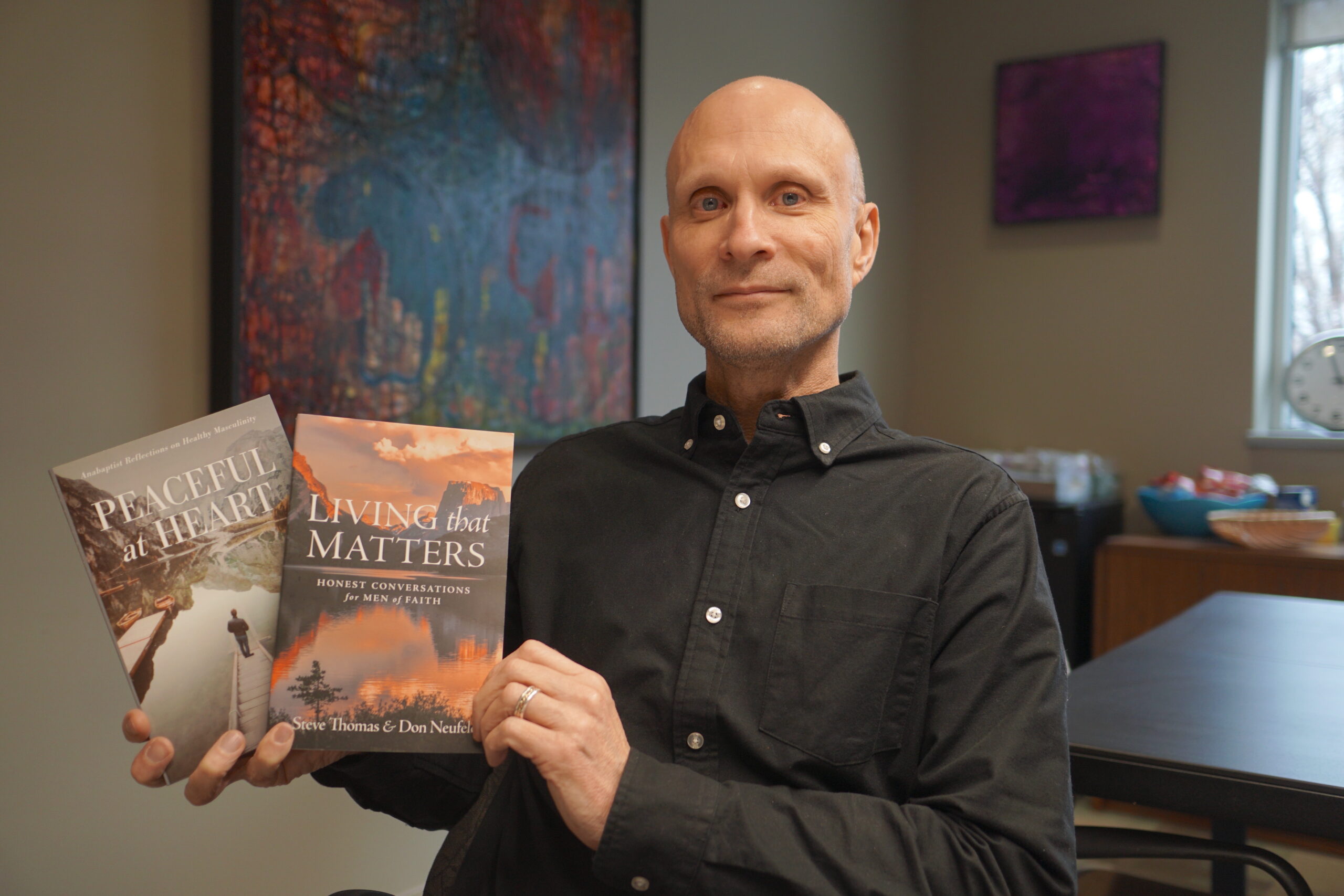
    The idea for the retreat started with a book edited by Don Neufeld and Steve Thomas called Peaceful at Heart: Anabaptist Reflections on Healthy Masculinity. It is a collection of essays from men and women from all over Canada and the United States who reflect on their experiences, traumas and healing related to masculinity using Anabaptist theological themes of discipleship, community and peace.

    Monty Woodyard was one who participated in a virtual book study of Peaceful at Heart facilitated by MCC’s Restorative Justice program staff Rod Friesen and David Blow. “I was surprised and impressed by the combination of good resource material, uncertainties involving life in the pandemic and guidance of the Holy Spirit,” reflected Monty. “Those conversations led us to speak and listen about struggles we had all experienced being male in North American society during the early twenty-first century. It was an eye-opener for all of us. I had never been part of such a group of men willing to engage in depth over serious issues relating to masculinity.”

    Monty was so inspired that he wrote a sermon about this exploration of healthy masculinity at his home church, Zion Mennonite Church. Around that time, Neufeld and Thomas co-authored another book, Living that Matters, designed to serve as a guide to men’s study groups on healthy masculinity. Monty noticed on the Mennonite Men website that Steve Thomas had offered to facilitate half-day weekend retreats in the U.S. on healthy masculinity. “I thought that a retreat might give men a first-time experience in speaking about things that really mattered with other men,” says Monty. “I hoped it could be a first step for some to a more sustaining study group on healthy masculinity.”

    Monty reached out to Rod Friesen, who was enthusiastic about the idea for a men’s retreat, and together with Don Neufeld and David Blow, they began planning the half-day retreat. MCC supported financially and with outreach to its diverse constituency.

    “Honestly, the hardest part of putting this together was getting the men out,” remembers Monty. “But in the end, we were so thrilled that we got as many men out as we did.” There were men from nine different area churches in Southwestern Ontario, with ages ranging from young fathers in their 30s to men in their 80s.

    “The most encouraging and enjoyable aspect of the morning was the active conversations, in small groups and in the larger group dialogue,” says Don. “They were just so willing to lean into honest conversations about masculinity.”
    Monty agrees that the vulnerability and willingness to share showed a real appetite for this kind of sharing amongst men. “We heard that men crave more than just a 20-minute sermon every week. I was seeing people connect one-on-one outside the agenda to arrange to follow up personally on something that was meaningful to them, which was also great to see.”

    The richness of sharing on the topic of healthy masculinity revealed to Monty, Don and Rod both the benefits and the need for more of this deep discussion.

    “I would love to take this event on the road and would welcome any partners who would reach out,” reflects Don. “I believe this first run was a grand success in showing the potential of this type of event in the future!”

    You can find Peaceful at Heart: Anabaptist Reflections on Healthy Masculinity here.
    And Living That Matters here.

    If you are interested in joining this discussion or are simply curious to learn more, contact Rod Friesen at rodfriesen@mcco.ca or Don Neufeld at don.neufeld@outlook.com.

    Photo credit: MCC photo/Ken Ogasawara


  • Purpose

    Purpose


    Why do we exist? We have a purpose in life linked to God’s great project. Once we discover this, we realize our lives matter and that we are part of something bigger than ourselves. Knowing and serving this purpose gives our life focus, meaning, and joy.

    Our purpose is linked with God’s purpose to establish shalom in the world. Shalom is the rich Hebrew word for a peaceable order with collective abundance, security, and justice throughout all creation. It’s the universal wholeness God seeks to restore on earth.

    Jesus knew and served his own purpose. He sums it up in these words: ‘I came that they may have life and have it abundantly’ (John 10:10). John describes God’s abundant life that Jesus brought in terms of freedom, love, and peace. In the last recorded conversations Jesus has with his friends, he says that he wants them to enjoy and extend this life (John 15:1–16; 20:21).

    In short, this is also our purpose—to enjoy and extend God’s abundant life.

    Enlarging this in terms of John’s gospel, our purpose in life is to enjoy and extend God’s abundant life of freedom, love, and peace.

    We all have a common purpose in life. How we serve this varies from person to person. We each have a personal mission in God’s project. In the Bible, we see a whole cast of characters, each playing their part in serving their mission.

    Consider the particular mission of a few of God’s people:

    • Moses—to free the Hebrews
    • Esther—to save the Jews
    • Nehemiah—to rebuild the walls of Jerusalem
    • Jeremiah—to restore hope among the exiles
    • Mary—to bear Jesus into the world
    • Luke—to tell the story of Jesus and the church
    • Paul—to share the gospel to Gentiles

    These people played prominent roles serving their purpose in life. But most characters in God’s story are never named. If they are, they receive only honor- able mention. Like Joseph—the carpenter and husband of Mary—who simply did what God asked of him. Over forty people are named in the genealogy of Jesus. Some are well known, others not. Some are virtuous, others not. Most of us fall in the ‘others’ category. Nevertheless, we too, in the legacy of Jesus, have a part to play in serving our purpose.


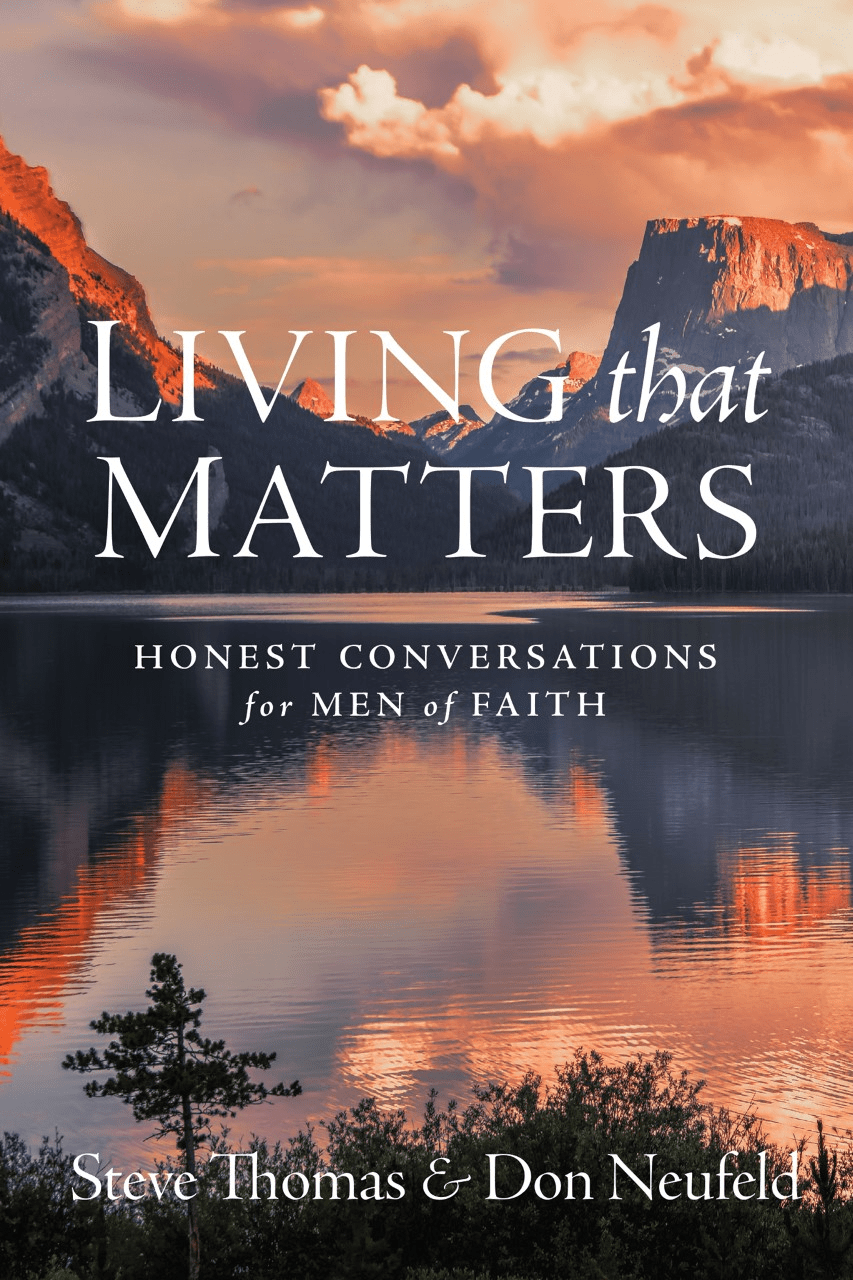
    Read the other reflections in Living that Matters: Honest Conversations for Men of Faith, which serves as a men’s guide for conversation and reflection and includes 70 topics, for use by individuals or groups. Order Living that matters: Honest Conversations for Men of Faith HERE.


  • Reba Place Men’s Group Benefits From Recent Book Release

    Reba Place Men’s Group Benefits From Recent Book Release

    At Reba Place Church (Illinois Mennonite Conference), in a densely populated urban neighborhood in Evanston, Illinois, a group of men gather together once a month to encourage and pray for one another. Our group shares the commitment to spiritual growth and deepening our connections with one another as we navigate the complexities of modern life. At the core of our gatherings is the invaluable resource: Steve Thomas and Don Neufeld’s book, Living that Matters: Honest Conversations for Men of Faith.

    On the second Wednesday of every month, we set aside an hour and a half to meet and connect. Our meetings are characterized by a sense of safety and acceptance, where every member is encouraged to be themselves. In a world often dominated by expectations and facades, our group provides a sanctuary where authenticity and vulnerability are celebrated. One of the men recently shared, ‘The things men go through in our society are not easy and this group helps me to not feel alone in the process.’

    Our meetings center on Living that Matters, a guide book summarizing crucial topics, serving as our roadmap for discussions on issues relevant to men. Notecards with topics written in bold black marker are laid out on the table. These notecards correspond to topics in the book. We take turns removing the notecards until one remains, and that is how we decide which topic we will ponder and discuss. We find the page(s) in Living that Matters, each reading a paragraph out loud. The following are some of the subjects we’ve chosen: grief, success, integrity, eros, failure, and nonviolence. These discussions help us explore and confront the complexities of modern life with our Anabaptist faith and the support from our brothers. We are continually amazed by the brevity in which the authors introduce complex topics in a two-page spread, covering multiple perspectives that is sure to start a lively conversation that gets to the heart of the matter.

    Solitude, Seeking, Solidarity: A Transformative Structure

    The structure of our gatherings is a carefully crafted process, allowing for silent reflection, personal connection, and collective growth. The three stages of our meetings are: Solitude, Seeking, and Solidarity.

    1. Solitude (10 minutes): After choosing the topic and reading the summary pages from Living that Matters we enter our time of Solitude. In the midst of our busy lives, we take a moment of stillness to connect with God and to reflect on the topic that we just read out loud as a group.

    2. Seeking (20 minutes): We seek one another out and pair off to have deeper and more meaningful one-on-one conversations. These dialogues are not debates; they are heartfelt exchanges where we seek to understand each other’s perspectives, experiences, and faith. Each person gets 10 minutes to share or they enjoy a casual back and forth conversation.

    3. Solidarity (30 minutes): In the final stage, we assemble as one group. Here, we put into practice the lessons of our faith, listening with open hearts. We share reflections, struggles, and joys. It’s a time of connection as a small group, where the act of listening becomes a gift of love. We are not there to merely debate or discuss ideas; we are there to pray for one another, to grow closer to Christ as brothers, as beloved sons of God.

    Annual Men’s Retreat at Menno Haven Retreat Center

    Two years ago, Steve Thomas came to Reba Place Church to lead a weekend retreat. Steve masterfully led us through learning experiences that challenged us to grow in wisdom, strength, and love. It was a critical time for us to confront immature versions of our identities as men and mature into beloved sons of God. Since then, we’ve continued to go on annual men’s retreats to Menno Haven Retreat Center to surround ourselves with the beauty of nature as we engage in practices like Lectio Divina, praying together and spending time around the campfire. It’s an inspiring time to reconnect with both God and nature, fostering a deeper understanding of our faith and purpose as disciples of Jesus.

    The Men’s Group at Reba Place Church is a seed planted in fertile soil, sprouting and branching out in faith, authenticity, and brotherhood. Many of us have a tendency to isolate and disengage, but the book Living that Matters has helped our group grow closer together because of the wisdom that draws us in every time. Steve Thomas and Don Neufeld have given the church a tremendous gift: teaching us to embrace ourselves as beloved sons of God; respecting all people as beloved children of God; following Jesus, the image of God and model human being; engaging our faith to partner with marginalized people seeking justice; protecting the earth as stewards of God’s creation; serving the mission of God’s shalom on earth; and becoming strong, loving and wise in the Spirit.


  • Shame

    Shame

    Excerpted from Living That Matters: Honest Conversations for Men of Faith by Steve Thomas and Don Neufeld. Used by permission of Herald Press. All rights reserved.


    Brené Brown defines shame as ‘the intensely painful feeling or experience of believing that we are flawed and therefore unworthy of love and belonging.’ Living with or in shame goes deeper than dealing with behaviors, shortcomings, and errors. Shame strikes at the center of who we are, telling us we are flawed and unworthy at our very core and that this awful reality can never change, because it’s just the way we are. Shame leaves us feeling that there is no way out other than medicating our pain or looking for someone or something to unload our self-loathing on.

    Believing that masculinity must be proven and maintained through performance, men are especially prone to the effects of shame. As Brown writes, shame for men means failure, being wrong, defective, soft, weak, fearful. When we’re ridiculed or called out for any of these things, it’s like a strong punch to the gut. ‘Basically,’ Brown writes, ‘men live under the pressure of one unrelenting message: Do not be perceived as weak.’

    Shame is strong. It can undermine courage, connection, and vulnerability. But it cannot endure self-compassion and honesty, especially when practiced in the loving embrace of true relationship. When someone welcomes us with an open heart and affirms our worthiness, it unlocks a door to share honestly about the things that are most difficult to face about ourselves. When we speak our shame in the presence of that welcoming other, shame’s power over our life withers.

    Living that Matters: Honest Conversations for Men of Faith serves as a men’s guide for conversation and reflection and includes 70 topics, like Sexuality, for use by individuals or groups. Order Living that matters: Honest Conversations for Men of Faith HERE.


  • Workers

    Workers


    Excerpted from Living That Matters: Honest Conversations for Men of Faith by Steve Thomas and Don Neufeld. Used by permission of Herald Press. All rights reserved.

    For many men, no role may dominate their waking hours more than that of worker. The usual response to ‘Tell me a little about you’ will often be some description of our work life: ‘I’m a farmer’; ‘I’m an engineer’; ‘I’m a construction worker’; ‘I’m a teacher’; ‘I’m a pastor.’

    So much of male identity has been wrapped up in employment, productivity, and earning a living for oneself and one’s family. A sense of worth or self-esteem teeters on having a job, and better yet, the right job. Leaving or losing a job can trigger a significant identity crisis. For some men, work brings much reward and accomplishment, with the greatest meaning when it serves a sense of vocation— that is, when our work is aligned with our calling to serve something bigger. For others, work life brings years of drudgery, risk, and sometimes even death.

    For boys and young men, coming of age has generally demanded pursuing some form of employment or career. Disruption of this path, especially in times of social and economic uncertainty, leaves many young men confused and distraught.

    At the other end of life are those whose employment has been interrupted by economics or life circumstances that leave them unmoored and lacking purpose. For some men, the prospect of retirement might mean a crisis of financial uncertainty or meaninglessness as they face the loss of not only a regular paycheck but also their identity tied to a trade, or company, or colleagues who have been their only friends in life.

    Living that Matters: Honest Conversations for Men of Faith serves as a men’s guide for conversation and reflection and includes 70 topics, like Sexuality, for use by individuals or groups. Order Living that matters: Honest Conversations for Men of Faith HERE.


  • Vulnerability

    Vulnerability

    Excerpted from Living That Matters: Honest Conversations for Men of Faith by Steve Thomas and Don Neufeld. Used by permission of Herald Press. All rights reserved.

    There is little that goes more against the grain of traditional masculinity than the concept of vulnerability. In fact, much of what is generally taught to boys and men about being men is designed to limit vulnerability and fine-tune “strength.” How do we reconcile our understandings of healthy strength and determination that serve our humanity well with the absolute-must relational requirements of vulnerability?

    “Vulnerability is the core, the heart, the center, of meaningful human experiences,” writes Brené Brown. If this is true, given the opposite messages men have been receiving about power and strength, how have we managed until now? Are we in a different time and place that might allow us to embrace vulnerability in a new way as men?

    Emotional vulnerability, according to Brown, is “the cradle of the emotions and experiences that we crave. Vulnerability is the birthplace of love, belonging, joy, courage, empathy, and creativity. It is the source of hope, empathy, accountability, and authenticity.” Our ability to connect, belong, and love is made possible by our ability to open ourselves to each other, to let down our guard, to be truly willing to give and receive vulnerably.

    The surprise of healthy vulnerability is that it’s actually an outcome of a certain kind of strength. When we know who we are as God’s beloved and that our worth comes from the fact that God created us, we can more easily dare to show our true selves.

    Living that Matters: Honest Conversations for Men of Faith serves as a men’s guide for conversation and reflection and includes 70 topics, like Sexuality, for use by individuals or groups. Order Living that matters: Honest Conversations for Men of Faith HERE.

  • Sexuality: God’s gift

    Sexuality: God’s gift


    Excerpted from Living That Matters: Honest Conversations for Men of Faith by Steve Thomas and Don Neufeld. Used by permission of Herald Press. All rights reserved.


    A journalist once asked, Why are men so consumed by sex? ‘Did nature sim­ply overload us in the mating department, hot-wiring us for the sex that is so central to the survival of the species, and never mind the sometimes sloppy consequences? Or is there something smarter and subtler at work, some larger interplay among sexuality, life and what it means to be human?’1

    We answer, ‘Both.’ As animals, we are hardwired with a sex drive for mating. As humans, we are also designed by God for loving, sexual intimacy. Both are true and create a dynamic tension within us as we experience a primitive drive to unite with physical body as well as a deeper spiritual desire to connect with another person.2 Both of these are part of our God-given impulse to ‘become one flesh’ (Genesis 2:24). God created sex not only for procreation but also for pleasure and intimacy in a secure, loving relationship where these are most fully enjoyed.3

    As the words themselves demonstrate, sex is part of sexuality. And sexuality and spirituality also belong together. They share a common longing for union with another—we desire sex and long for intimacy.4 But these two ways of being are often split apart, especially by men.

    Living that Matters: Honest Conversations for Men of Faith serves as a men’s guide for conversation and reflection and includes 70 topics, like Sexuality, for use by individuals or groups. Order Living that matters: Honest Conversations for Men of Faith HERE.