
Category: JoinMen

  • Men listening; men talking

    Men listening; men talking

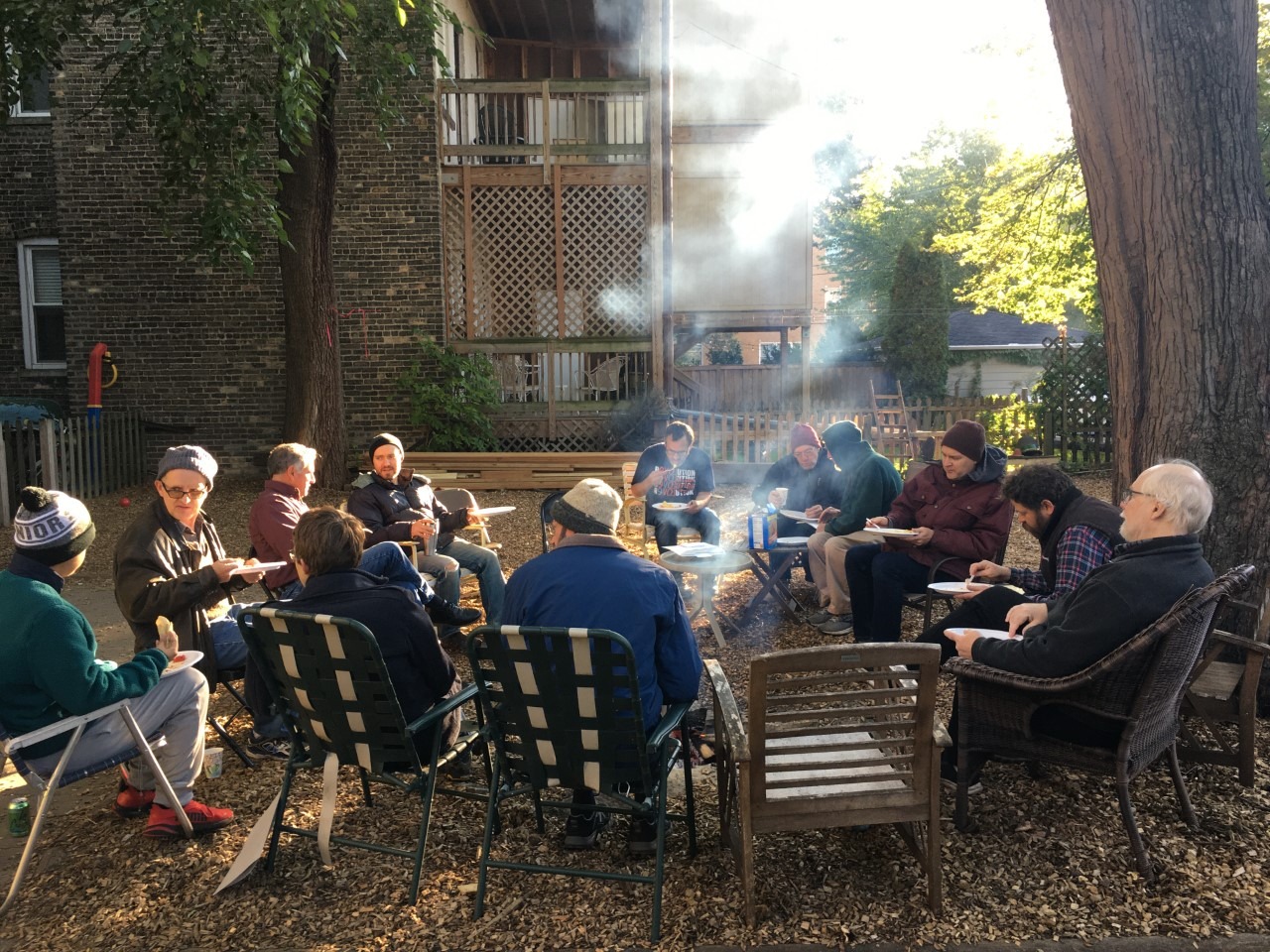
    What does it mean to be a man in today’s world? A Christian man in North America? How do men deal with harmful legacies of “traditional” masculinity? These were just a few of the questions that 18 men gathered to ponder and reflect on during a half-day retreat at Zion Mennonite Fellowship, in Elmira, Ontario.

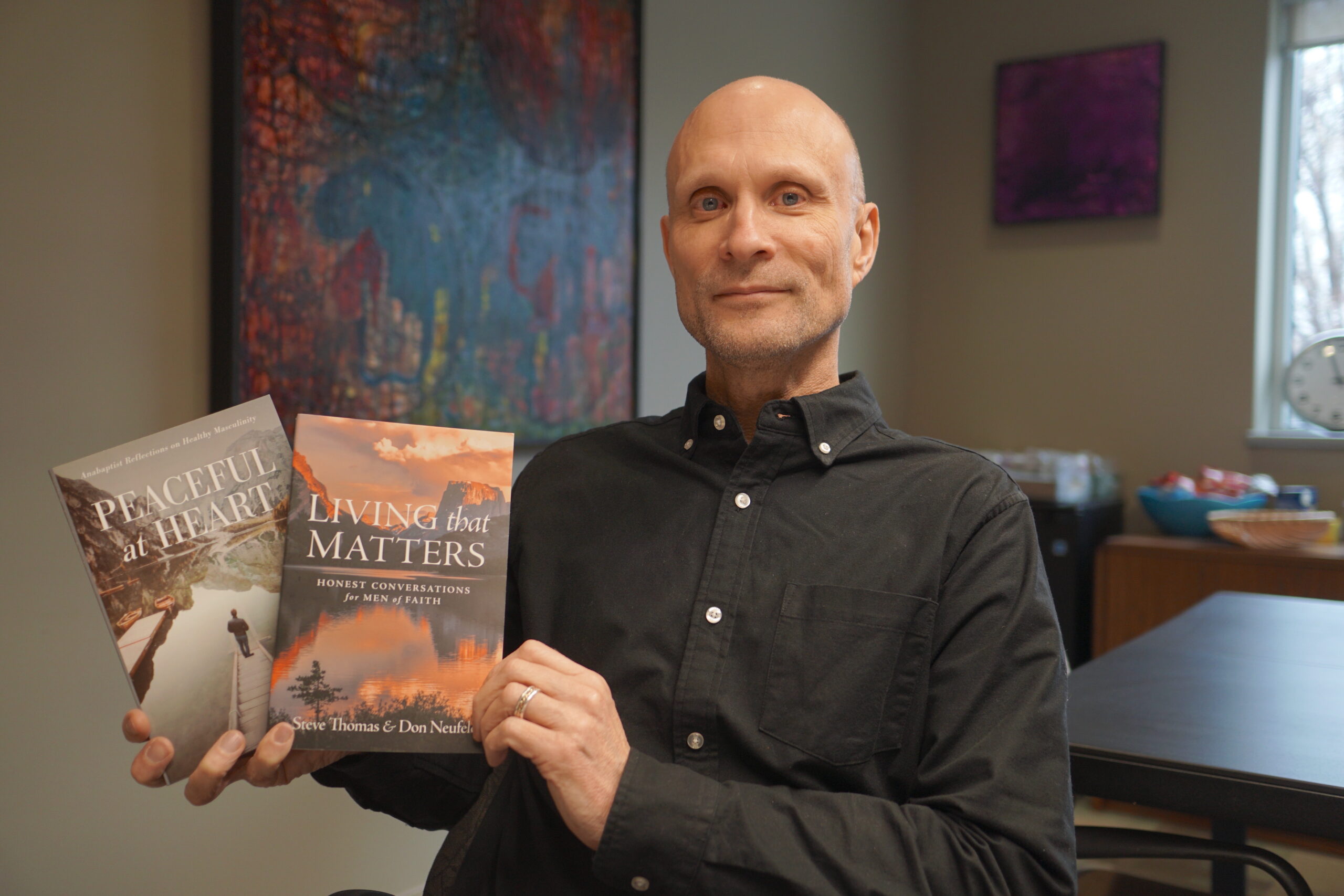
    The idea for the retreat started with a book edited by Don Neufeld and Steve Thomas called Peaceful at Heart: Anabaptist Reflections on Healthy Masculinity. It is a collection of essays from men and women from all over Canada and the United States who reflect on their experiences, traumas and healing related to masculinity using Anabaptist theological themes of discipleship, community and peace.

    Monty Woodyard was one who participated in a virtual book study of Peaceful at Heart facilitated by MCC’s Restorative Justice program staff Rod Friesen and David Blow. “I was surprised and impressed by the combination of good resource material, uncertainties involving life in the pandemic and guidance of the Holy Spirit,” reflected Monty. “Those conversations led us to speak and listen about struggles we had all experienced being male in North American society during the early twenty-first century. It was an eye-opener for all of us. I had never been part of such a group of men willing to engage in depth over serious issues relating to masculinity.”

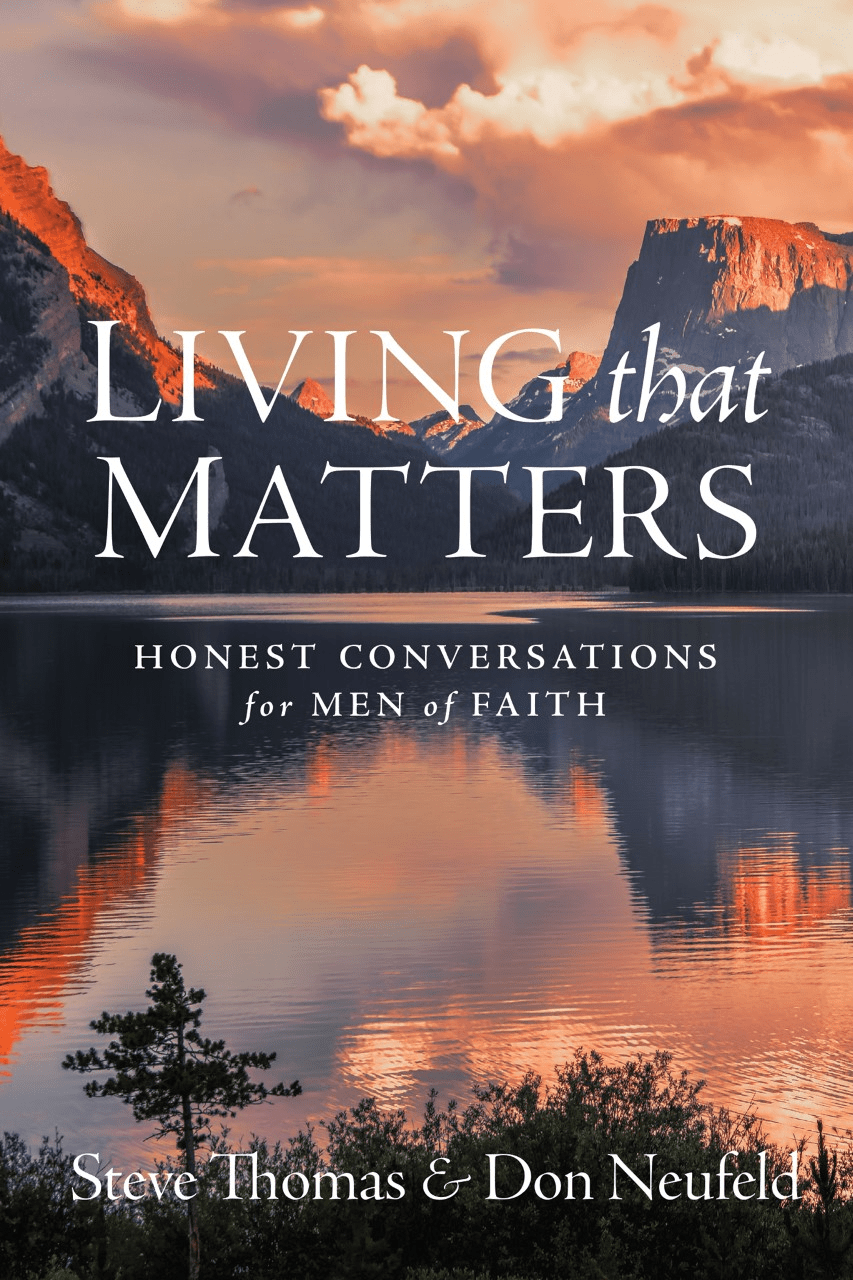
    Monty was so inspired that he wrote a sermon about this exploration of healthy masculinity at his home church, Zion Mennonite Church. Around that time, Neufeld and Thomas co-authored another book, Living that Matters, designed to serve as a guide to men’s study groups on healthy masculinity. Monty noticed on the Mennonite Men website that Steve Thomas had offered to facilitate half-day weekend retreats in the U.S. on healthy masculinity. “I thought that a retreat might give men a first-time experience in speaking about things that really mattered with other men,” says Monty. “I hoped it could be a first step for some to a more sustaining study group on healthy masculinity.”

    Monty reached out to Rod Friesen, who was enthusiastic about the idea for a men’s retreat, and together with Don Neufeld and David Blow, they began planning the half-day retreat. MCC supported financially and with outreach to its diverse constituency.

    “Honestly, the hardest part of putting this together was getting the men out,” remembers Monty. “But in the end, we were so thrilled that we got as many men out as we did.” There were men from nine different area churches in Southwestern Ontario, with ages ranging from young fathers in their 30s to men in their 80s.

    “The most encouraging and enjoyable aspect of the morning was the active conversations, in small groups and in the larger group dialogue,” says Don. “They were just so willing to lean into honest conversations about masculinity.”
    Monty agrees that the vulnerability and willingness to share showed a real appetite for this kind of sharing amongst men. “We heard that men crave more than just a 20-minute sermon every week. I was seeing people connect one-on-one outside the agenda to arrange to follow up personally on something that was meaningful to them, which was also great to see.”

    The richness of sharing on the topic of healthy masculinity revealed to Monty, Don and Rod both the benefits and the need for more of this deep discussion.

    “I would love to take this event on the road and would welcome any partners who would reach out,” reflects Don. “I believe this first run was a grand success in showing the potential of this type of event in the future!”

    You can find Peaceful at Heart: Anabaptist Reflections on Healthy Masculinity here.
    And Living That Matters here.

    If you are interested in joining this discussion or are simply curious to learn more, contact Rod Friesen at rodfriesen@mcco.ca or Don Neufeld at don.neufeld@outlook.com.

    Photo credit: MCC photo/Ken Ogasawara


  • Purpose

    Purpose


    Why do we exist? We have a purpose in life linked to God’s great project. Once we discover this, we realize our lives matter and that we are part of something bigger than ourselves. Knowing and serving this purpose gives our life focus, meaning, and joy.

    Our purpose is linked with God’s purpose to establish shalom in the world. Shalom is the rich Hebrew word for a peaceable order with collective abundance, security, and justice throughout all creation. It’s the universal wholeness God seeks to restore on earth.

    Jesus knew and served his own purpose. He sums it up in these words: ‘I came that they may have life and have it abundantly’ (John 10:10). John describes God’s abundant life that Jesus brought in terms of freedom, love, and peace. In the last recorded conversations Jesus has with his friends, he says that he wants them to enjoy and extend this life (John 15:1–16; 20:21).

    In short, this is also our purpose—to enjoy and extend God’s abundant life.

    Enlarging this in terms of John’s gospel, our purpose in life is to enjoy and extend God’s abundant life of freedom, love, and peace.

    We all have a common purpose in life. How we serve this varies from person to person. We each have a personal mission in God’s project. In the Bible, we see a whole cast of characters, each playing their part in serving their mission.

    Consider the particular mission of a few of God’s people:

    • Moses—to free the Hebrews
    • Esther—to save the Jews
    • Nehemiah—to rebuild the walls of Jerusalem
    • Jeremiah—to restore hope among the exiles
    • Mary—to bear Jesus into the world
    • Luke—to tell the story of Jesus and the church
    • Paul—to share the gospel to Gentiles

    These people played prominent roles serving their purpose in life. But most characters in God’s story are never named. If they are, they receive only honor- able mention. Like Joseph—the carpenter and husband of Mary—who simply did what God asked of him. Over forty people are named in the genealogy of Jesus. Some are well known, others not. Some are virtuous, others not. Most of us fall in the ‘others’ category. Nevertheless, we too, in the legacy of Jesus, have a part to play in serving our purpose.


    Read the other reflections in Living that Matters: Honest Conversations for Men of Faith, which serves as a men’s guide for conversation and reflection and includes 70 topics, for use by individuals or groups. Order Living that matters: Honest Conversations for Men of Faith HERE.


  • Reba Place Men’s Group Benefits From Recent Book Release

    Reba Place Men’s Group Benefits From Recent Book Release

    At Reba Place Church (Illinois Mennonite Conference), in a densely populated urban neighborhood in Evanston, Illinois, a group of men gather together once a month to encourage and pray for one another. Our group shares the commitment to spiritual growth and deepening our connections with one another as we navigate the complexities of modern life. At the core of our gatherings is the invaluable resource: Steve Thomas and Don Neufeld’s book, Living that Matters: Honest Conversations for Men of Faith.

    On the second Wednesday of every month, we set aside an hour and a half to meet and connect. Our meetings are characterized by a sense of safety and acceptance, where every member is encouraged to be themselves. In a world often dominated by expectations and facades, our group provides a sanctuary where authenticity and vulnerability are celebrated. One of the men recently shared, ‘The things men go through in our society are not easy and this group helps me to not feel alone in the process.’

    Our meetings center on Living that Matters, a guide book summarizing crucial topics, serving as our roadmap for discussions on issues relevant to men. Notecards with topics written in bold black marker are laid out on the table. These notecards correspond to topics in the book. We take turns removing the notecards until one remains, and that is how we decide which topic we will ponder and discuss. We find the page(s) in Living that Matters, each reading a paragraph out loud. The following are some of the subjects we’ve chosen: grief, success, integrity, eros, failure, and nonviolence. These discussions help us explore and confront the complexities of modern life with our Anabaptist faith and the support from our brothers. We are continually amazed by the brevity in which the authors introduce complex topics in a two-page spread, covering multiple perspectives that is sure to start a lively conversation that gets to the heart of the matter.

    Solitude, Seeking, Solidarity: A Transformative Structure

    The structure of our gatherings is a carefully crafted process, allowing for silent reflection, personal connection, and collective growth. The three stages of our meetings are: Solitude, Seeking, and Solidarity.

    1. Solitude (10 minutes): After choosing the topic and reading the summary pages from Living that Matters we enter our time of Solitude. In the midst of our busy lives, we take a moment of stillness to connect with God and to reflect on the topic that we just read out loud as a group.

    2. Seeking (20 minutes): We seek one another out and pair off to have deeper and more meaningful one-on-one conversations. These dialogues are not debates; they are heartfelt exchanges where we seek to understand each other’s perspectives, experiences, and faith. Each person gets 10 minutes to share or they enjoy a casual back and forth conversation.

    3. Solidarity (30 minutes): In the final stage, we assemble as one group. Here, we put into practice the lessons of our faith, listening with open hearts. We share reflections, struggles, and joys. It’s a time of connection as a small group, where the act of listening becomes a gift of love. We are not there to merely debate or discuss ideas; we are there to pray for one another, to grow closer to Christ as brothers, as beloved sons of God.

    Annual Men’s Retreat at Menno Haven Retreat Center

    Two years ago, Steve Thomas came to Reba Place Church to lead a weekend retreat. Steve masterfully led us through learning experiences that challenged us to grow in wisdom, strength, and love. It was a critical time for us to confront immature versions of our identities as men and mature into beloved sons of God. Since then, we’ve continued to go on annual men’s retreats to Menno Haven Retreat Center to surround ourselves with the beauty of nature as we engage in practices like Lectio Divina, praying together and spending time around the campfire. It’s an inspiring time to reconnect with both God and nature, fostering a deeper understanding of our faith and purpose as disciples of Jesus.

    The Men’s Group at Reba Place Church is a seed planted in fertile soil, sprouting and branching out in faith, authenticity, and brotherhood. Many of us have a tendency to isolate and disengage, but the book Living that Matters has helped our group grow closer together because of the wisdom that draws us in every time. Steve Thomas and Don Neufeld have given the church a tremendous gift: teaching us to embrace ourselves as beloved sons of God; respecting all people as beloved children of God; following Jesus, the image of God and model human being; engaging our faith to partner with marginalized people seeking justice; protecting the earth as stewards of God’s creation; serving the mission of God’s shalom on earth; and becoming strong, loving and wise in the Spirit.


  • Shame

    Shame

    Excerpted from Living That Matters: Honest Conversations for Men of Faith by Steve Thomas and Don Neufeld. Used by permission of Herald Press. All rights reserved.


    Brené Brown defines shame as ‘the intensely painful feeling or experience of believing that we are flawed and therefore unworthy of love and belonging.’ Living with or in shame goes deeper than dealing with behaviors, shortcomings, and errors. Shame strikes at the center of who we are, telling us we are flawed and unworthy at our very core and that this awful reality can never change, because it’s just the way we are. Shame leaves us feeling that there is no way out other than medicating our pain or looking for someone or something to unload our self-loathing on.

    Believing that masculinity must be proven and maintained through performance, men are especially prone to the effects of shame. As Brown writes, shame for men means failure, being wrong, defective, soft, weak, fearful. When we’re ridiculed or called out for any of these things, it’s like a strong punch to the gut. ‘Basically,’ Brown writes, ‘men live under the pressure of one unrelenting message: Do not be perceived as weak.’

    Shame is strong. It can undermine courage, connection, and vulnerability. But it cannot endure self-compassion and honesty, especially when practiced in the loving embrace of true relationship. When someone welcomes us with an open heart and affirms our worthiness, it unlocks a door to share honestly about the things that are most difficult to face about ourselves. When we speak our shame in the presence of that welcoming other, shame’s power over our life withers.

    Living that Matters: Honest Conversations for Men of Faith serves as a men’s guide for conversation and reflection and includes 70 topics, like Sexuality, for use by individuals or groups. Order Living that matters: Honest Conversations for Men of Faith HERE.


  • Workers

    Workers


    Excerpted from Living That Matters: Honest Conversations for Men of Faith by Steve Thomas and Don Neufeld. Used by permission of Herald Press. All rights reserved.

    For many men, no role may dominate their waking hours more than that of worker. The usual response to ‘Tell me a little about you’ will often be some description of our work life: ‘I’m a farmer’; ‘I’m an engineer’; ‘I’m a construction worker’; ‘I’m a teacher’; ‘I’m a pastor.’

    So much of male identity has been wrapped up in employment, productivity, and earning a living for oneself and one’s family. A sense of worth or self-esteem teeters on having a job, and better yet, the right job. Leaving or losing a job can trigger a significant identity crisis. For some men, work brings much reward and accomplishment, with the greatest meaning when it serves a sense of vocation— that is, when our work is aligned with our calling to serve something bigger. For others, work life brings years of drudgery, risk, and sometimes even death.

    For boys and young men, coming of age has generally demanded pursuing some form of employment or career. Disruption of this path, especially in times of social and economic uncertainty, leaves many young men confused and distraught.

    At the other end of life are those whose employment has been interrupted by economics or life circumstances that leave them unmoored and lacking purpose. For some men, the prospect of retirement might mean a crisis of financial uncertainty or meaninglessness as they face the loss of not only a regular paycheck but also their identity tied to a trade, or company, or colleagues who have been their only friends in life.

    Living that Matters: Honest Conversations for Men of Faith serves as a men’s guide for conversation and reflection and includes 70 topics, like Sexuality, for use by individuals or groups. Order Living that matters: Honest Conversations for Men of Faith HERE.


  • Vulnerability

    Vulnerability

    Excerpted from Living That Matters: Honest Conversations for Men of Faith by Steve Thomas and Don Neufeld. Used by permission of Herald Press. All rights reserved.

    There is little that goes more against the grain of traditional masculinity than the concept of vulnerability. In fact, much of what is generally taught to boys and men about being men is designed to limit vulnerability and fine-tune “strength.” How do we reconcile our understandings of healthy strength and determination that serve our humanity well with the absolute-must relational requirements of vulnerability?

    “Vulnerability is the core, the heart, the center, of meaningful human experiences,” writes Brené Brown. If this is true, given the opposite messages men have been receiving about power and strength, how have we managed until now? Are we in a different time and place that might allow us to embrace vulnerability in a new way as men?

    Emotional vulnerability, according to Brown, is “the cradle of the emotions and experiences that we crave. Vulnerability is the birthplace of love, belonging, joy, courage, empathy, and creativity. It is the source of hope, empathy, accountability, and authenticity.” Our ability to connect, belong, and love is made possible by our ability to open ourselves to each other, to let down our guard, to be truly willing to give and receive vulnerably.

    The surprise of healthy vulnerability is that it’s actually an outcome of a certain kind of strength. When we know who we are as God’s beloved and that our worth comes from the fact that God created us, we can more easily dare to show our true selves.

    Living that Matters: Honest Conversations for Men of Faith serves as a men’s guide for conversation and reflection and includes 70 topics, like Sexuality, for use by individuals or groups. Order Living that matters: Honest Conversations for Men of Faith HERE.

  • Sexuality: God’s gift

    Sexuality: God’s gift


    Excerpted from Living That Matters: Honest Conversations for Men of Faith by Steve Thomas and Don Neufeld. Used by permission of Herald Press. All rights reserved.


    A journalist once asked, Why are men so consumed by sex? ‘Did nature sim­ply overload us in the mating department, hot-wiring us for the sex that is so central to the survival of the species, and never mind the sometimes sloppy consequences? Or is there something smarter and subtler at work, some larger interplay among sexuality, life and what it means to be human?’1

    We answer, ‘Both.’ As animals, we are hardwired with a sex drive for mating. As humans, we are also designed by God for loving, sexual intimacy. Both are true and create a dynamic tension within us as we experience a primitive drive to unite with physical body as well as a deeper spiritual desire to connect with another person.2 Both of these are part of our God-given impulse to ‘become one flesh’ (Genesis 2:24). God created sex not only for procreation but also for pleasure and intimacy in a secure, loving relationship where these are most fully enjoyed.3

    As the words themselves demonstrate, sex is part of sexuality. And sexuality and spirituality also belong together. They share a common longing for union with another—we desire sex and long for intimacy.4 But these two ways of being are often split apart, especially by men.

    Living that Matters: Honest Conversations for Men of Faith serves as a men’s guide for conversation and reflection and includes 70 topics, like Sexuality, for use by individuals or groups. Order Living that matters: Honest Conversations for Men of Faith HERE.


  • Friends: shelter, treasure, medicine for one another

    Friends: shelter, treasure, medicine for one another

    Excerpted from Living That Matters: Honest Conversations for Men of Faith by Steve Thomas and Don Neufeld. Used by permission of Herald Press. All rights reserved.


    a5153d4f-2a66-a071-dab6-dc73ee4525c5.png

    Great books and films often depict the important role of friends. Consider Sam accompanying Frodo on his journey in The Lord of the Rings. Frodo wouldn’t have made it and completed his mission without Sam. And Frodo’s recovery and joy were complete in the end only by being reunited with his friends.

    The author of the Book of Sirach (in the Apocrypha) writes on the gift of being and having friends:

    Faithful friends are a sturdy shelter:
    whoever finds one has found a treasure.
    Faithful friends are beyond price;
    no amount can balance their worth.
    Faithful friends are life-saving medicine. (6:14–16)

    The writer also describes false friendship to show what true friends are like. Faithful friends stand together in times of trouble. They are faithful in conflict. And they are close in adversity (6:8–13). When we have true friends, we can say with the writer, ‘Wine and music gladden the heart, but the love of friends is better than either’ (40:20). The friendship between David and Jonathan illustrates this love that is intimate, steadfast, and protective (1 Samuel 18–20, 23; 2 Samuel 1).

    Jesus was a true friend. Consider his concentric circles of friends and what he modeled. We think first of his twelve companions. Within this circle was the inner circle of Jesus, Peter, James, and John. And inside this circle, Jesus enjoyed his closest friendship with John, the ‘beloved.’ Even with Jesus, we see different levels of friendship. Outside the twelve, Jesus also had many other friends, like Mary, Martha, and Lazarus. Jesus looked upon them not simply as followers but also as friends. He made this clear in the end when he said, ‘I do not call you servants, . . . but I have called you friends’ (John 15:15). When Lazarus died, Jesus cried. When others saw Jesus weeping, they exclaimed, ‘See how he loved him!’ Here’s a strong man crying over the death of a friend (John 11:35–36). Such was the love of Jesus for his friends.

    Notice that Jesus chose to be with others who were significantly different from one another. For example, Jesus chose to be friends with Simon—a revolutionary Zealot—and Matthew, a tax collector and a Roman collaborator. Arguments and conflicts among the twelve disciples demonstrate that these friendships were challenging. But as we discussed earlier, conflict is simply a normal part of relationships. Rather than seeing it as a problem, Jesus saw these occasions as opportunities to learn.

    Jesus formed close friendships not only with men but also with women, like Mary and Martha. This was radical for his day. With both men and women, he modeled learning and growing together as a company of companions.

    In his relationships, Jesus shows us that friends embody love for one another. In being friends, we receive and extend God’s love. And as we include others in our circles of belonging, we widen the embodied circle of God’s love in the world.

    How can we be better friends? By

    • having regular habits of meeting together,
    • being vulnerable in order to truly know each other,
    • sharing our joys and struggles,
    • extending God’s unconditional love.

    Being friends takes practice—that is, regular habits of being together. I have been in small groups of women and men who meet regularly to share deeply of life and faith. I have also had the weekly practice of walking with a friend at six in the morning before work. And for many years, I’ve met with a men’s group every other week at six in the morning. Sometimes I just want to sleep in, especially on dark winter mornings, or stay home after a long day. When I look at my busy calendar or feel tired, I sometimes wonder whether it’s worth the time and effort. So what keeps me going? It’s what we experience together as friends by being a shelter, treasure, and medicine for one another.


    Living that Matters: Honest Conversations for Men of Faith serves as a men’s guide for conversation and reflection and includes 70 topics, like inclusion, for use by individuals or groups. Look for the book’s release from Herald Press in January, 2023. Preorder Living that matters: Honest Conversations for Men of Faith HERE.


  • Inclusion: breaking barriers, building shalom

    Inclusion: breaking barriers, building shalom


    This piece comes from the upcoming book, Living that Matters: Honest Conversations for Men of Faith.


    In the classic story Animal Farm, barnyard animals revolt and set out to establish a better social order than what they had under the farmer. After the revolution, they create commandments to reorder their life: No human is above them. No one calls another ‘Master.’ All animals are equal and included in their life together. But in the course of time, pigs take charge and arrange things to their benefit. With their power, pigs reduce the commandments from seven to one: ‘All animals are equal, but some animals are more equal than others.‘ Certain animals regarded as ‘lower animals’ are not allowed to partake of the prosperity of Animal Farm. In their second- class position outside the house, those animals watch pigs inside enjoying what they are denied.

    George Orwell told this ‘fairy story’ based on his observations of human behavior in social orders. He drives home the point that no matter what a group or constitution may say, ‘some are more equal than others.’ Societies may claim otherwise even while treating some as less equal and deserving while giving power, privilege, and goods to others.

    Wherever the animal farm or human group may be, some people tend to be treated as second-class citizens, denied certain benefits and excluded from opportunities others have. This social exclusion is based on skin color, religious beliefs, income, gender, sexual orientation, physical ability, intellectual ability, political opinions, and appearance. It ranges from exclusion on the playground to being marginalized in other areas of life where certain individuals are not allowed to fully participate in the economic, social, and political life of their society.

    This also happened in the time of Jesus. The Gospels describe Jesus modeling the way of loving inclusion for all people as God’s beloved children in his responses to the following types of social exclusion:

    • Class-based exclusion—when Jesus called working-class fisherman as his disciples and future church leaders
    • Gender-based exclusion—when Jesus developed close relationships with women and drew them into his circle of disciples
    • Ethnic-based exclusion—when Jesus extended healing to the Syrophoenician’s daughter and the centurion’s servant
    • ‘Purity’-based exclusion—when Jesus made physical contact with individuals considered unclean
    • Conduct-based exclusion—when Jesus let prostitutes in and became known as a ‘friend of sinners’
    • Age-based exclusion—when Jesus called to himself children who were kept aside
    • Party-based exclusion—when Jesus invited both Matthew as a tax collector (supporting Rome) and Peter as a Zealot (resisting Rome) into his circle

    Jesus’s interactions with two socially excluded outsiders—a Samaritan woman and a Syrophoenician woman—are especially interesting. When Jesus relates to the Samaritan woman at the well, he crosses boundaries between men and women, Jews and Samaritans, religious and sinners. The woman is surprised by his inclusive actions (Jn 4:1–30). By contrast, Jesus appears to mistreat the Syrophoenician woman based on her ethnic identity. To his surprise, she confronts his exclusive healing.

    He then extends God’s healing to her daughter as requested (Mk 7:24–30). This Syrophoenician woman had something to teach Jesus!

    Having observed Jesus’s response to outsiders, Paul proclaimed that Jesus had broken down dividing walls to create in himself one new humanity in place of two (Eph 2:14–15). Based on both our common identity as God’s children and what God had accomplished in Christ, Paul wrote that there are no longer distinctions like Jew or Gentile, slave or free, male or female (Gal 3:28). Extending the way of his brother Jesus, James confronted class-based distinctions practiced even in Christian community (Jas 2:1–6).

    Unlike the banquet at the end of Animal Farm, where only pigs feed at the table while other animals watch outside, the great banquet Jesus describes includes the poor, blind, lame, and people off the street (Lk 14:15–24). No one is more equal than others. Everyone belongs and fully participates in the community. All are inside together and enjoy God’s abundant life. This is God’s shalom.


    Living that Matters: Honest Conversations for Men of Faith serves as a men’s guide for conversation and reflection and includes 70 topics, like inclusion, for use by individuals or groups. Look for the book’s release from Herald Press in January, 2023.


  • After two years, grant provides energy, connection

    After two years, grant provides energy, connection


    Two years after a JoinMen grant helped purchase their first church building, African Community Church of Lancaster (ACCL) is thriving with a renewed sense of vision and connection to the broader Mennonite Church.

    After nearly 15 years of saving and praying, the congregation purchased its first building in Manheim, Pennsylvania in 2020. A $40,000 grant from Mennonite Men’s JoinHands program helped complete the long journey towards the dream of ownership at a critical time in the congregation’s story. ‘We were in a desperate mood,’ recalled Sam Wanjau, pastor of ACCL. Having just purchased the new building, ‘we learned that the parking lot was not drivable and the boiler nearly dead.’ The JoinHands grant, along with two other private gifts, helped the congregation purchase the building without debt and took care of these two major projects. ACCL finally had a home of its own after years of prayer and preparation.

    The financial assistance gave the small congregation a sense of belonging within the broader Mennonite community. As a congregation made up of primarily East African immigrants, many questioned whether they were a valued part of the local faith community. ‘We felt very isolated and some of us wondered whether we made the right choice in coming to the United States,’ said Pastor Wanjau. ‘Having a friend who could support us with no expectations, who we could turn to in desperation, showed us that maybe the cultural and relational barriers aren’t so great as we feared.’

    Church ownership has also given a boost to ACCL’s sense of mission and purpose. A new energy and commitment to their various projects followed their move and resulted in a new level of financial flexibility and freedom to creatively explore new ministry. ACCL now supports four church plants and their associated ministries in East Africa along with their local commitments to organizations like Water Street Rescue Mission. They also serve as a soft landing place for other East African immigrants who arrive in Lancaster before transitioning to other parts of the country.

    Support from Mennonite Men and other groups and individuals within Mennonite Church USA and Atlantic Coast Conference helped bridge a feeling of isolation felt by the immigrant congregation and contributed to their thriving and growing ministry in their community and beyond.

    If your congregation is a Mennonite congregation that is 10 years old or less and is looking to acquire its first building, you can find out more about the JoinHands program at mennonitemen.org/joinhands.