Category: JoinMen

  • Navigating Boys’ Rites of Passage: Anabaptist Insights from Follow Jesus 2025

    Navigating Boys’ Rites of Passage: Anabaptist Insights from Follow Jesus 2025


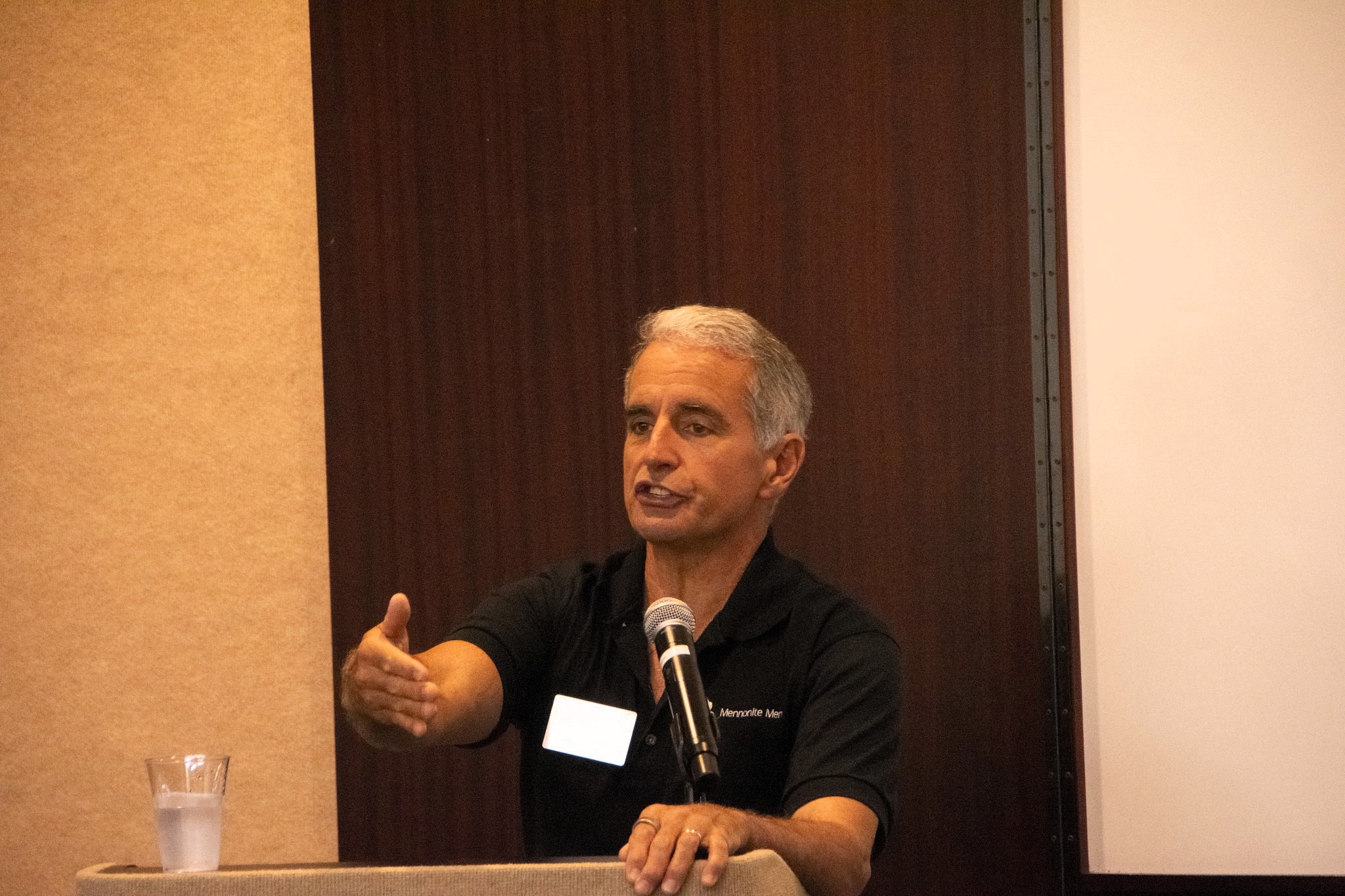
    The Follow Jesus 2025 denominational gathering in Greensboro, North Carolina, was an incredibly rich opportunity to interact with a wide swath of people from Mennonite Church USA. I am still riding the wave of gratitude for having been able to attend and to co‑present a workshop along with Co‑Coordinator Steve Thomas and Mennonite Men board member (and pastor) Phil Schmidt.

    One of our workshops was called “Boys’ Rites of Passage: Anabaptist Perspectives.” Despite the small room size, over 30 people attended, including men and women of various ages and geographic regions, as well as high school and college students.

    Mennonite Men has been asked by parents what we, as an organization, can offer to support boys who are coming of age in ways that are rooted in Anabaptist Christian faith and theology.

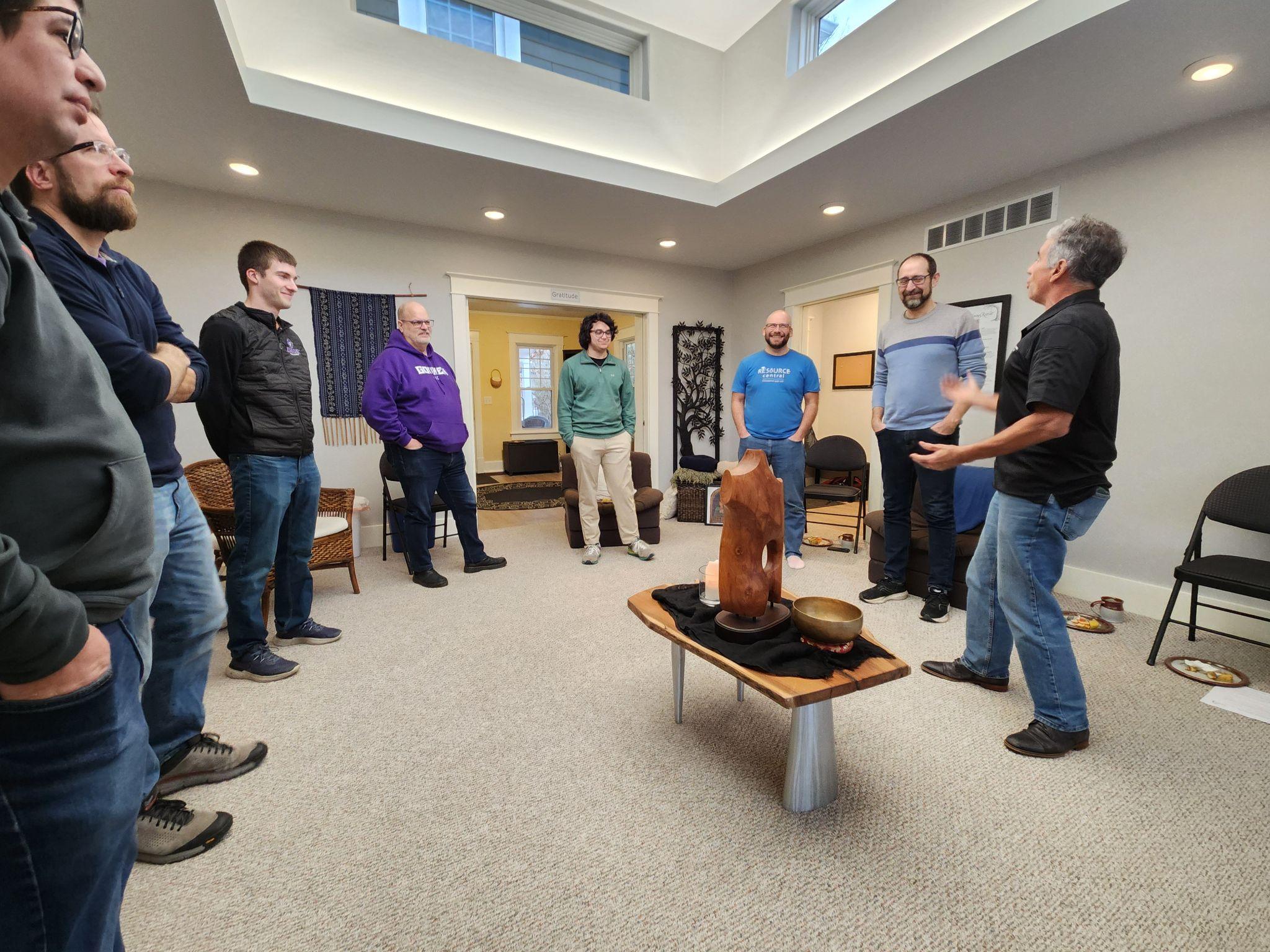
    Steve, Phil, and I began the workshop by each sharing our own personal experiences participating in Men’s Rites of Passage (MROP) retreats as adults—a five‑day gathering organized by Illuman, which was started by Franciscan priest Richard Rohr. The bulk of the workshop was spent dialoguing about how to support boys as they come of age.

    The in‑person exchanges during the workshop were informative and at times vulnerable, stretching us all to think deeply and share honestly about the real challenges boys face.

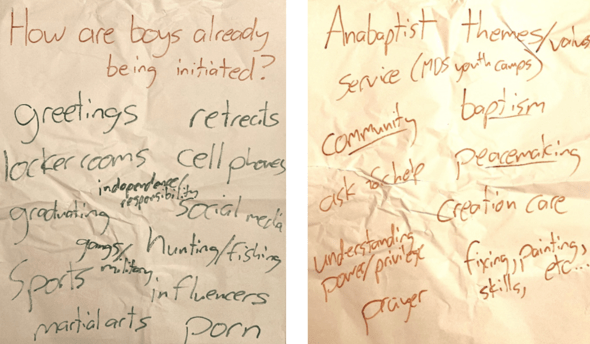
    The most fruitful aspects of this workshop included direct input from attendees. Each table in the room had two questions written on sheets of paper: (1) How are boys already being initiated? (2) What might be particularly Anabaptist about boys’ rites of passage? Folks were given time to reflect, then share aloud with others at their table, before we invited people to share with the whole room. Looking at what was shared, something stood out: our Anabaptist Christian values and intentions appear strikingly different from many of the ways boys are otherwise initiated in everyday situations.

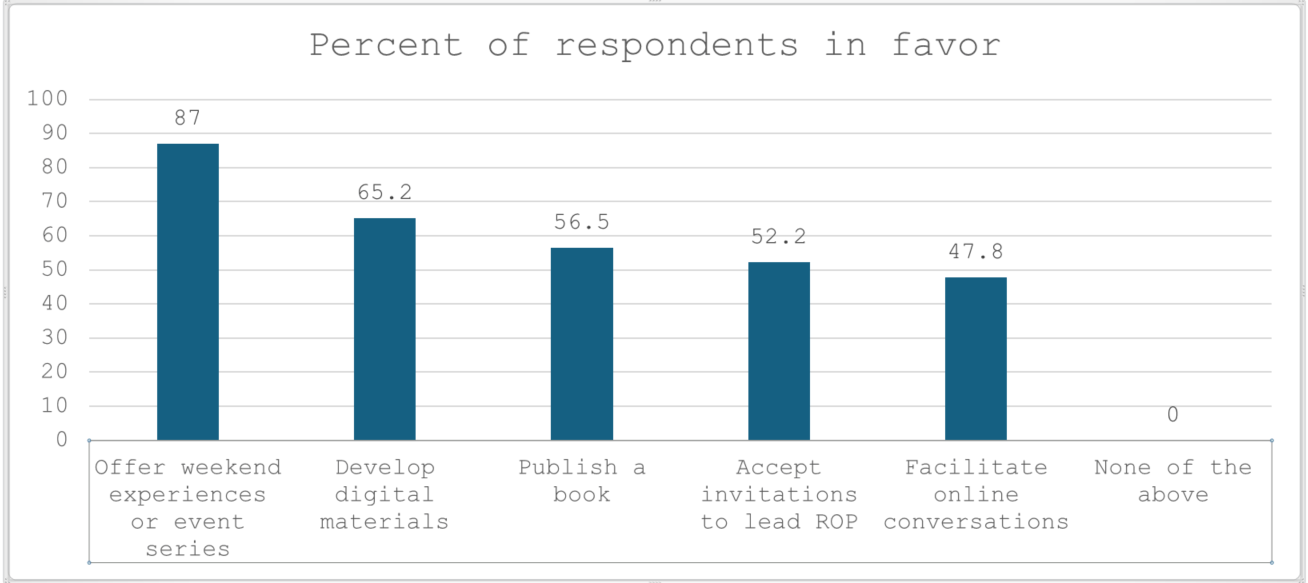
    Before attendees left the session, we asked them to fill out slips of paper about how Mennonite Men staff and board could be of service regarding boys’ rites of passage from Anabaptist Christian perspectives. We were grateful to collect responses from 23 attendees. Below is a table showing the percentage of attendees in favor of several possible actions Mennonite Men could take.

    We left the gathering with new clarity: people do want to see Mennonite Men take action in specific ways to support boys’ rites of passage as Anabaptists, and we now have data on which to base these actions.

    The most requested service was to offer in‑person weekend experiences or a series of events that could help prepare adults and boys for rites of passage. This idea is encouraging, and we hope to lean into this request. Creating and posting digital materials on our website related to boys’ rites of passage was the second most requested service. Other actions generated positive responses from about half of the attendees.

    Mennonite Men now has concrete action items to work with and is beginning to discuss possibilities. Preparing for this work will take more input, as well as resources to do the work.

    To get started, we are offering an online Zoom meeting for folks who want to connect about boys’ rites of passage from Anabaptist Christian perspectives. The first Zoom meeting will be on Thursday, September 25, from 8:00 to 9:00 p.m. Eastern Time. To register for this free gathering, complete a short registration form at: us02web.zoom.us/meeting/register/kNwKon01Rp6p2naMJn3FCg.


  • Learning to Listen

    Learning to Listen

    As a co-director of Mennonite Men, it feels important to get to know Mennonite males from around the country and reflect on unique and shared experiences. Turns out that traveling to the far reaches of the US is not so affordable. And while phone and Zoom calls aren’t quite the same as meeting in-person, they are great ways to listen to, share with, and learn from other men working at being followers of Jesus for God’s shalom.

    I recently had a virtual conversation with a fellow Mennonite male in Idaho, Rob Hanson, thanks to an introduction from contacts in Pacific Northwest Mennonite Conference. Rather quickly I discovered Rob and I share several passions including conservation, agriculture, soil, and forests. God’s creation clearly means a lot to Rob. But I also sensed Rob’s care for relationships and the well-being of people as well as concerns about violence and poverty in the world. Rob is part of a bagel breakfast men’s group with other men in the congregation where he attends in Boise, Hyde Park Mennonite Fellowship. I was grateful to connect about shared experiences and have much to learn from Rob.

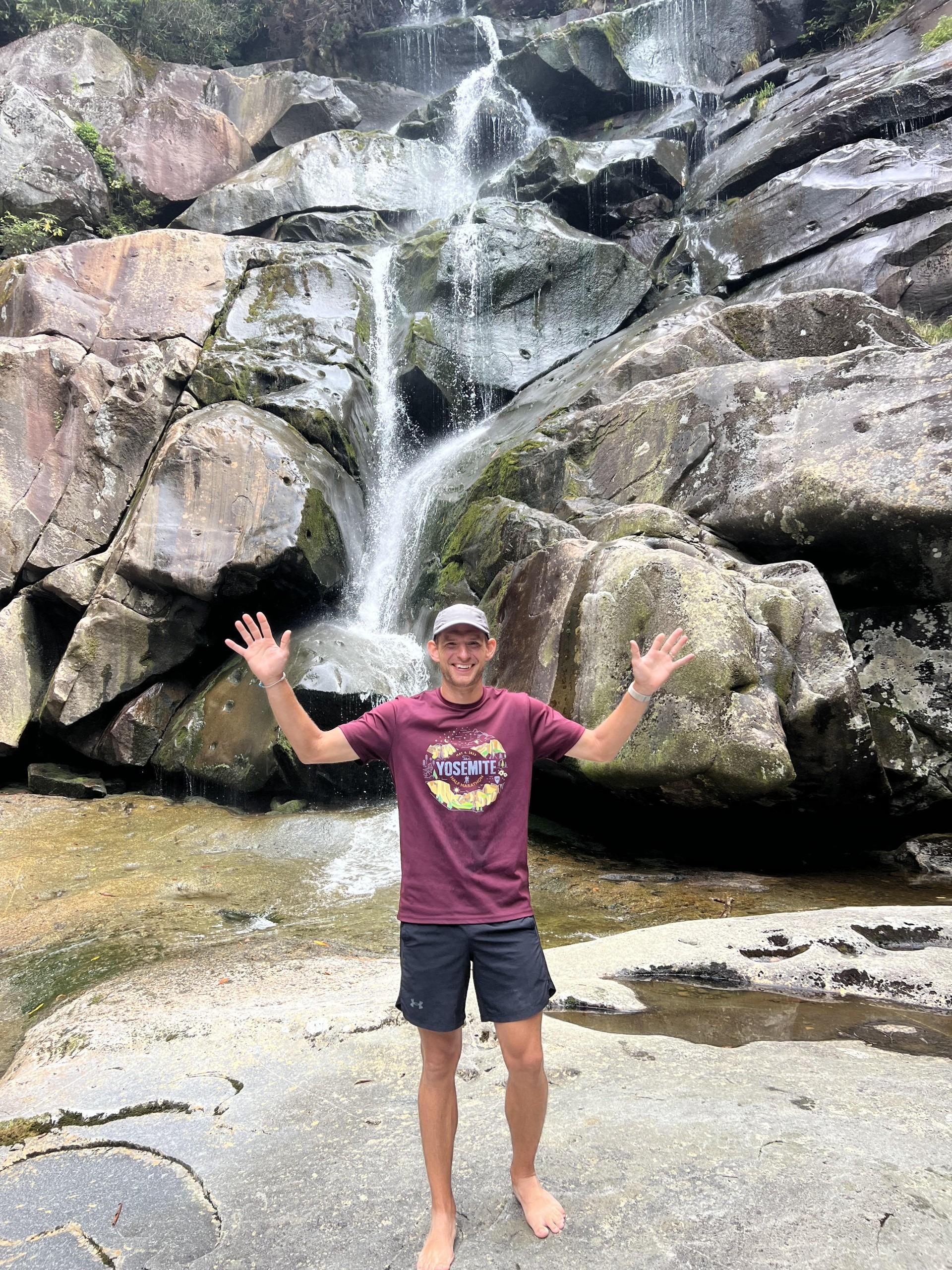
    Photo: Rob Hanson, provided by himself.

    Rob grew up evangelical and his wife grew up Catholic. Their journey to Mennonite Christian faith has been decades in the making. I was honored to hear about Rob’s faith journey and lessons learned along the way. We talked about our younger years, our younger selves, and our faith development and perspectives as we’ve encountered people with differing beliefs and perspectives.

    “As a male growing up, I thought it wasn’t okay to be wrong or to admit that I didn’t know the answer to something. As I get older, I’m letting go of these notions,” Rob shared.

    He gave an example from real life. “After moving to Idaho, I realized there are many Latter Day Saints folks in my area. Growing up, I was taught that the Church of LDS was a cult. Now I open my heart to them.”

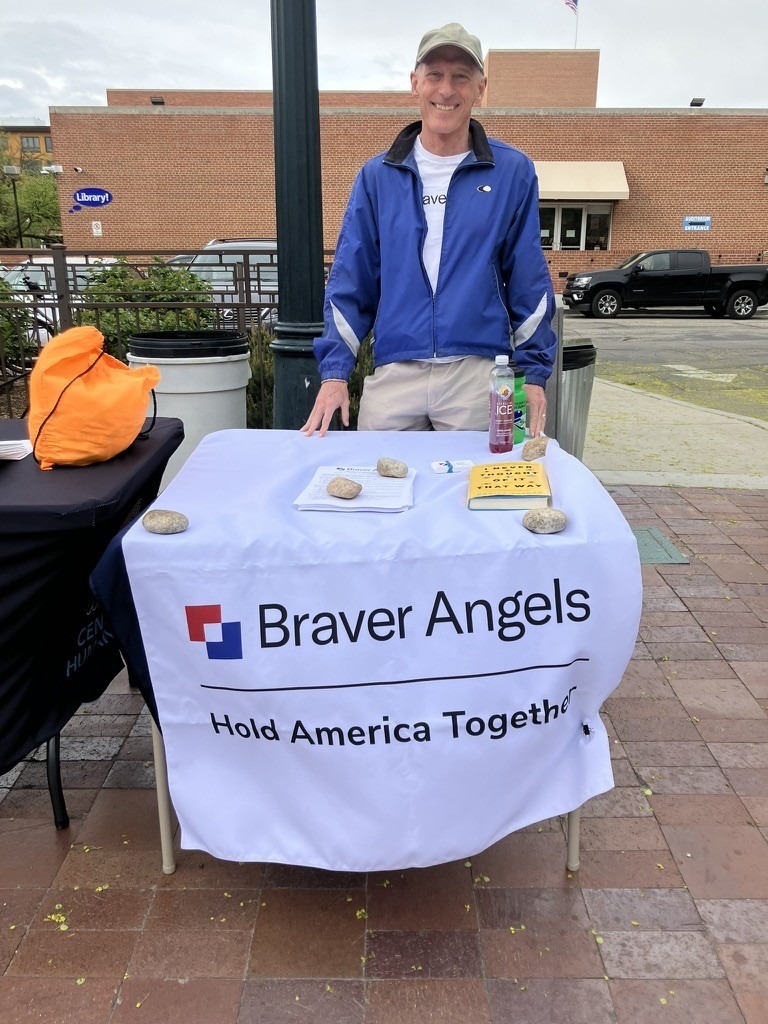
    Soon our conversation led to talking about Rob’s involvement in the work of Braver Angels, an organization that his congregation has supported. Braver Angels is a non-partisan civic organization that welcomes peopel of all faiths and brings together people of polarized political viewpoints to respectfully listen to one another, practice dialogue, and build connection despite difference. Thanks to their pastor and a pastoral intern at the time, Hyde Park Mennonite Fellowship has hosted Braver Angels workshops. Rob and others in the congregation have gotten training to be moderators at these workshops. This work has become a ministry.

    I asked Rob how he is working to follow Jesus for God’s shalom these days, a reference to the mission statement of Mennonite Men. Rob directly referenced his involvement in Braver Angels in response.

    “Participating in Braver Angels gives me conversation skills I find important in trying to be a peacemaker,” he told me. “This all takes practice. It’s kinda an art. This work helps show me what my conflict triggers are and helps me learn to be curious about other people’s values… Braver Angels has helped me see others as whole people. Every person is worthy of dignity and respect and honesty. We are all made in the image of God. Through this work I get practice seeing Christ in other people, seeing the holiness in each other. God loves them just as much as He loves me.”

    As men trying to follow Jesus for God’s shalom, Mennonite Men is often trying to redefine what it means to be brave, to be strong, especially when the wider culture associates violence and domination with male bravery and strength. Rob again drew on Braver Angels in response.

    “If I am saved by Jesus, what is there to fear? By getting involved in Braver Angels, I’m trying to convey to others I meet that ‘I wish you the best. I don’t wish you harm.’ I’m learning how to talk to anyone and not be afraid to. That’s a form of bravery,” Rob shared.

    I learned so much in my short conversation with Rob. May you and other males—Mennonites and non-Mennonites!—find encouragement in following Jesus for God’s shalom, as well. To learn more about Braver Angels, visit https://braverangels.org or contact Rob Hanson directly at rhanson@braverangels.org. For more online resources for men’s groups and for spiritual growth, check out our JoinMen tab on our website at mennonitemen.org/joinmen, reach out to us directly, and consider donating to our cause.


  • Join the Conversation: Help Us Explore Anabaptist Rites of Passage for Boys

    Join the Conversation: Help Us Explore Anabaptist Rites of Passage for Boys


    Mennonite Men is gathering information on rites of passage for boys from an Anabaptist perspective. We want to explore the ways that Mennonites have or want to honor boys coming of age in meaningful ways. This could be through the giving of gifts, creating ceremonies, organizing special trips, words of blessing and more. Mennonite Men recognizes that this topic is of interest for a wide range of parents, families, and boys, and that there is not a goal of a singular approach to offering rites of passage that works for everyone. In particular what might be unique about an Anabaptist approach? Perhaps you have ideas.

    This growing interest in rites of passage for boys has led the JoinMen committee and the full board of Mennonite Men to discuss and create an online survey about boys rites of passage. Below is a link to this online survey. We hope many will participate in the survey. The more responses we get the better. Anyone is welcome to fill out the survey, and we also hope that many men will complete the survey.

    Find the survey here

    Jon Zirkle, Co-Director of Mennonite Men


  • Finding Connection: Young Men, Faith, and Community

    Finding Connection: Young Men, Faith, and Community

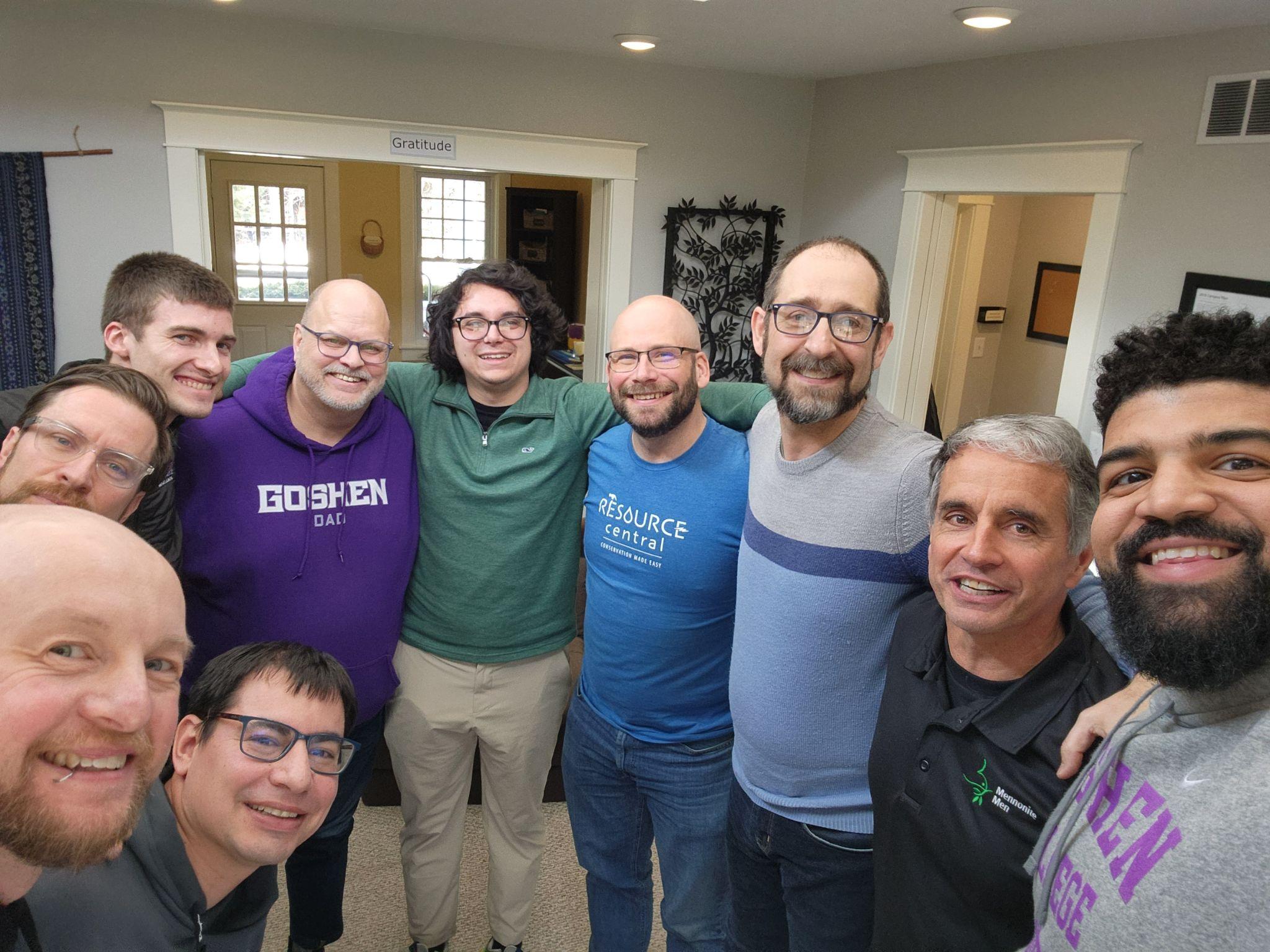
    ​Recently, I went on a walk with several men in their 30s who had attended a Mennonite Men’s retreat I helped lead in November 2024. They had arranged the meetup themselves via group text, eager to reconnect and continue building community. We walked and talked for nearly an hour, engaging in deep conversation.

    I’m excited to see these men taking the initiative to foster meaningful friendships. Many younger men today lack in-person interaction, and some struggle to form friendships at all. This challenge isn’t exclusive to men—I’ve spoken with many young adults, both male and female, who find it difficult to make and sustain friendships.

    These kinds of gatherings may seem surprising, given the stereotype that men avoid personal conversations. Similarly, concerns are often voiced—especially by older Mennonites—about young people disengaging from the church. While I understand their concerns, I also have questions. Are we, as a church, inviting young men into conversations that feel relevant? What topics foster connection and trust across generations?

    During our walk, one participant biked slowly alongside us. As we strolled through the woods and past calming waters, we checked in on each other’s lives. The biker, who was single, shared his experiences with online dating, sparking a lively discussion. Several men spoke about their own experiences, comparing dating apps, discussing their pros and cons, and offering advice.

    I admitted that I had never used online dating—a statement that made me feel like an outlier among Millennials. Still, participating in the conversation was insightful. Online dating is a reality for many Mennonite men, young and old. I even know Mennonites in their 80s who have found it helpful.

    What I observed in this conversation—and in the retreat itself—is that men want connection. They want to talk, exchange ideas, and build relationships. Young men are no exception. If we long for more connection within our congregations, have we fully considered our settings, formats, and discussion topics? What feels relatable and safe to younger generations may seem unfamiliar or even intimidating to older ones, and vice versa.

    By creating intentional spaces for young adults to share their experiences, we foster mutual trust, friendship, and faith formation. Perhaps we might even see greater young adult participation in Mennonite congregations. With a spirit of care and curiosity, faith communities can engage meaningfully with today’s realities—perhaps even discussing topics like online dating in small groups and sermons. In doing so, we live out our faith in ways that resonate across generations.


  • Self exploration through Mens’ Rites of Passage

    Self exploration through Mens’ Rites of Passage


    ‘You should seriously consider doing the men’s rites of passage (MROP) with Illuman someday, Jon. If you decide to go, I’d even help make that happen,’ a good friend told me. I knew in my gut that someday I’d follow through on his invitation and sign up for such a journey. It took me about five years after that conversation, but in September of 2024, I finally went to the four-day gathering in the mountains of western Virginia. Having been through the COVID19 pandemic, years of work stress, and finishing a seminary degree program, the timing finally felt right. I was also hearing about the MROP experience from several guys in my life, including Mennonite Men Executive Director Steve Thomas and Mennonite Men board member and pastor Phil Schmidt.

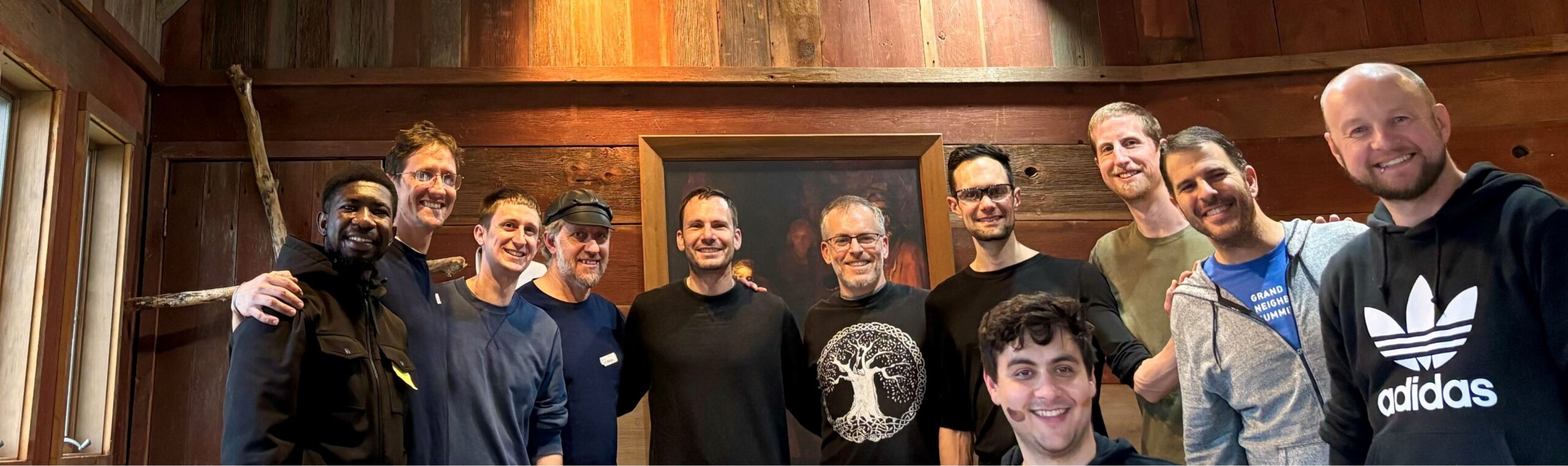
    Jon Zirkle, center above, serves as US co-director for Mennonite Men

    I had my own reservations and perhaps a bit of cynicism before going. Would this be an over-the-top woo-woo experience or worse yet, four days loaded with one-size-fits-all portrayals of masculinity I find uncomfortable? Turns out, my experience was neither of these things, and almost every guy I met also had questions and doubts coming into the experience.

    I didn’t know anyone there when I arrived, agreed to not use my phone for our days and left work behind. I met men from eastern Canada, Maine, Ohio, Massachusetts, D.C., North Carolina, and Alabama, representing a wide range of life experiences and faith traditions. Ranging in age from 29 to 81 years old, 49 of us came for rites of passage, and 42 who’d previously done the rites of passage were present to support the gathering and to pray for us initiates. Yes, 90 total! I can’t recall ever being in an all-male gathering with men willing to get vulnerable, find healing, and go deep.

    Months after my MROP, I still remember the large painting displayed in the pavilion each time the full group gathered: an image of Christ hanging on the cross, eyes looking out, and a diverse depiction of others who witnessed his suffering. As a Mennonite Christian, I’m not that used to seeing huge painted depictions of Jesus’ crucifixion. I’ve seen plenty of images of Jesus on the cross before, but this particular image of Jesus—naked Jesus, looking straight ahead at me—was both searing and healing. I had the time and permission to sit with the excruciating pain I could only fathom Jesus felt as his flesh tore. Deep learnings were etched in me: suffering and pain are unavoidable. I’m not alone on that journey. ‘I see you, and you see me,’ it seemed he said to me.

    Like other memorable spiritual experiences I can recall in my life, the MROP was not just an individual experience. It wasn’t just about me and my personal journey. Rather, it was other guys I met who made the biggest mark on me. Through this four-day experience, I made friends. Soul brothers. We spent time in the woods together, witnessed vulnerable confessions, prayed and cried silently and aloud, participated in powerful rituals, sang, and even danced. Every man was assigned to a smaller ‘council’ group of 5 or so guys, guided by a group leader. My council was incredibly important to my experience, and we’ve stayed in touch after three virtual gatherings together. I do not and will not forget these brothers.

    It wasn’t just about me and my personal journey.
    Rather, it was other guys I met who made the biggest mark on me.

    The Illuman Men’s Rites of Passage is not for everyone. For me it was transformative and continues to help me on my faith journey and in approaching life with greater wisdom, honesty, and deep friendships. I am left with a new sense of freedom and courage, peace about my own limitations, and more compassion for myself and from God. I am also filled with gratitude that Mennonite Men also promotes the MROP on our website and that several Mennonites encouraged me to pursue this.

    I pray more men find the permission, resources, and experiences to grow deeper in their faith, relationships, and sense of God’s belovedness. Whether it’s doing MROP, attending Mennonite Men retreats, joining or starting a men’s group, or checking out our online resources for men, there many ways for me to take a next step.


  • Initiation! Adventure through wilderness and water

    Initiation! Adventure through wilderness and water

    As a congregational pastor, I was in the middle of a three-month sabbatical. What a gift! I had abundant time to be with family, to camp and spend time out in creation, to rest and renew… and yet the cycles of anxiety and anger within me remained. In fact, with so much time to think, the anxiety was actually getting worse. I was feeling stuck, tired, frustrated and ready for something new.

    In early August I journeyed from my home in Goshen, Indiana to Pilgrim Park Camp near Princeton, Illinois for the Men’s Rite of Passage (MROP) sponsored by the Illinois chapter of Illuman. Steve Thomas had encouraged me to attend this formational experience, and it is something that Mennonite Men has been encouraging for a while. As a Mennonite Men board member, I was also interested in attending to see how it might help me focus on men’s work in the future.

    I left home uncertain of what lie ahead. I was aware that the five-day MROP had been originally designed by Richard Rohr, someone whose wisdom I trusted. I knew there would be several other men there. I knew the experience would include fasting and time in the wilderness. But a lot of what I would experience remained a mystery.

    When I arrived at camp, I was welcomed warmly along with 23 other initiates. Additionally, several elders were there the whole time to guide the process and hold the space for us to do deep soul work. We didn’t wade into the work slowly; The expectation was participation and vulnerability, and all of us brothers dove right in.

    Over the next days, we kept diving deeper into our soul work through learning, ritual, time alone, and time in small groups. We explored our mortality, we grieved, we practiced contemplation and we celebrated. Through the experience, I dove deeper into myself than I had before. I discovered inner wounds and lies of my false self. I discovered that my constant anxiety and anger had been churning from those wounds for a long time.

    I discovered that the patterns and mindset of my
    first half of life just weren’t working anymore.

    Throughout the deep dive experience, I also encountered God’s love at my core, energizing my true self. While fasting and sitting alone in the wilderness, I contemplated the presence of a caterpillar and later a butterfly. I began to know in my gut the transformative realities that God is love, that God’s abundant love is within me, and that through God’s love I am interconnected with all things. During this time of awareness, I sat with some deep truths: Life is hard; I am going to die; I am not that important; I am not in control; My life is not about me. With each truth that on the surface sounded negative, I discovered joy and freedom. And in that joy and freedom, I began to discover within myself a new way of being, countering the churning anxiety, connecting with my true self and the divine spark within me and all things. I also experienced an ongoing call to work not only with men in their spiritual journeys, but also to encourage boys in their journey toward authentic manhood.

    Now I am home again. Sabbatical is over and ‘normal life’ has resumed. But somehow I am different on the inside: in my mind, heart, and gut. Yes, anxiety and anger will still be companions on my journey, but they are no longer my guides. I am a beloved son of God, initiated as a man into my second half of life. The journey still lies ahead and the challenges are still real. But instead of fearing the journey, I embrace the path of descent and seek to live one moment at a time, contemplatively centered on the truth of God’s abundant love.

    I’ll end with a few invitations as well as another Haiku

    • To my brothers who have not yet attended an MROP: if you find yourself feeling stuck and discouraged in life, I strongly encourage you to consider attending one. It will help guide you on the journey of transformation.
    • To my sisters and other siblings, if you know a man who is stuck, searching for meaning in life, struggling with his false self, I encourage you to mention the MROP to him.
    • To those who have already been initiated through the MROP experience, may we continue the journey of contemplation, soaking in and overflowing with the love of God.


    Every little thing
    A true piece of God’s Shalom
    Interconnected!


    I, Phil, am a beloved Son of God. I am in my late 30s, am married to Mary, and
    we have two sons, Ethan (10) and Noah (8). I enjoy running, biking, hiking,
    camping, and spending time with my family, including coaching sports my
    boys are involved in. I work as a congregational pastor at Belmont Mennonite
    Church in Elkhart, Indiana. I also serve on the board for Mennonite Men.

  • Guys Growing Through Gaming

    Guys Growing Through Gaming

    ‘There are good ships and wood ships, and there are ships that sail the sea,
    but the best ships are friendships, and may they always be.’ – Irish Toast


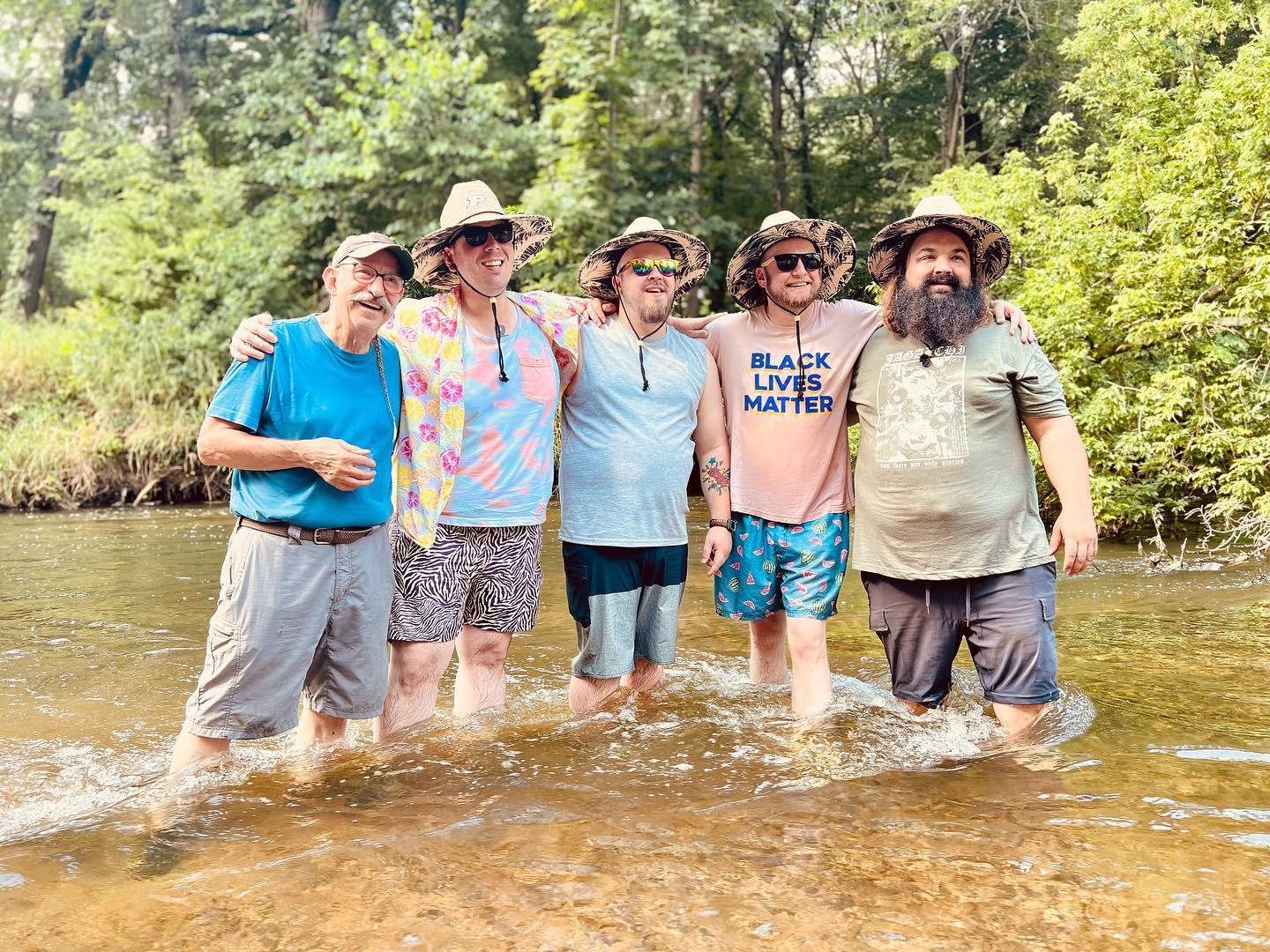
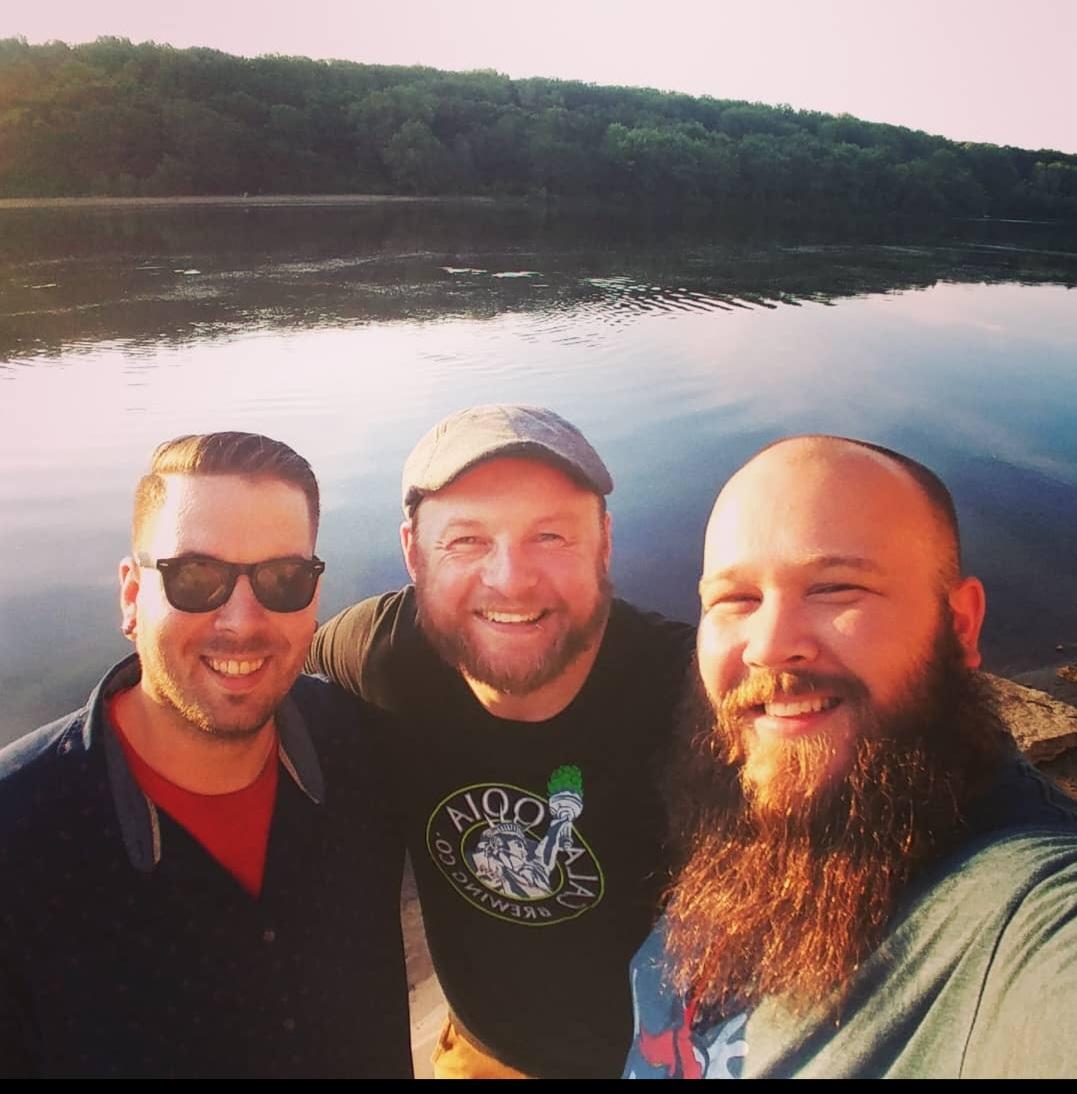
    What does every journey require? A crew. A team with a shared sense of purpose and trust. A group of people you can trust enough to show vulnerability in order to be held accountable. In working with boys and men, I see them struggling with finding their crew. Historically this crew would be found in church, on an athletic team, or maybe through work. As society has evolved, so have the places in which boys and men find their crews. Looking for friends to connect and develop meaningful relationships with other men. I am proud to say I found my crew in Kevin (aka KK, pictured left) and Brandon (pictured right). This is our story of how we have remained connected for over 10 years, adapting to the pandemic by using video games as a tool to regularly check in, encourage one another, and hold each other accountable.


    Our origin story, according to KK:

    ‘Three friends met and reconnected serendipitously amidst major life changes. We have remained friends for more than 10 years and have seen one another through career changes, devastating breakups, and difficult divorces. We have helped one another grieve and celebrate, and we’ve never done it perfectly which is why we’ve lasted this long.’

    The three of us met while I was living in Oregon. Brandon and I met working with homeless youth. KK and I met through a mutual friend. In 2019 Brandon and KK graciously agreed to join me on a life changing journey to return to the Midwest. Not many friends would give up a week of their summers on a 2000+ mile road trip to Indiana, of all places. KK wasn’t even for sure coming until the last possible moment and he always reminds us, ‘I put my own job on the line.’ As he only got his shifts covered the morning we left.

    Long story short, we made it to Indiana, but of course the journey came to an end and they both returned home to Oregon. Less than a year later we found ourselves amidst a ‘2 week global shut down’. Reconnecting over Zoom, laughing became crucial to overcome the uncertainty and loneliness, and we discovered that checking in with one another helped. So in April of 2020, when the shutdown moved from a short break to indefinitely we each decided to buy an Xbox and began playing weekly. Now the point was never about excelling past a mediocre skill level, and I’m proud to say that in just over 4 years, with hundreds of hours of playing together, we have remained true to that commitment.

    The point was always to remain connected and be a lifeline for one another. On any given week no topic is off limits – from politics, terrible dad jokes, and new hobbies we either started or wanted to start. To what came out during our recent therapy sessions or how our medication is affecting us. In those 4+ years we have only missed a few weeks of killing zombies and losing to 12 year olds. So if you’re of the mindset that video games are solely for kids and immature adults, I will let Brandon explain why we do it:


    ‘Playing video games is just an activity to keep our hands busy and engage in something together. We use gaming to have a shared purpose and to practice teamwork. Win or lose, we do it together. I think it continues to work because we sincerely want to be better versions of ourselves. Talking freely, calling each other out, asking for help, and sharing what we have learned for ourselves in hopes that it might help someone out. Knowing that we are on the same page when it comes to destigmatizing mental health is critical in building that sense of trust with one another.’


    Men tend to communicate with one another ‘side to side’ by ‘participating’ in shared passive activities – like watching sports or fishing for example. These often result in shallow relationships involving no sense of intimacy. Yes I said intimacy, because I believe that is what men are actually seeking in partners and friends, but those same gender norms have led us to understand intimate as strictly romantic or sexual. Intimacy to me means being truly seen and heard by someone else, without fear of judgment or ostracization. Outdated gender norms have placed restrictions on the ways in which men are allowed to communicate with each other, so it is important that all forms be accepted so long as they involve that desire for intimacy.


    That original trip also introduced them to new crew members – Brent (yellow sunglasses) and Scott (far right in the river). While Brent is not much of a gamer, his brother Scott wanted to be and he was also seeking connection and the support of male friends. The only issue was the cost of a new Xbox, so we agreed to pitch in and help. Thus our team of 3 weekly gamers became 4, and we continue to play (albeit at a mediocre skill level). KK points out:

    ‘This weekly game night continues to allow us to open up and to be vulnerable with one another. This has helped me avoid isolating myself when it has felt so tempting. These guys have been there for me through all of it, and I am fortunate enough to have them in my life to look up to and to help me strive to be a better person. Without any shame I am proud to say I love them and I know they feel the same for me. It’s important for men to have healthy connections where they can communicate and open up about their feelings.’

    Thanks to that first trip in 2019, we have spent a week together each summer, building on the intimacy we curate each week. We really are a crew, there to support one another through the journey. I feel out of sorts the whole week and recognize how important our relationship is to my mental health and general well being.


  • Living a Life That Matters: Reflections from Goshen College Men’s Retreat

    Living a Life That Matters: Reflections from Goshen College Men’s Retreat


    In patriarchal culture males are not allowed simply to be who they are and to glory in their unique identity. Their value is always determined by what they do. In an anti patriarchal culture males do not have to prove their value and worth. They know from birth that simply being gives them value, the right to be cherished and loved.

    -bell hooks
    ‘The Will to Change: Men Masculinity and Love’


    How do we, as men, live a life that matters? More importantly, how do we set a good example for future generations on how to answer this question. A first step is to reflect on how a patriarchal society assigns value to us, and then taking it a step further to reflect on how it impacts the value we assign to ourselves. After 12 years and hundreds of hours of facilitating challenging conversations on this topic, I believe it is clear value is assigned based on what men can provide or produce. Which in and of itself is not wrong, just shortsighted. I would argue that the very patriarchal culture that overwhelmingly benefits men in our society, simultaneously uses the concept of the ‘man box’ to prevent us from showing up for ourselves. Unpacking this ‘man box’ has shown me a way to expand how men find their sense of value, and thus begin to really discover how they define what matters to them.

    Doing this work with college men comes with a lot of barriers so I began reflecting on ways to overcome them. I realized that my male colleagues and I had not taken the opportunity to do this work together in order to better role model the lessons we were trying to get across. Thus I began looking for other resources to help us in doing that, and luckily I had become familiar with Menno Men a couple of years ago. I reached out and Steve Thomas was more than willing to develop a small retreat just for us.

    Steve and I spent some time shaping an existing workshop to help us answer the question, ‘How does one live a life that matters?’ We spent the Saturday morning unpacking our own man boxes and envisioning how our campus could better support our students in this regard. The conversation was both challenging and supportive. It is important to acknowledge that we did not walk away with ‘the’ answer, as this work is never ending and always evolving.

    We all recognized this was not the end of the conversation as there are countless intersectional facets of the ‘man box’ to unpack, race being one. Jesse shared how that informed his decision to attend:

    ‘During our discussion, I had some questions about how men, especially men of color, are impacted (or not) by this work. I usually find myself surrounded by white men, Mennonites, or Latino/Hispanic individuals, so I wanted to gain insight into their perspectives on our current world, as well as their struggles and triumphs men face.’

    This gathering took place on February 3rd, 2024 at the Pathways Retreat Center in Goshen, and we are looking forward to continuing them on a semi-regular basis. This work is hard, but the immeasurable support of Steve Thomas, Pathways Retreat, and Mennonite Men makes it so much easier.


  • MC USA files new amicus brief in support of Apache-Stronghold

    MC USA files new amicus brief in support of Apache-Stronghold


    The Mennonite Church USA Executive Board and MC USA’s Pacific Southwest Mennonite Conference filed an amicus brief on April 25, 2024, in support of Apache-Stronghold’s petition for a new full-court hearing on the potential destruction of Oak Flat, a sacred Indigenous site in Arizona.

    Mennonite Men along with 18 additional churches and organizations also signed on as amici curiae, or friends of the court, including Mennonite Mission Network and numerous MC USA-affiliated congregations.

    Oak Flat is a sacred Indigenous site known to Apaches as Chi’chil Bildagoteel. It has been at the heart of a 20-year struggle by Apache and other Southwestern Indigenous peoples to prevent the federally owned site from being given to Resolution Copper, a Phoenix-based affiliate of British-Australian mining companies, Rio Tinto and BHP Billiton, for a new copper mine.

    In March 2024, a rare “en banc” panel of 11 judges from the Ninth Circuit Court of Appeals ruled in Apache-Stronghold v. United States that the federal government can transfer the sacred Oak Flat site to Resolution Copper. Apache-Stronghold, a non-profit Apache-led organization, appealed the decision and petitioned the court, arguing that “the en banc court got it wrong and that this error warrants a full court review.”

    The amicus brief supports Apache-Stronghold’s position as a right to religious freedom under the Religious Freedom Restoration Act of 1993 (RFRA). It draws from a previous amicus brief that was filed on behalf of MC USA and the Pacific Southwest Mennonite Conference in 2023. The new brief, however, focuses on the court’s expressed concern that ruling for the Apache-Stronghold would create a “slippery slope” for future RFRA claims about federal land, according to Eric N. Kniffin of Kniffin Law PLLC, Colorado Springs, Colorado, who wrote the new brief.

    “In this case, the Apache have an unparalleled historical connection to Oak Flat … and the government act they challenge would unquestionably destroy this sacred site,” writes Kniffin in the brief. “These characteristics are relevant to the RFRA analysis and would help courts, in appropriate cases, distinguish between the Apache’s RFRA claim here and other religious groups seeking access to federal land.” He notes that the Western Apache have been making pilgrimages to this spot since before the Mennonite tradition was founded in Switzerland in 1525 and even before William of Normandy invaded England in 1066.

    “Mennonites resonate with the Apache’s attachment to Oak Flat,” wrote Kniffin in the brief. “Like the Apache, caring for creation and receiving care from God’s natural world is woven into the Mennonite faith, from its heritage in rural farming to its practice of planting peace gardens at the sites of urban gun violence. Both traditions know God tends us through creation.”

    The brief also references the long support for Apache Stronghold offered by Mennonites who have ‘made the pilgrimage to Oak Flat to pray and learn – from the land and from Apache Stronghold.’ Several leaders of Mennonite Men attended a training offered by Community Peacemaker Teams and the Coalition to Dismantle the Doctrine of Discovery in 2023 and expect to be available for future presence and action in the region.


    Mennonite Church USA is an Anabaptist Christian denomination, founded in 2002 by the merger of the Mennonite Church and the General Conference Mennonite Church. Members of this historic peace church seek to follow Jesus by rejecting violence and resisting injustice. MC USA’s Renewed Commitments state the following shared commitments among its diverse body of believers: to follow Jesus, witness to God’s peace and experience the transformation of the Holy Spirit. Mennoniteusa.org

    Link for the amicus brief:
    https://www.mennoniteusa.org/wp-content/uploads/2024/05/Amicus-brief.pdf

  • The Road Ahead: Living That Matters for Men in Early and Middle Years

    Location:
    The Hermitage, 11321 Dutch Settlement Rd, Three Rivers, MI 49093

    Date:
    Friday November 8 and Saturday November 9, 2024. Friday dinner (silent) at 5:30pm optional, though official gathering starts at 6:30pm. Retreat ends at 4pm on Saturday.

    Cost:
    Suggested donation range of $120-150. (Includes room, meals, and Living that Matters: Honest Conversations for Men of Faith)

    Registration:
    See form below. Register by October 31. If you can’t register in time but want to see if there’s still space, contact Jon Zirkle directly at jonz@mennonitemen.org. Limited to the first 9 registrations. All overnight spaces are individual rooms, though cabins in the woods are available upon request (limit 2).