Author: Admin account

  • Sexuality: God’s gift

    Sexuality: God’s gift


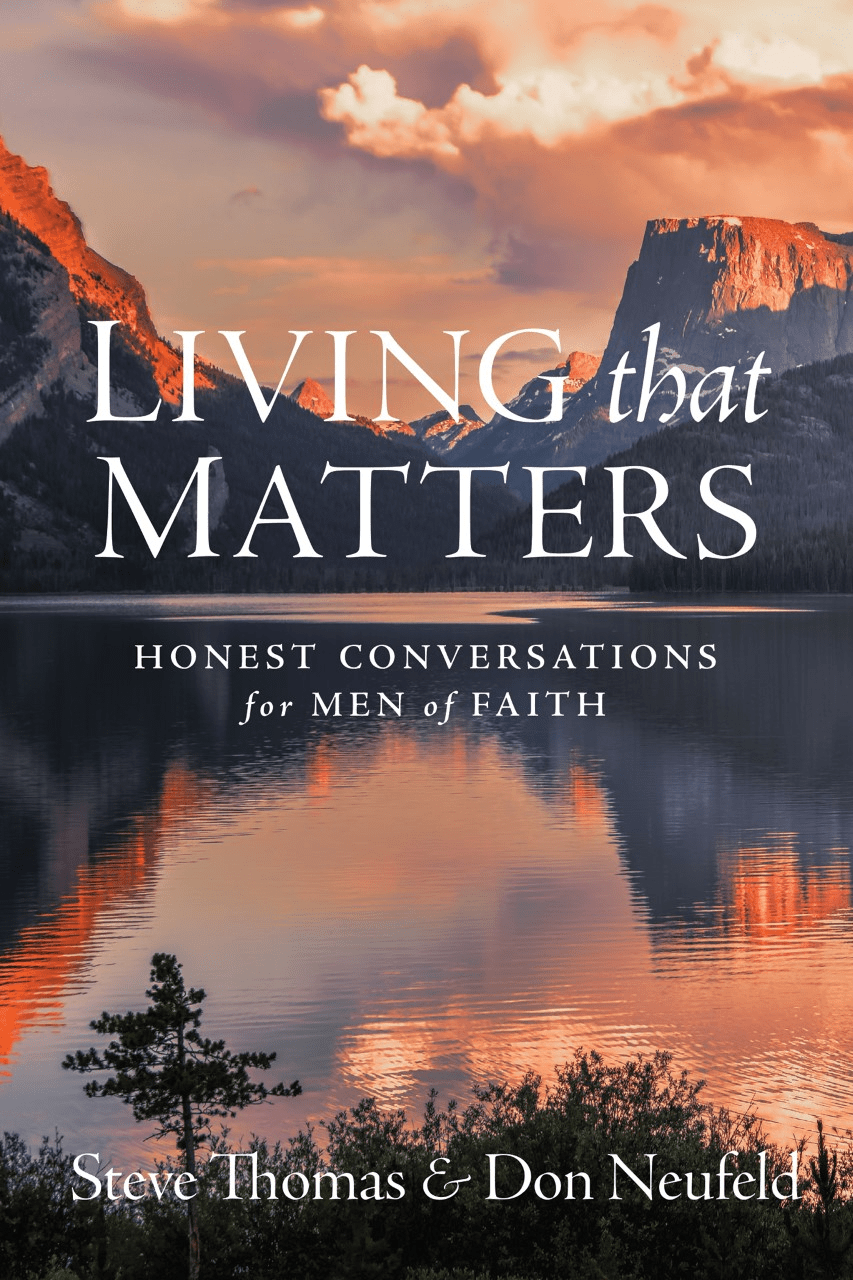
    Excerpted from Living That Matters: Honest Conversations for Men of Faith by Steve Thomas and Don Neufeld. Used by permission of Herald Press. All rights reserved.


    A journalist once asked, Why are men so consumed by sex? ‘Did nature sim­ply overload us in the mating department, hot-wiring us for the sex that is so central to the survival of the species, and never mind the sometimes sloppy consequences? Or is there something smarter and subtler at work, some larger interplay among sexuality, life and what it means to be human?’1

    We answer, ‘Both.’ As animals, we are hardwired with a sex drive for mating. As humans, we are also designed by God for loving, sexual intimacy. Both are true and create a dynamic tension within us as we experience a primitive drive to unite with physical body as well as a deeper spiritual desire to connect with another person.2 Both of these are part of our God-given impulse to ‘become one flesh’ (Genesis 2:24). God created sex not only for procreation but also for pleasure and intimacy in a secure, loving relationship where these are most fully enjoyed.3

    As the words themselves demonstrate, sex is part of sexuality. And sexuality and spirituality also belong together. They share a common longing for union with another—we desire sex and long for intimacy.4 But these two ways of being are often split apart, especially by men.

    Living that Matters: Honest Conversations for Men of Faith serves as a men’s guide for conversation and reflection and includes 70 topics, like Sexuality, for use by individuals or groups. Order Living that matters: Honest Conversations for Men of Faith HERE.


  • Church building grant to assist refugee ministry

    Church building grant to assist refugee ministry


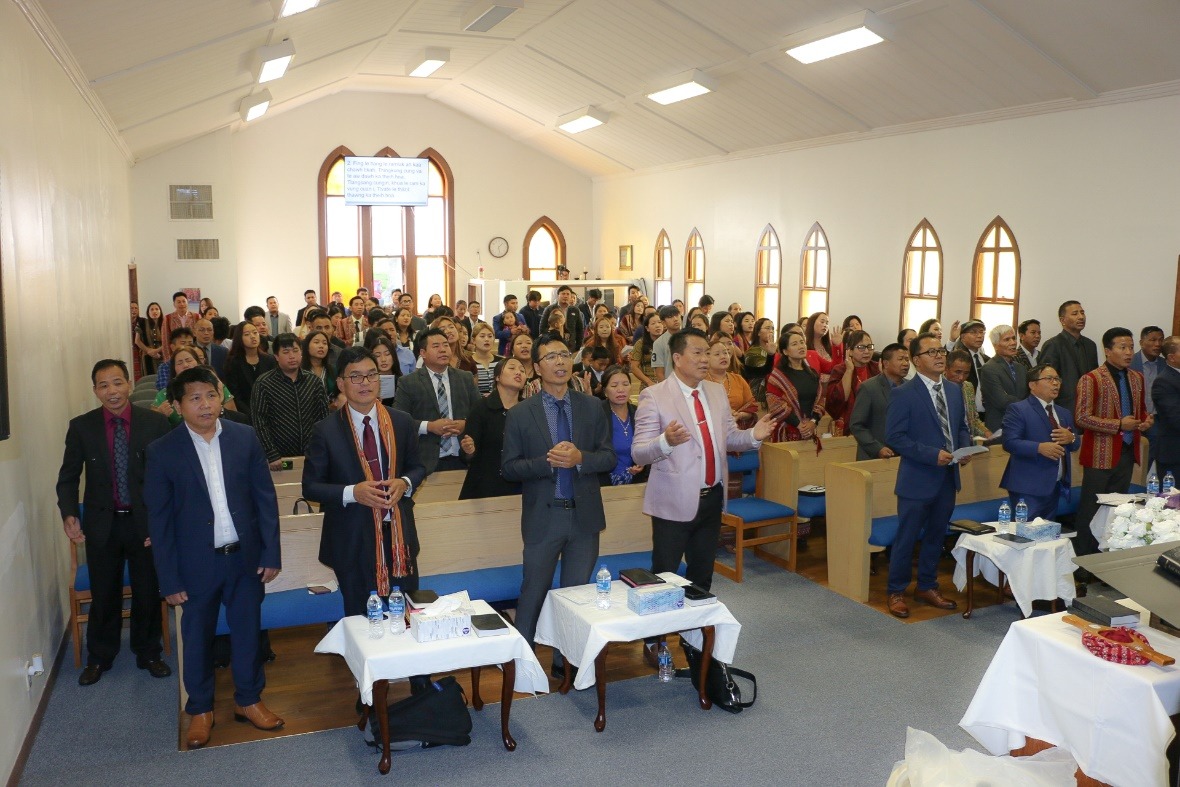
    In late December Mennonite Men completed its fundraising for a $40,000 grant for Omaha Chin Christian Church in Omaha, Nebraska. With the release of these funds, the congregation will be able to move forward with their church building project on the outskirts of the city.


    A member of Central Plains Mennonite Conference of MC USA, Omaha Chin Christian Church is one of an increasing number of Chin Christian communities in North America. These communities, who have roots in Myanmar, are finding their way into MC USA and MC Canada conferences.

    This congregation is connected to a large population of Chin immigrants in Omaha and has a special ministry of assisting people navigate a challenging new life in North America and find a home in the Anabaptist family. Many folks in this population have come from refugee camps and have been marginalized or exiled from their country. As the congregation continues to grow and reach more Chin people in Omaha, the church facility they plan to acquire will not only provide a space of their own for worship but will also offer a place for community activities to honor and celebrate their culture.

    ‘We previously met in a rented space and this has left the church feeling like they are not rooted,’ shared Ngun Lian Mawi, pastor of the 70-member congregation. Leaders hope that their own building will be a catalyst for unity growth, both numerically and spiritually.

    Omaha Chin Christian Church is the 93rd congregation to receive a JoinHands grant from Mennonite Men. Nearly 2.5 million has been granted since the program begain in 1985. If you or your congregation are interested in contributing to our next campaign, visit mennonitemen.org/joinhands.

    .


  • Church building provides ongoing community ministry

    Church building provides ongoing community ministry


    Throughout 2020 and 2021, when the effects of COVID were hitting the US and exposing glaring inequality across the country, many churches were stepping in to meet needs in their communities.


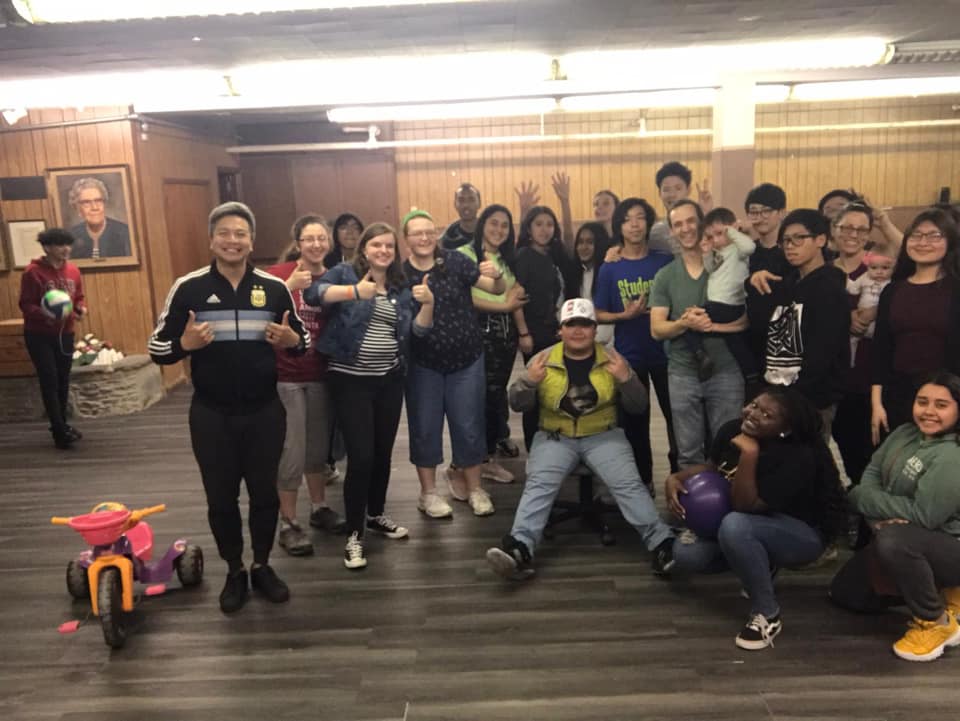
    Centro de Albanza, a small Latino congregation of Mosaic Mennonite Conference, offered its facilities in South Philadelphia to meet the new needs of their community. The congregation, along with several local agencies using their space, provided Covid tests and assisted with ID card registration. They also provided space and supervision for kids taking virtual classes whose parents needed to work and didn’t feel comfortable leaving their kids at home alone.


    The congregation received a grant from Mennonite Men’s JoinHands program in 2020 to help renovate the 160-year old building. The grant helped replace a leaky roof, install more efficient windows, and generally allowed the congregation to continue offering their building as a place of ministry and outreach for the community.

    ‘Its definitely our priority is to share the Gospel and have activities related with discipleship,’ said pastor Fernando Loyola. ‘We have two other churches that share the building, one is Indonesian and the other is Burmese.’


    Together the three congregations continue to serve their community and make the word of God known in South Philadelphia. To learn more about assisting congregations in purchasing or renovating their first church building, visit mennonitemen.org/joinhands.


  • 9,000 Trees

    9,000 Trees

    ​An unfolding story, made possible with the vision and support of many, including camp staff Jonathan Fridley and Amy Huser.

    The best time to plant a tree was 20 years ago. The second best time is now. – Chinese proverb

    . . . and the leaves of the trees are for the healing of the nations. – Revelation 22:2


    A number of years ago we entered into a land trade with a neighbor to the north of Camp Friedenswald. In exchange for a portion of land off Union Road (near Round Lake), Camp Friedenswald received 37 acres of land adjacent to Main Camp, just north of the Allan Hill campsite. The trade opened up possibilities, including the chance to steward more of the rare prairie fen habitat, home to the federally endangered Mitchell’s satyr butterfly. We hoped that having more direct access would help us to better steward the land, reduce the flow of chemicals into the wetland, and hopefully increase the butterfly’s chance of survival.


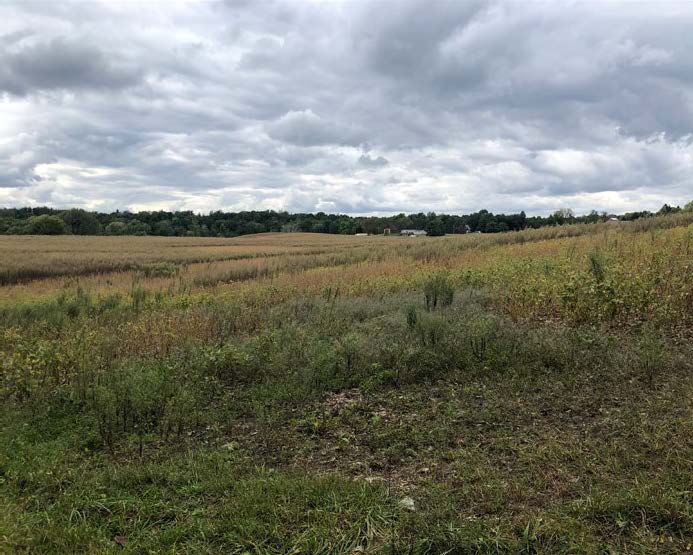
    While one portion of the land is wetland and other is forest, approximately 17 acres of land has been conventionally farmed for decades. In acquiring this land, we knew there was something more that needed to be done – something that would align with our values of sustainability and stewardship and our commitment to the work of repair. After dreaming about possibilities, we decided to transition most of the land from conventional farmland to forest, enrolling the land in the Conservation Reserve Program (CRP), with the goal of increasing habitat for wildlife. Camp will receive financial support for this transition for the next fifteen years.


    We are excited to partner with Mennonite Men in their JoinTrees campaign to plant one million trees by the year 2030 by planting 9,000 trees on this land next spring (2023). This initiative targets climate change by increasing tree and forest cover with the goals to help (1) mitigate global warming, (2) promote climate justice, and (3) sustain biodiversity.


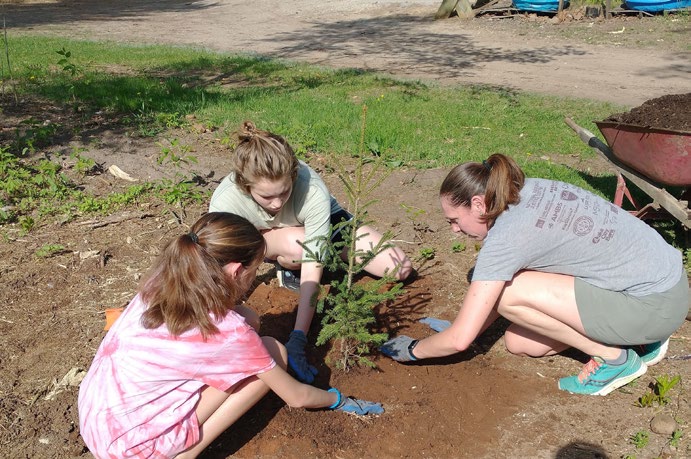
    Photo captions: (Top) A ‘before’ photo taken in fall 2022 of the farmland that is to be converted to forest. (Bottom) In spring 2022, volunteers from Assembly Mennonite Church (Goshen, IN) assisted with planting 50 trees across Camp. Next spring 9,000 trees will be added to that count.


    The trees will consist of a variety of oak, hickory, cherry, and walnut trees, among others, and will be planted with the help of experienced foresters and a few of our own staff. In time, this new forest will aid in sequestering carbon, providing habitat for wildlife and contributing to the overall resilience and health of the natural communities in this area. Someday, campers might even walk under its canopy.


    If the best time to plant a tree was twenty years ago, and the second best time is today, we hope that the third best time will be the spring of 2023. And with each of the 9,000 trees planted, we pour our prayers for the leaves that have yet to unfurl. May the leaves of the trees be for the healing of the nations.


    If you, your congregation, or an organization you’re part of are interested in learning more about the JoinTrees campaign contact Steve Thomas at SteveT@mennonitemen.org or visit mennonitemen.org/jointrees


  • Friends: shelter, treasure, medicine for one another

    Friends: shelter, treasure, medicine for one another

    Excerpted from Living That Matters: Honest Conversations for Men of Faith by Steve Thomas and Don Neufeld. Used by permission of Herald Press. All rights reserved.


    a5153d4f-2a66-a071-dab6-dc73ee4525c5.png

    Great books and films often depict the important role of friends. Consider Sam accompanying Frodo on his journey in The Lord of the Rings. Frodo wouldn’t have made it and completed his mission without Sam. And Frodo’s recovery and joy were complete in the end only by being reunited with his friends.

    The author of the Book of Sirach (in the Apocrypha) writes on the gift of being and having friends:

    Faithful friends are a sturdy shelter:
    whoever finds one has found a treasure.
    Faithful friends are beyond price;
    no amount can balance their worth.
    Faithful friends are life-saving medicine. (6:14–16)

    The writer also describes false friendship to show what true friends are like. Faithful friends stand together in times of trouble. They are faithful in conflict. And they are close in adversity (6:8–13). When we have true friends, we can say with the writer, ‘Wine and music gladden the heart, but the love of friends is better than either’ (40:20). The friendship between David and Jonathan illustrates this love that is intimate, steadfast, and protective (1 Samuel 18–20, 23; 2 Samuel 1).

    Jesus was a true friend. Consider his concentric circles of friends and what he modeled. We think first of his twelve companions. Within this circle was the inner circle of Jesus, Peter, James, and John. And inside this circle, Jesus enjoyed his closest friendship with John, the ‘beloved.’ Even with Jesus, we see different levels of friendship. Outside the twelve, Jesus also had many other friends, like Mary, Martha, and Lazarus. Jesus looked upon them not simply as followers but also as friends. He made this clear in the end when he said, ‘I do not call you servants, . . . but I have called you friends’ (John 15:15). When Lazarus died, Jesus cried. When others saw Jesus weeping, they exclaimed, ‘See how he loved him!’ Here’s a strong man crying over the death of a friend (John 11:35–36). Such was the love of Jesus for his friends.

    Notice that Jesus chose to be with others who were significantly different from one another. For example, Jesus chose to be friends with Simon—a revolutionary Zealot—and Matthew, a tax collector and a Roman collaborator. Arguments and conflicts among the twelve disciples demonstrate that these friendships were challenging. But as we discussed earlier, conflict is simply a normal part of relationships. Rather than seeing it as a problem, Jesus saw these occasions as opportunities to learn.

    Jesus formed close friendships not only with men but also with women, like Mary and Martha. This was radical for his day. With both men and women, he modeled learning and growing together as a company of companions.

    In his relationships, Jesus shows us that friends embody love for one another. In being friends, we receive and extend God’s love. And as we include others in our circles of belonging, we widen the embodied circle of God’s love in the world.

    How can we be better friends? By

    • having regular habits of meeting together,
    • being vulnerable in order to truly know each other,
    • sharing our joys and struggles,
    • extending God’s unconditional love.

    Being friends takes practice—that is, regular habits of being together. I have been in small groups of women and men who meet regularly to share deeply of life and faith. I have also had the weekly practice of walking with a friend at six in the morning before work. And for many years, I’ve met with a men’s group every other week at six in the morning. Sometimes I just want to sleep in, especially on dark winter mornings, or stay home after a long day. When I look at my busy calendar or feel tired, I sometimes wonder whether it’s worth the time and effort. So what keeps me going? It’s what we experience together as friends by being a shelter, treasure, and medicine for one another.


    Living that Matters: Honest Conversations for Men of Faith serves as a men’s guide for conversation and reflection and includes 70 topics, like inclusion, for use by individuals or groups. Look for the book’s release from Herald Press in January, 2023. Preorder Living that matters: Honest Conversations for Men of Faith HERE.


  • A Forest of Faith: Planting an acre of trees, Indiana congregation adds a second sanctuary

    A Forest of Faith: Planting an acre of trees, Indiana congregation adds a second sanctuary

    ​This article originally appeared in Anabaptist World, August 26, 2022
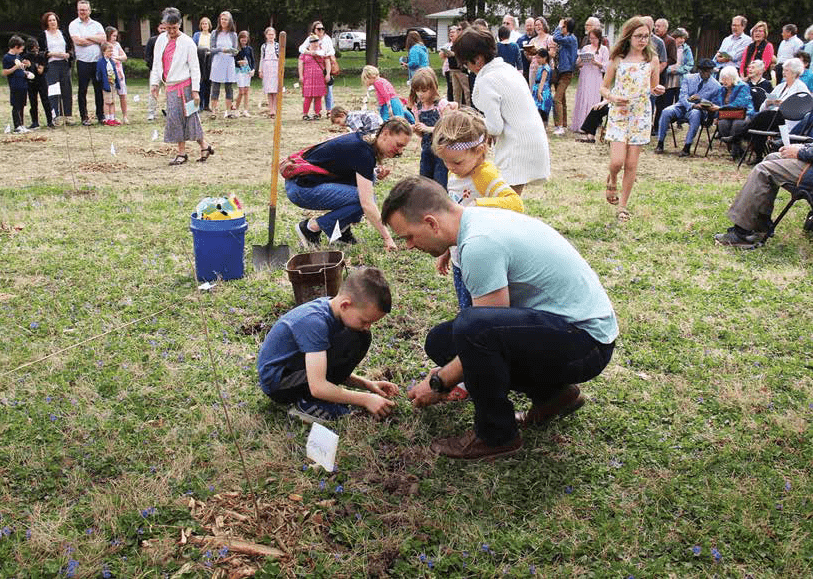

    On Good Friday, congregants and friends of Berkey Avenue Mennonite Fellowship in Goshen, Ind., began planting trees on an acre of land behind the church building. Bare-root seedlings, not more than 2 years old, were placed in the soil. Each vulnerable tree touched a person as it went into the ground. By the end of the Easter weekend, 700 trees, representing 17 species, were in the earth.


    This bit of ground was part of a three-acre plot the church purchased in 2007. Some of it was used to create a large community garden. Another portion was seeded to wildflowers. The back acre was left to be mowed.

    The land is surrounded on two sides by residential development and on a third by farmland.

    At one time, this land must have been farmed, too, along with the rest of the neighborhood. And before that, it would have held forest, wetland and forested wetland.
    And now an acre is being returned to trees.

    Why?

    James Yoder, who attends the church, saw an opportunity. While the garden and wildflowers represent- ed certain aspects of church life and church values, something was missing. A committee to develop a memorial garden plan on the south end of the three-acre space was already in place. But how could the entire space be used as an outdoor sanctuary, consistent with the congregation’s mission of being a welcoming place to its neighbors?
    In 2020, with the onset of the coronavirus pandemic, Berkey Avenue moved worship services outdoors. They felt fortunate to have green space to do this. By August 2021, the congregation decided to create a long- term plan for the entire three acres. They envisioned a memorial garden, outdoor worship space, community garden, wildflower meadow, prayer labyrinth and woods.
    How could the entire space be used as an outdoor sanctuary?

    By the spring of 2022, funds were raised and the Berkey Outdoor Sanctuary Committee formed, led by Ruth Miller Roth, Bryan Heinz and James Yoder, to carry out the plan. Yoder’s role was to give leadership to the woods.

    Site preparation for the memorial garden and outdoor worship space began this summer. The columbarium was scheduled to be delivered in mid-August. By late fall they hope to have everything completed, including connecting paths, plantings and a pergola marking the entrance into the sanctuary space.
    The vision for planting the back acre to trees — reforesting a small portion of land — was a way to act out long- term care and hope. The trees will communicate something about who is welcome. Yoder imagined people in the surrounding neighborhoods would be drawn to the emerging forest as a place to walk and relax or play and explore — a sanctuary from everyday routines.

    The woods will take on a broader sanctuary-life as animals are drawn to it. These nonhuman brothers and sisters will find their way back to the land some of their ancestors once inhabited. This ground will become a meeting place for a fuller chorus of the creation, reflecting a more diverse, truer aspect of the Creator.

    Yoder began attending online seminars to learn about reforestation and scaled-up planting. He consulted with Steve Thomas, director of the Men- nonite Men JoinTrees campaign, and Ben Wilson, a district forester, about tree species appropriate for northern Indiana and the space available at the church. He talked with members of the congregation to gauge and engage interest. With a charismatic smile, Yoder helped others to see the rightness of giving some land over to a wooded sanctuary. The vision caught.

    The JoinTrees tree-planting campaign committed funding and expertise. The City of Goshen’s goal to double the tree canopy by 2045 became part of the motivation. The growing awareness of the important role trees play in land stewardship helped the congregation pull together the pieces.

    A planting plan was developed and mapped. Trees were ordered from the Indiana Department of Natural Resources State Nursery. A planting date was selected, and the word was spread. The ground was prepared, and a spot for each tree was marked with a flag identifying the species.

    The Sunday before planting, Yoder encouraged fellow attenders to consider planting a tree as a symbol of hope and resurrection.

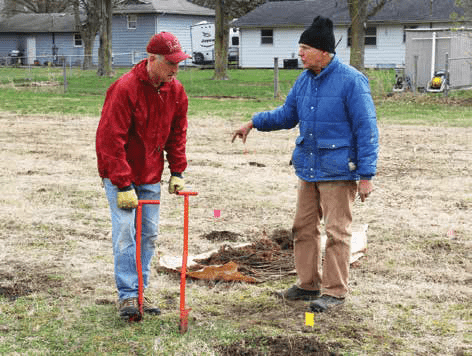
    On Good Friday, lots of people showed up with shovels and hand augers. There were demonstrations of proper planting: correct depth, making sure roots are respected. Crews were organized, family groups were instructed, and trees were planted.

    By the time I arrived shortly after noon, Yoder needed to slow things down to make sure there were enough trees for the youth group to plant the following day. Indeed, by Easter, a small forest was planted.

    Any planting requires faith. It takes work and maintenance. But, as anyone who has planted a garden knows, there is only so much a person can do. The actual growing is up to the intricacies of germination, nutrition, photosynthesis, cell division, molecu- lar biology — things that merge toward mystery, where control is relinquished.

    When a church plants trees — or anything — it is a signal of living faith. It is demonstrating a release of control (fertilizer, irrigation, mowing) and acting on trust that the Earth is capable of beauty, growth and grandeur well beyond human design.

    When a church surrounds itself with trees, it is giving time and space to something much larger than itself in an act of faith that God’s good Earth is exactly that — God’s and good.

    Trees are an expression of a tithe, or even jubilee — the idea that land should return to its original owner or state. When trees are present, we put aside ideas of practical use, optimal efficiency, maximum productivity. We content ourselves with a slow unfurling of bounty, which can test our faith and strengthen our trust.

    Deepened trust is good for all of us.


    Aaron Kingsley is director of the City of Goshen’s Department of Environmental Resilience and the city forester. He lives in Goshen with his wife and three children. This article is expanded from an article first published in The Goshen News.

  • Inclusion: breaking barriers, building shalom

    Inclusion: breaking barriers, building shalom


    This piece comes from the upcoming book, Living that Matters: Honest Conversations for Men of Faith.


    In the classic story Animal Farm, barnyard animals revolt and set out to establish a better social order than what they had under the farmer. After the revolution, they create commandments to reorder their life: No human is above them. No one calls another ‘Master.’ All animals are equal and included in their life together. But in the course of time, pigs take charge and arrange things to their benefit. With their power, pigs reduce the commandments from seven to one: ‘All animals are equal, but some animals are more equal than others.‘ Certain animals regarded as ‘lower animals’ are not allowed to partake of the prosperity of Animal Farm. In their second- class position outside the house, those animals watch pigs inside enjoying what they are denied.

    George Orwell told this ‘fairy story’ based on his observations of human behavior in social orders. He drives home the point that no matter what a group or constitution may say, ‘some are more equal than others.’ Societies may claim otherwise even while treating some as less equal and deserving while giving power, privilege, and goods to others.

    Wherever the animal farm or human group may be, some people tend to be treated as second-class citizens, denied certain benefits and excluded from opportunities others have. This social exclusion is based on skin color, religious beliefs, income, gender, sexual orientation, physical ability, intellectual ability, political opinions, and appearance. It ranges from exclusion on the playground to being marginalized in other areas of life where certain individuals are not allowed to fully participate in the economic, social, and political life of their society.

    This also happened in the time of Jesus. The Gospels describe Jesus modeling the way of loving inclusion for all people as God’s beloved children in his responses to the following types of social exclusion:

    • Class-based exclusion—when Jesus called working-class fisherman as his disciples and future church leaders
    • Gender-based exclusion—when Jesus developed close relationships with women and drew them into his circle of disciples
    • Ethnic-based exclusion—when Jesus extended healing to the Syrophoenician’s daughter and the centurion’s servant
    • ‘Purity’-based exclusion—when Jesus made physical contact with individuals considered unclean
    • Conduct-based exclusion—when Jesus let prostitutes in and became known as a ‘friend of sinners’
    • Age-based exclusion—when Jesus called to himself children who were kept aside
    • Party-based exclusion—when Jesus invited both Matthew as a tax collector (supporting Rome) and Peter as a Zealot (resisting Rome) into his circle

    Jesus’s interactions with two socially excluded outsiders—a Samaritan woman and a Syrophoenician woman—are especially interesting. When Jesus relates to the Samaritan woman at the well, he crosses boundaries between men and women, Jews and Samaritans, religious and sinners. The woman is surprised by his inclusive actions (Jn 4:1–30). By contrast, Jesus appears to mistreat the Syrophoenician woman based on her ethnic identity. To his surprise, she confronts his exclusive healing.

    He then extends God’s healing to her daughter as requested (Mk 7:24–30). This Syrophoenician woman had something to teach Jesus!

    Having observed Jesus’s response to outsiders, Paul proclaimed that Jesus had broken down dividing walls to create in himself one new humanity in place of two (Eph 2:14–15). Based on both our common identity as God’s children and what God had accomplished in Christ, Paul wrote that there are no longer distinctions like Jew or Gentile, slave or free, male or female (Gal 3:28). Extending the way of his brother Jesus, James confronted class-based distinctions practiced even in Christian community (Jas 2:1–6).

    Unlike the banquet at the end of Animal Farm, where only pigs feed at the table while other animals watch outside, the great banquet Jesus describes includes the poor, blind, lame, and people off the street (Lk 14:15–24). No one is more equal than others. Everyone belongs and fully participates in the community. All are inside together and enjoy God’s abundant life. This is God’s shalom.


    Living that Matters: Honest Conversations for Men of Faith serves as a men’s guide for conversation and reflection and includes 70 topics, like inclusion, for use by individuals or groups. Look for the book’s release from Herald Press in January, 2023.


  • JoinHands grant to provide stability to urban Pennsylvania church

    JoinHands grant to provide stability to urban Pennsylvania church


    Since its beginning as refuge for those distanced by the church, the group that turned into Ripple Church has kept its focus on caring for its neighborhood and the vulnerable living there. Its community-

    focused approach means Ripple provides a community of support and place of worship for our neighbors of whom many struggle with addiction, mental illness, trauma, and abuse which is often further complicated by isolation, homelessness, and incarceration.


    Ripple has met in five different locations in the city of Allentown, Pennsylvania. In each new location, the congregation needed to adjust its rhythms to accommodate the new space and neighborhood. With each move, valuable relationships were lost and leadership development was hindered.


    In 2018 the congregation moved into St. Stephens Outreach Center owned by Christ Lutheran Church (CLC) in Allentown. As the relationship between the two congregations grew, so did the mutual idea of a permanent space to grow roots and become a stable presence in the neighborhood. CLC

    offered ownership of the building for a largely reduced price as a way to support Ripple’s continuing ministry.


    Mennonite Men’s next JoinHands grant will assist Ripple Church, a Mennonite congregation of Mosiac Mennonite Conference, to purchase this building. Ownership of the building will provide stability for this growing congregation and allow them to put down permanent roots in their neighborhood where they currently offer ministries for children and youth, sit down meals each Sunday for those attending, a clothing closet with hygiene/food pantry, to go meals twice a week, a community garden, Bible studies, and a community of belonging for members who are often isolated. Church leaders state, ‘Purchasing this building will give the church a permanent home and provides a safe location downtown for many people who are not welcomed in other areas of the city.’


    To assist this congregation in purchasing this building in Allentown with a JoinHands grant, Mennonite Men needs to raise $40,000. To learn more about JoinHands grants or to make a gift, visit mennonitemen.org/joinhands.


  • My prayer: God save the Earth

    My prayer: God save the Earth

    This article first appeared in the August 26, 2022 issue of Anabaptist World.


    To cool the planet, plant a tree. Together we can plant a million.


    As a child, I loved being in nature. While I don’t recall what I noticed one day, I remember feeling
    worried. I wrote a message, placed it in a corked bottle and floated it down the creek.

    My message?

    “God save the Earth.”

    As climate change worsens, many people make this prayer. I now realize, however, that God doesn’t answer prayers like this while we stand by and wait. God answers our prayers with our cooperation.

    As St. Teresa of Avila said, “Christ has no body now but yours. No hands, no feet on Earth but yours.”

    God wants to cooperate with our own actions to answer our prayers. Yes, we may pray, but we must act. And now.

    We see in the news people suffering the loss of their homes, food supply or clean water. All of this is projected to worsen as extreme heat, storms,
    flooding, fires and droughts increase in frequency and intensity with climate change.

    The last report of the United Nations’ Intergovernmental Panel on Climate Change is disheartening. It finds climate change is widespread, rapid and intensifying. These changes will lead to humanitarian crises — food in- security, scarce resources, health issues and other population stresses.

    And, according to last year’s report of the National Security, Military and Intelligence Panel on Climate Change, these conditions will contribute to political insecurity — increasing conflicts, violence and mass migrations.

    As followers of Jesus, we must respond. But we often don’t act until we experience the problem or feel the heat.

    In Indiana, I’m rather insulated from these impacts. What really gets my attention is our grandchild, Lily.

    Around the time of her birth, I read in The New Yorker: “If you’re younger than 60, you have a good chance of witnessing the radical destabilization of life on Earth — massive crop failures, apocalyptic fires, imploding economies, epic flooding, hundreds of millions of refugees fleeing regions made uninhabitable by extreme heat or permanent drought. If you’re under 30, you’re all but guaranteed to witness it.”

    I worry about our grandchildren and all God’s creatures. I imagine our grandchildren asking two questions about climate change: “Did you know? What did you do?” I hope to answer with, “Yes, I knew about global warming, and here’s what we did about it…”

    I’m worried, but hopeful enough to act.

    What can we do? We must use less fossil fuel, turn to renewable energy and adjust our diet, to name a few ac- tions. Protecting forests and planting trees are also among the most critical actions we must take.

    As the best means to sequester carbon dioxide, trees are the most essential natural solution to mitigate global warming. With their unparalleled capacity to capture and store carbon, protecting and increasing tree cover are front-line actions to mitigate catastrophic climate change.

    And yet, global tree-cover loss continues at a rate of 11.6 million acres per year, adding to the 46% loss of the Earth’s tree cover since humans began clearing land and logging.

    Annual per capita wood consump- tion in the United States is 640 pounds — equal to a white pine tree 43 feet tall, one foot in diameter. With decreasing forest cover and increasing carbon emissions, rising temperatures will continue to create greater crises.

    Mennonite Men, the men’s organization of Mennonite Church USA and Mennonite Church Canada, is responding to this global crisis with our JoinTrees campaign to plant one million trees.

    The campaign is rooted in biblical wisdom and scientific knowledge, with the aim to restore the Earth.

    The first and last chapters of the Bible feature trees of life, revealing their importance in God’s design for the Earth. The woodland garden of Eden in Genesis represents what its Creator intended on Earth: beauty, biodiversity and abundance, where trees give life with God. The last chapter of Revelation presents the tree of life again as a central part of the new Earth for healing.

    In Genesis 2:15 we read that God put the human creature in the garden to serve and protect it as its steward. This stewardship includes planting, tending and protecting trees so they may serve their critical role in the ecology of God’s creation.

    A Jewish midrash (ancient commentary on Scripture) says that after God made the first human, God led him around all the trees of the Garden of Eden and said, “See my works, how beautiful and praiseworthy they are. Be careful not to spoil or destroy my world, for if you do, there will be nobody after you to repair it.”

    Ancient wisdom recognized the importance of trees, as does modern science. Trees have benefits far beyond beauty, shade, wood and food.

    Trees capture and store carbon, cool the planet and moderate the climate. Trees improve water and air quality and stabilize soil. Trees support biodiversity, which is endangered, by providing food and shelter.

    Trees reduce storm water runoff, cool urban heat centers and curb energy use. Trees promote commu- nity interaction and reduce aggres- sion and crime. Trees have personal health benefits.

    Trees provide a great return on investment. According to iTree (based on USDA Forest Service research), each $1 invested in urban trees returns $3.93 in Goshen, Ind., $6.09 in Indianapolis and $5.80 in New York City.

    While all these benefits are significant, our JoinTrees campaign focuses on establishing trees as a natural solution to mitigate global warming. The campaign involves planting trees on private, business and church properties, marginal farmland set aside for afforestation, public rights-of-way and interna- tional projects.

    We especially focus on large-scale tree planting and agroforestry in the Global South, where trees have the greatest impact to cool the planet, restore degraded land and support vulnerable populations.

    We call on communities of faith to participate in JoinTrees. People can:
    • Plant trees and report these to us.
    • Devote land for afforestation projects.
    • Help with planting and caring for trees.
    • Provide financial support for planting trees.
    • Make carbon-offset contributions to JoinTrees.
    People are looking for ways to be carbon-neutral or carbon-positive for the good of God’s Earth and future generations. Individuals, churches, schools and businesses can calculate their carbon use with the Center for Sustainable Climate Solutions’ Carbon Tax Calculator (sustainableclimatesolutions.org/carbon-tax-calculator-full) and submit carbon-offset contributions for large-scale tree projects to JoinTrees. For this and to participate in this campaign, go to mennonitemen.org/jointrees.

    Thanks to strong participation and support, since our campaign began in 2020, nearly 90,000 trees have been planted or funded. And we have pro- posals to plant at least 34,000 more trees in our next grant cycle.
    Let’s take action with God to answer prayers to save the Earth. Let’s do our part for a healthy, thriving planet.


    Steve Thomas is the U.S. director for Mennonite Men. A certified arborist and graduate student in urban forestry, he is coordinating the JoinTrees campaign to plant one million trees with the larger church.


  • Angolan Church Completes Roof Project

    Angolan Church Completes Roof Project

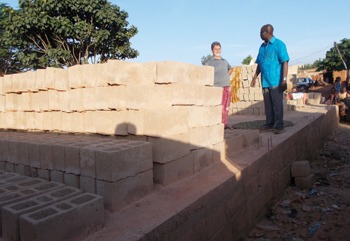
    Construction work on a new Angolan Mennonite-Brethren church building was recently finished, giving the congregation a permanant meeting space for the first time. The Galilee Parish of Calunga, part of the Igreja Evangélica Irmãos Mennonitas em Angola (Evangelical Church of Mennonite Brethren in Angola) had been meeting in an airport hanger while during construction. A recent JoinHands grant of $10,000 from Mennonite Men assisted the congregation in constructing a roof for their unfinished building.


    The IEIMA, along with several other Mennontie Brethren Church groups in the country, resulted from the interaction of Angolan refugees in Congo with Mennonite ministries in that country following conflict in the Democratic Republic of Congo in the 1980s.


    In a recent letter to Mennonite Men, the pastor, Maiala Kibango, writes that, ‘The conclusion of this work brought much joy and is a great benefit for the community in general and this congregation in particular…[We give] thanks to you for all your efforts, and sacrifice in having helped us financially to accomplish this work, which seemed difficult but today has become a reality. Our gratitude to all the AIMM (Africa Inter Mennonite Mission) team and to all international partners who have thought of IEIMA and of the Mennonites of Angola in general.’


    The JoinHands Mennonite Church Building Program, we provide grants to help new congregations acquire their first church building. Mennonite Men has given over 2 million dollars to new congregations for this purpose. We invite individuals and congregations to give to JoinHands. We especially ask churches pursuing building projects to give as a way of sharing resources and serving ‘fair balance’ with congregations in need.


    Paul wrote in his appeal to churches,’I do not mean that there should be relief for others and pressure on you, but it is a question of a fair balance between your present abundance and their need, so that their abundance may be for your need, in order that there may be a fair balance (2 Corinthians 8:13-15).’

    Help us accomplish this fair balance. We can extend grants only as donors give to this program. Find more information at https://mennonitemen.org/joinhands.