Author: Admin account

  • Progress Continues on Brazil Church Building

    Progress Continues on Brazil Church Building

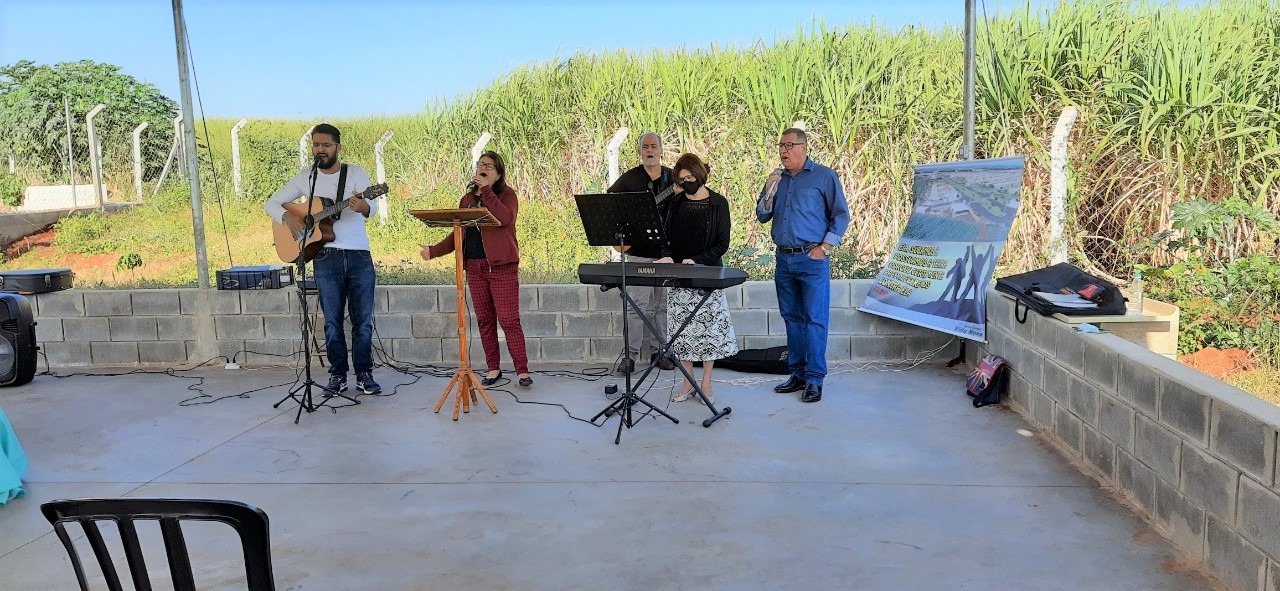
    In March, 2021, a Brazilian congregation, Igreja Evangélica Vida Nova (New Life) was awarded a JoinHands grant from Mennonite Men to aid construction of a new church building. Since acquiring the property, the congregation has been making improvements to the space, first meeting on the sidewalk bordering the property and then purchasing a spacious tent to house their services and other activities.

    A storm in early 2021 destroyed their tent but the setback only sped up the building process. They constructed a much simpler tent as a temporary meeting space and decided it was time to begin building the permanent church structure. In June, the congregation held its first service on the pad of their new building.

    Mennonite Men worked with Mennonite Mission Network (MMN) to identify Vida Nova along with Samogohiri Mennonite Church in Burkina Faso and Igreja Evangélica Menonita em Lago Azul in Brazil, as congregations that were working to construct a church building.

    In addition to the international grants, Mennonite Men also granted funds to Eastside Church, a congregation of Virginia Mennonite Conference in Harrisonburg, Virginia. They are currently raising funds for a grant to assist Hmong Mennonite Church, a congregation of Mountain State Mennonite Conference in Westminster, Colorado that is made up of Hmong people, a Southeast Asian ethnic group.

    JoinHands grants are dispersed when awarded grants are fully funded. We rely on the support of the Mennonite Men community to fill these grants and assist congregations with the building of their first meeting space. Since JoinHands began as Tenth Man in 1985, the program has distributed over $2 million helping churches in the United States, Canada, and in other countries to build or purchase their first building.

    Applications for a JoinHands grant, along with details about supporting these projects, can be found at mennonitemen.org/joinhands.

  • Local Congregation brings community together to plant 640 trees

    Local Congregation brings community together to plant 640 trees

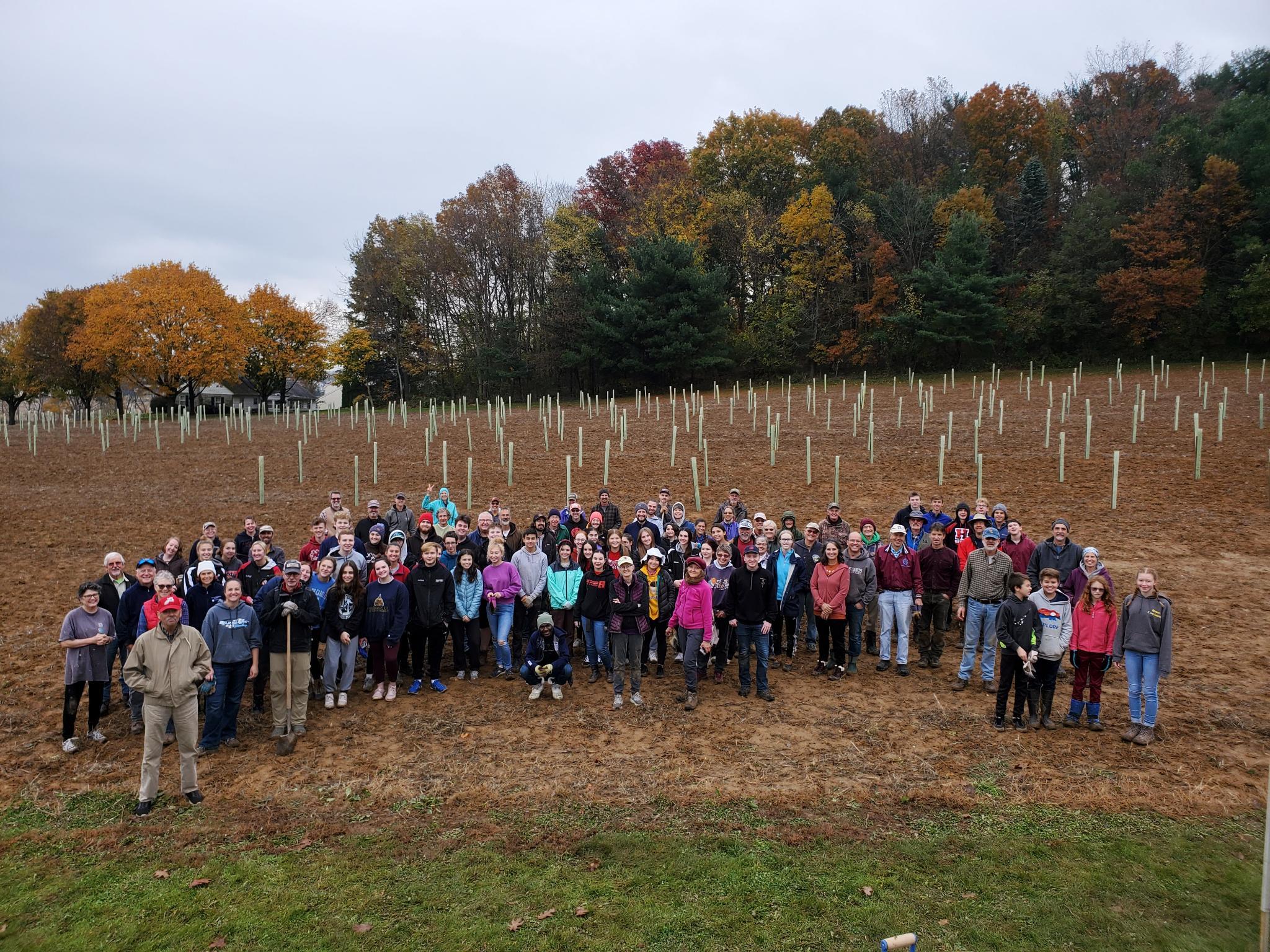
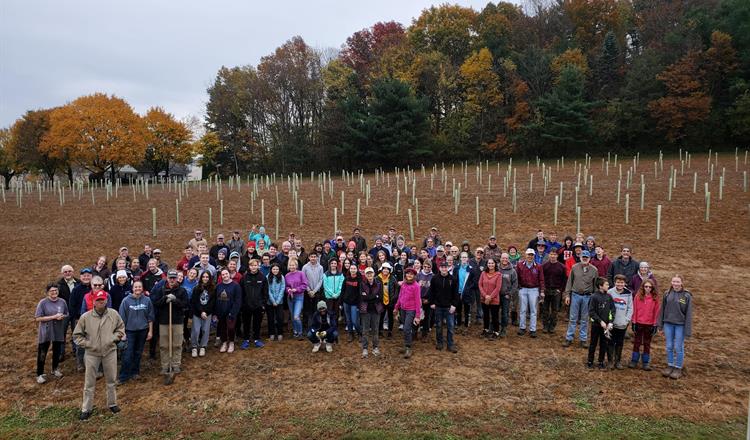
    On two Saturdays in November, volunteers gathered at Landisville Mennonite Church to convert 3.65 acres from farmland into forest and meadow as part of the congregation’s efforts to improve water quality, expand pollinator and wildlife habitat, and address climate change. On November 6, over 80 volunteers planted meadow seed on 1.25 acres, and the following Saturday, November 13, over 100 volunteers planted 640 tree seedlings on 2.4 acres.


    On both days a statement was read out loud, acknowledging that the land was home to indigenous peoples before the church was founded there, and that the planting project is part of the congregation’s work of reconciliation with indigenous peoples

    “We wanted to do this as part of our commitment to caring for God’s creation, both now and for future generations,” said Brenda Horst, a member of Landisville Mennonite who helped organize the project. “But we couldn’t have done it alone. We really relied on the expertise of the Alliance for the Chesapeake Bay and volunteers from the community get this done.”

    In addition to volunteers from the church and from the Alliance, volunteers came from Hempfield High School, Franklin & Marshall College, Etown College, local Boy Scout Troops, Interfaith Partners for the Chesapeake, Lancaster Conservancy, Hope United Methodist Church, and several Mennonite congregations.

    Ryan Davis, the Pennsylvania Forest Projects Manager at the Alliance, helped plan the project and led the plantings both days.

    “The tree planting went very well on Saturday! We have had large groups before but never so many on site at once,” said Davis. “The seeding and tree planting days were just the very beginning of the process. We can expect the meadow to begin benefitting pollinators and other wildlife next spring, as the vegetative diversity there skyrockets relative to when it was a crop field. Rain infiltration will improve by the second year and we will begin to sequester carbon in the soil within just a few years.”

    In addition to the support from The Alliance for the Chesapeake Bay, Landisville Mennonite received a grant from Interfaith Partners for the Chesapeake for the meadow seed. Mennonite Men, the men’s organization for Mennonite Church USA, also gave a grant for the tree seedlings as part of JoinTrees, Mennonite Men’s campaign to plant one million trees by the year 2030.

  • Men’s retreat in Chicago explores use of power, love

    Men’s retreat in Chicago explores use of power, love

    By Ron Larson

    Reba Place Church hosted a Men’s Retreat on October 22-24, 2021, and invited Steve Thomas, USA Director of Mennonite Men, to lead our three day retreat. The original retreat was scheduled for March 2020, but the COVID lockdown forced us to cancel. It took us a year and a half to reschedule, but during that time, Steve Thomas and Don Neufeld wrote a new book titled, ‘Strong, Loving and Wise: Conversations with Men.’ Reba Place Church was excited to host Steve for the weekend to explore these topics together. The retreat was an opportunity to reconnect in person after the COVID lockdown and reflect on events and people that shaped us as men over the course of our lifetimes. The retreat helped us reclaim our identity as beloved sons of God who are following in the nonviolent way of Jesus, who are shaped into Christlikeness by both great love and great suffering.

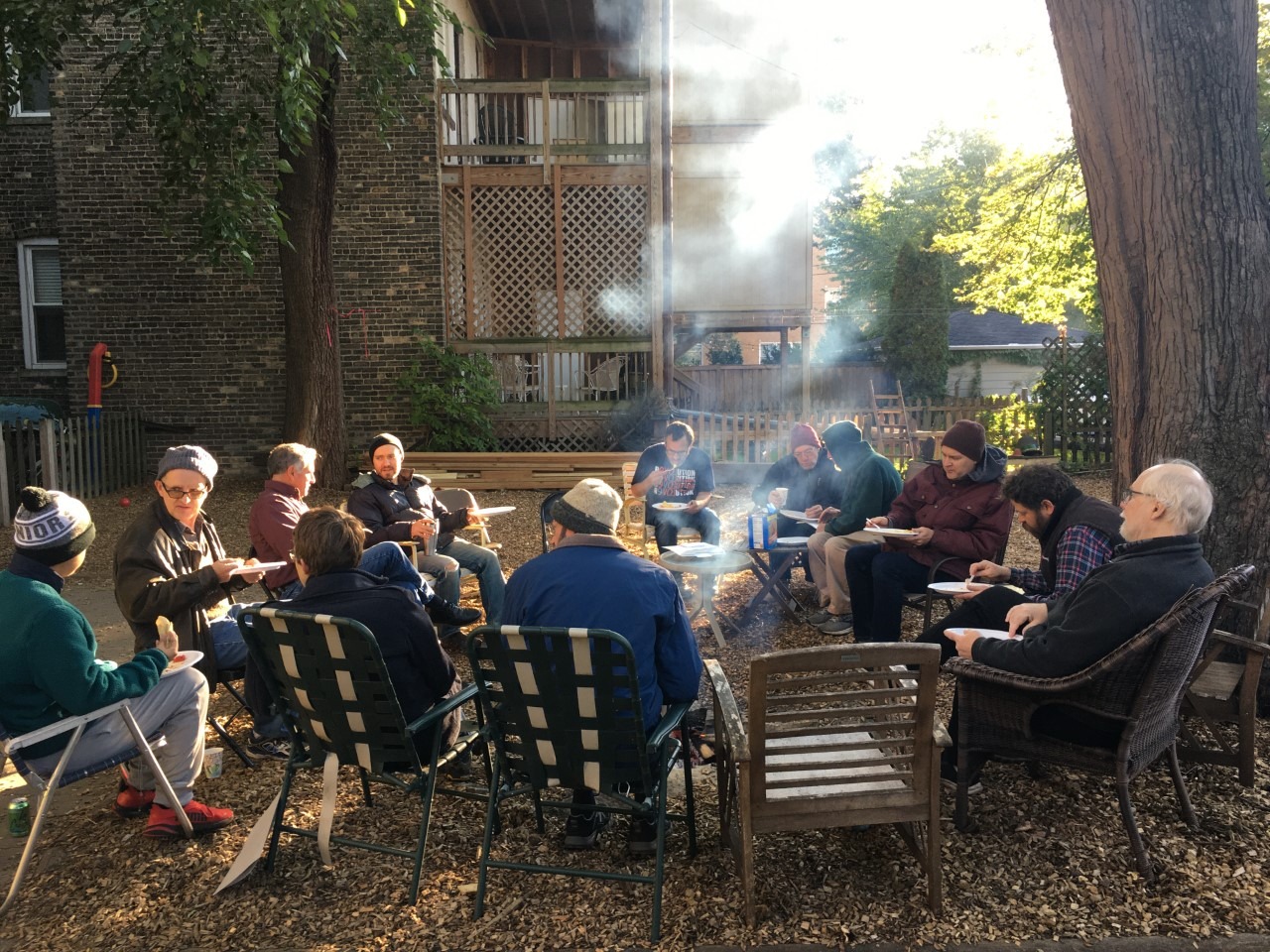
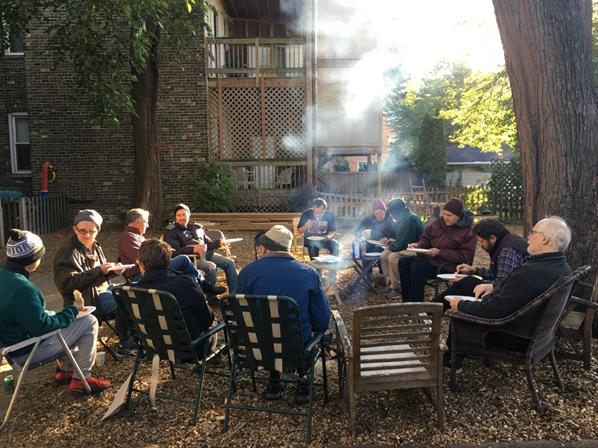
    On Friday night, we had a campfire, ate s’mores and told stories. We enjoyed meals outside and kept a fire going to keep us warm on the chilly Fall days. Due to Covid precautions, we masked up indoors and made the joke that we were there to discuss what it meant to be ‘MASKuline.’ That was a fun way to go deeper and set aside our ‘inner masks’ to open up and be vulnerable. Steve Thomas created a safe space for us to share from the heart and discuss topics that wouldn’t just come up in regular conversation. We spent time reflecting on power structures and violence and how we can engage powerfully with a combination of love and wisdom. We also took time to embrace who we are as beloved sons of God. This is an important and ongoing stage for us as we grow beyond violent or immature male stereotypes offered up by the culture. We spent time discussing the connections between spirituality and sexuality and to embrace both as gifts from God.

    The new book by Steve Thomas and Don Neufeld, ”Strong, Loving and Wise,’ is a unique contribution to the men’s movement because it draws upon the nonviolent way of Jesus as the ultimate expression of human growth, both individually and for society. Steve incorporates elements of Robert Bly and Richard Rohr’s work, but delivers a uniquely Anabaptist vision for a thriving humanity pursuing shalom in the local church community. The format of the book is designed to foster conversation with over 70 topics to discuss. The book is a treasure trove of wisdom for men to explore together.

    Steve rounded out the retreat weekend by being our guest preacher for the Sunday service. After a joyful time of prayer and singing, Steve taught from 2 Timothy 1:7 where Paul encouraged young Timothy with these words, ‘For God has not given us a spirit of fear, but of power and of love and of a sound mind.’ Steve pointed to John Lewis and Martin Luther King, Jr. as men who served their communities faithfully and who learned how to use power and love to transform their worlds. By the time we finished our sermon discussion time at the end of the service, we knew we wanted to continue to hold space for these deepening conversations. We are excited to offer a monthly gathering for male identified folks to gather, listen and share in the nonviolent way of Jesus.

  • Congregation comes together to plant 640 trees

    Congregation comes together to plant 640 trees

    ​On two Saturdays in November, volunteers gathered at Landisville Mennonite Church to convert 3.65 acres from farmland into forest and meadow as part of the congregation’s efforts to improve water quality, expand pollinator and wildlife habitat, and address climate change. On November 6, over 80 volunteers planted meadow seed on 1.25 acres, and the following Saturday, November 13, over 100 volunteers planted 640 tree seedlings on 2.4 acres.


    On both days a statement was read out loud, acknowledging that the land was home to indigenous peoples before the church was founded there, and that the planting project is part of the congregation’s work of reconciliation with indigenous peoples

    “We wanted to do this as part of our commitment to caring for God’s creation, both now and for future generations,” said Brenda Horst, a member of Landisville Mennonite who helped organize the project. “But we couldn’t have done it alone. We really relied on the expertise of the Alliance for the Chesapeake Bay and volunteers from the community get this done.”

    In addition to volunteers from the church and from the Alliance, volunteers came from Hempfield High School, Franklin & Marshall College, Etown College, local Boy Scout Troops, Interfaith Partners for the Chesapeake, Lancaster Conservancy, Hope United Methodist Church, and several Mennonite congregations.

    Ryan Davis, the Pennsylvania Forest Projects Manager at the Alliance, helped plan the project and led the plantings both days.

    “The tree planting went very well on Saturday! We have had large groups before but never so many on site at once,” said Davis. “The seeding and tree planting days were just the very beginning of the process. We can expect the meadow to begin benefitting pollinators and other wildlife next spring, as the vegetative diversity there skyrockets relative to when it was a crop field. Rain infiltration will improve by the second year and we will begin to sequester carbon in the soil within just a few years.”

    In addition to the support from The Alliance for the Chesapeake Bay, Landisville Mennonite received a grant from Interfaith Partners for the Chesapeake for the meadow seed. Mennonite Men, the men’s organization for Mennonite Church USA, also gave a grant for the tree seedlings as part of JoinTrees, Mennonite Men’s campaign to plant one million trees by the year 2030.


  • Men’s retreat in Chicago explores use of power, love

    Men’s retreat in Chicago explores use of power, love

    Reba Place Church hosted a Men’s Retreat on October 22-24, 2021, and invited Steve Thomas, USA Director of Mennonite Men, to lead our three day retreat. The original retreat was scheduled for March 2020, but the COVID lockdown forced us to cancel. It took us a year and a half to reschedule, but during that time, Steve Thomas and Don Neufeld wrote a new book titled, ‘Strong, Loving and Wise: Conversations with Men.’ Reba Place Church was excited to host Steve for the weekend to explore these topics together. The retreat was an opportunity to reconnect in person after the COVID lockdown and reflect on events and people that shaped us as men over the course of our lifetimes. The retreat helped us reclaim our identity as beloved sons of God who are following in the nonviolent way of Jesus, who are shaped into Christlikeness by both great love and great suffering.

    On Friday night, we had a campfire, ate s’mores and told stories. We enjoyed meals outside and kept a fire going to keep us warm on the chilly Fall days. Due to Covid precautions, we masked up indoors and made the joke that we were there to discuss what it meant to be ‘MASKuline.’ That was a fun way to go deeper and set aside our ‘inner masks’ to open up and be vulnerable. Steve Thomas created a safe space for us to share from the heart and discuss topics that wouldn’t just come up in regular conversation. We spent time reflecting on power structures and violence and how we can engage powerfully with a combination of love and wisdom. We also took time to embrace who we are as beloved sons of God. This is an important and ongoing stage for us as we grow beyond violent or immature male stereotypes offered up by the culture. We spent time discussing the connections between spirituality and sexuality and to embrace both as gifts from God.

    The new book by Steve Thomas and Don Neufeld, ”Strong, Loving and Wise,’ is a unique contribution to the men’s movement because it draws upon the nonviolent way of Jesus as the ultimate expression of human growth, both individually and for society. Steve incorporates elements of Robert Bly and Richard Rohr’s work, but delivers a uniquely Anabaptist vision for a thriving humanity pursuing shalom in the local church community. The format of the book is designed to foster conversation with over 70 topics to discuss. The book is a treasure trove of wisdom for men to explore together.

    Steve rounded out the retreat weekend by being our guest preacher for the Sunday service. After a joyful time of prayer and singing, Steve taught from 2 Timothy 1:7 where Paul encouraged young Timothy with these words, ‘For God has not given us a spirit of fear, but of power and of love and of a sound mind.’ Steve pointed to John Lewis and Martin Luther King, Jr. as men who served their communities faithfully and who learned how to use power and love to transform their worlds. By the time we finished our sermon discussion time at the end of the service, we knew we wanted to continue to hold space for these deepening conversations. We are excited to offer a monthly gathering for male identified folks to gather, listen and share in the nonviolent way of Jesus.

  • Participants explore being a “Real Man” at Convention

    Participants explore being a “Real Man” at Convention

    At Mennonite Church USA’s biannual convention, Mennonite Men engaged with convention attendees in two in-person seminars. The first seminar explored tree planting as a way for congregations to engage in creation care and the second addressed issues of healthy masculinity and identity.

    On Wednesday, July 7, Steve Thomas, U.S. director of Mennonite Men Men, led a seminar on planting trees to help restore the earth. Thomas led participants in discussion on the critical place of trees in God’s creation, evident in the fact that the very first and last chapters of the Bible feature the trees of life. Based on a long list of their benefits for our communities and ecosystems, participants recognized the importance of planting and protecting trees. Thomas then presented how people can participate in the Mennonite Men JoinTrees campaign to plant one million trees by 2030 to help slow climate change and restore the earth.

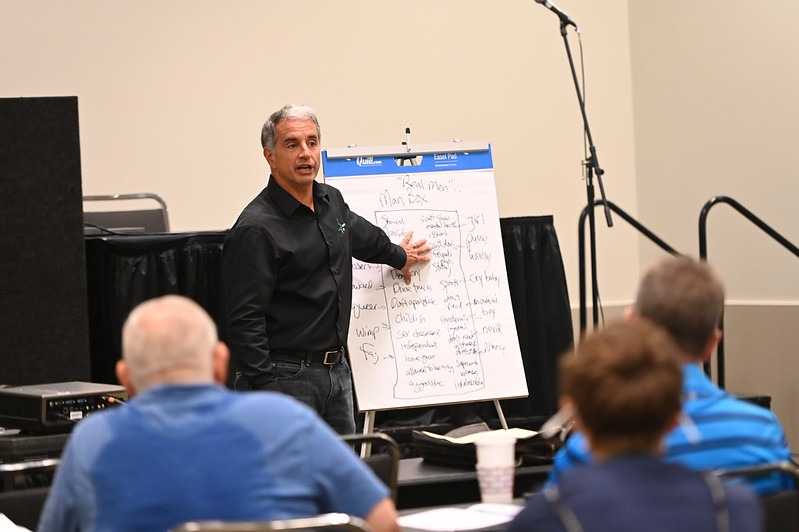
    On Thursday, July 8, Thomas led a seminar discussing the phrase, ‘Be a man.’ While men and boys are often told to be a man, what does this mean? Thinking of conventional masculinity in American culture, participants responded that ‘real men’ are assertive, allowed to be angry, independent, strong, invulnerable, sex obsessed, don’t cry, don’t apologize, dominate, have guns, and drive truck, among other things. Participants examined what boys and men are called who don’t fit in the ‘man box’ and how this affects them. And they considered how this kind of masculinity impacts other genders. Thomas expressed that it was especially helpful to hear from women who were in this seminar.

    Seminar participants then identified traits of healthy masculinity and what Jesus modeled. Participants stated that ‘good men’ are caring, compassionate, serve, express feelings other than anger, are inclusive, respectful, confident, empathetic, loving, selfless, able to confess and apologize, and listen, among other traits. The contrast and tensions between these two ways of being men became evident. Participants imagined what our world would be like if more men embodied these traits of healthy masculinity more than what conventional masculinity calls for. They imagined a world with more respect, love, justice and peace.

    This exercise was drawn from the digital version of new book Strong, Loving, and Wise: Joining Conversations for Men that Mennonite Men will be publishing this fall. A print version of the book will be available later this year.


  • Book study group explores healthy masculinity

    Book study group explores healthy masculinity

    Donandco.jpg

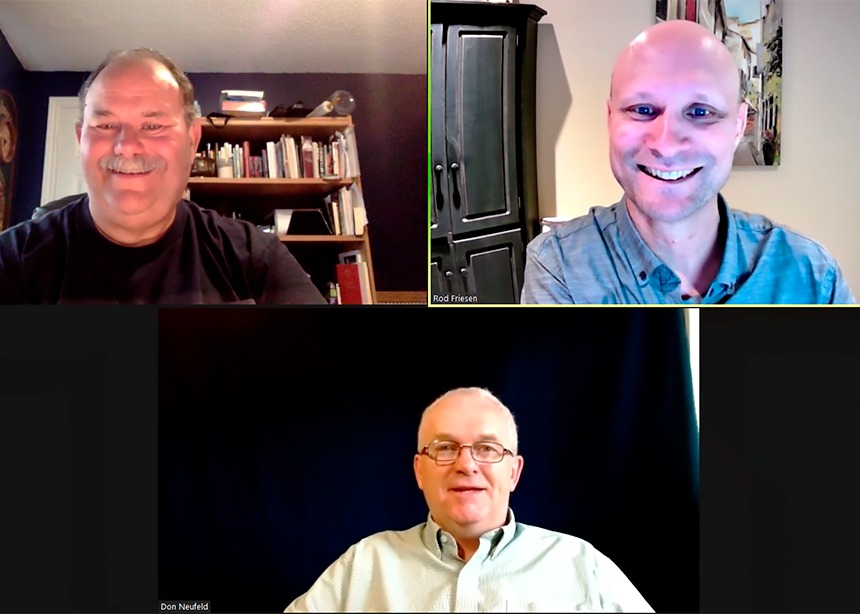
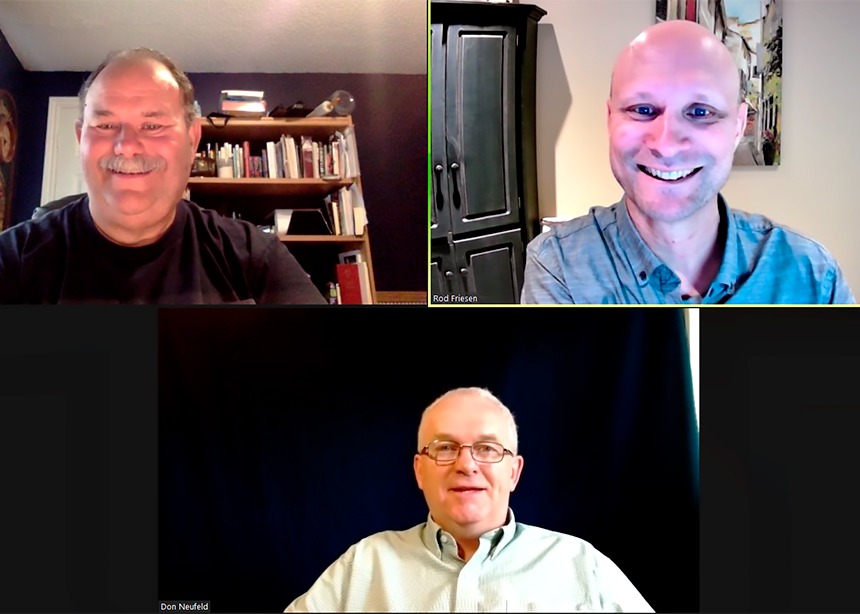
    Clockwise from bottom, Don Neufeld, the editor of Peaceful at Heart; David Blow, Mennonite Central Committee

    program associate, top left; and Rod Friesen, an MCC restorative justice program coordinator, plan their agenda for

    week four of the online book club they facilitate dealing with healthy masculinity. (Screenshot by Rod Friesen)


    Note: This story was originally published by Canadian Mennonite


    For years Don Neufeld dreamed about providing a space where men could explore healthy masculinity from an Anabaptist/Mennonite perspective. During the month of June he co-facilitated an online book study for a diverse group of men, using a resource he co-edited with Steve Thomas, called Peaceful at Heart: Anabaptist Reflections on Healthy Masculinity.

    According to Neufeld, the online gathering of 11 participants and three facilitators, responds to the “depth of interest and need” for this kind of conversation.

    Neufeld is a social worker with 30 years of experience. In his therapy practice, mostly treating men, he sees “how profoundly men are hurting,” how angry, insecure and confused they are. But when he looked for material to touch these “hurting souls” he did not find much that included a Mennonite peace perspective. So he decided to do something about it. He, along with Thomas, gathered a variety of voices into one book.

    In Peaceful at Heart, 16 men, including some from minority groups based on ethnicity, class and sexual orientation, address power, patriarchy, privilege, the Bible, peace, spirituality, community and discipleship. The chapters invite men into “difficult conversations” about healthy and unhealthy expressions of masculinity.

    One of three women to contribute to the book is Carol Penner, assistant professor of theological studies at Conrad Grebel University College in Waterloo, Ont. She asks, “How can we talk about peace and masculinity without talking about intimate partner violence and child abuse,” which is “the elephant in the room that cries out to be acknowledged and addressed.”

    Dan Epp-Tiessen, a semi-retired associate professor of Bible at Canadian Mennonite University in Winnipeg, wrote a study guide for the book, which includes a session on abuse, and suggestions about how to facilitate the heavy topic. The guide contains 10 other sessions, with detailed references to the book and plenty of questions to spark personal reflection, storytelling and conversations.

    Mennonite Central Committee (MCC) Ontario, Mennonite Men, Mennonite Church Eastern Canada, MC Canada and the Be In Christ Church of Canada are all supporting partners of the project. Neufeld is the coordinator of Mennonite Men Canada, (the men’s organization for MC Canada) and Thomas is his counterpart for MC U.S.A.

    Rod Friesen, who is also co-facilitating the current book study, is the restorative justice program coordinator for MCC Ontario. He saw the book as a useful tool for leading conversations in its Circles of Support and Accountability program. Since it is an important calling for MCC to build peaceful communities, Friesen also facilitated a pilot book study with his coworkers, which led to rich conversations.

    As Friesen writes in the preface to the study guide, “We saw a need for resources that would encourage and foster conversations about masculinity in healthy ways—and point us to the author of our faith—Jesus.” It is an “overlooked area of study within our Anabaptist faith communities.”

    Participant George Best says he appreciates how the facilitators create “a safe space for disclosure and trust within the group.” As someone who worked with men in the prison system, he was looking for insights into violence and the “dynamics of dominance and control” as related to the Mennonite community.

    Neufeld and Friesen appreciate the sensitive nature of these topics. Friesen writes in the preface to the study guide: “Conversations around masculinity, especially what has become known as ‘toxic expressions of masculinity,’ have become incredibly polarizing.” It is a “courageous step for men to move into these uncomfortable conversations.”

    Neufeld says, “I fully respect the passion and energy of naming centuries of injustice,” including sexism, racism and anti-LGBTQ+ attitudes, and “highly respect the need to privilege women’s voices in that context.” He suggests that the conversation can’t stop there. He wants men to be invited to the table, not to take over, but to expand the narrative on gender to include men’s stories.

    He also wants to avoid the pitfall of men either “checking out” of these uncomfortable conversations because they feel judged, or “powering up” when they feel challenged. He hopes conversations around gender can “evolve into something more collaborative.”

    The facilitators hope for positive ripple effects wherever the book is studied. Penner’s call in the book to go “from peaceful at heart to peaceful at home” inspires them. As Friesen writes, “These are critical peacebuilding conversations essential for creating safe, peaceable spaces in our churches, homes, workplaces, communities and society.”

    They hope to mentor other men to lead study groups in the future. They are in the process of recording an audio book with Cedric Martin of Theatre of the Beat. And there are plans to develop a curriculum to engage young men.

    Also, Thomas and Neufeld are just finishing another self-published resource called “Strong, loving and wise: Conversations for men,” which is a series of 70 shorter topic sheets that include questions to spark discussion.

    For Friesen and Neufeld, normalizing conversations around masculinity requires humility and listening. Friesen writes, “The book is not necessarily an easy read, but it is an important one—perhaps even a life-changing one.”


  • Anabaptist tree planting campaign plants over 2,250 trees this spring

    Anabaptist tree planting campaign plants over 2,250 trees this spring

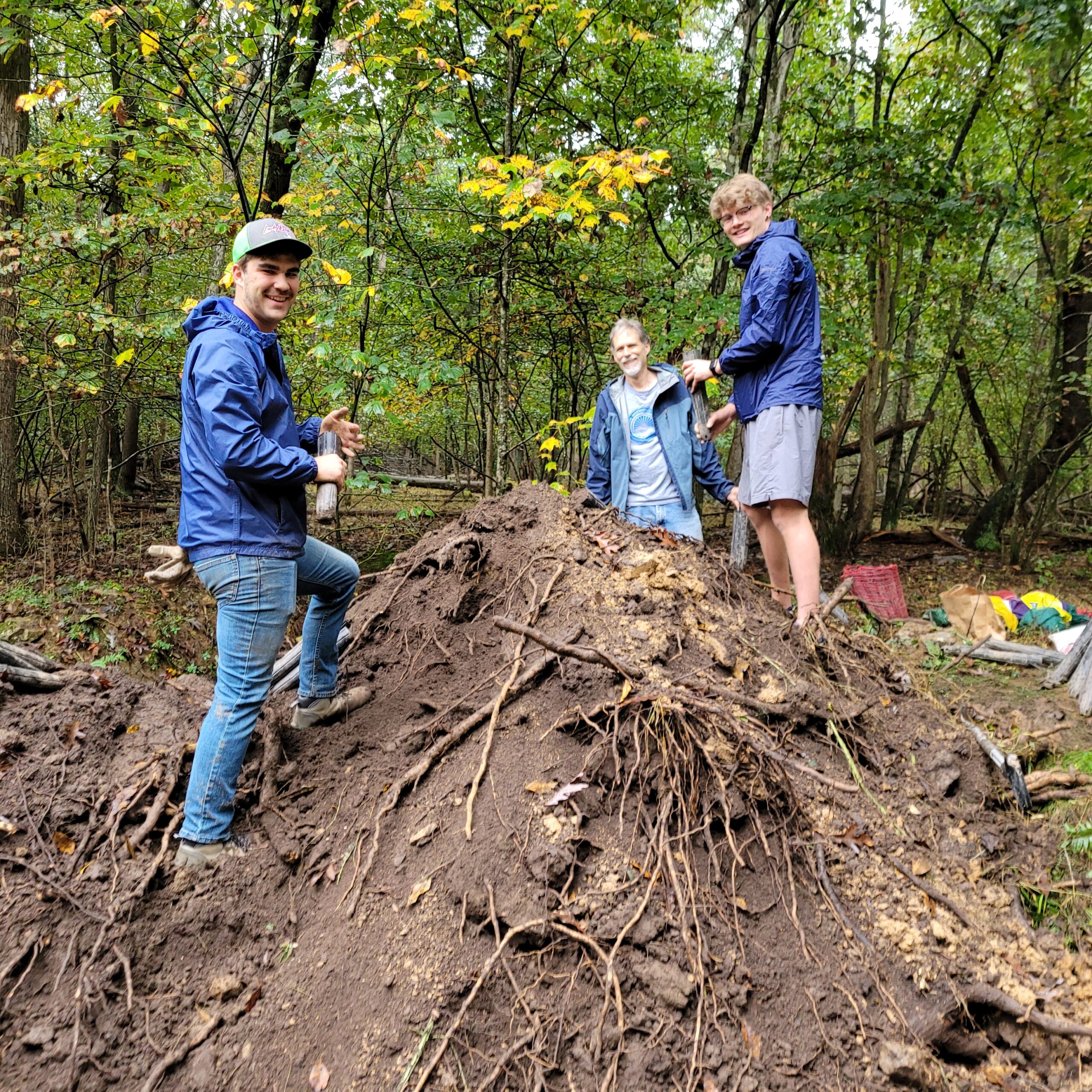
    This spring Anabaptist communities have been enthusiastically planting trees, with over 2,250 trees planted in April alone. Congregations, farmers, men’s groups, and schools have partnered with Mennonite Men to plant trees as part of Mennonite Men’s campaign, JoinTrees, with the goal of planting one million trees by the year 2030.

    Steve Thomas, Mennonite Men U.S. coordinator and certified arborist, has encouraged JoinTrees partners to be creative in their planting projects. The results have been intergenerational events at a variety of sites, including tree plantings at churches, farms, retreat centers, and along the Indiana Toll Road.

    In addition to the various planting events, Mennonite Men’s board of directors also approved $8,247.00 for 5 grants to congregations, farms, and environmental education projects to assist them in tree planting projects they’re undertaking this spring and fall.

    One of the grants helped finance tree planting at Full Circle Farm in Three Rivers, Michigan, where farm owners Gabe and Bethany Bauman-Baker enlisted the help of students from Bethany Christian School in Goshen, Indiana. Students helped them plant 632 trees to create a fast-growing windbreak between their field and the conventionally farmed fields beside them and increase carbon capture.

    ‘We have three goals with this campaign to restore God’s earth,’ said Steve Thomas. ‘Doing our part to care for God’s creation, we aim to mitigate global warming, serve climate justice, and sustain biodiversity.’

    ‘We continue to receive inquiries about how to participate in our campaign,’ said Thomas. ‘People are seeking to join this campaign by offering land to plant, making contributions to fund tree planting, and helping to plant seedlings. We are excited by the strong, positive response across the church.’

    To date, 9,151 trees have been planted through the JoinTrees campaign. To learn more about JoinTrees and how you and your community can get involved, visit mennonitemen.org/jointrees.


  • Mennonite Men helps build churches from Brazil to Burkina Faso

    Mennonite Men helps build churches from Brazil to Burkina Faso

    Mennonite Men are assisting five new congregations across three continents with over $107,400 through JoinHands, Mennonite Men’s program to provide grants to help new congregations acquire their first church building. The board of directors of Mennonite Men approved grants at their board meeting on March 27 that will benefit Mennonite churches in Colorado, Virginia, Brazil, and Burkina Faso.

    “We’re excited to help provide these new, growing congregations with the space they need to worship and carry out vital ministries,” said Steve Thomas, U.S. coordinator for Mennonite Men.

    Mennonite Men worked with Mennonite Mission Network (MMN) to identify Samogohiri Mennonite Church in Burkina Faso and two congregations in Brazil, Igreja Evangélica Vida Nova and Igreja Evangélica Menonita em Lago Azul, as congregations that were working to construct a church building.

    “In Brazil, the people of Lago Azul and Vida Nova are excited to receive the JoinHand grant. These funds will help a lot as they are working hard on their church buildings,” said Linda Shelly, MMN’s Regional Director for Latin America.

    “The members of Samogohiri Mennonite Church dug the foundation for their building,” said Sharon Norton, co-director for Africa and Europe for MMN. “In order to keep their costs low, they’ve provided a lot of sweat equity, and got members of all ages involved.”

    In addition to granting funds internationally, Mennonite Men is also assisting Eastside Church, a congregation of Virginia Mennonite Conference in Harrisonburg, Virginia, as well as Hmong Mennonite Church, a congregation of Mountain State Mennonite Conference in Westminster, Colorado made up of Hmong people, a Southeast Asian ethnic group.

    JoinHands, which began in 1985 as Tenth Man, has distributed over $2 million helping churches in the United States, Canada, and in other countries to build or purchase their first building. Learn more at mennonitemen.org/joinhands.

  • Calgary Chin Christian Church celebrates 10 year anniversary with new building

    Calgary Chin Christian Church celebrates 10 year anniversary with new building

    On Sunday, March 14, 2021, Calgary Chin Christian Church celebrated the grand opening of their new church building, as well as marking their 10 year anniversary as a congregation.

    Because of the pandemic, the church held a celebratory worship service with a hybrid format, in which some members were present at the new building, while other members and special guests participated via Zoom.

    The congregation, a Mennonite Church Alberta congregation, was able to purchase and renovate the building with assistance from a $40,000 grant from JoinHands, Mennonite Men’s program to provide grants to help new congregations acquire their first church building.

    Don Neufeld, Coordinator for Mennonite Men in Canada, shared at the event.

    “My presence today is about connection. At a basic level it is about connecting our donors and their funds and the needs of your congregation,” said Neufeld. “But this is more than just about money. It is about connection in God’s family and in our joint ministry to see God’s will abound in our world.”

    Neufeld expressed appreciation for the opportunity to work with church leadership to make a new church building possible for the congregation.

    Calgary Chin Christian Church is made up of Chin people, a Southeast Asian ethnic group from Chin State, Myanmar (Burma).

    The church began in June 2010 in the basement of one of the church members, with volunteers teaching songs and Bible verses to children. In January 2011, the congregation was founded, and then joined Mennonite Church Alberta in March 2013. After renting space from another church, with limited space and available time for their activities, church members are looking forward to growing their ministries, including Bible studies, women’s groups, and youth activities.

    JoinHands, which began in 1985 as Tenth Man, has distributed over $2 million helping churches in the United States, Canada, and in other countries to build or purchase their first building. Learn more at mennonitemen.org/joinhands.

    Photo courtesy of Calgary Chin Christian Church