Tag: Stories

  • Oregon Eco-excursion: Responding to Deforestation

    Oregon Eco-excursion: Responding to Deforestation


    Did you know that wood consumption in the U.S. is approximately 640 pounds per capita? That’s like a white pine tree 43 feet tall and one foot in diameter. Global forest loss is approximately 11.6 million acres each year. Severe drought and insect outbreaks related to climate changes have killed hundreds of millions of trees across the U.S. over the past 20 years and wildfires have burned over 3.7 million acres annually. An additional 175,000 acres per year are removed in community areas of the U.S. due to development and other human pressures.


    During our Oregon Eco-excursion, we will learn about deforestation, the second largest factor in climate change (second only to emissions from burning of fossil fuels). And we will do something about it. We will help with a Mennonite Men project to plant 3,000 trees to convert farm pasture to original forestland. Now that these seedlings have been planted, we will help with vegetation management around the trees so that they can get off to a good start. This will be one activity among other experiences in wild spaces in Oregon.


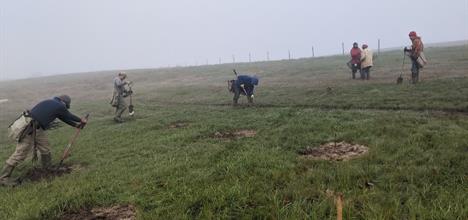
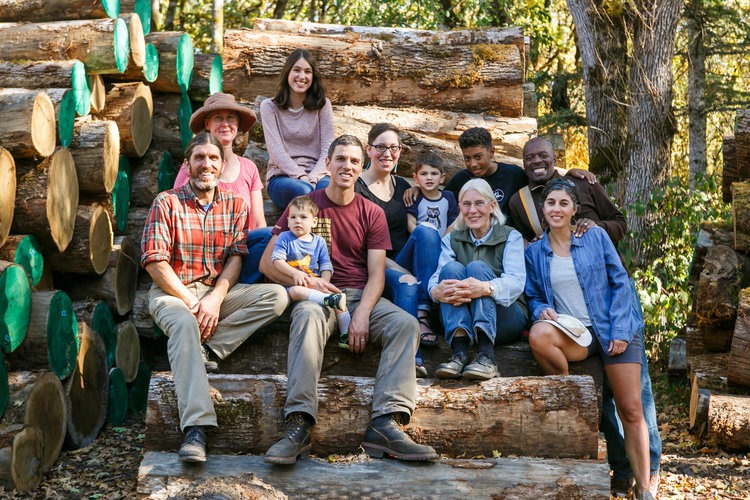
    This photo shows Oregon white oak (a declining species) and other seedlings being planted in a pasture previously used for grazing cattle. It’s being turned back to forestland and added to the Zena Forest managed by a Mennonite family. In an area dominated by industrial clear cutting, this family practices sustainable forestry to protect forest ecosystems while performing selective harvesting for essential wood products.


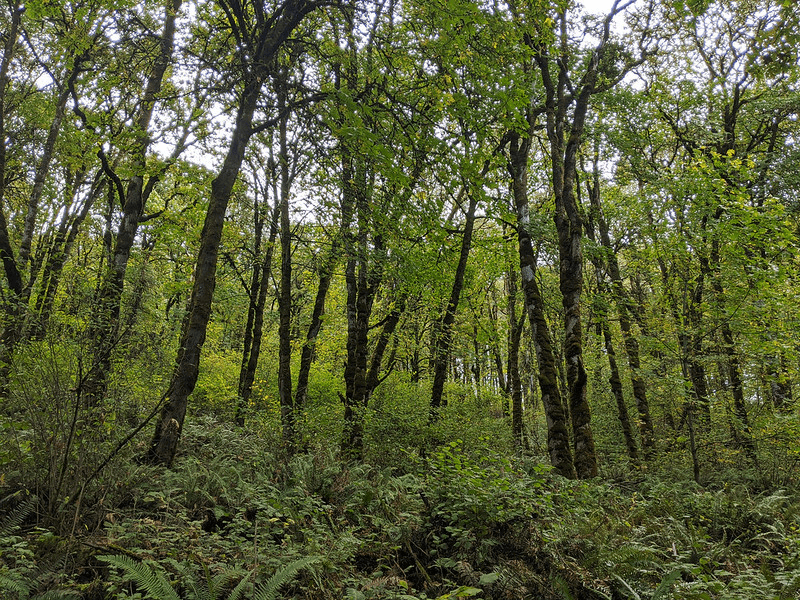
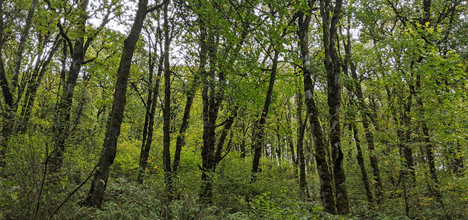
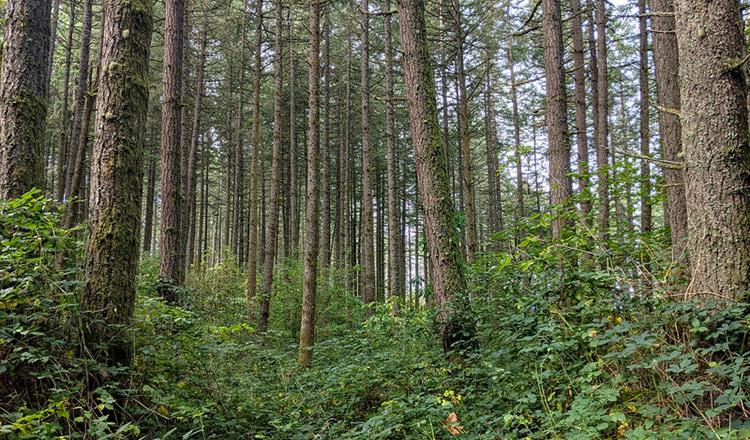
    Eventually as these trees mature, this degraded land will once again become a more productive oak forest like this in the Zena Forest with lust understory and rich biodiversity. Once regenerated into a healthy forest ecosystem, it will sequester carbon dioxide responsible for global warming, improve water and soil quality, create wildlife habitat, and provide other critical ecosystem services while providing a source of wood products from sustainable management.


    This project integrates our JoinTrees campaign to plant one million trees to restore God’s Earth and our JoinMen program to provide meaningful experiences for men learning, growing and serving together. In this eco-excursion we will also enjoy wonderful wild spaces in God’s creation and learn from what trees and forests teach us about life. To learn more and participate, register here mennomen.live/oregon. Registration is due by April 11.


  • Tree planting as Christian discipleship

    Tree planting as Christian discipleship


    The Bible begins and ends by featuring trees of life and reveals the essential place trees inhabit on the earth and their roles, both in the ecosystems of God’s creation and in the spiritual lives of its people.

    Jewish teachings carry on this theme. A Jewish midrash, or proverb, states that after God made the first human, God led the human creature around all the trees of the Garden of Eden and said, ‘See My works, how beautiful and praiseworthy they are …Be careful not to spoil or destroy My world – for if you do, there will be nobody after you to repair it.’ Another Jewish teaching says if people claim the world is ending and the Messiah has come, first plant a tree, and then see if the story is true.

    We plant trees because they have environmental, social, and spiritual benefits. Trees capture carbon and slow the warming of the earth. They cool the land and preserve it from erosion, thereby making it a hospitable place for the other beings of God’s creation to live and thrive. The point our eyes heavenward and remind us of the goodness that God proclaimed over all that he had made.


    In a time of ecological crisis that can feel overwhelming, we can find hope and resilience in the simple act of planting trees. The JoinTrees program of Mennonite Men has assisted many communities across the U.S., and Central America take part in this simple act of healing that begins to restore our connection to the land as individuals and as communities. Visit mennonitemen.org/jointrees to read these stories and to join Mennonite Men’s campaign to plant one million trees by 2030.


  • A “Third Way” Forestry Practice in the Zena forest

    A “Third Way” Forestry Practice in the Zena forest


    The upcoming Mennonite Men Eco-excursion will visit and work in the Zena forest in June, 2022. Details about the trip can be found at mennomen.live/oregon.


    The story of the Zena forest began in 1984 with the purchase of 400 acres of forestland in Oregon’s Willamette Valley by the German forest owning family for whom my husband Dieter worked. Two years later several hundred acres of adjoining forest land were purchased and in 1987 our family moved back to Oregon, where I had grown up on a family farm, to manage the forestland. We built a house on the edge of the forest which Dieter managed while I managed four children, household, garden, sheep and goats, etc.


    In 1996 Dieter died of cancer and the German owners asked if I would take over the forest management. My other option would have been to go back to teaching high school. Though I had no forestry training the choice was clear – trees don’t talk back and I preferred outdoor to indoor work. I accepted on the condition that they train me which they did with German thoroughness.

    I had my moments of anxiety and doubt as a woman in a largely man’s world which faded quickly when, at some point, I realized that instead of hiding my ignorance I could ASK QUESTIONS. Those loggers and log buyers who spoke another language were only too happy to answer my questions and tell me stories about their work and world.

    Over the years the forest increased in size through the purchase of nearby parcels until it’s zenith of well over 2000 acres. I had grown happily into my job when, in the mid 2000s the Germans decided to sell the Zena Forest which we had come to love and consider home. My first move was to buy 2 lottery tickets, my first and only, to see if God wanted this forest to be ours. It didn’t work. The following two years are a long and complicated story but with angels on my shoulders we won another sort of lottery and since 2008 we have been the owners and stewards of 1300 acres of the forest.

    From the beginning of this story the Zena Forest has been managed in a sort of ‘Third Way’ based on the German ‘Natuergemaesse Waldwirtschaft’ which roughly translates as ‘Near to Nature Forestry’. Our goal is to disturb nature’s natural processes as little as possible, to use the lightest touch possible while recognizing that harvesting some trees carefully can improve the quality and health of the forest ecosystem. Our forest management is an anomaly in Oregon where the industrial clear cut is king, driving our markets, mill capacity and infrastructure. The other end of this spectrum are the environmental groups, with whom we have much sympathy, who often want to cut no trees at all. We have always walked a tightrope between the two.

    The primary differences between Zena management and standard industrial management are:

    1. Valuing all naturally occurring tree species, not just Douglas Fir, and therefore planting a mixture of seedlings most suited to a particular site. Up until our arrival on the scene hardwood trees were considered nuisance trees to be cut and left or, at best, taken to a chip mill. This fact explains our small hardwood mill which has created a market for local hardwoods and a variety of wood products which had not been available from local sources.
    2. Keeping all equipment on designated, permanent skid trails to protect the soil (our capital) from compaction.
    3. Using an ‘individual tree selection’ method of harvesting instead of clear cuts. This often means taking defective trees or competitors of the most vigorous trees.
    4. Leaving logging debris on the forest floor as organic matter rather than piling and burning it after a harvest.
    5. Using machetes instead of chemicals to release tree seedlings from competing vegetation.


    When the industrial types visit our forest they don’t challenge our management but inevitably say, ‘it’s not scalable, it won’t pencil’ which we have, as of yet, been unable to disprove. The Environmental folks tend to listen appreciatively and seem enthusiastically grateful that there might be another way beside the clearcuts.

    A recent essay by a thoughtful farmer in Scotland was entitled ‘How Can I Make a Living Off My Land Without Destroying It?’ Perhaps this is the central dilemma of all conscientious landowners. It certainly is our biggest concern and challenge. I’m still hoping to demonstrate that economy and ecology are one and the same – that an ecologically healthy forest is also the most economically valuable forest. For my grandchildren I want to leave a great deal of love and responsibility for all the wonders of a healthy, vibrant forest ecosystem.


  • Mennonite Men releases digital resources for Peaceful at Heart

    Mennonite Men releases digital resources for Peaceful at Heart

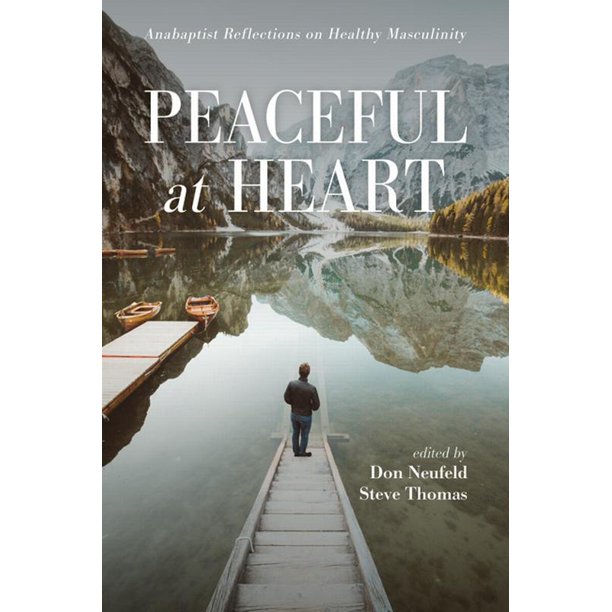
    Peaceful at Heart was released in 2019 to present a vision of peaceful living as an alternative to the expectations for masculinity widely held by society. The goal has been to engage as many men as possible in this important conversation. To that end, Mennonite Men, in collaboration with Mennonite Central Committee’s Ontario office, has created an audiobook, study guide, and a podcast/video interview series with the book’s contributors. These written, audio and video materials will assist in individual or group engagement of these critical ideas.


    The interview series includes the personalities and passions of each of the contributors as they are interviewed about their chapters. Cedric Martin of Ontario-based Theatre of the Beat hosts the interviews and performs the audiobook. Retired professor Dan Epp-Tiessen walks leaders through a series of 11 sessions in the written study guide, providing suggestions for facilitating group conversations including questions to get men thinking and sharing. From the hard stuff of abuse to a vision for living life with a peaceful heart, covering a broad reach of masculinities, Peaceful at Heart challenges our thinking of what it means to be men of God.


    Financial support from Mennonite Church Eastern Canada, Be In Christ Canada, and Mennonite Church Canada as partners with Mennonite Men and MCC Ontario has allowed these materials, to be made available free of charge, with the exception of the commercially published book edition. We encourage you to download, distribute, and view which ever of the materials meets your interests and needs.

    Don Neufeld and Steve Thomas, the editors of Peaceful at Heart, are readily available to support your individual or community conversations, and can be contacted at DonN@MennoniteMen.org and SteveT@MennoniteMen.org.

    Peaceful at Heart and its accompanying resources, along with the forthcoming book Strong, Loving and Wise: Joining Conversations for Men, are resources of Mennonite Men’s JoinMen program, which provides retreats and resources from an Anabaptist perspective to promote healthy masculinity, Christian formation and community. Mennonite Men desires that all men find a place of belonging among men who are strong, loving and wise as we follow Jesus in building God’s shalom. More info at mennonitemen.org/joinmen.

    You will find all these great resources at:

    mennomen.live/PeacefulAtHeart

    commonword.ca/ResourceView/83/25300


  • Defending peace, defending the climate: Anabaptist organizations collaborate on climate change

    Defending peace, defending the climate: Anabaptist organizations collaborate on climate change

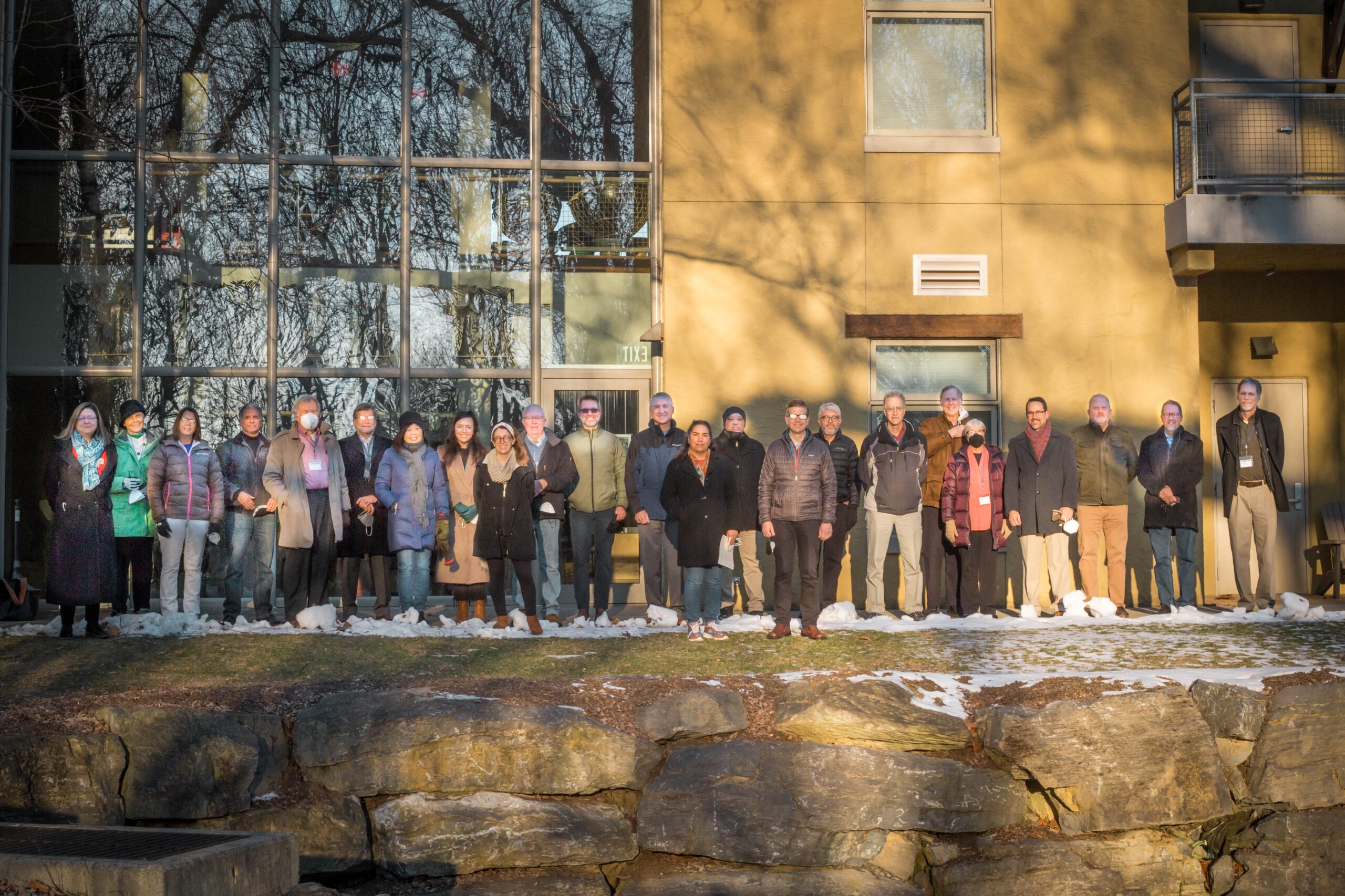
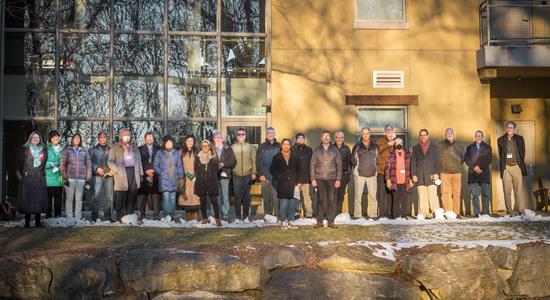
    ​Leadership from 18 Anabaptist organizations in the United States and Canada convened at the Anabaptist Collaboration on Climate Change (ACCC) on Jan. 26 and 27 to address what many consider a moral emergency.


    Those gathered drafted a statement that was later signed by the majority of the participating organizations: ‘As organizations founded on Christian faith in the Anabaptist tradition, we recognize the significant threat to global communities, economic justice, and the next generations from climate change. We are committed to explore our work and mission in support of sustainable and just climate solutions.’ The 24-hour meeting at the Mennonite Central Committee (MCC) Welcoming Place in Akron, Pennsylvania, was the largest gathering of Anabaptist leaders on climate change in North America to date. It was organized by the Center for Sustainable Climate Solutions (CSCS).


    ‘Having so many organizations willing to come together and talk about climate change clearly reflects that this issue is important to Anabaptist communities,’ said Doug Graber Neufeld, director of CSCS, and Professor of Biology at Eastern Mennonite University.

    Since its founding five years ago, CSCS has functioned as a joint initiative between three core partners: Eastern Mennonite University, Mennonite Central Committee and Goshen College. In order to broaden its reach, CSCS is in the process of deepening its relationships with a wider range of partners in programming, governance and financial support. The event was meant to provide a place for a focused conversation on the Anabaptist response to climate change as well as lay groundwork for future collaborations between the organizations. ‘There is a real risk that climate change will have a huge impact on things Mennonites care about,’ Ray Martin, who helped found CSCS, said in an opening speech. ‘Well-being of families, conflict, sustainability of agriculture, hunger, our sense of community, our health, the livability of low-lying areas, even our faith (will be affected).’

    Martin went on to say he believes Anabaptists are uniquely positioned for climate action. Anabaptists have a history of radical innovation, a theology centered around community and care for creation, a background in agriculture and land stewardship and a value placed on simple, selfless living. These are attributes that ‘may make us more open to acknowledging the concerns of global warming and more willing to change our ways to address the risks,’ he said. Jennifer Halteman Schrock, director of Mennonite Creation Care Network which works closely with CSCS on congregational outreach, appreciated the questions posed at the gathering. ‘How might we leverage our unique identity in practical ways? What assets do our organizations have that we could mobilize? What could we do together? It will take time for answers to emerge, but I believe they are the right ones to ask,’ she said.

    Sarah Augustine, a participant who represented the Coalition for Dismantling the Doctrine of Discovery, was inspired by the willingness of the participants to ‘come together and speak with’ one voice’ despite the group’s diversity. Still, there were many voices not present at the table. ‘We represent the people who are causing the problem more than people who are affected by it,’ said Graber Neufeld. ‘We are very aware of that.’ To Augustine, the role of the Coalition at the gathering was to represent those on the front lines of climate change and remind others that climate change isn’t an abstract concept; there are people suffering right now. ‘Indigenous people and vulnerable people… are usually the first people that are impacted; they’re the first that are going to be refugees, the first that are displaced, the first people injured by climate change,’ she said. ‘It’s good to see Mennonite institutions willing to take a stand.’
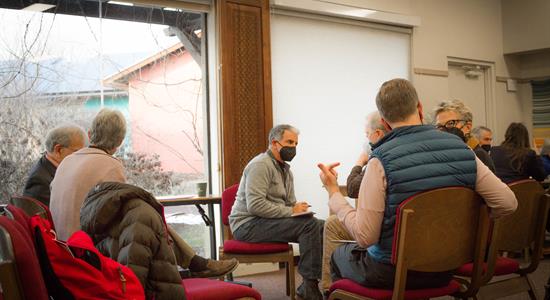

    Brent Alderfer of Community Energy, Inc., extended this moral concern to future generations, ‘Solutions take more than a tweak to operations—they require revamping our core missions to assure sustainability for generations to come.’ At the ACCC, participants were asked the question, ‘how can CSCS best support Anabaptist organizations in their climate efforts?’ ‘With climate change accelerating, it is clear that individual organizations will find it more and more difficult to make a difference,’ said Mark Lancaster, Advancement Director for CSCS. ‘There is a growing need for building collaborations among Anabaptist organizations to create broader impact, and CSCS would like to embrace this role to coordinate work and catalyze actions.’

    The center plans to organize more gatherings on climate change in the future, and include a broader range of participants. In the meantime, CSCS facilitators encouraged participants to consider how Anabaptist organizations working in diverse areas can incorporate climate justice into their operations and missions. For Mennonite Men, this looks like developing the JoinTrees campaign with the goal of planting a million trees by 2030. For Goshen College climate action looks like developing young leaders and conducting research that will inform the sustainability work of others. For the Mennonite Healthcare Fellowship, it means exploring the ethics and impact of climate change to human health, while for MennoMedia, it looks like incorporating Anabaptist perspectives of climate issues into the publications that reach beyond Anabaptist audiences.

    The gathering left many participants with new questions, but also with newfound hope. ‘Having the Mennonite church step forward as a tradition and say ‘on behalf of peace we have to defend the climate… defend the earth.’ That brings me hope,’ said Augustine. Graber Neufeld concluded his presentation with a reminder: when it comes to climate action, the outcome is what’s most important. ‘In everything, we are not interested in doing things just for the sake of doing things, but because it makes a difference…’ he said. ‘(The) ultimate outcome for us would be climate justice.’


    Organizations that participated in the meeting were CSCS (as the convening organization), Coalition for Dismantling the Doctrine of Discovery, Eastern Mennonite University, Everence Financial, Goshen College, MCC U.S., MCC Canada, MennoMedia, Mennonite Church Canada, Mennonite Church USA, Mennonite Creation Care Network, Mennonite Disaster Service, Mennonite Economic Development Associates, Mennonite Healthcare Fellowship, Mennonite Men, Mennonite Mission Network, Mennonite World Conference, and Merry Lea Environmental Learning Center of Goshen College.

    A link to the consensus statement and signatories is found at the CSCS website for the meeting: https://sustainableclimatesolutions.org/anabaptist-climate-collaboration/


  • Church-building as communion

    Church-building as communion

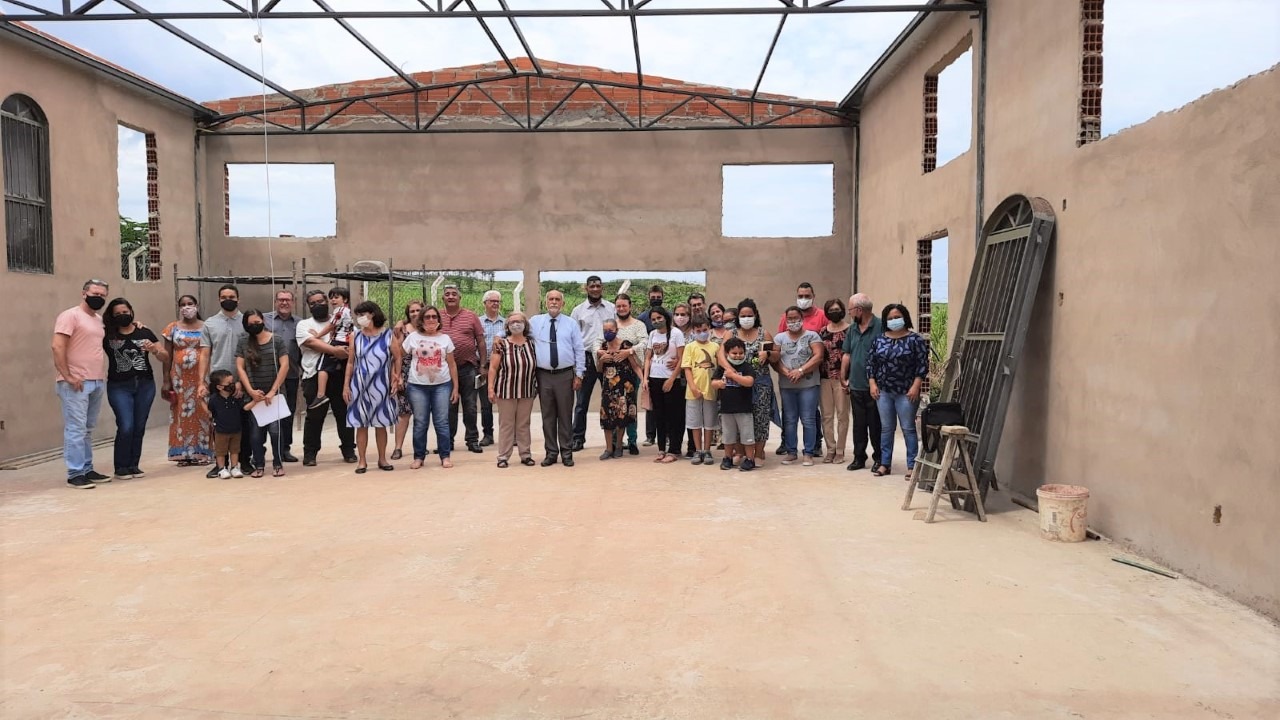
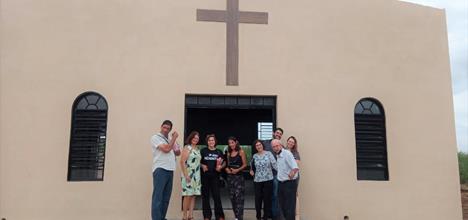
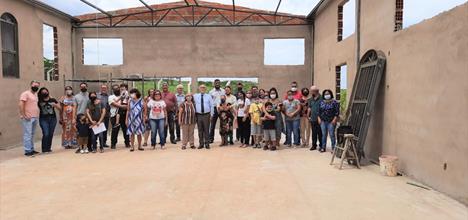
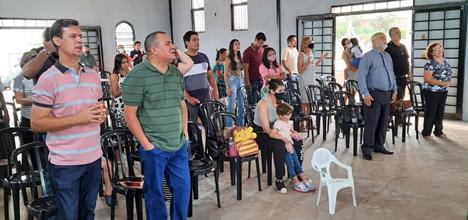
    The church-building project in Samogohiri, Bukina Faso that began in 2016 with prayer, some small savings, and the collection of sand and gravel and other materials, is nearing completion following much hard work on the part of the congregation. Samogohiri Mennonite Church received a JoinHands grant from Mennonite Men in 2021 to help aid the completion of their first church building.

    Fabe Traore, member of the Samogohiri congregation, has been part of the project since the beginning: ‘when we saw the estimate of 30 Million FCFA ($51,570 USD), we did not know how to mobilize all of that money to build quickly. However, with the $10,000.00 that we received from you, we have been about to advance a great deal.’


    This sum helped the members build the entire building, with only the carpentry for the roof needed to complete the project.

    The construction has been done primarily by members of the congregation. The mason is a member and is supported by all the other members in the labor. Congregants have divided into teams to complete different aspects of the construction.

    Says Traore of the congregation’s active participation, ‘It is a work that reinforces our communion and our sense of giving to the work of the Lord. Through this communion and engagement, we see the hand of God in the work. Everything that everyone brings they bring with an open heart. We are very thankful to the Lord for this project.’

    The congregation thanks all who contributed to the Join Hands program that contributed to their new building. JoinHands, which began in 1985 as Tenth Man, has distributed over $2 million helping churches in the United States, Canada, and internationally to build or purchase their first building. Learn more at mennonitemen.org/joinhands.


  • Series for men explores intersection of patriarchy, racism in our stories

    Series for men explores intersection of patriarchy, racism in our stories

    A three-part series of events in October and November 2021 provided an opportunity for 26 men to learn and unpack narratives around masculinity, faith, and equity. Sponsored by Mennonite Men and Anabaptist Mennonite Biblical Seminary, including the Church Leadership Center and the Institute of Mennonite Studies.


    Events were facilitated by Ben Tapper of the Kindred Collective, a nonprofit that provides leaders with the tools necessary to overcome systemic problems that undercut the value of every person. Teaching helped unpack some of the ways that patriarchy and white supremacy have been interwoven.


    Participants were given the space and tools to dissect their own narratives so they can see where they’ve been influenced by patriarchy and white supremacy and how these aspects of their story may undermine their core beliefs or their desired values.


    Teaching by Ben Tapper emphasized that the work of combating racism and patriarchy must begin at home, with ones self before we can begin to begin this work in the church, so deconstructing and rebuilding our own understandings is foundational. ‘The institution of the church has helped uphold patriarchy and white supremacy throughout history and so has a huge responsibility in breaking them down,’ said Ben during the first of the three events.


    The opportunity to begin some of this work as a group of men was an important aspect of the series for many of the participants. ‘It was a healthy space to not only receive more information about masculinity as a social construct and type of socialization but also to practice being vulnerable with other men,’ said one participant.


    Steve Thomas, U.S. Coordinator of Mennonite Men, helped to plan and lead the series. ‘I think what impressed me most is how powerful it was for men to pull together their life stories and share these with others,’ said Steve. ‘So few men had done this before and as they shared their narratives with each other they identified deep wounds and gifts. It was moving to see men share heart-to-heart about what it means to be men and struggling with how we are socialized. It was also an opportunity to face the privilege White cisgender men have and acknowledge how this impacts other genders and other men of color.’


    Following the event, participants were given prerelease copies of the forthcoming book, Strong, Loving, and Wise: Joining Conversations for Men, written by Steve Thomas and Don Neufeld. The book invites men to reflect on their experience of God, Jesus, and the Spirit and explore how identity, gender, values, and practices shape us. It gives tools to help men pursue shalom in their personal and communal lives. The book will be published in the coming months.


  • Mennonite Men hosts Oregon Eco-excursion: Enjoying and tending God’s Earth

    Mennonite Men hosts Oregon Eco-excursion: Enjoying and tending God’s Earth


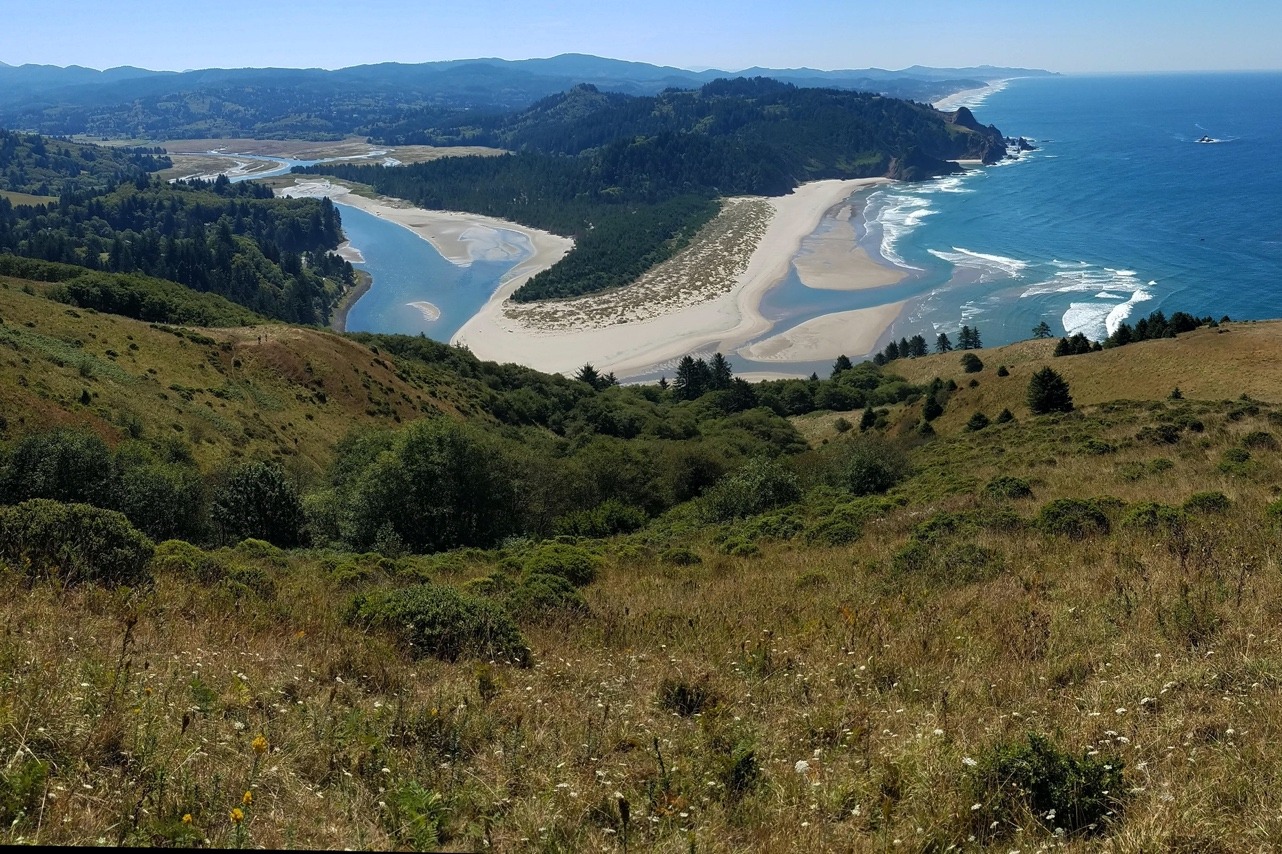
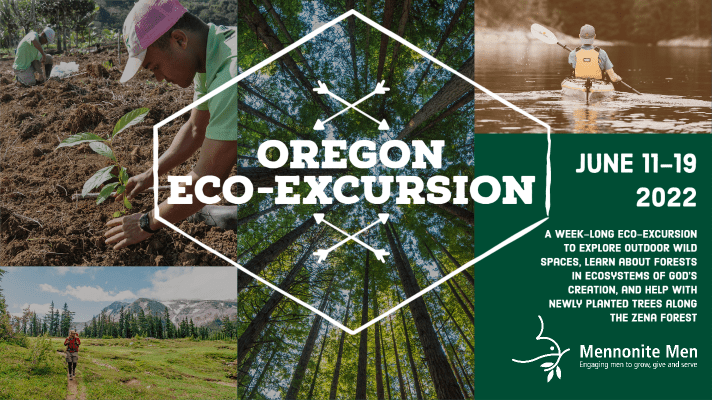
    In June, 2022, Mennonite Men will host an eight-day eco-excursion in Oregon’s Willamette Valley. The June 11- 19 trip provides an opportunity for a different kind of vacation that will give participants an opportunity to explore outdoor wild spaces and learn about forests and ecosystems in God’s creation.


    The excursion will include hiking in temperate rainforests, kayaking on the Salmon River Estuary, working on a Zena Forest tree-planting project, whale-watching along Oregon’s coast, and staying in an old-growth forest at Drift Creek Camp.


    This venture will be an experience for men to be in the wild together and work with a tree project supported by Mennonite Men to convert pasture to forestland. The project – part of the Mennonite Men JoinTrees campaign to plant one million trees – will extend the Zena Forest, a model working forest managed by a Mennonite family in a region with extensive clear-cutting. Steve Thomas, US director of Mennonite Men, is coordinating the trip. Steve is a certified arborist and graduate student in urban forestry at Oregon State University.

    Registration is open through April 11. Find more details and registration at oregon-eco-excursion.mailchimpsites.com/.


  • Indianapolis congregation transforms lawn to habitat

    In November, 2021, First Mennonite Church in Indianapolis, Indiana, planted 55 trees on church property. Led by the congregation’s Creation Care Crew, the project transformed a piece of the lawn to wildlife habitat that will better capture carbon dioxide, beautify the property, and help reduce standing storm water in the neighborhood.

    Steve Thomas, U.S. coordinator of Mennonite Men and certified arborist, provided some initial guidance on this project. The crew of 28 volunteers planted primarily native trees with the addition of some non-native fruit-bearing trees, the produce of which can be used or shared by congregation members. A portion of the trees planted will line the future path toward a memorial garden, which is the next phase in the congregation’s property update plan.


    To date, over 33,500 trees have been planted through the JoinTrees campaign. To learn more about JoinTrees and how you and your community can get involved, visit mennonitemen.org/jointrees.


  • EMU students help reintroduce American Chestnut in Virginia

    EMU students help reintroduce American Chestnut in Virginia

    In early October, EMU students helped to complete the reintroduction of 200 American Chestnut seedlings on 11 sites in Rockingham County, Virginia. The project, led by Loren Hostetter, a volunteer with the American Chestnut Cooperator’s Foundation (ACCF), has been working to reintroduce the tree to its historical habitat and to educate the public about the dangers of invasive species and the pathogens they carry.

    The American Chestnut once numbered nearly four billion in the eastern United States and southern Ontario. It played an important part of the ecosystem in its natural range and an essential piece of the early U.S. agricultural economy both for its nuts and its rot-resistant, straight-grained, fast-growing wood. In the early 20th century, a deadly blight was introduced from Asia that effectively destroyed the tree’s population in about 40 years.

    Since the 1980s, the American Chestnut Cooperator’s Foundation (ACCF) has been working to crossbreed surviving trees to resist the blight. Their hope is that ongoing trials and partnership with the National Forest Service and Shenandoah National Park will someday see the largescale return of the American Chestnut to wide swaths of its native range.

    The planting was funded in part through a grant from JoinTrees, a campaign of Mennonite Men, the men’s organization of Mennonite Church Canada and Mennonite Church USA, to plant one million trees by the year 2030.