Tag: Stories

  • Revival on new land

    Revival on new land

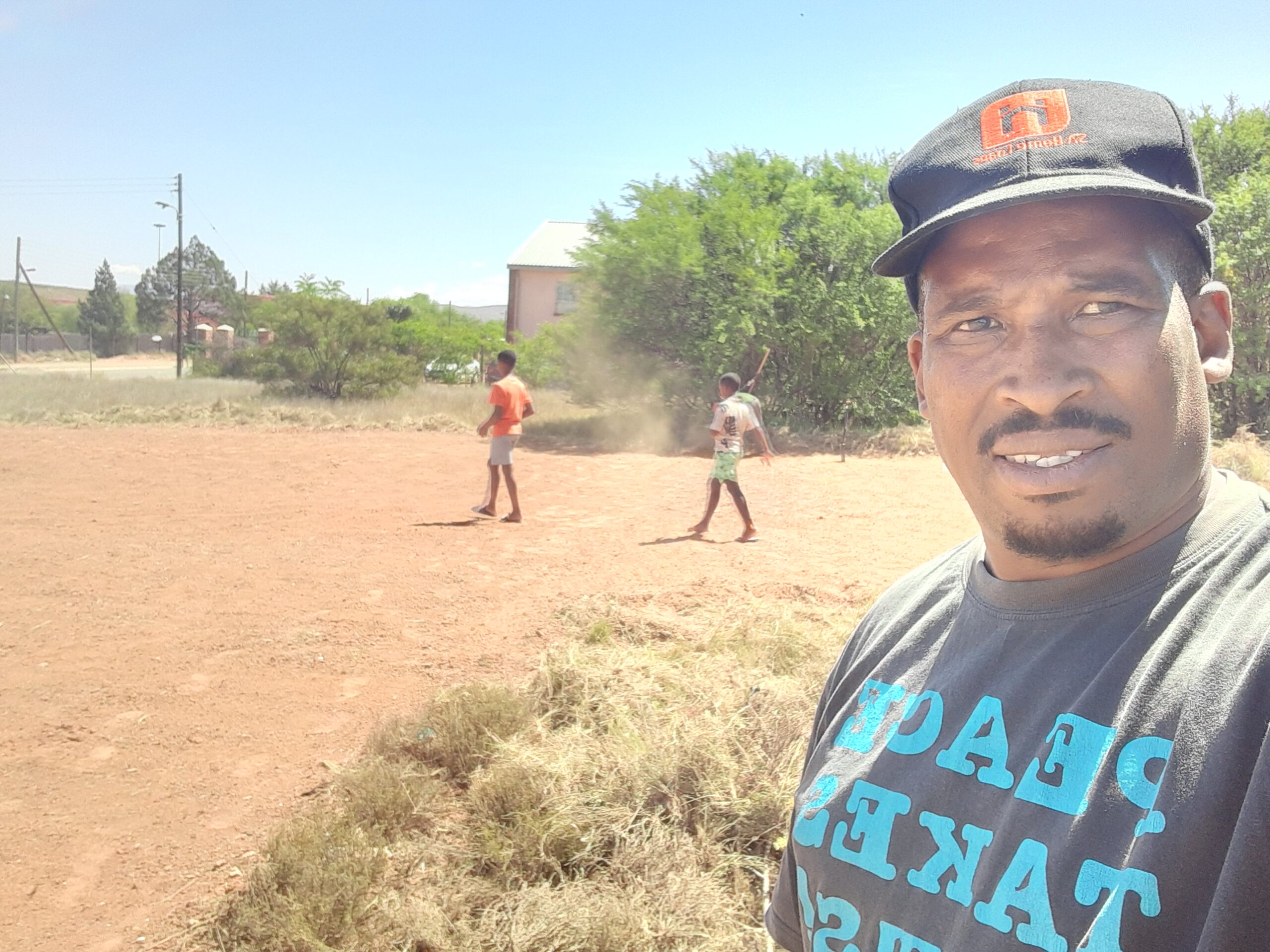
    After years of waiting, seeking, and praying, members of the Grace Community Mennonite church in Cradock, South Africa are finally able to begin working and meeting on the land that will hold their first church building.

    The congregation received a JoinHands grant from Mennonite Men in 2018 and has since struggled to find a suitable location for a building. With the recent purchase of a plot, they have now been clearing and preparing the land for building, which they hope to begin early this year.

    In the meantime, the congregation has hosted a revival conference in late January with sister churches in the area. They raised a large tent and invited all those with musical instruments to join the worship and open air evangelism.

    Pastor Lawrence Coetzee shared that the gathering ‘was well supported locally and we are looking forward to mobilise young people for the next event before the Easter holidays.’

    Mennonite Men would like to thank all those who generously contributed to the Grace Community Mennonite Church grant. Look for details about the next JoinHands grant in the coming weeks.


  • Men listening; men talking

    Men listening; men talking

    What does it mean to be a man in today’s world? A Christian man in North America? How do men deal with harmful legacies of “traditional” masculinity? These were just a few of the questions that 18 men gathered to ponder and reflect on during a half-day retreat at Zion Mennonite Fellowship, in Elmira, Ontario.

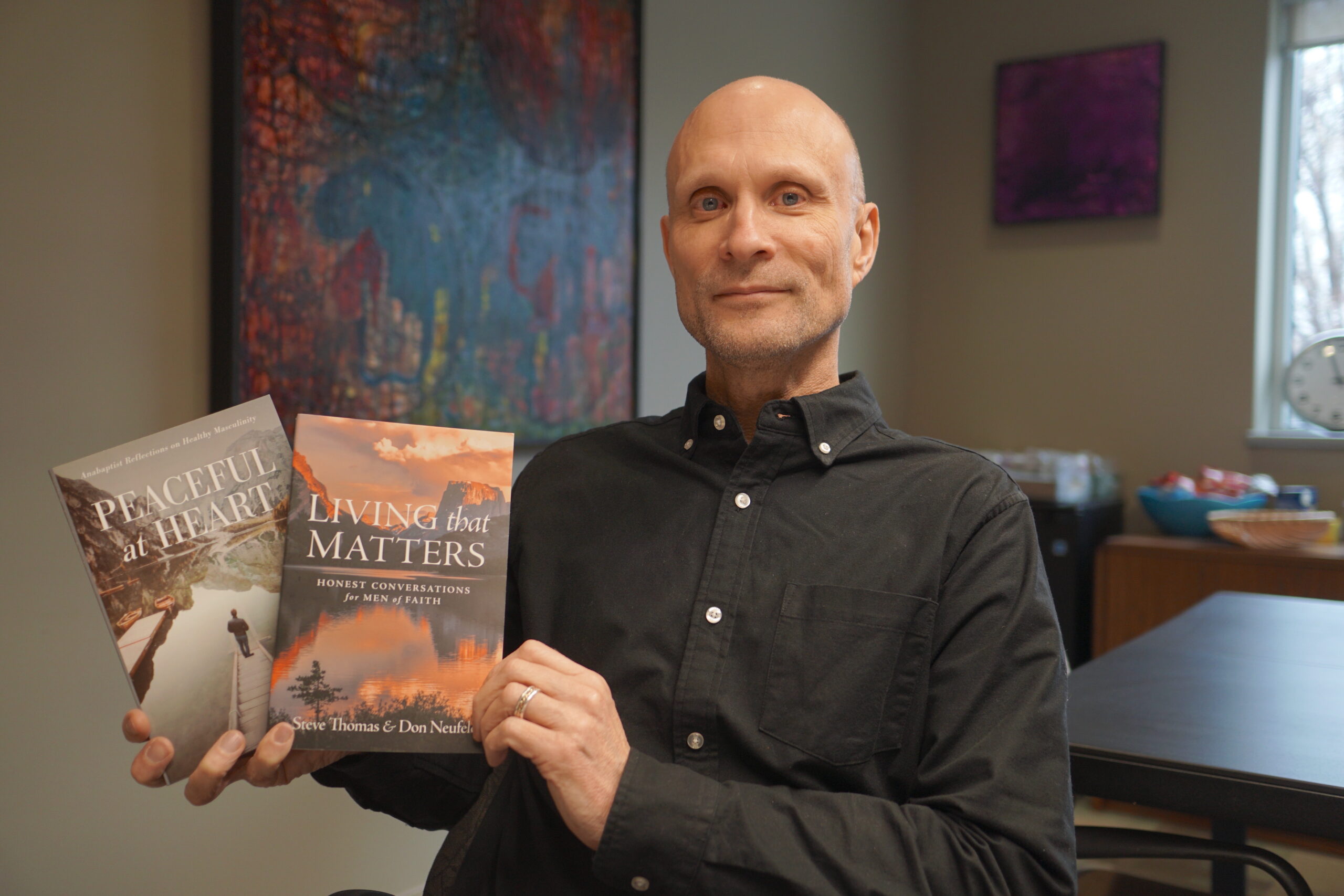
    The idea for the retreat started with a book edited by Don Neufeld and Steve Thomas called Peaceful at Heart: Anabaptist Reflections on Healthy Masculinity. It is a collection of essays from men and women from all over Canada and the United States who reflect on their experiences, traumas and healing related to masculinity using Anabaptist theological themes of discipleship, community and peace.

    Monty Woodyard was one who participated in a virtual book study of Peaceful at Heart facilitated by MCC’s Restorative Justice program staff Rod Friesen and David Blow. “I was surprised and impressed by the combination of good resource material, uncertainties involving life in the pandemic and guidance of the Holy Spirit,” reflected Monty. “Those conversations led us to speak and listen about struggles we had all experienced being male in North American society during the early twenty-first century. It was an eye-opener for all of us. I had never been part of such a group of men willing to engage in depth over serious issues relating to masculinity.”

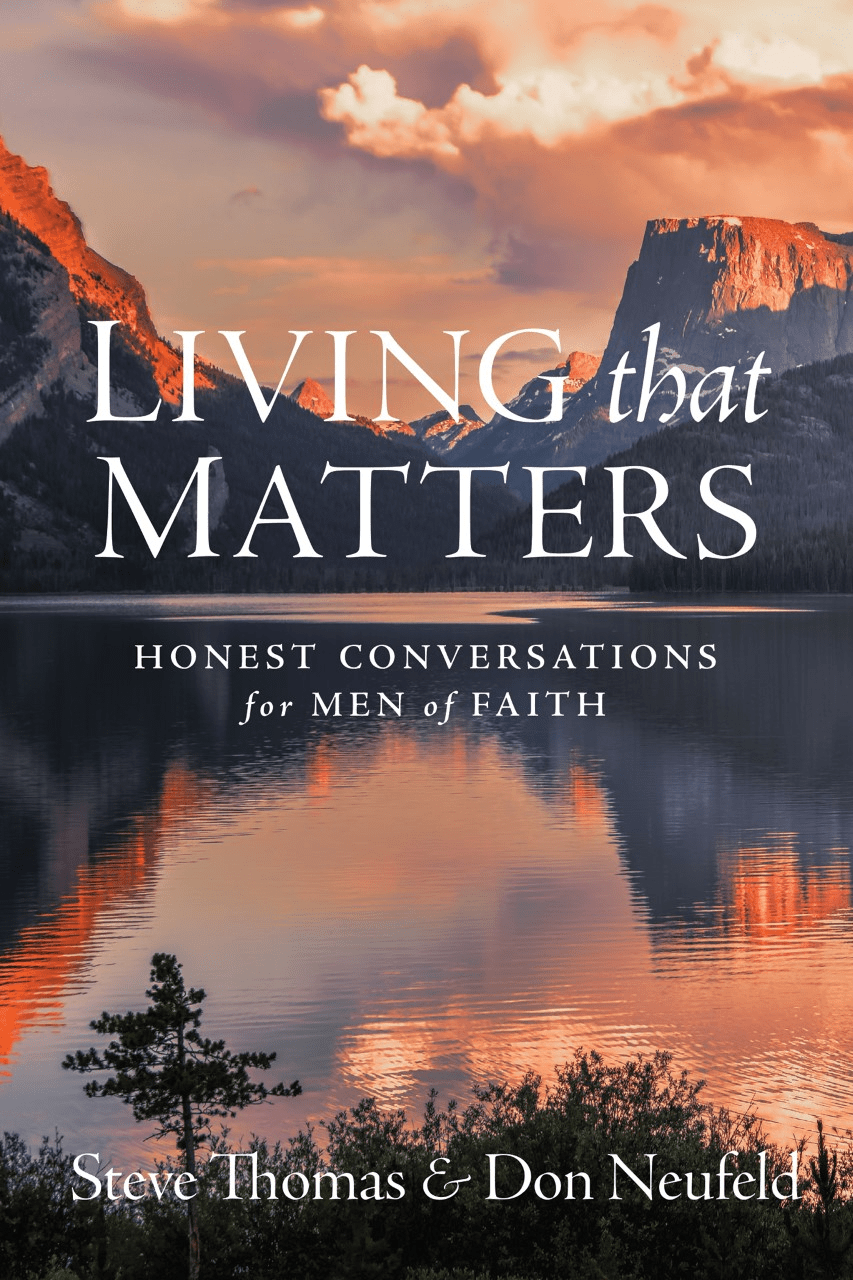
    Monty was so inspired that he wrote a sermon about this exploration of healthy masculinity at his home church, Zion Mennonite Church. Around that time, Neufeld and Thomas co-authored another book, Living that Matters, designed to serve as a guide to men’s study groups on healthy masculinity. Monty noticed on the Mennonite Men website that Steve Thomas had offered to facilitate half-day weekend retreats in the U.S. on healthy masculinity. “I thought that a retreat might give men a first-time experience in speaking about things that really mattered with other men,” says Monty. “I hoped it could be a first step for some to a more sustaining study group on healthy masculinity.”

    Monty reached out to Rod Friesen, who was enthusiastic about the idea for a men’s retreat, and together with Don Neufeld and David Blow, they began planning the half-day retreat. MCC supported financially and with outreach to its diverse constituency.

    “Honestly, the hardest part of putting this together was getting the men out,” remembers Monty. “But in the end, we were so thrilled that we got as many men out as we did.” There were men from nine different area churches in Southwestern Ontario, with ages ranging from young fathers in their 30s to men in their 80s.

    “The most encouraging and enjoyable aspect of the morning was the active conversations, in small groups and in the larger group dialogue,” says Don. “They were just so willing to lean into honest conversations about masculinity.”
    Monty agrees that the vulnerability and willingness to share showed a real appetite for this kind of sharing amongst men. “We heard that men crave more than just a 20-minute sermon every week. I was seeing people connect one-on-one outside the agenda to arrange to follow up personally on something that was meaningful to them, which was also great to see.”

    The richness of sharing on the topic of healthy masculinity revealed to Monty, Don and Rod both the benefits and the need for more of this deep discussion.

    “I would love to take this event on the road and would welcome any partners who would reach out,” reflects Don. “I believe this first run was a grand success in showing the potential of this type of event in the future!”

    You can find Peaceful at Heart: Anabaptist Reflections on Healthy Masculinity here.
    And Living That Matters here.

    If you are interested in joining this discussion or are simply curious to learn more, contact Rod Friesen at rodfriesen@mcco.ca or Don Neufeld at don.neufeld@outlook.com.

    Photo credit: MCC photo/Ken Ogasawara


  • Peace of Eden Farm Incorporates Trees in Silvopasture

    Peace of Eden Farm Incorporates Trees in Silvopasture


    Peggy and Jeff Boshart live on Peace of Eden Farm, located west of Fort Atkinson, Wisconsin. Glacial drumlins accentuate the landscape. The poorest soils in the area are not very suitable for crop production and are often covered with oak, hickory, and cherry woodlots. Peggy’s family purchased this farm when she was in middle school. Jeff was a city kid from Lebanon, Pennsylvania, but who grew up in a family that enjoyed camping, birdwatching, and gardening. They met as interns in Florida at a Christian non-profit organization called ECHO (Educational Concerns for Hunger Organization). Later, they served as intern supervisors in Haiti for ECHO, and as community development coordinators in the Dominican Republic for the Church of the Brethren.


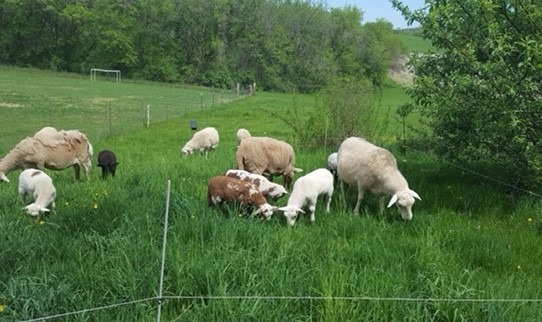
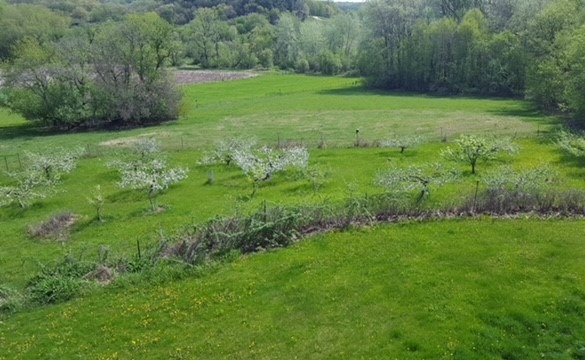
    Fifteen years ago, the Bosharts moved to Wisconsin and built a home on a corner of her parent’s 200-acre farm. Peggy’s parents have gradually turned over part of the farm – first about 3 acres of cropland that was converted to vegetable gardens, a small orchard, and a pasture for a few sheep and a small chicken flock, and recently 37 more acres that contain a several acre woodlot. Immediately, with the help of a government grant, 20 acres were planted in permanent pasture and divided up by electric fencing into smaller sections for rotational grazing. Produce from the farm is sold at several local farmers markets. Vegetable production, primarily salad greens in the colder months, and tomatoes in the summer, is year-round with the aid of high tunnels. Lamb, eggs, fruit, apple cider, and maple syrup round out the seasonal offerings.

    In the 1990’s in preparation for overseas work, Peggy and Jeff received Masters’ degrees from Cornell University. Peggy focused her studies on animal nutrition and Jeff on Adult Education, both in the College of Agriculture and Life Sciences. Jeff took several classes that touched on agroforestry in both tropical and temperate settings. The term agroforestry encompasses a variety of practices, all of which include the intentional integration of both tree products and crop or animal farming in farming systems on the same piece of land. Through proper design and species selections, agroforestry systems offer both short- and long-term financial opportunities, wildlife habitat, and synergistic interactions that mimic nature. Funding to establish tree plantings is available through grants from the Natural Resources Conservation Service (NRCS).


    One category of agroforestry that combines Peggy’s love of working with animals and Jeff’s love of planting trees is known as silvopasture. Silvopasture is the practice of integrating trees and livestock production on the same field. Plans are in the works to begin a silvopastoral demonstration in one of the pastures, with trees being planted with wide spacing to mimic a temperate savanna ecosystem. Jeff reached out for advice on spacing and tree species selection from the Savanna Institute in nearby Madison, Wisconsin.

    Caring for God’s creation is what brought Peggy and Jeff together and is the motivation behind all that they do. Their two teenagers share this passion as both are looking to further their studies in environmental science. The Bosharts also expect to have solar panels installed on their barn later this year. The goal of the farm is to serve their local community by providing healthy food, as well as being good neighbors to their global community by capturing carbon through the conversion of cropland to permanent pasture, along with tree planting.


    Are you pursuing a tree-planting project in your community? Do you want to be part of Mennonite Men’s JoinTrees project to plant one million trees by 2030? Send us an email and let us know what you’re working on at info@mennonitemen.org.


  • Purpose

    Purpose


    Why do we exist? We have a purpose in life linked to God’s great project. Once we discover this, we realize our lives matter and that we are part of something bigger than ourselves. Knowing and serving this purpose gives our life focus, meaning, and joy.

    Our purpose is linked with God’s purpose to establish shalom in the world. Shalom is the rich Hebrew word for a peaceable order with collective abundance, security, and justice throughout all creation. It’s the universal wholeness God seeks to restore on earth.

    Jesus knew and served his own purpose. He sums it up in these words: ‘I came that they may have life and have it abundantly’ (John 10:10). John describes God’s abundant life that Jesus brought in terms of freedom, love, and peace. In the last recorded conversations Jesus has with his friends, he says that he wants them to enjoy and extend this life (John 15:1–16; 20:21).

    In short, this is also our purpose—to enjoy and extend God’s abundant life.

    Enlarging this in terms of John’s gospel, our purpose in life is to enjoy and extend God’s abundant life of freedom, love, and peace.

    We all have a common purpose in life. How we serve this varies from person to person. We each have a personal mission in God’s project. In the Bible, we see a whole cast of characters, each playing their part in serving their mission.

    Consider the particular mission of a few of God’s people:

    • Moses—to free the Hebrews
    • Esther—to save the Jews
    • Nehemiah—to rebuild the walls of Jerusalem
    • Jeremiah—to restore hope among the exiles
    • Mary—to bear Jesus into the world
    • Luke—to tell the story of Jesus and the church
    • Paul—to share the gospel to Gentiles

    These people played prominent roles serving their purpose in life. But most characters in God’s story are never named. If they are, they receive only honor- able mention. Like Joseph—the carpenter and husband of Mary—who simply did what God asked of him. Over forty people are named in the genealogy of Jesus. Some are well known, others not. Some are virtuous, others not. Most of us fall in the ‘others’ category. Nevertheless, we too, in the legacy of Jesus, have a part to play in serving our purpose.


    Read the other reflections in Living that Matters: Honest Conversations for Men of Faith, which serves as a men’s guide for conversation and reflection and includes 70 topics, for use by individuals or groups. Order Living that matters: Honest Conversations for Men of Faith HERE.


  • A Men’s Organization for God’s Shalom

    A Men’s Organization for God’s Shalom

    Mennonite Men—as the men’s organization of Mennonite Church USA and Mennonite Church Canada—includes all persons who identify as men in these church bodies. Our mission is engaging men to grow, give, and serve as followers of Jesus for God’s shalom.


    We promote an Anabaptist way for men that focuses on following Jesus, forming community, and building peace with a model that is more whole and life-giving than our culture’s dominant version of masculinity. From our Christian faith perspective based on the way of Jesus, we seek to engage in men’s work that affirms men, supports their personal growth, forms healthy relationships, transforms social problems, and cares for the Earth—all to bring about God’s shalom. We do this by providing events and resources for men, participating in social action, and funding building projects for new churches and tree planting for climate action.


    Our purpose is to enjoy and extend God’s abundant life. This is the why of our life and work. We believe that God intends for us to live life with individual and collective well-being. We are meant to enjoy the gifts of this life not just for ourselves but also to extend them to others. We experience this together and have meaningful, life-giving work as we seek the following ten aims.


    1. Respecting themselves and all people as beloved children of God
    All people are beloved children of God created in the Divine image. Because all people are created in God’s image, all are God’s beloved regardless of culture, creed, or deed. By respecting one another, we honor our God-given identity and dignity. This truth influences how we look at and relate to others and is the basis for living in love, nonviolence, and peace.

    2. Following Jesus, the image of God and model human
    Jesus revealed in the flesh what God is like and how to be fully human. We follow his model for how to be men—expressing tenderness, confronting wrongs, feeling grief, respecting all genders, having close friends, crossing social divides, caring for the marginalized, resisting the use of force, serving rather than dominating, and embracing all with love.

    3. Becoming strong, loving, and wise in the Spirit
    As we realize our identity as God’s beloved children, follow the way of Jesus, and are formed by the Spirit, we become strong, loving, and wise. We value these traits and seek to be men of integrity. And as we mature in character, our gendered distinctions diminish. We become more alike than different, reflecting our true selves in the image of God.

    4. Practicing love across the range of our relationships
    Satisfying our longing for love, we embrace God’s unconditional love for us and extend this to others. We express love in affection, care, and service and more fully experience love in empathy, vulnerability, and mutuality. In receiving and giving love we are fully alive. We believe living in love brings about healing, peace, and joy.

    5. Using power with and for rather than over and against others
    We recognize that power coming to us from various sources can be used to dominate, control, or violate others. In a culture where men too often use their power over and against others, we follow the way of Jesus, using power with and for others. Rather than exploiting power to (seemingly) benefit ourselves, we use power to serve the world’s collective well-being.

    6. Sharing resources with generosity to meet human needs
    We acknowledge that everything is ultimately God’s and that we are stewards of what we have. Aware of greed and that what we take can take us, we are not tight-fisted, clinging to things, but openhanded, freely sharing our resources with others. As God has been generous toward us, we are generous toward others, so we all have enough and more to experience God’s abundance.
    7. Standing with marginalized people for diversity and inclusion
    Against cultural supremacy and domination where some groups are excluded and oppressed based on difference, we embrace diversity—believing all people are created in the Divine image and are part of one human race with rich expressions of manifold differences. Honoring the dignity and equality of all people, we practice loving inclusion so all may fully participate in society.

    8. Transforming oppressive systems for freedom and justice
    We recognize that God’s shalom requires social justice—the public expression of love and right ordering of societal relationships. We deconstruct patriarchy, sexism, racism, classism, and other social systems that privilege some and oppress others. We work to transform systems like these to establish freedom and justice for all in our global village.

    9. Relating to all creatures as kin in the community of creation
    Aware that we are not above but part of the natural world, we take our place as members in God’s community of creation, and, as stewards, we serve and protect its well-being. We recognize that all living things are our kin and play an important part in an interconnected web of life. We all live together in ways where all resources, plants, and animals flourish in a life-giving balance.
    10. Caring for Earth to sustain its beauty, biodiversity, and abundance
    In response to environmental degradation and the climate crisis, we protect and restore our planet’s ecosystems upon which all life depends. We care for the Earth, manage resources sustainably, and live in ways that preserve the beauty, biodiversity, and abundance our Creator intended not only for ourselves but also for the global community and future generations.


    As we do these things in the power of the Spirit, we live into God’s shalom—a peaceable order with freedom, security, and justice for all, and well-being throughout the community of creation from generation to generation. Aligning ourselves with God’s great project of establishing shalom, we realize our lives matter and that we are part of something bigger than ourselves. Knowing and serving this gives our life focus, meaning, and joy.


    Our approach to men’s work

    Because men historically have been largely responsible for constructing patriarchy and because we continue to benefit from systems that privilege males, men have a responsibility for the transformation of these systems. Following the Appreciative Inquiry model for social change, we approach this and other social problems from within a positive framework. The highest forms of cooperation depend upon not a push but an invitation, calling people to respond more from aspiration than confrontation to bring about social change. Blaming, scolding, and shaming people tend to provoke resistance rather than cooperation and mutual growth.


    We promote what we’re for as we denounce what we’re against. To transform patriarchy, for example, we focus on God’s shalom, which calls us to build respect, equity, and justice for all genders. While dismantling is part of constructive work, we want to focus on a vision of God’s shalom and to practice its values for changing ourselves and society.

    For knowing where and how to engage in our work for social change, we seek a posture of listening and learning, especially toward marginalized and oppressed people.

    Motivating men to be their best selves for a better society, we seek to inspire action with vision. As we do so, we call forth positive change for greater well-being with abundance, freedom, love, and justice for all—the fruits of God’s shalom.


  • Mennonite Men Partners Plant Over 30,000 Trees in Guatemala

    Mennonite Men Partners Plant Over 30,000 Trees in Guatemala

    ​ On Oct. 22, 2022, EPIC, the Ecumenical Project for International Cooperation, Inc., received $20,000 from Mennonite Men to facilitate the planting of 20,000 trees by the Baja Verapaz Sustainable Agriculture and Health Education Program. Program staff expects to greatly exceed planting expectations with up to 34,248 trees planted this grant year. The exact number of trees that are planted will be known when the tree planting season has finished.

    Trees were planted this grant year in 18 communities with a total of 277 families involved in planting. These families receive the trees without cost, but they are not paid anything for all of the work they do carrying the trees to the planting locations (sometimes long distances), digging the large holes for planting, and caring for the trees.

    About 40% of the trees will be used in reforestation of badly eroding land. Frequently this serious deforestation has been caused by powerful lumbering companies or wealthy individuals coming in and cutting forests illegally. The deforestation causes soil erosion and multiple negative effects in the environment. Perhaps one of the most serious effects is that the small streams on which local populations depend for their farm and household use have less water. Doing reforestation is the most difficult work of the project.

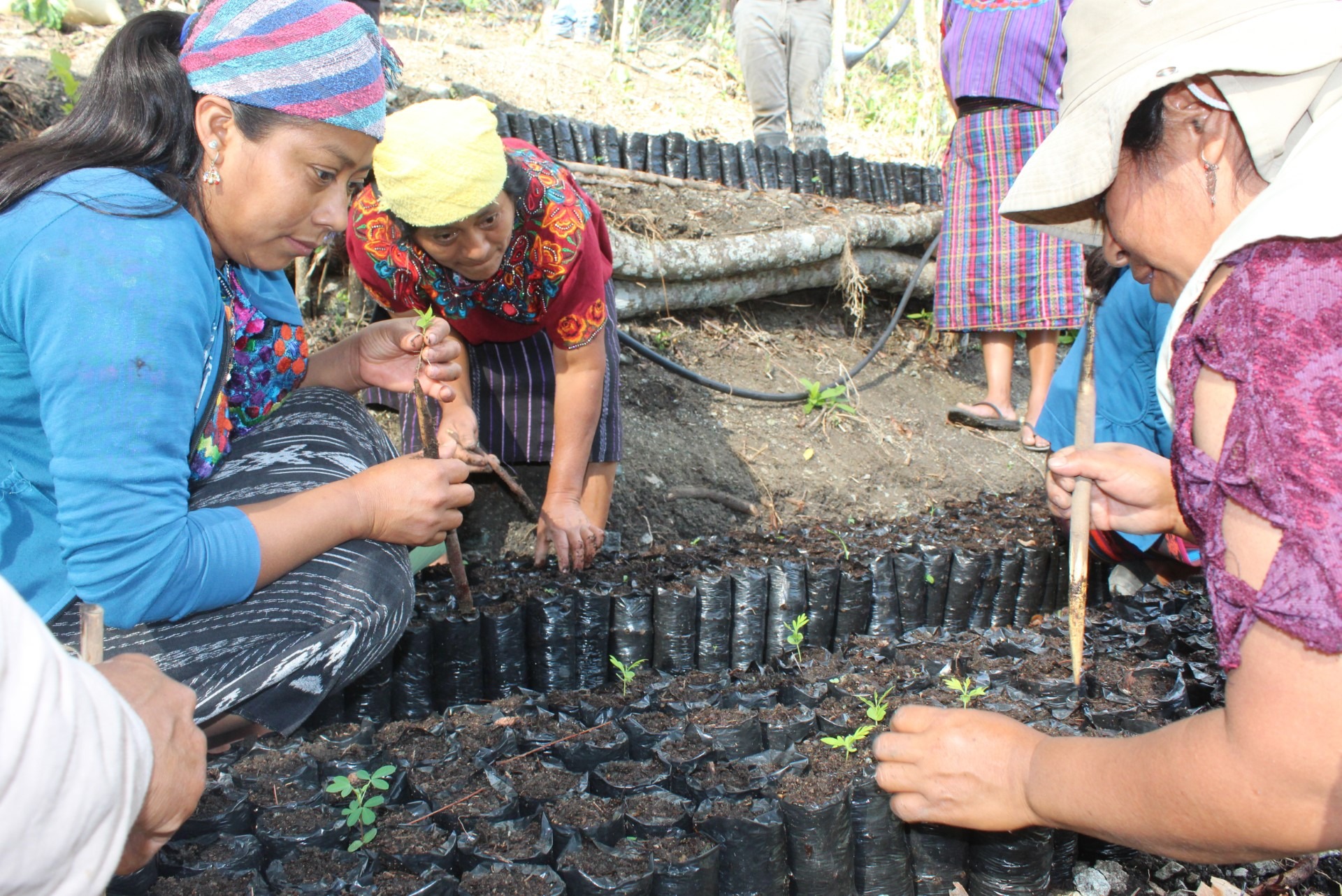
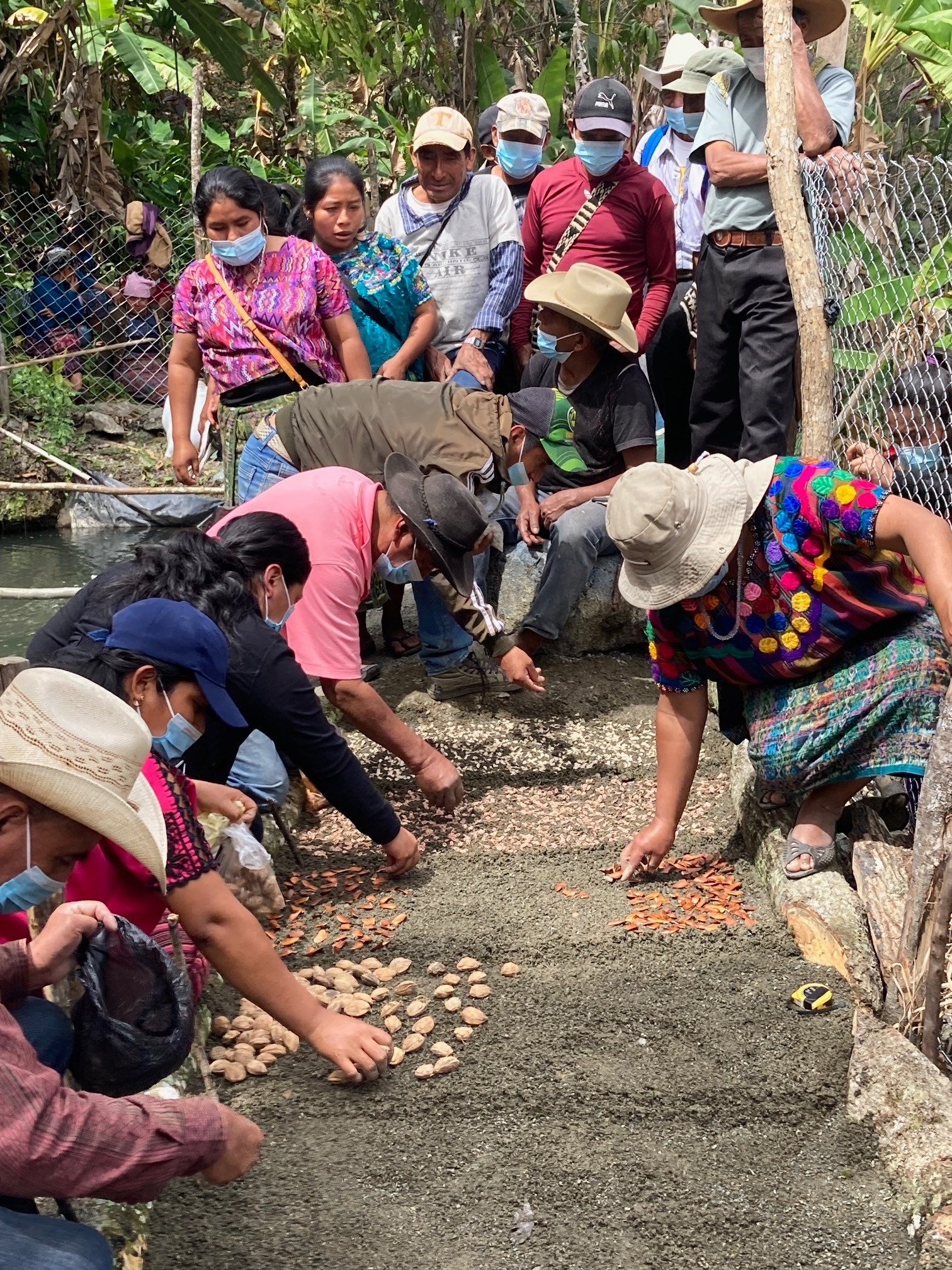
    Photo: (Right) Members of the village of Chivaquito are planting seeds of several varieties of native trees in a seed bed they have prepared. Note that the seed bed is near water so that in the dry season it can be watered. (Below) Women of the group transplant the seedlings from the seedbed into individual grow bags.

    Approximately 30% of the trees will be planted on the farms of local participants in a wide variety of small agroforestry projects. These consist of a managed mix of trees planted to produce various products: food to eat or sell, fodder for livestock by cutting lower tree branches, lumber for houses, sustainably grown firewood for the family, etc. Producing lumber and fuelwood from these plantings protect trees from being removed from more valuable intact forest ecosystems. The objective is to restore the land while also producing an economic advantage for the farm family.
    Another on-the-farm way the trees will be used is to create living fences. Planting rows of cypress trees can solve a major problem contributing to deforestation in the region. Farmers cut down small native trees to make fence posts for barbed wire fences, but the life of these fence posts is only 6 to 8 years. Planting rows of cypress as living fences solves this cause of deforestation. About 28% of the trees planted will become living fences.

    To curb the consumption of junk foods and to improve local nutrition, especially that of children, 375 grafted fruit trees have been planted this grant year. These have mostly been planted by women relatively close to their homes to enable easy access to the fruit and to be able to bring water to the trees in very dry weather

    Many of the trees were grown on local family farms before being transported to their final planting spots. A total of 54 families were actively involved in creating tree nurseries to produce trees for transplanting. These program participants had hoped to produce many more trees than they did, but their nurseries suffered large losses because of drought and the much hotter than normal temperatures that were experienced in Guatemala as a result of climate change.

    The climate and food security situation is very worrisome in this area. The temperatures this year have been unprecedented, and for several years most of the Baja Verapaz region has experienced droughts and the rainfall that has arrived has been erratic and not with the normal timing. As a response to these challenges, the leaders of the Baja Verapaz program are planting only native trees and those of other regions that have been shown to be adapted to a dry area. However, they are continually searching for more drought resistant varieties to mitigate the climate crisis.

    This large grant and planting project follows a similar grant and project in 2022, where Mennonite Men granted 20,000 and EPIC Baja Verapaz Sustainable Agriculture Program planted 35,385 trees. You can read about Don Antonio and Doña Hermelinda who, with their family, helped to supply trees for the project in their nursery.

    Once other large-scale tree projects like this receive sufficient funding and are completed in 2024, Mennonite Men’s JoinTrees program will be 1/3 of the way toward its goal of planting one million trees by as a way to combat climate change. Read more about the program and ways you can get involved at MennoniteMen.org/jointrees.


  • Greening the faith: students plant avocado trees in Guatemala

    Greening the faith: students plant avocado trees in Guatemala

    ​This piece originally appeared at www.mennonitemission.net on August 30, 2023.

    In early August 2023, Q’eqchi’ Bezaleel Mennonite Educational Center students and Iglesia Nacional Evangélica Menonita Guatemalteca (INEMGUA, National Evangelical Mennonite Church of Guatemala) church leaders planted 367 Hass avocado (Persea americana) trees at the education center in San Juan Chamelco, Alta Verapaz, Guatemala. Funds to purchase the trees were provided by Mennonite Men through the JoinTrees campaign to plant one million trees by 2030. This campaign targets climate change by increasing tree and forest cover. Mennonite Mission Network provided an additional $500 for transporting the trees, organic fertilizer and other materials.

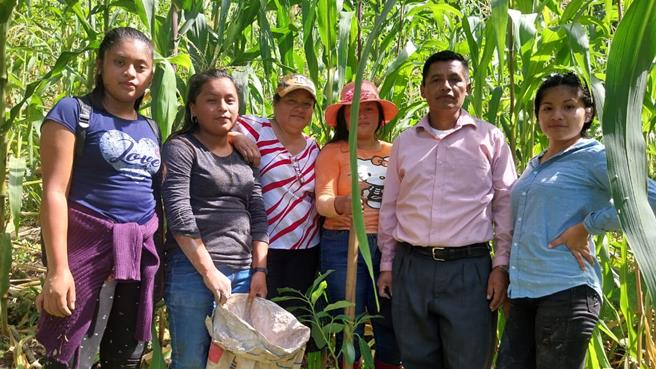
    Photo: Bezaleel agriculture teacher Alejandro Hub Caz (second from right) who coordinated the tree-planting project, celebrates the work they have accomplished with teacher Luvia Guillermo de Ac (third from the left) and four of the students who planted trees. Q’eqchi’ Bezaleel Mennonite Educational Center in San Juan Chamelco, Alta Verapaz, Guatemala.

    With a deep commitment to spiritual growth and environmental responsibility, while serving as president of the INEMGUA, Santiago Iqui and former Mission Network international service worker Deb Byler envisioned a project that would not only contribute to the beautification of the education center’s landscape and provide produce for the students at the education center but also serve as a tangible expression of the Mennonite faith’s teachings on caring for the environment. Mission Network is a partner of INEMGUA.

    Months of research and planning preceded the actual tree-planting endeavor. Church leaders collaborated closely with consultant engineers and an agricultural technician to examine the education center site for drainage concerns and exotic and endangered plant species. They also collected soil samples for testing to ensure the trees would thrive.

    They chose to plant Hass avocado trees based on their ecological suitability to the region, as well as their ability to provide valuable ecosystem services, such as carbon sequestration, soil stabilization and habitat creation.


    ‘Helping with trees in agroforestry projects like this is especially important because these trees not only help sequester carbon, cool the planet, and reduce deforestation but also support the livelihoods of families. So we get multiple benefits by planting trees in communities like San Juan Chamelco,’ said Steve Thomas, Mennonite Men Coordinator for USA.

    The church leaders worked together with Bezaleel’s agriculture teacher Alejandro Hub Caz to include the education center’s students and teachers in the planting initiative to foster a sense of collective responsibility and ownership in the project. One of the project’s stated objectives is to teach students to manage trees so they can help reforest their local communities once they graduate. Guided by environmental experts, the volunteers learned proper planting techniques, which ensured that the trees had the best chance of survival and growth.

    Ongoing stewardship and care for the newly planted trees is important for food security and will benefit the students and teachers. A maintenance schedule was developed, which includes fence maintenance to protect the trees from animals and keeping the areas around the trees clear of any other plant growth.


  • Mennonite Men board members take Flat Oak accompaniment training

    Mennonite Men board members take Flat Oak accompaniment training

    ​In late September, Mennonite Men board members Jon Zirkle, Doug Amstutz, and US Coordinator Steve Thomas participated in accompaniment training at Shalom Mennonite Fellowship in Tucson, Arizona, at the invitation of the Coalition to Dismantle the Doctrine of Discovery.

    The training, provided by Community Peacemaker Teams, prepared participants to to join the Coalition’s work at Oak Flat by serving as interns alongside trained CPTers while camping at Oak Flat, praying with/on the land, and traveling with and taking direction from Apache Stronghold leaders. Tim Nafziger, a volunteer with the Coalition with strong ties to CPT, attended as support staff and Deborah Yoder was the Coalition staff person on the ground.

    ‘This CPT training, shared Thomas, ‘was a first step in exploring a partnership of engaging men in the work of accompanying Indigenous people in pursuing justice, reparations, and creation care.’

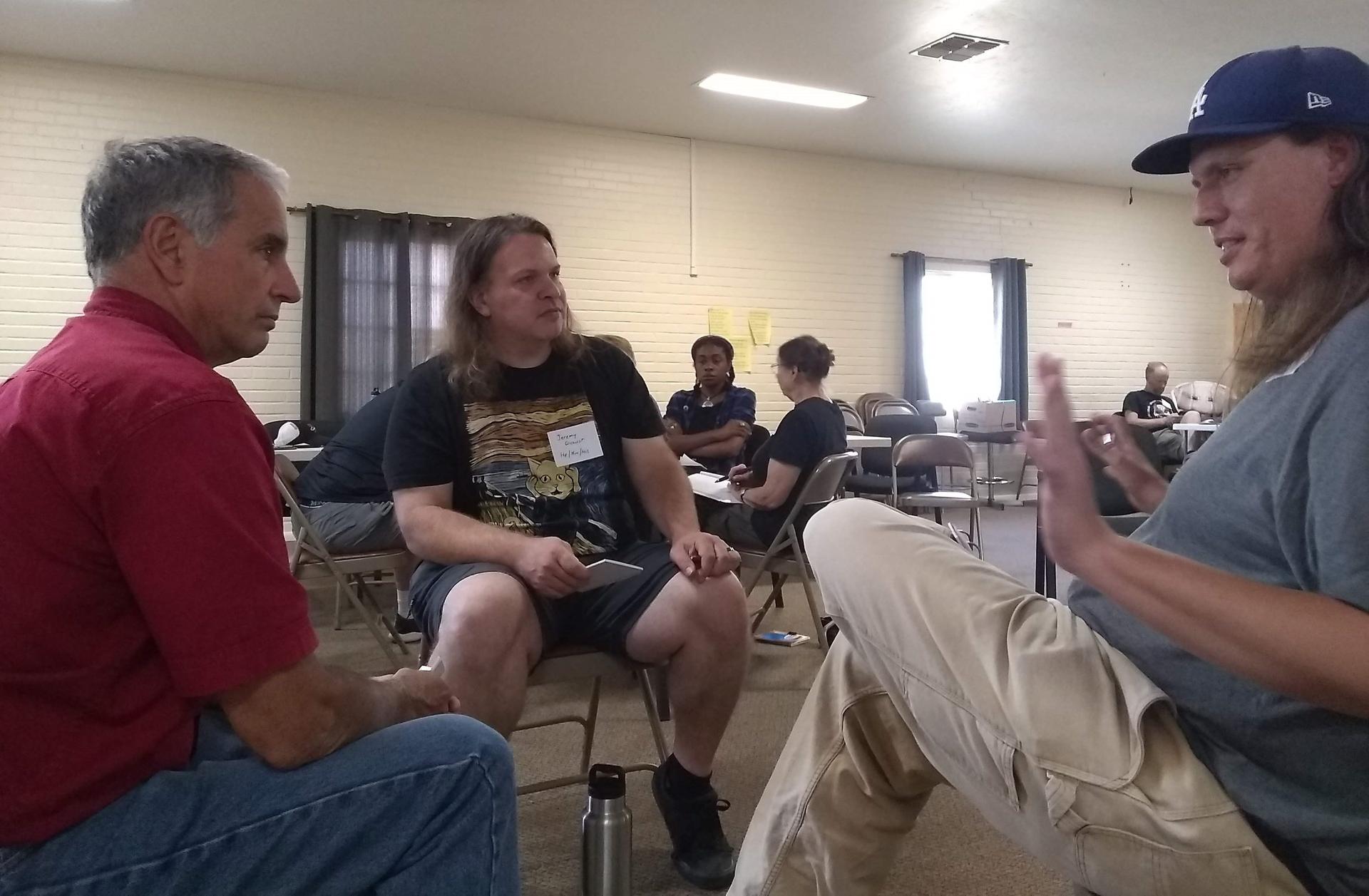
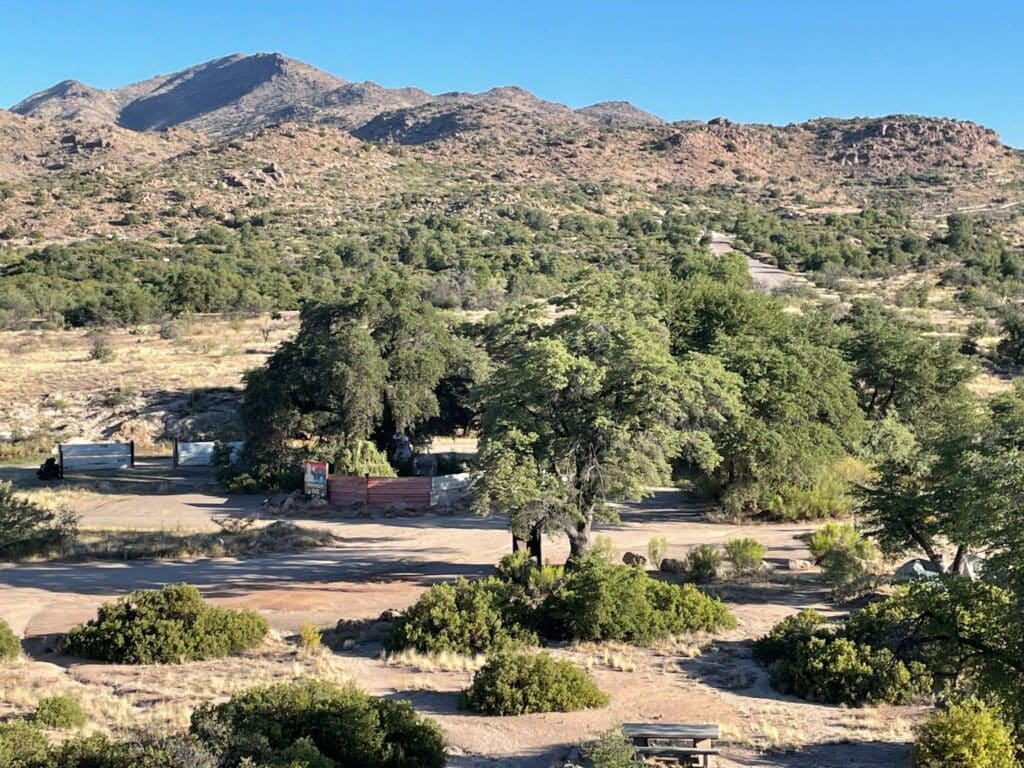
    Photos: (above) Steve Thomas, Jeremy Gilchrist, and Theo Kayser during small group discussions (photo taken by Deborah Yoder); (below) Flat Oak, Arizona (photo courtesy of Community Peacemaker Teams).

    Apache Stronghold is a group led by the San Carlos Apache and their allies. They are engaged in religious and legal efforts to defend their sacred site of Chi’chil Biłdagoteel (Oak Flat) from being destroyed by a multinational copper mining company.

    There were 14 total participants from across North America who followed the training curriculum provided by two CPT trainers, Julie Brown and Rachelle Friesen. During the training participants were vulnerable in their sharing as they talked and worked through various exercises focused on team building, exploring personal comfort zones, finding creative ways to break the pillars of White Supremacy, and recognizing privilege and leveraging it. It was a fulfilling experience to see so many dedicated individuals invested in this work.


  • Reba Place Men’s Group Benefits From Recent Book Release

    Reba Place Men’s Group Benefits From Recent Book Release

    At Reba Place Church (Illinois Mennonite Conference), in a densely populated urban neighborhood in Evanston, Illinois, a group of men gather together once a month to encourage and pray for one another. Our group shares the commitment to spiritual growth and deepening our connections with one another as we navigate the complexities of modern life. At the core of our gatherings is the invaluable resource: Steve Thomas and Don Neufeld’s book, Living that Matters: Honest Conversations for Men of Faith.

    On the second Wednesday of every month, we set aside an hour and a half to meet and connect. Our meetings are characterized by a sense of safety and acceptance, where every member is encouraged to be themselves. In a world often dominated by expectations and facades, our group provides a sanctuary where authenticity and vulnerability are celebrated. One of the men recently shared, ‘The things men go through in our society are not easy and this group helps me to not feel alone in the process.’

    Our meetings center on Living that Matters, a guide book summarizing crucial topics, serving as our roadmap for discussions on issues relevant to men. Notecards with topics written in bold black marker are laid out on the table. These notecards correspond to topics in the book. We take turns removing the notecards until one remains, and that is how we decide which topic we will ponder and discuss. We find the page(s) in Living that Matters, each reading a paragraph out loud. The following are some of the subjects we’ve chosen: grief, success, integrity, eros, failure, and nonviolence. These discussions help us explore and confront the complexities of modern life with our Anabaptist faith and the support from our brothers. We are continually amazed by the brevity in which the authors introduce complex topics in a two-page spread, covering multiple perspectives that is sure to start a lively conversation that gets to the heart of the matter.

    Solitude, Seeking, Solidarity: A Transformative Structure

    The structure of our gatherings is a carefully crafted process, allowing for silent reflection, personal connection, and collective growth. The three stages of our meetings are: Solitude, Seeking, and Solidarity.

    1. Solitude (10 minutes): After choosing the topic and reading the summary pages from Living that Matters we enter our time of Solitude. In the midst of our busy lives, we take a moment of stillness to connect with God and to reflect on the topic that we just read out loud as a group.

    2. Seeking (20 minutes): We seek one another out and pair off to have deeper and more meaningful one-on-one conversations. These dialogues are not debates; they are heartfelt exchanges where we seek to understand each other’s perspectives, experiences, and faith. Each person gets 10 minutes to share or they enjoy a casual back and forth conversation.

    3. Solidarity (30 minutes): In the final stage, we assemble as one group. Here, we put into practice the lessons of our faith, listening with open hearts. We share reflections, struggles, and joys. It’s a time of connection as a small group, where the act of listening becomes a gift of love. We are not there to merely debate or discuss ideas; we are there to pray for one another, to grow closer to Christ as brothers, as beloved sons of God.

    Annual Men’s Retreat at Menno Haven Retreat Center

    Two years ago, Steve Thomas came to Reba Place Church to lead a weekend retreat. Steve masterfully led us through learning experiences that challenged us to grow in wisdom, strength, and love. It was a critical time for us to confront immature versions of our identities as men and mature into beloved sons of God. Since then, we’ve continued to go on annual men’s retreats to Menno Haven Retreat Center to surround ourselves with the beauty of nature as we engage in practices like Lectio Divina, praying together and spending time around the campfire. It’s an inspiring time to reconnect with both God and nature, fostering a deeper understanding of our faith and purpose as disciples of Jesus.

    The Men’s Group at Reba Place Church is a seed planted in fertile soil, sprouting and branching out in faith, authenticity, and brotherhood. Many of us have a tendency to isolate and disengage, but the book Living that Matters has helped our group grow closer together because of the wisdom that draws us in every time. Steve Thomas and Don Neufeld have given the church a tremendous gift: teaching us to embrace ourselves as beloved sons of God; respecting all people as beloved children of God; following Jesus, the image of God and model human being; engaging our faith to partner with marginalized people seeking justice; protecting the earth as stewards of God’s creation; serving the mission of God’s shalom on earth; and becoming strong, loving and wise in the Spirit.


  • Sacred endings, beginnings

    Sacred endings, beginnings

    Green burials, planting trees draw congregation near to natural cycles of life, death


    (Charity Shenk plays viola as guests await the arrival of Priscilla Ziegler’s immediate family for the graveside service in the cemetery on March 29 at Akron Mennonite Church in Pennsylvania. — Jim Shenk)

    On March 29, we gathered for a graveside service to honor the life of a beloved Akron Mennonite Church member, Priscilla Ziegler. This would be unlike traditional interments.

    We waited expectantly for immediate family and Priscilla’s shroud-wrapped body to arrive. Few of the 250 family and friends had experienced this kind of green burial and its intimacy. Upon arrival, guests were handed a short description of green burials, written by Priscilla’s husband, Don.

    During the reading of a poem, family members gently lowered Priscilla’s body into the 5-foot-deep earthen grave. While a violist played sacred tunes, we were invited to approach the grave and drop fresh-cut flowers and a note of blessing or memory. The flowers and notes thickly blanketed Priscilla’s body.

    Participants were touched by this sacred graveside experience. Many said, “This is what I want.”

    The possibility of green burials in the Akron Mennonite Church cemetery grew out of conversations inspired by end-of-life workshops more than a decade ago. Don Ziegler, Jerry Shank and Dick Leaman designed an eight-session curriculum and led discussion for the more than 100 people who participated.

    Upon learning more about what happens to the human body when embalmed and the consequences for the soil and groundwater, many participants considered more environmentally friendly alternatives.

    A few of us advocated for green burials as an option in the church cemetery. Some wished to be buried in a biodegradable container such as a shroud, seagrass basket or simple pine casket.

    Our cemetery trustees learned that in Pennsylvania there is no legal requirement for a vault. Such requirements are individual cemetery rules, primarily to prevent settling of earth for easier maintenance.

    It did not take long for the trustees, led by Glenn Weaver, to approve green burials without vaults. Our cemetery is only the second in Lancaster County to offer this option. Glenn and his wife, Anne, led the way by making their own plans for shroud burial.

    Photo: Nick, Abby and Lily Buckwalter joined 150 people who planted 450 tree seedlings in October at Akron Mennonite Church in Pennsylvania. — Bob Wyble

    The ministry team that formed to consider more natural alternatives to practices of the funeral industry then started to dream about how to use the adjacent four-acre hay field to reflect the natural cycles of life and death.

    Our dreaming led to rather grandiose plans that over the course of a few years evolved with input from a range of people from within and outside the congregation.

    The original idea of a memorial garden shifted to a focus on a nature preserve connected to our cemetery space. It would be a place where life and death are experienced holistically, symbolized in the chrysalis and the butterfly. The congregation affirmed this refocusing.

    Local and state approvals were secured and financial contributions committed. Presentations were made by John Weber to area Mennonite congregations, with an invitation to join in this creation-care initiative and receive member privileges for burial options. Church council gave its blessing to move forward. Neighbors were invited to a service of blessing for the transformation of this space.

    Implementation of this vision began last summer. Two months of excavations shaped the sloping tract of land and formed a bio-retention basin.

    On a gorgeous day last October, 150 people planted 450 trees. Individuals and families from AMC, neighbors, students and representatives of five ­sister congregations were guided by staff of the Alliance for the Chesapeake Bay.

    This parcel of land is being transformed into a woodland of more than 20 native species, a meadow of native grasses and flowers, and walking paths.

    A sidewalk was contoured along two sides of the property to meet borough guidelines but inset from the streets to make it compliant with the Americans with Disabilities Act. Bark-mulched paths were put down just in time to welcome winter walkers.

    Congregational support was profoundly deeper than just support for this project. It was rooted in a commitment to be faithful stewards of the Earth by enhancing the natural environment for the benefit of all life.

    This commitment was evident in support for a project led by Nick Buckwalter to install solar panels on the church’s roof; in 25 volunteers gathering on a Saturday to clear invasive trees and bushes from our campus; in congregational leadership proposing creation care as one of our congregation’s four core values; and in a resounding call for the nature preserve project to be understood as part of this larger commitment.

    A Green Team was formed to give leadership to this commitment to creation care. Plans include collaborating with the Diamond Street Early Education Center, resident in our facility, to develop an outdoor classroom, a creation-care curriculum and a StoryWalk; developing contemplative spaces at benches with access to resources via QR codes; collaborating with interfaith partners for the Chesapeake and neighboring groups working on similar initiatives; and educating and developing awareness of individual, family and community actions to benefit the environment.

    Donna Mack Shenk, convener of the Green Team, notes both the remarkable breadth of gifts within the congregation and the rich connections that have been developed with like-minded individuals, groups and churches in the community.

    “It is so inspiring to see our small efforts as part of something much larger, locally and globally,” she said.

    What began as a conversation about end-of-life has evolved into a life-giving initiative that offers opportunities for coming generations.

    This article was originally published by Anabaptist World on April 28, 2023 at anabaptistworld.org. Used by permission.


    Jim Shenk and wife Donna have been part of the Akron Mennonite Church team that has envisioned and guided the nature preserve initiative. They live north of Lititz, Pa., in a three-generation household.