
By Jon Zirkle
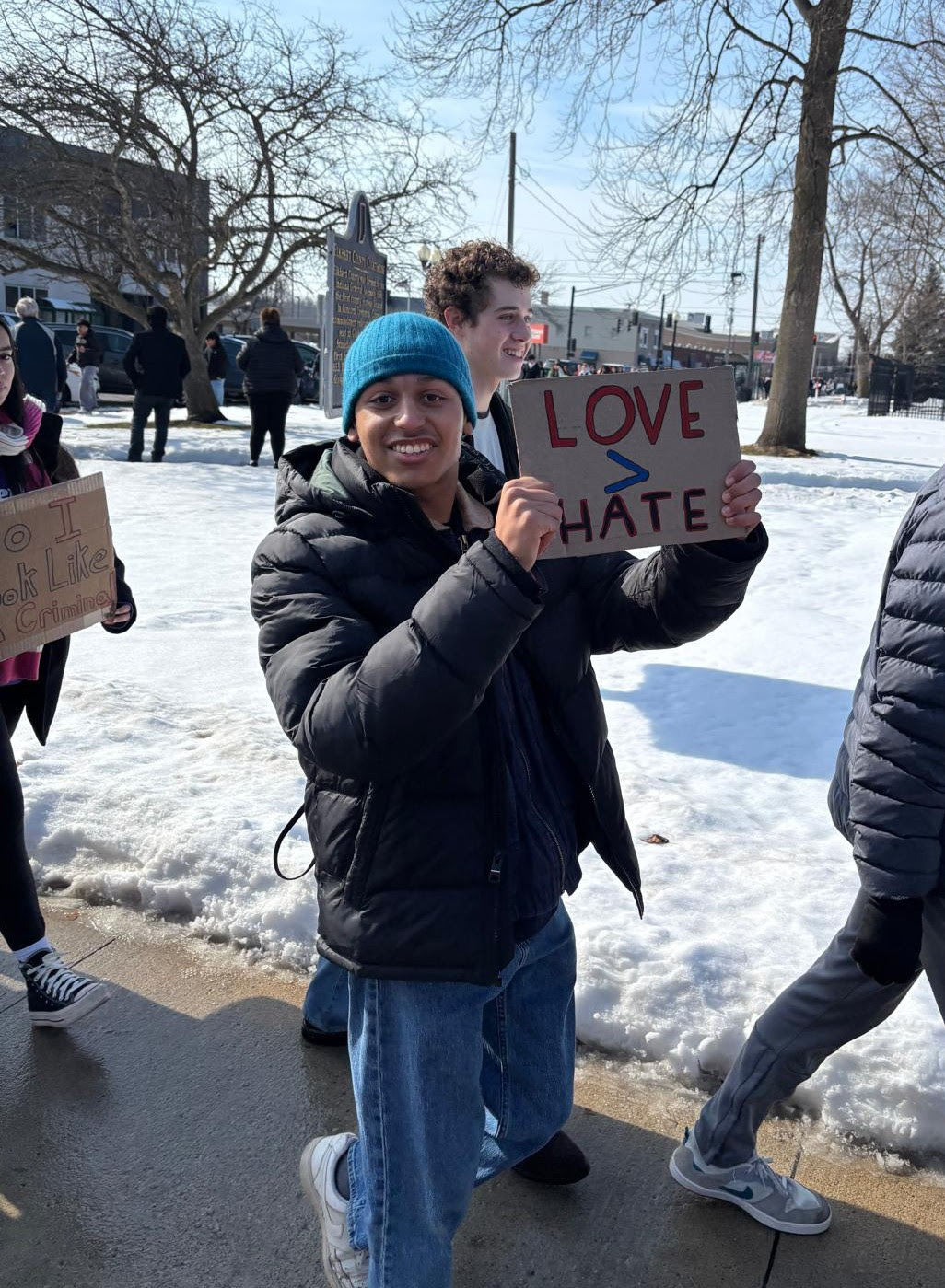
A few weeks ago, I was in downtown Goshen for a midday meeting and encountered high school students marching to the Goshen courthouse square in protest of ICE. I was moved to see so many young people taking prophetic public action. Many of them were youth I recognized from nearby Mennonite congregations.
One of the youth was Isaya Magatti, a high school junior who attends Assembly Mennonite Church and is part of the Mennonite Youth Fellowship (MYF) group. The next day I saw him and several other MYF members in photos from the march included in our congregation’s weekly prayer and sharing email. On a number of occasions, I’ve had a chance to hear Isaya read Scripture aloud and make announcements in Sunday morning worship. His maturity, sincerity, prophetic voice, and heart for justice are noteworthy. It being Black History Month, I felt it could be a good opportunity to hear from a teenager who identifies as a Black male and possibly write an article for our Mennonite Men newsletter. I reached out to Isaya’s father, Tobias, to see about interviewing Isaya, and I was grateful that he and Isaya agreed.
Meeting up with Isaya for a conversation was both a good opportunity to hear about his experiences and to share about Mennonite Men. First, we talked about the MCUSA convention back in July that we both attended and its theme, “Follow Jesus”. I asked how that theme and phrase lands for him.
“’Follow Jesus’ encompasses faith, following Jesus’ example and his radical approach to making good in the world. It makes me want to do good in the world, too.”
When I shared our Mennonite Men mission statement—engaging men to grow, give, and serve as followers of Jesus for God’s shalom—with Isaya, I was moved to hear his reflections.
“The last part of Mennonite Men’s mission statement, “…for God’s shalom,” is a good reminder of the end goal, of why we give, grow, and serve, and why we try to follow Jesus”, says Isaya. “It’s for God’s shalom.”
I asked Isaya what feels significant to him about Black History Month and why it is important to him personally. Sharing that his mom is from the U.S. and his dad is from Tanzania, he expressed there is a difference for him in relating to Black History as a first-generation American and as someone with an African father. At times he feels more connection to the words “African” and “American” separately.
“I don’t feel all that connected to the history of Black culture in the U.S. That said, the reason I even exist is due to the Civil Rights movement and the legalization of interracial marriages, which is only about 60 years old. That’s not that long ago. So, I do feel a really direct connection to the Civil Rights movement.”
Our conversation wove between topics of what it’s like having brothers, service trips for youth and young people, and how masculinity shows up in everyday life. Isaya had important points to make and questions pertaining to how Mennonite males can show up online.
“How do we follow Jesus in online spaces? How do we cultivate community in our online age?” he asked.
“Part of being people of faith is being in right relationship with other people. This includes how we interact with others online. Masculinity portrayed online is usually communicated as taking control, not being weak, and making sure you can dominate situations. I wonder how we as Mennonites can discuss masculinity online with other men, including with those who fully believe in a masculinity of domination.”
“There is relationship happening online, both good and bad. It’s also important to build community outside the online world,” he concluded.
Men having authentic and respectful conversation with other men of differing life experiences, ages, and racial identities can be a powerful and transformative experience. I believe that Christ can show up in our midst as we relate in this way. Though not always the case, we men might also experience greater trust, curiosity, solidarity, joy, and friendship with each other as well. These are gifts of the Spirit.
Join me in praying for Isaya and other young Black male Mennonites who strive to follow Jesus and usher in the kin-dom of God by building relationships. I look forward to ways Mennonite Men can encourage, deeply listen to, and act on the questions, ideas, and leadership gifts of our Black brothers in the Mennonite Church and beyond.