Author: Admin account

  • Shame

    Shame

    Excerpted from Living That Matters: Honest Conversations for Men of Faith by Steve Thomas and Don Neufeld. Used by permission of Herald Press. All rights reserved.


    Brené Brown defines shame as ‘the intensely painful feeling or experience of believing that we are flawed and therefore unworthy of love and belonging.’ Living with or in shame goes deeper than dealing with behaviors, shortcomings, and errors. Shame strikes at the center of who we are, telling us we are flawed and unworthy at our very core and that this awful reality can never change, because it’s just the way we are. Shame leaves us feeling that there is no way out other than medicating our pain or looking for someone or something to unload our self-loathing on.

    Believing that masculinity must be proven and maintained through performance, men are especially prone to the effects of shame. As Brown writes, shame for men means failure, being wrong, defective, soft, weak, fearful. When we’re ridiculed or called out for any of these things, it’s like a strong punch to the gut. ‘Basically,’ Brown writes, ‘men live under the pressure of one unrelenting message: Do not be perceived as weak.’

    Shame is strong. It can undermine courage, connection, and vulnerability. But it cannot endure self-compassion and honesty, especially when practiced in the loving embrace of true relationship. When someone welcomes us with an open heart and affirms our worthiness, it unlocks a door to share honestly about the things that are most difficult to face about ourselves. When we speak our shame in the presence of that welcoming other, shame’s power over our life withers.

    Living that Matters: Honest Conversations for Men of Faith serves as a men’s guide for conversation and reflection and includes 70 topics, like Sexuality, for use by individuals or groups. Order Living that matters: Honest Conversations for Men of Faith HERE.


  • Planting and Prayer for the Earth

    Planting and Prayer for the Earth

    Not everyone reading this article lives in a place filled with forests or has an affinity for appreciating trees. For those living on the open plains, in the desert, parts of many cities, and on wind-swept islands, trees may feel out of place. This may be true for you.

    Regardless of whether trees are part of your landscape, the benefits of trees reach all of us in daily life. Take a deep breath or read words printed on paper—you just involved the work of trees. Walk into a restroom and you might be surprised that tree products are likely in your toothpaste, soap, shampoo, and cleaning products, not just in that toilet paper and facial tissue. There’s a decent chance you started your day with coffee or tea—using filters, opening a kitchen cabinet—or ate baked goods containing tree nuts. Maybe today you drank orange or apple juice, sprinkled cinnamon on toast or oatmeal, or ate bacon or lunch meat smoked with apple or hickory wood. Are you sitting in a wooden chair, at a desk or table, or have wood-framed photos nearby?

    Almost unknowingly, our days are blessed by trees.

    When talking about appreciating trees, I think of children and my own childhood experience of trees. As a kid when my family went to parks for hiking or to my great grandma’s woods for camping, I could spend hours exploring, hunting, and pretending. When the adults from church played softball on Sunday nights, we kids would play hide-and-seek in the nearby woods and catch jars of lightning bugs, sometimes getting poison ivy and chiggers. Me and my friends would make shelters out of sticks and branches in the woods, pretending to be surviving in the wilderness. I’m sure it wasn’t just me. Children in many parts of the world also see living trees as a place to play, climb, and find shade, protection.

    Not all children are blessed with nearby trees that are living and protected. Trees are also an economic means for survival. Children may be sent out to search far and wide for firewood for the necessities of cooking, boiling water, and staying warm. Communities desperate for income may feel forced to cut the trees around them to sell as timber or for artistic creations to sell at market. Such efforts may not even generate much income. In other cases, communities are becoming more treeless as hungry herds of livestock devour bark and foliage or as large companies clear forests to make way for commodity crops or cattle ranches. As forests get cleared, microclimates change. Tropical soils bake and crack in the sun. When torrential rains come, these barren areas cleared of trees experience devastating floods that wash away soil, crops, livestock, homes, and entire communities.

    We know that deforestation of millions of acres of forest each year is contributing to climate change. Many of us grieve over such suffering and the terrible realities we read and hear about. The future can feel bleak, and many of us younger folks wonder what our future world will look like in 20 and 50 years.

    What can people of faith do in response to the desperate realities of climate change, deforestation, and poverty nearby and in faraway places? I believe the example of Jesus as seen in the Gospels can teach us two important responses: 1) lament, 2) offering our resources and our service out of a deep sense of care.

    First, we can lament. Lament may be unfamiliar in many North American churches and Christian traditions today, and it can be hard work. But lament is a practice we can learn and lean into. When feelings of sadness and guilt fester quietly within us, the end results can be overwhelming, sending us into depression and despair. Not only can we turn to the vast body of Psalms and words of the Old Testament prophets to witness lament, Jesus also shows examples of lament. He wept over Jerusalem, and he called out injustice. Have you ever wept over the losses and destruction to the land you see and hear about? Indeed, lament is cathartic for our souls, but so is public witness. And this public witness gets political, too. Our lament can be an avenue for changing hearts and minds, inspiring advocacy for policies that slow the effects of climate change.

    Praying with words can fall short. Words don’t always come. Rituals—in private, in worship, in public spaces—can also express lament. We have much to learn from Jewish as well as indigenous traditions on how rituals can release sadness, anger, and dismay. As Christians we can also pledge our intent to believe in God’s goodness and care for the Earth. I encourage you and your congregation to explore lament—lamenting over the destruction of the Earth—as a faithful and Biblical act. Be creative.

    After offering lament for the destruction of the Earth and fostering a connection to that destruction, we can take direct action by giving resources and through our service. Direct action, giving and service perhaps feel natural to many Anabaptists. Sure, giving resources and service is exceedingly important, but so is explicitly naming the wrongs done, confessing our complicity, and turning to God who is greater than our human efforts alone. I think a combined commitment is critical.
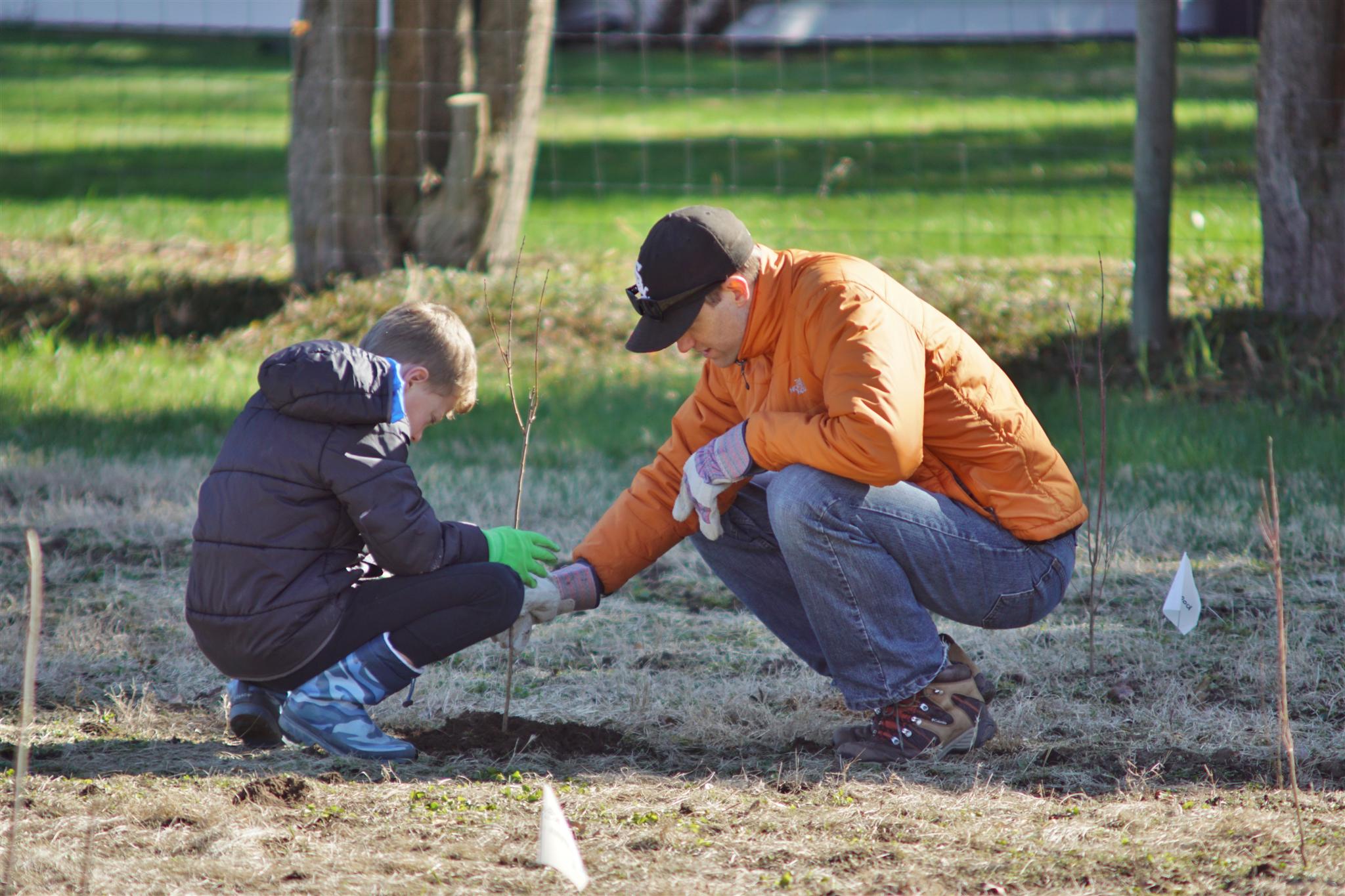
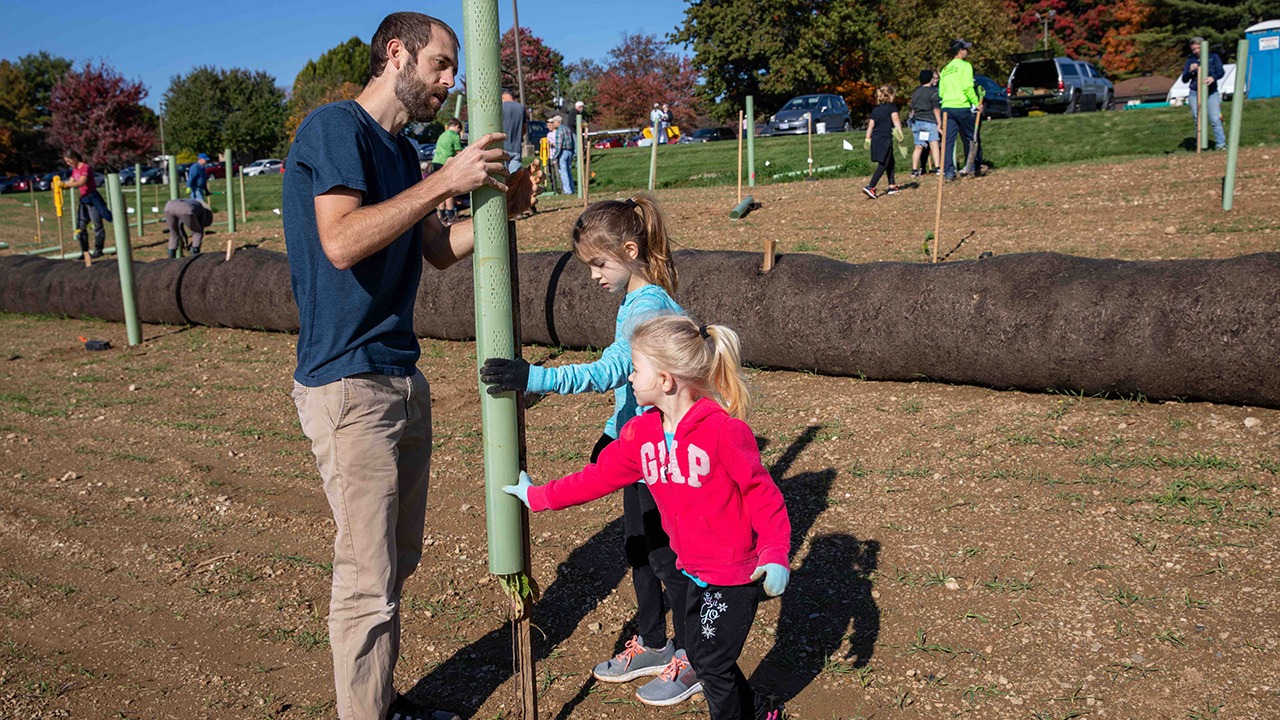
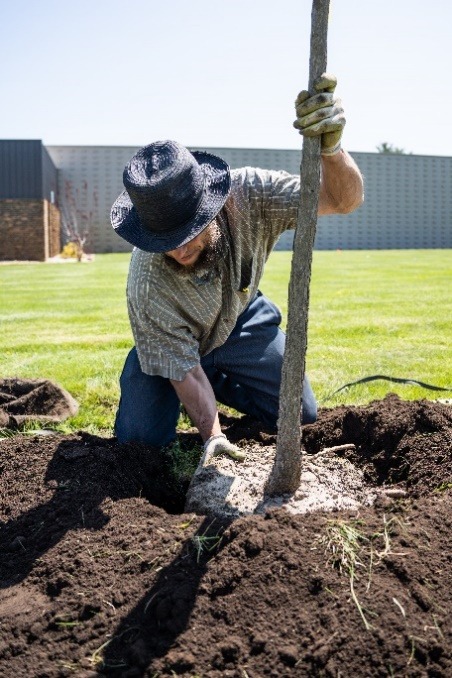
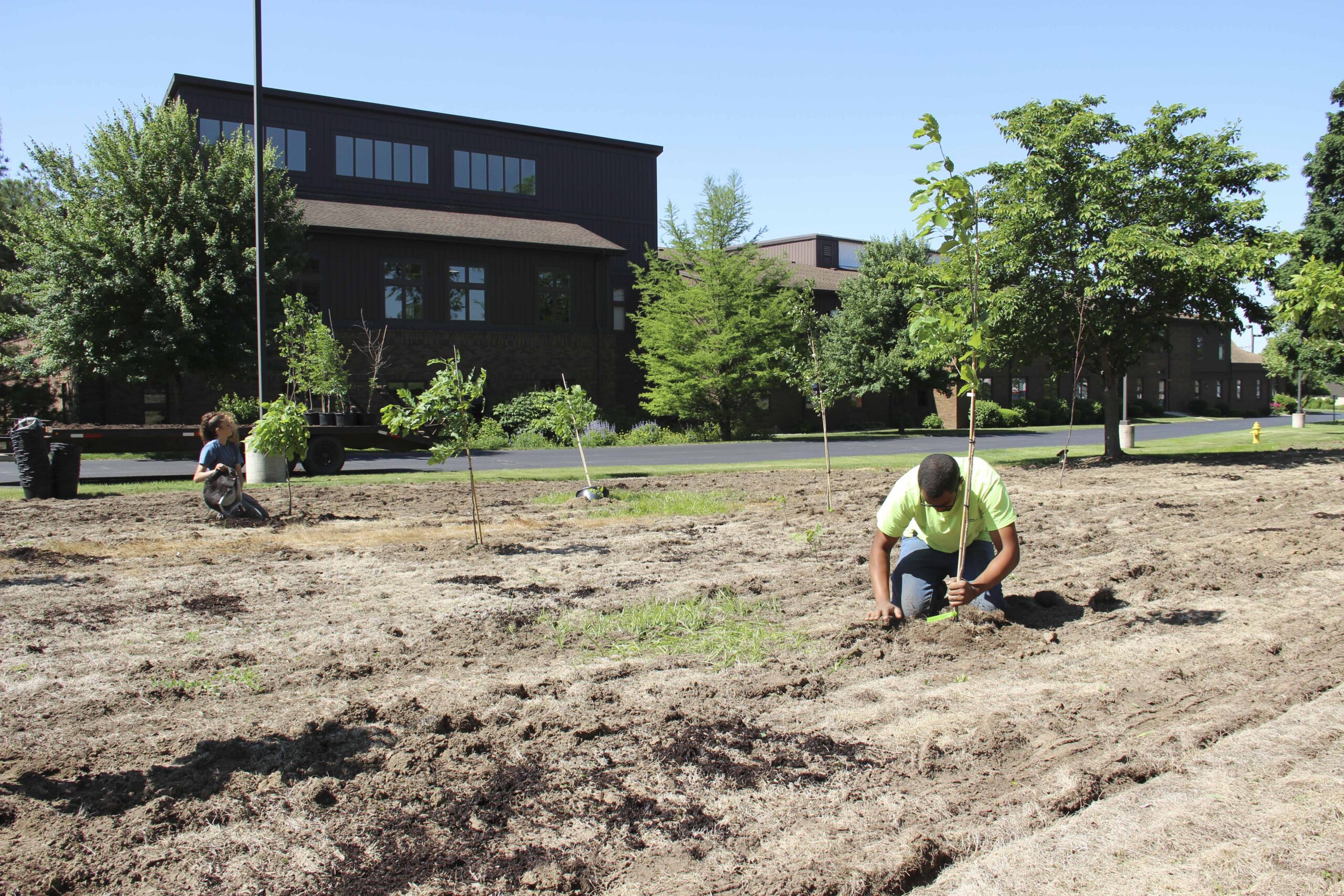
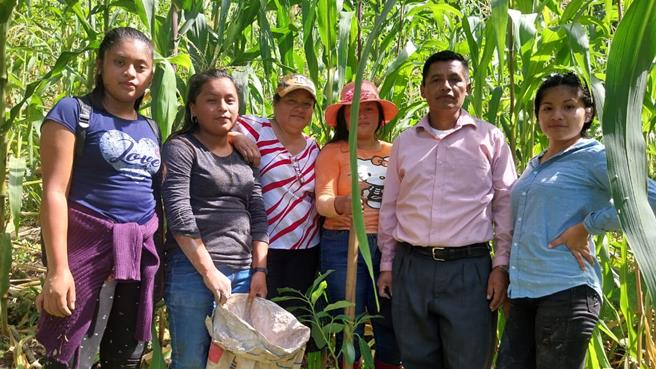
    Mennonite Men’s JoinTrees project to help restore the Earth has a tangible opportunity for individuals, congregations, companies, and groups to take direct action by funding tree planting efforts around the world. Up until now, JoinTrees has enabled the planting of more than 180,000 trees, mostly with Mennonite communities in North and Central America. Recent applications are coming from Anabaptist communities in Benin, Angola, Democratic Republic of Congo as well. Once these new projects get funded, JoinTrees could help facilitate more than 121,000 more trees being planted. Our wider goal is to help plant one million trees by the year 2030.

    In many of these approved JoinTrees projects, resources are needed for more than just the trees themselves—these projects need tree caretakers and supplies to ensure trees get watered and not destroyed by wildlife. Some projects reforest 14-28 hectares and could make huge impacts in communities struggling with deforestation. In some of the project applications, the trees planted will be fruit and nut trees or trees that later could be thinned or trimmed for firewood, thereby reducing pressure to cut down intact forests. Trees can be grown in rows, allowing other crops or even livestock to be raised in between. In short, these projects could be vital to sustaining and inspiring communities, and this bit of hope may catalyze others to follow suit. We need your help to fund such projects.

    I hope and pray you, your congregation, and your contacts will consider engaging JoinTrees and these incredible partners throughout North America and around the world. Consider offering a fundraiser or inviting representatives of Mennonite Men to speak to your congregation or company about JoinTrees. Pray with us. Plant with us. Support us. May you be transformed by the act of tree planting as a form of prayer for peace and new life, a prayer of hope for communities in need, a prayer to the living Christ who is transforming and healing the Earth, one community and one tree at a time.


    Jon Zirkle is a Mennonite Men board member and on the JoinTrees sub-committee. He directs a farmland conservation non-profit called Wood-Land-Lakes RC & D, as well as educational farm Bushelcraft Farm. Prior to this work, Jon was farm manager and an educator at Merry Lea Environmental Learning of Goshen College where he taught college students and helped design a five-acre agroforestry project. Jon is a part-time student at Anabaptist Mennonite Biblical Seminary and part of the Rooted & Grounded conference (September 2023) planning committee. Attending Assembly Mennonite and Southside Fellowship, he and his wife live in Goshen, IN and enjoy their backyard garden, chickens, and fruit trees.

  • Workers

    Workers


    Excerpted from Living That Matters: Honest Conversations for Men of Faith by Steve Thomas and Don Neufeld. Used by permission of Herald Press. All rights reserved.

    For many men, no role may dominate their waking hours more than that of worker. The usual response to ‘Tell me a little about you’ will often be some description of our work life: ‘I’m a farmer’; ‘I’m an engineer’; ‘I’m a construction worker’; ‘I’m a teacher’; ‘I’m a pastor.’

    So much of male identity has been wrapped up in employment, productivity, and earning a living for oneself and one’s family. A sense of worth or self-esteem teeters on having a job, and better yet, the right job. Leaving or losing a job can trigger a significant identity crisis. For some men, work brings much reward and accomplishment, with the greatest meaning when it serves a sense of vocation— that is, when our work is aligned with our calling to serve something bigger. For others, work life brings years of drudgery, risk, and sometimes even death.

    For boys and young men, coming of age has generally demanded pursuing some form of employment or career. Disruption of this path, especially in times of social and economic uncertainty, leaves many young men confused and distraught.

    At the other end of life are those whose employment has been interrupted by economics or life circumstances that leave them unmoored and lacking purpose. For some men, the prospect of retirement might mean a crisis of financial uncertainty or meaninglessness as they face the loss of not only a regular paycheck but also their identity tied to a trade, or company, or colleagues who have been their only friends in life.

    Living that Matters: Honest Conversations for Men of Faith serves as a men’s guide for conversation and reflection and includes 70 topics, like Sexuality, for use by individuals or groups. Order Living that matters: Honest Conversations for Men of Faith HERE.


  • Grants approved for 121,000 trees

    Grants approved for 121,000 trees


    At its semi-annual meeting, the board of Mennonite Men approved $121,000 for eleven grants to support tree-planting projects.


    Among those receiving grants are two congregations in the U.S.: Blooming Glen (PA) and Harrisonburg (VA) Mennonite Churches. Both projects will reforest areas of these congregational properties.

    Nine grants were awarded to Mennonite community projects outside the US: Commune of Allada (Benin), Kalonda Mission (DR Congo), Kwilu Provice (DR Congo), Mpukinsele Village (Angola), Muala Village (Angola), Sambo Communie (Angola), Tshilenge Territory (DR Congo), Quipindi Village (Angola), and Mukedi Community (DR Congo). Most of these international projects will provide seedlings both for long-term reforestation efforts and for short-term economic support of local communities that will learn sustainable forestry practices while earning income from the trees through fruit and charcoal-production (to reduce cutting trees in intact forests).

    Once planted, trees from these 11 projects will bring the JoinTrees project to 301,373 trees planted in total, nearly 1/3 of its goal of one million trees by 2030.

    ‘We weren’t expecting this level of demand for funding of tree-planting projects,’ noted Steve Thomas, U.S. Coordinator of Mennonite Men and a certified arborist. ‘We’re excited there is so much interest, especially internationally. Now we need to get to work raising funds for these important projects.’

    The goal of the project is to plant one million trees by 2030 to help restore God’s Earth. Individuals, congregations, and businesses are invited to contribute to this project with funding or by initiating their own planting projects. Visit mennonitemen.org/jointrees for more details.


  • New partnerships on two new international church building projects

    New partnerships on two new international church building projects


    Our last JoinHands grant helped Ripple Church, a new Mennonite congregation of Mosiac Mennonite Conference, to purchase an existing church building for their meeting place and community center in Allentown, Pennsylvania. This dynamic congregation is active in their neighborhood as they provide ministries for children and youth, meal service, and a place of belonging. When I presented our $40,000 JoinHands grant to this church I was impressed with their diversity, level of sharing, and inclusion of people from within their community.

    Our next JoinHands grants will go to Mennonite building projects in Burkina Faso and Columbia. Our first is for Iglesia Menonita Caminando En Esperanza in Bogota, Colombia—a six-year-old church plant in a very large borough in Bogotá, Colombia with over 1,200,000 people. Thanks to offerings and a loan from the National Colombian Mennonite Church, they purchased a two-story building. Previously paid rent is now applied to the new property. The church is renovating this building for church gatherings, Christian education, and store front shops to sell their baked goods and rent for income to support their ministries. In addition to the grant we will make, this church invites volunteers from Canada and the US to assist with various repair and remodeling work. Contact me if you are interested in volunteering to work at this project.

    Our second grant will go to Kodeni Evangelical Mennonite Church in Kodeni, Burkina Faso. This church plant has outgrown the small building it was using. Another Mennonite church bought land for this congregation. Members of Kodeni have put a lot of work and sweat into the project by making their own concrete blocks (shown to the right) and a sister Mennonite church has helped with building the walls. With good relationships with their predominately Muslim neighbors, Muslim youth have also helped with construction—a remarkable illustration of Christians and Muslims living together in community. Our grant will assist the church to complete their building project.

    To make these grants, we need to raise $13,800. Please consider contributing to these projects. Learn more about JoinHands and opportunities to give by visiting mennonitemen.org/joinhands or by emailing US Coordinator Steve Thomas, SteveT@mennonitemen.org.


  • Vulnerability

    Vulnerability

    Excerpted from Living That Matters: Honest Conversations for Men of Faith by Steve Thomas and Don Neufeld. Used by permission of Herald Press. All rights reserved.

    There is little that goes more against the grain of traditional masculinity than the concept of vulnerability. In fact, much of what is generally taught to boys and men about being men is designed to limit vulnerability and fine-tune “strength.” How do we reconcile our understandings of healthy strength and determination that serve our humanity well with the absolute-must relational requirements of vulnerability?

    “Vulnerability is the core, the heart, the center, of meaningful human experiences,” writes Brené Brown. If this is true, given the opposite messages men have been receiving about power and strength, how have we managed until now? Are we in a different time and place that might allow us to embrace vulnerability in a new way as men?

    Emotional vulnerability, according to Brown, is “the cradle of the emotions and experiences that we crave. Vulnerability is the birthplace of love, belonging, joy, courage, empathy, and creativity. It is the source of hope, empathy, accountability, and authenticity.” Our ability to connect, belong, and love is made possible by our ability to open ourselves to each other, to let down our guard, to be truly willing to give and receive vulnerably.

    The surprise of healthy vulnerability is that it’s actually an outcome of a certain kind of strength. When we know who we are as God’s beloved and that our worth comes from the fact that God created us, we can more easily dare to show our true selves.

    Living that Matters: Honest Conversations for Men of Faith serves as a men’s guide for conversation and reflection and includes 70 topics, like Sexuality, for use by individuals or groups. Order Living that matters: Honest Conversations for Men of Faith HERE.

  • Trees of Life: Hope for God’s Earth

    Trees of Life: Hope for God’s Earth

    To promote creation care and climate action this spring, we invite your congregation to use these worship resources focusing on trees of life. This is part of our JoinTrees campaign to plant one million trees to help restore God’s Earth.

    The first and last chapters of the Bible feature the “tree of life” as a critical part in the community of God’s creation. While the Christian calendar does not have a special day to celebrate trees, the Jewish calendar does on Tu BiShvat or Tu B’Shevat, a holiday for ecological awareness and planting trees.

    The United States has Arbor Day on the last Friday in April each year. This time in spring is a good opportunity to celebrate and plant trees for creation care and climate action. Trees are the best, most cost-efficient natural climate solution. Trees not only sequester carbon, cool the planet, and slow climate change, but support biodiversity and provide an array of amazing other benefits.

    Please forward this packet of four attachments to pastoral leaders and worship planners to consider for a future service.

    For assistance, please contact Steve Thomas at SteveT@Mennonites.org or 574-202-0048.


    Resources:

    Worship Resource Guide for Trees of Life

    JoinTrees Brochure

    Article: A Forest of Faith by Aaron Kingsley

    Article: God Save the Earth by Steve Thomas


  • Sexuality: God’s gift

    Sexuality: God’s gift


    Excerpted from Living That Matters: Honest Conversations for Men of Faith by Steve Thomas and Don Neufeld. Used by permission of Herald Press. All rights reserved.


    A journalist once asked, Why are men so consumed by sex? ‘Did nature sim­ply overload us in the mating department, hot-wiring us for the sex that is so central to the survival of the species, and never mind the sometimes sloppy consequences? Or is there something smarter and subtler at work, some larger interplay among sexuality, life and what it means to be human?’1

    We answer, ‘Both.’ As animals, we are hardwired with a sex drive for mating. As humans, we are also designed by God for loving, sexual intimacy. Both are true and create a dynamic tension within us as we experience a primitive drive to unite with physical body as well as a deeper spiritual desire to connect with another person.2 Both of these are part of our God-given impulse to ‘become one flesh’ (Genesis 2:24). God created sex not only for procreation but also for pleasure and intimacy in a secure, loving relationship where these are most fully enjoyed.3

    As the words themselves demonstrate, sex is part of sexuality. And sexuality and spirituality also belong together. They share a common longing for union with another—we desire sex and long for intimacy.4 But these two ways of being are often split apart, especially by men.

    Living that Matters: Honest Conversations for Men of Faith serves as a men’s guide for conversation and reflection and includes 70 topics, like Sexuality, for use by individuals or groups. Order Living that matters: Honest Conversations for Men of Faith HERE.


  • Church building grant to assist refugee ministry

    Church building grant to assist refugee ministry


    In late December Mennonite Men completed its fundraising for a $40,000 grant for Omaha Chin Christian Church in Omaha, Nebraska. With the release of these funds, the congregation will be able to move forward with their church building project on the outskirts of the city.


    A member of Central Plains Mennonite Conference of MC USA, Omaha Chin Christian Church is one of an increasing number of Chin Christian communities in North America. These communities, who have roots in Myanmar, are finding their way into MC USA and MC Canada conferences.

    This congregation is connected to a large population of Chin immigrants in Omaha and has a special ministry of assisting people navigate a challenging new life in North America and find a home in the Anabaptist family. Many folks in this population have come from refugee camps and have been marginalized or exiled from their country. As the congregation continues to grow and reach more Chin people in Omaha, the church facility they plan to acquire will not only provide a space of their own for worship but will also offer a place for community activities to honor and celebrate their culture.

    ‘We previously met in a rented space and this has left the church feeling like they are not rooted,’ shared Ngun Lian Mawi, pastor of the 70-member congregation. Leaders hope that their own building will be a catalyst for unity growth, both numerically and spiritually.

    Omaha Chin Christian Church is the 93rd congregation to receive a JoinHands grant from Mennonite Men. Nearly 2.5 million has been granted since the program begain in 1985. If you or your congregation are interested in contributing to our next campaign, visit mennonitemen.org/joinhands.

    .


  • Church building provides ongoing community ministry

    Church building provides ongoing community ministry


    Throughout 2020 and 2021, when the effects of COVID were hitting the US and exposing glaring inequality across the country, many churches were stepping in to meet needs in their communities.


    Centro de Albanza, a small Latino congregation of Mosaic Mennonite Conference, offered its facilities in South Philadelphia to meet the new needs of their community. The congregation, along with several local agencies using their space, provided Covid tests and assisted with ID card registration. They also provided space and supervision for kids taking virtual classes whose parents needed to work and didn’t feel comfortable leaving their kids at home alone.


    The congregation received a grant from Mennonite Men’s JoinHands program in 2020 to help renovate the 160-year old building. The grant helped replace a leaky roof, install more efficient windows, and generally allowed the congregation to continue offering their building as a place of ministry and outreach for the community.

    ‘Its definitely our priority is to share the Gospel and have activities related with discipleship,’ said pastor Fernando Loyola. ‘We have two other churches that share the building, one is Indonesian and the other is Burmese.’


    Together the three congregations continue to serve their community and make the word of God known in South Philadelphia. To learn more about assisting congregations in purchasing or renovating their first church building, visit mennonitemen.org/joinhands.