Tag: Stories

  • Jesus Embodies Solidarity and Nonviolence

    Jesus Embodies Solidarity and Nonviolence

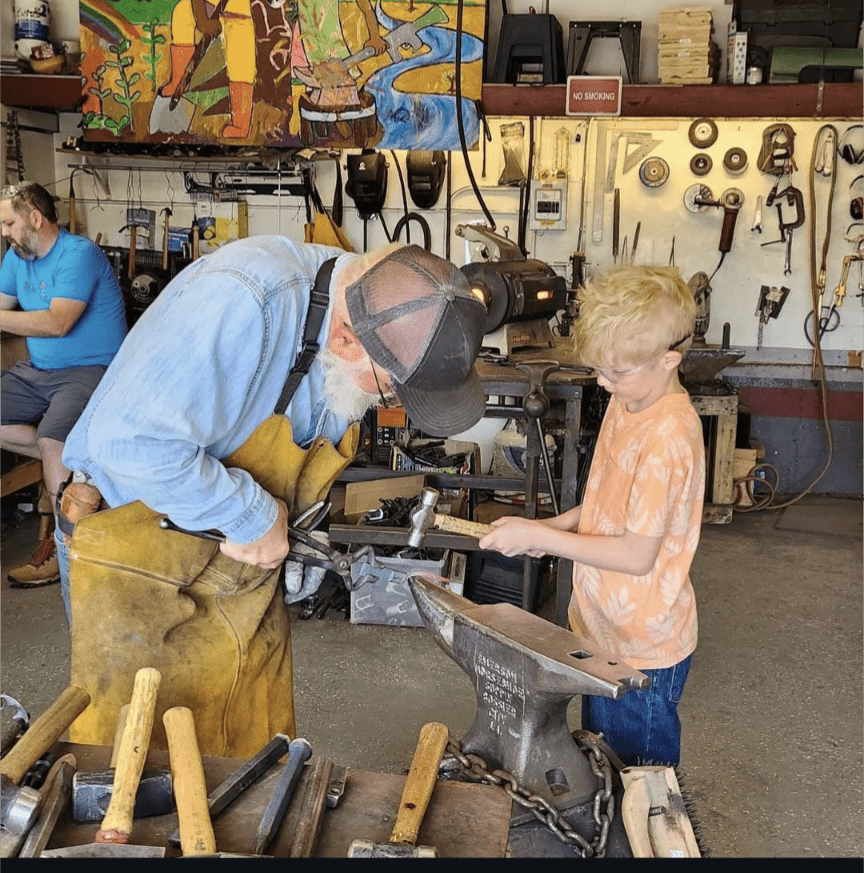
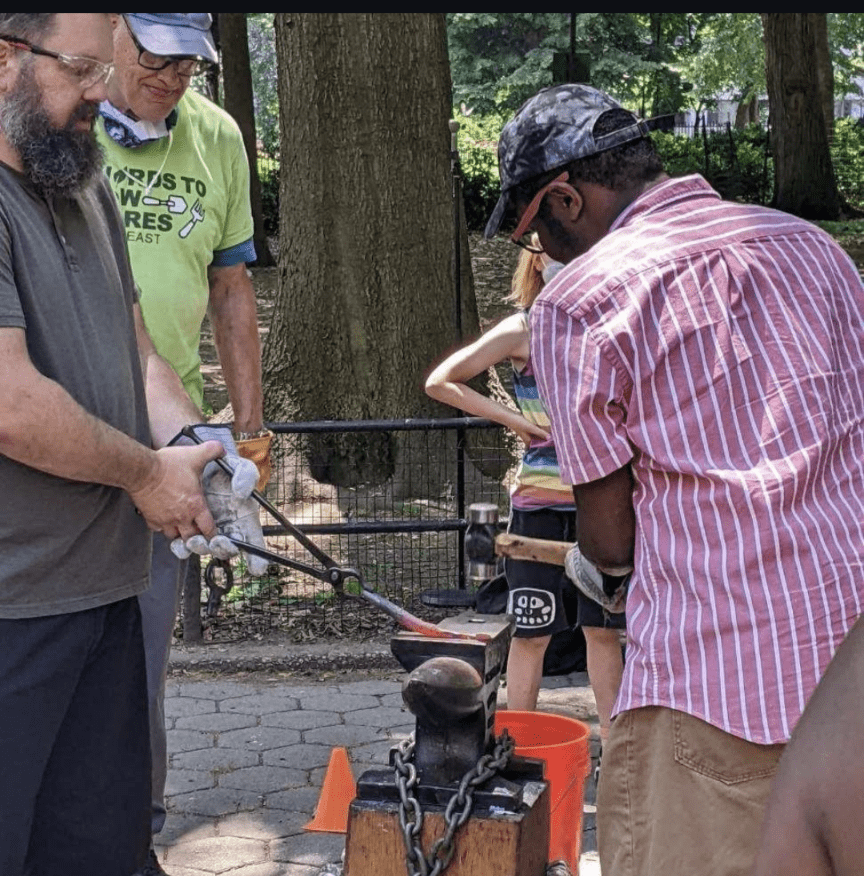
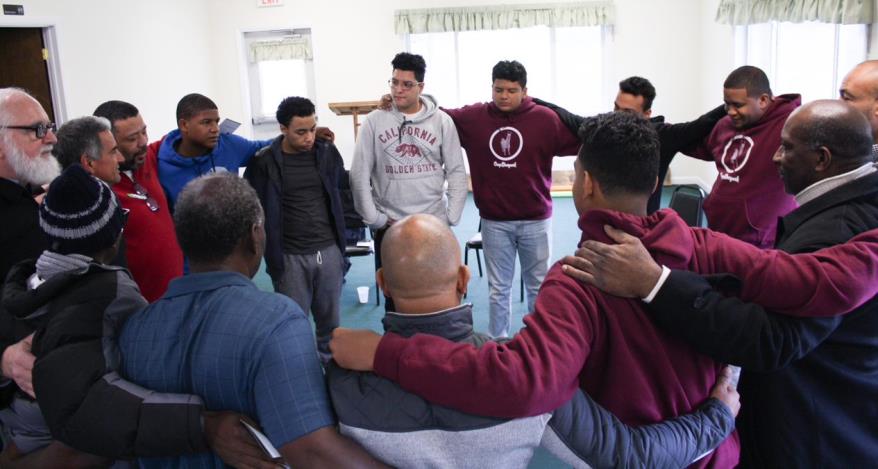
    Back in July at Follow Jesus 2025 in Greensboro, I had the pleasure of meeting Michael Martin, a Mennonite man from Colorado Springs, CO. He was staffing an exhibit hall table for RAWTools, an organization he founded in 2013. Walking up to the table, I saw a display of incredible tools and pieces of art made out of transformed weapons. As someone who uses garden tools for a living, I was drawn in immediately. Suddenly, I remembered attending a RAWTools event in my hometown years ago where Shane Claiborne gave a talk and Michael was present in a support role. I did not get a chance to talk to Michael at that event, but I am very grateful to be getting to know him now.

    RAWTools’ work of turning donated firearms into garden tools and works of art generates searing visual symbols and powerful emotions. But their work goes much farther and deeper than forge and blacksmithing activities. In my observation and in talking to Michael, the work of RAWTools is rooted in a commitment to walk with people who want to experience healing and who want to turn away from violence. The organization seeks to unleash creativity, foster dialogue across divides, and teach new ways of peacemaking and problem-solving.

    On their website, RAWTools asks the question, “What if we made a commitment to solve our problems without guns and violence?”

    Are you asking this question, too?

    I talked by phone with Michael the other day to ask him more questions about his unique ministry and his story. He told me more about the evolution of his unfolding ministry as a movement chaplain and how he was recently ordained by Mountain States Mennonite Conference. We also talked about his roles as a spouse and a father of sons, about living in the West, and about being a Mennonite Christian. What immediately stood out to me was Michael’s willingness to step out of either-or thinking, step out of entrenched divides and stereotypes, and step out of church walls to witness and encounter the Spirit’s transformative power in people’s lives. I was also struck and refreshed by hearing how his ministry brings together people whose backgrounds we might not expect to intersect: gun owners and survivors of gun violence.

    We talked about walking with people who have experienced fear and trauma, and about walking into public spaces with courage. Quite naturally, we started talking about Jesus. Referencing the Mennonite Men mission statement, I asked Michael what it means to him to follow Jesus for God’s shalom.

    “Jesus embodied solidarity with people who are being harmed. I think Jesus is calling people to risk something in this. Fellow Jesus followers—including men—are called to put their bodies between people being harmed. We are being called to put our reputations on the line. People in positions of power need to be vulnerable,” he responded.

    I asked Michael about the nature of RAWTools’ work and where he experiences God there.

    “A lot of RAWTools’ work happens iteratively. It’s Spirit-led. We work with folks who are survivors of gun violence. They’ve always been the guiding light. In those moments, I feel God’s presence the most,” he shared.

    That said, saying yes to this calling is no cakewalk for Michael.

    “In getting into this work with RAWTools, I had to work through the traumas of my own life. I’ve had to wrestle with my own sense of belovedness. Once I’d done some of that personal work, I felt more comfortable continuing to invest in where I felt God was moving.”

    If you or other men in your circles want to learn more about Michael’s ministry and his faith journey, visit the RAWTools website and consider coming to an upcoming men’s retreat in southwest Michigan. Mennonite Men is fortunate to have Michael as the speaker at its upcoming Men’s Retreat, Becoming Malleable Men, which runs from Friday night, March 6, to Sunday morning, March 8. Online registration can be found at https://friedenswald.org/retreats/.

    Photo credits: RAWTools.

  • Tree Planting is Climate Action to Protect our Planet

    Tree Planting is Climate Action to Protect our Planet

    Our JoinTrees campaign targets climate change, an existential threat to life on our planet. By increasing tree and forest cover, one of our goals with tree planting is to help mitigate global warming.

    Does “existential threat to life” overstate the problem? Not according to what is happening on our planet.

    The Intergovernmental Panel on Climate Change (IPCC) of the United Nations finds that climate change is widespread, rapid, and intensifying, with increasing temperatures, forest fires, hurricanes, sea levels, drought, and desertification around the world.

    The report documents that human-induced climate change is already affecting every region across the globe and that approximately 3.3 to 3.6 billion people live in contexts highly vulnerable to climate change. Vulnerable populations who contributed the least to emissions are disproportionately affected by this environmental injustice. The report projects that global warming is likely to exceed the threshold of 1.5°C in the near term (around 2030–2035) across almost all considered scenarios, increasing the risk of abrupt and potentially irreversible changes in Earth systems. Once past this tipping point, there is an elevated risk of abrupt ice sheet loss, large-scale forest dieback, and other dire natural disasters that will accelerate suffering for most forms of life.*

    These environmental changes will lead to humanitarian crises, with food insecurity, scarce resources, health issues, and other population stresses. The National Security, Military, and Intelligence Panel on Climate Change in Washington, D.C., and other security analyses project that these conditions, together with population growth, will contribute to political insecurity, with increasing conflicts, violence, and mass migrations as desperate conditions prompt desperate reactions. Just within the United States, the Fifth National Climate Assessment reports that the U.S. now experiences, on average, a billion-dollar weather or climate disaster every three weeks. Add to all this the loss of biodiversity and the increasing rate of species extinction. All of God’s community of creation is truly threatened.

    To counter these threats, we need a range of solutions to reduce greenhouse gas emissions, especially reducing the use of fossil fuels and consuming less meat (which drives forest conversion to agriculture). At the top of natural solutions is protecting forests and planting trees. In a study of 21 distinct natural climate solutions in the United States to increase carbon storage and avoid greenhouse gas emissions, reforestation had the single largest maximum mitigation potential. Other studies have also found that restoration of trees and forests is among the most effective, if not the best, means to help draw down CO₂, slow global warming, and thereby mitigate climate change, because in terrestrial ecosystems, trees account for most of the carbon capture and long-term storage.

    Recognizing the role of trees in moderating climate, protecting forests and planting trees are critical—especially to offset continuing deforestation, the second-largest source of climate-warming CO₂, second only to emissions from burning fossil fuels. Since humans began cutting forests, the number of trees on Earth has fallen by about 46 percent. While the rate of forest loss has slowed significantly, global assessments still estimate net forest loss on the order of millions of acres per year. According to recent UN forest resource assessments, the world’s net forest loss is roughly 10 million acres—or nearly 16,000 square miles—per year. What is especially alarming is that some tropical forests that were once a major carbon sink have become a net source of CO₂ in the atmosphere, as they are lost from harvesting and conversion to agriculture to produce beef, soybeans, and palm oil. This contributes to drought, insect infestation, and fires, all of which reduce forest biomass and weaken hydrologic cycles, atmospheric cooling, and carbon sequestration.

    Considering what trees do to protect our planet, many forest restoration programs and tree-planting campaigns have been undertaken around the world.

    Within Mennonite Church USA, JoinTrees is our tree-planting campaign to protect God’s Earth and the community of creation.

    We are roughly one-third of the way toward reaching our goal of planting one million trees. We are grateful for the support we receive to fund and carry out our projects with local communities in the United States and seven other countries. Individuals, congregations, organizations, and businesses make JoinTrees possible.

    Some supporters who pay attention to their carbon footprint and seek to make offsets with contributions to JoinTrees are interested in knowing the actual values of tree-planting projects. To help us with this, the Economics of Sustainability class, led by Professor Jerrell Ross Richer, with the assistance of Bill Minter at Goshen College, will calculate the environmental and economic values of some of our projects. We will report on this in a future issue of Engage.

    Look for an announcement of our next tree-planting projects with Mennonite partners, and partner with us as we seek to do our part to protect our planet and God’s community of creation.

    *Read the latest climate reports:
    Fifth National Climate Assessment (2023) and Intergovernmental Panel on Climate Change (2023)


  • Walking Together: An Invitation to Men

    Walking Together: An Invitation to Men

    One afternoon back in 2021, I crossed paths unexpectedly with a guy from church when we both pulled into the church parking lot about the same time, arriving before a gathering started. He was alone in his vehicle, head tilted back and looking exhausted. I went over to his van and we started catching up. To my surprise he told me he had just lost his job and his son was getting out of control at school and at home. After that conversation we started making more regular time for hanging out, usually around a backyard fire ring once his kids were put to bed. Our hangouts led to some humbling discoveries and confessions, as we both had really difficult personal stuff going on. The idea of forming a men’s group emerged. Would other guys in our congregation want to have deep conversations like we were having, to find ways to grow spiritually and encourage each other?

    The answer was yes!

    It’s now been three years since our men’s group formed, and the gathering has transformed how I feel about church, male friendship, and myself. For one thing, this gathering is not for talking sports, weather, or gossip. Each time we gather, there is time for each man to check in about what’s going on in his life. We ask for volunteers to help facilitate and bring food, one man shares deeply from his life (or leads a teaching of sorts), and we open and close with prayer. We have ground rules that help structure our sharing and listening, and we read aloud words that remind us all that we are welcome and in God’s presence.

    Three years later, I still need this group. Why? Because it’s raw and unpolished. We confess and ask for help. We laugh. We sometimes say the wrong thing and hurt each other and have to apologize. We break bread together. In short, we are walking together. And it takes practice.

    I write not to brag, but to offer permission for guys to spend intentional time with other guys. Many men out there—including those within church communities—are lonely and don’t know how to find male friends and community. There’s no formula for how to start friendships with other guys or how to start a men’s group. Sometimes it starts with a simple text, phone call, email, or ‘Hey, how’s it goin’?’ when running into one other guy.

    Mennonite Men seeks to engage men to grow, give and serve as followers of Jesus for God’s shalom. We care about men, we pray for men, and we want to offer resources to men. Here are a few ideas and invitations—not a list of ‘shoulds’—for you or men in your life during this dark time of the year and as the new year approaches:

    • Revive contact with friends past and present. You might be surprised that guys you haven’t talked to in a while may be in the same boat: they mean to reach out, but haven’t gotten around to it. If someone takes initiative, it could lead to a great connection. Many people—including men—have a hard time during the holidays.
    • Seek support (beyond friends) if you need it. If you need to talk to someone who is trained to listen well and be a supportive resource, talk to a pastor, a therapist, a spiritual director, or a friend who might refer you to someone they recommend. This could include joining a men’s group or a support group. If you’ve got the energy, consider starting a group that has some sort of clear focus. Mennonite Men would love to be a sounding board if you want ideas (check out our website).
    • Spend time outside of our own bubble, encountering men in everyday situations where we can interact and bear witness as followers of Jesus. For me, joining a local gym creates opportunity to interact with other guys in the community I wouldn’t otherwise meet. Perhaps the Spirit may lead me to strike up conversation with brothers there who are struggling.
    • Go on a retreat, getting away from the fast-paced and technology-driven rhythms of daily life and work. Contact a retreat center near you. Check out Iluman’s website and their upcoming online or in-person men’s retreats. And if you haven’t heard, Mennonite Men is offering a men’s retreat at Camp Friedenswald March 6-8, 2026, with guest presenter Michael Martin of RAW Tools (registration is open).
    • Offer yourself in some form of in-person service to others. Maybe this looks like volunteering in the community, becoming a mentor at church or in a local school, visiting elders who are often alone, or doing repairs or yardwork for someone who just had surgery or a family emergency.

    We celebrate the birth of Jesus, who came to us as a child born into a dangerous world. And we anticipate a new year coming. Lean in. May you find ways to join with other men, and may you find that, in doing so, you discover new ways to connect with yourself, with Christ, and with God.


  • Working Together for Creation Care

    Working Together for Creation Care

    Collaboration among organizations brought energy and encouragement to potentially challenging ecological work on the Mennonite Central Committee campus in Akron, PA.

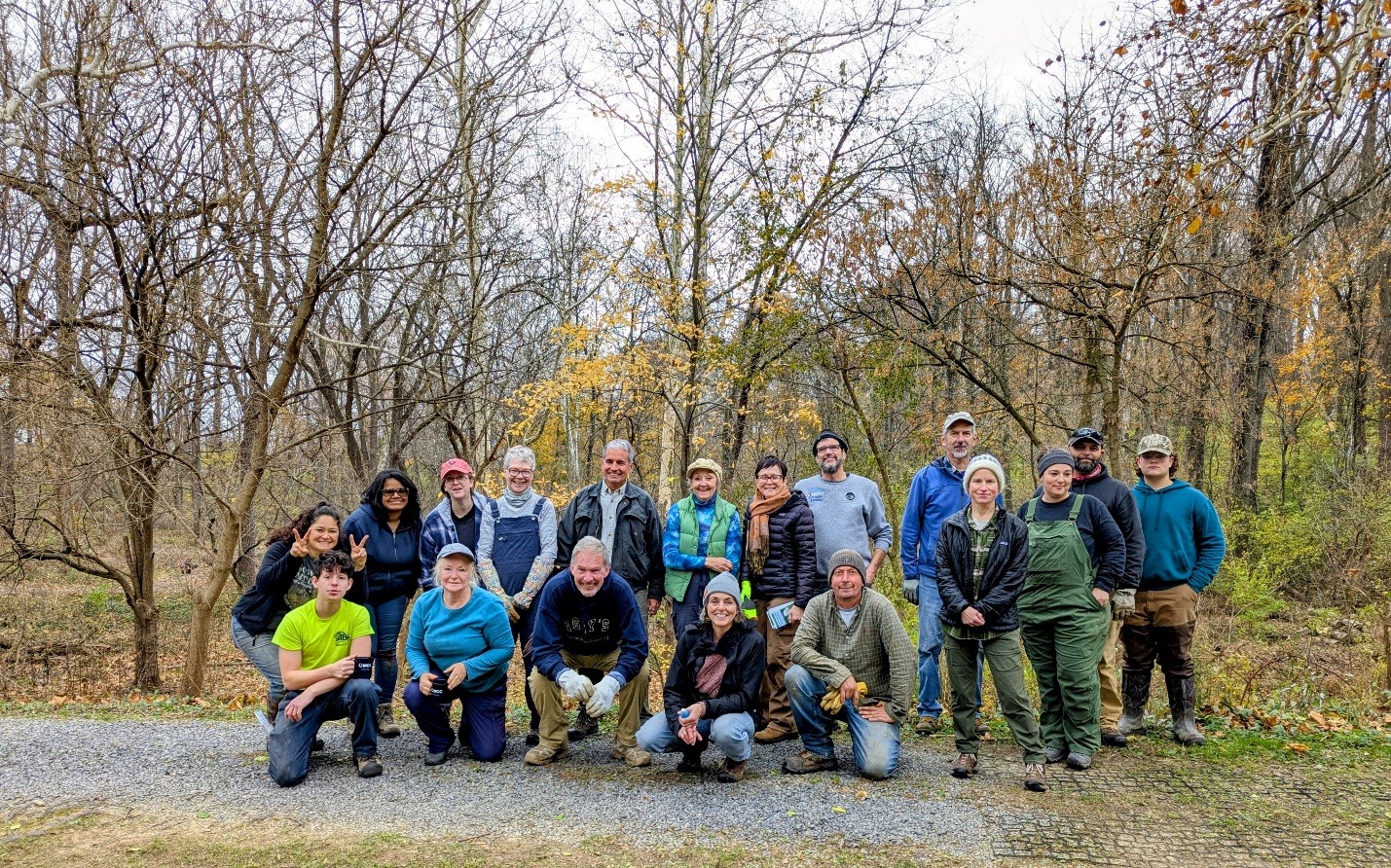
    MCC partnered with Mennonite Men and the nonprofit Let’s Go 1-2-3 for a creation care event in mid-November. A group of 20 people gathered to learn from two experts on the topic of woodland restoration and invasive plant removal using the MCC Akron campus woodland as a model. The weather was beautiful, and spirits were high.


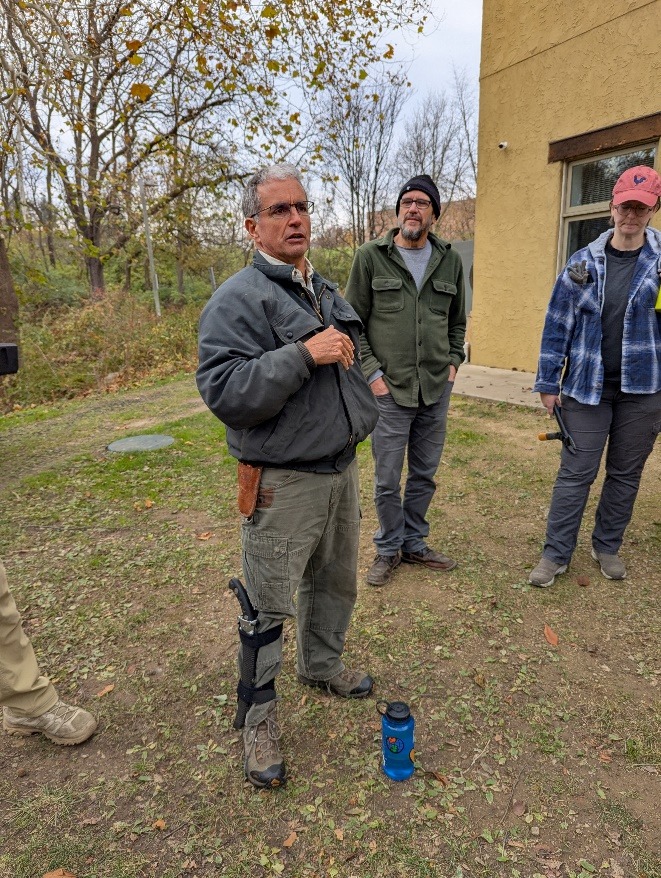
    Thomas, an urban forestry liaison in Goshen, Indiana, and co-director of Mennonite Men, represented the group and their work around the globe. Steve had been in communication with MCC since 2022 concerning the many invasive plants that had taken over the rear woodland and how our organizations can partner to educate the greater community on the topic of woodland restoration. Woodlands play a significant role in the health of the ecosystems in the Northeast.

    Lydia Martin represented Let’s Go 1-2-3, a small nonprofit in southeastern Pennsylvania, whose mission is to encourage youth and families in Philadelphia and Lancaster to participate in outdoor and nature-based experiences with a goal of long-term connection to the natural environment. Their programing and education are free in order to help remove barriers to outdoor experiences. Lydia and her husband Doug own Hidden Valley, a 7-acre restored woodland, wetland and meadow in southern Lancaster County which has been a labor of love and model of wildlife habitat restoration for the past 15 years. Lydia also served with various conservation organizations and currently serves as an ecological design consultant for MCC’s grounds as needed.

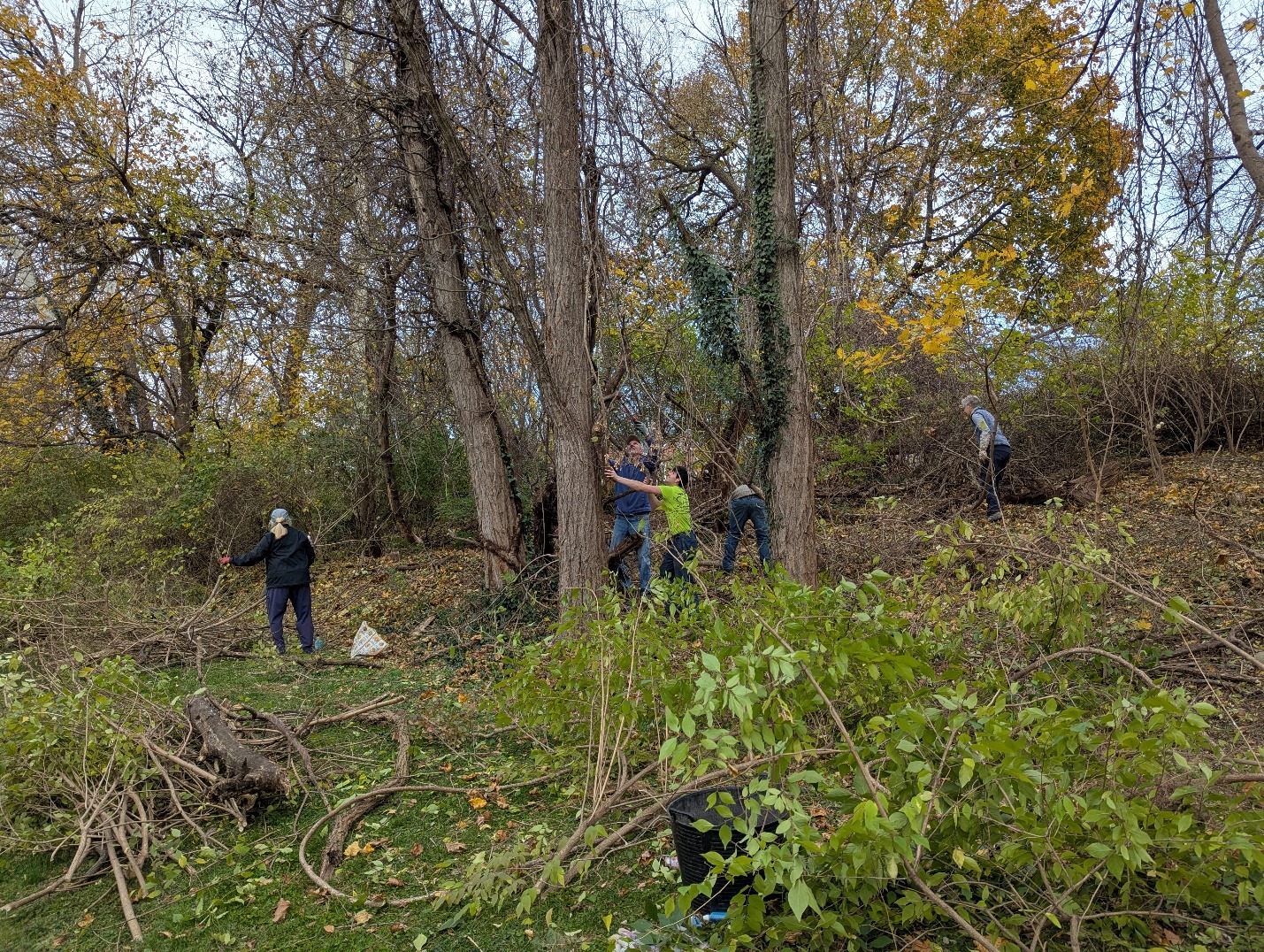
    After networking and donuts on the MCC Veranda, both leaders shared information on the work of their respective organizations. The group then moved down to the woodland to learn to identify the main invasive plants choking the MCC woods: multiflora rose, shrub honeysuckle, Oriental bittersweet vine and English ivy. Techniques for removal were shared with the group.

    In 2022, MCC received a grant from the Lancaster Sierra Club through the Huplits Foundation to remove much of the larger invasive multiflora rose, shrub honeysuckle, and Asian bittersweet vine, some of which were 8 feet tall. While native canopy trees like sycamore and black walnut were still standing strong, the rest of the area, including wetland, had been choked out by these three species.

    Now several years later, smaller invasive shrubs which were previously missed, began being cleared out by groups of chatting volunteers, opening more areas for native tree replacements and overseeding. Clipping these small shrubs off at the base and dabbing the fresh cut with a focused herbicide in the fall removes the invasive plant while not disturbing the surrounding ground.

    While woodland work can be daunting, participants were reminded again of the satisfaction of bringing ecological health to an area like this one. Visitors from all over the world walk the MCC woodland loop yearly. Each person who walks through the woodland experiences a bit of transformation. Each of the participants involved in the November creation care event will take what they learned on the MCC campus back to the land they are stewarding personally, as well as teach others.

    Tannis Hudock, a 16-year-old who participated with his parents, took the skills he learned as well as the free dauber offered to participants at the end of the event, and immediately began removing invasive plants on his grandparents’ woodlot. His father Tyler, who manages large acreage on a local wildlife refuge, was interested in the techniques applied to small lots while offering advice on setting up wildlife cameras to observe the animals and birds making use of the area. Other participants learned skills and inspiration to apply to other local projects, including the Akron Mennonite Church’s Nature Preserve and the Lancaster Cemetery project in the city of Lancaster.


    During the summer, the MCC woodland is full of native annual jewelweed which often grows 5-6 feet tall. It fills the woods with a jungle. Hummingbirds drink from its impatiens-like flower, kids enjoy watching the seed propelled through the air, and adults love learning how jewelweed soothes poison ivy reactions. By mid-November, jewelweed dies back, opening the structure of the woodland once again. The plants not native to this region stand out in late fall as they often keep their leaves longer than native species. These invasive plants are easy to spot and remove in October and November, and the leaf drop makes it easier to move through vegetation. Birds are not nesting, and poison ivy is mostly dormant. Interestingly, most plants identified as invasive (from other ecosystems) will also send out green leaves a month earlier in the spring than the indigenous species on the East Coast. To learn more about invasive species in your state, visit U.S. Invasive Species | National Invasive Species Information Center https://share.google/CxQK6201NuUAiaQtt.

    Native replacements will continue to be planted to fill in and add biodiversity. Since much of the area is wetland, black gum trees and white swamp oak were selected as the main replacement canopy trees. Serviceberries and pawpaws were planted in the food forest. American hornbeam (Carpinus carolinana) has been added to the current understory since they are shade tolerant and enjoy high moisture levels. Other trees/shrubs introduced include sweet gum, yellowwood, big leaf magnolia, witchhazel, several viburnum species, pagoda dogwood and others.

    As biodiversity builds and matures in the future, those involved in this project expressed interest in continuing to watch the MCC woodland come to life in years to come.

    Katrina Lefever, MCC Sustainable Landscape Coordinator


  • JoinTrees for Creation Care

    JoinTrees for Creation Care

    We continue to receive inspiring tree-planting proposals from Mennonite communities worldwide. Recently, groups in Indonesia and Kenya submitted plans to address the climate challenges facing their regions. Before we can fund these, however, we must first complete our current projects in Angola, DR Congo, and this year’s U.S. project in Orrville, Ohio.

    The Ohio project is restoring 51 acres of farmland with 36,000 trees, while also repairing relationships with Indigenous peoples in central Ohio. After nearly three decades of service with Mennonite Central Committee in Africa and Asia, Jeanne Zimmerly Jantzi and Daniel Jantzi share, ‘We have been called more deeply into relationship with this land where we live. As people of faith, we have a calling to reconciliation and a restored relationship with the land and with the Indigenous people whose history is also on this land.’

    This future forest will:

    1. Restore farmland to forest, improving soil, water, and wildlife habitat.
    2. Build partnership with a Native American organization in Ohio for ceremonies, cultural preservation, and forest foraging.
    3. Create a place for local people to reconnect with the land and with God’s creation.

    Partners include Orrville Mennonite Church, Central Christian School, The Nature Conservancy, NRCS, Ohio State University, Killbuck Watershed Land Trust, and Mennonite Men. The Zimmerly Family has donated conservation rights for the entire farm to permanently protect this land. Read the full story here.

    To complete our seven projects in DR Congo and Angola and this Ohio project, we need to raise $78,470.


  • Mennonite Men and Indigenous Solidarity

    Mennonite Men and Indigenous Solidarity

    In recent years, Mennonite men have become directly involved in Indigenous solidarity work. Some of this has come to Mennonite Men as an organization through staff and board members; in other cases, individual men have initiated involvement on their own. In both cases, Mennonite men are being invited to show up, listen, and bear witness to realities that Indigenous persons have historically and currently faced. Mennonite men are being invited to pray with and for Indigenous siblings, to show care, build relationships, and raise their voices alongside Indigenous voices who are advocating for just treatment.

    I want to highlight two different Indigenous communities in the U.S. that are advocating for justice and with whom Mennonite men are getting involved. In both examples, Indigenous communities have invited involvement from the Coalition to Dismantle the Doctrine of Discovery (CDDoD).

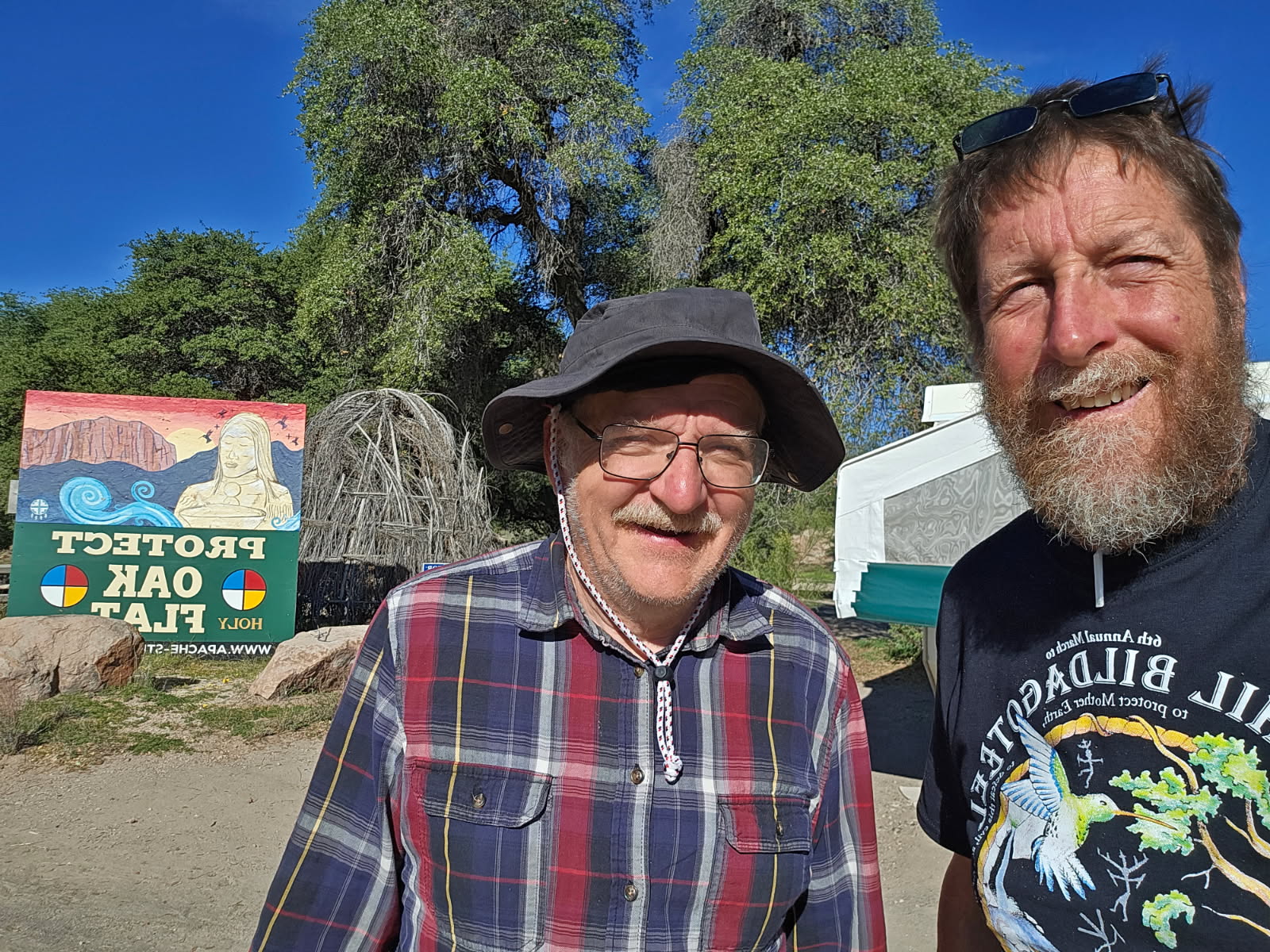
    The first example is at Oak Flat (Chi’Chil Bildagoteel), sacred land of the Western Apache in Arizona. Rich Meyer and David Baer of Benton Mennonite Church (IN) have been serving at Oak Flat to pray, learn from Apaches, offer accompaniment to Apache Stronghold when needed, and maintain the camp. Rich Meyer offers this reflection:

    “I knew coming here that I would need to be listening and learning—listening to the Apache, to teammates with experience, to God. In my daily walks here, I am able to really stop, wait, and listen much more deliberately than in my usual busy life.”

    Being at Oak Flat allows one to bear witness to the beauty of God’s creation and the injustices Oak Flat is slated to experience if the land is transferred to the copper mining company Resolution Copper. Efforts to protect Oak Flat and to stand with Apaches are not over. If you or your congregation would like to get involved in prayerful work where you are to support Apache Stronghold and sacred land, contact Molly@dismantlediscovery.org. If you are intereseted in joining pray-filled protective accompaniment at Oak Flat, or have someone to nominate for this work, contact Carol Rose at cofa@dismantlediscovery.org to explore options for training and serving on a team. You may also contact me at JonZ@MennoniteMen.org to hear about my personal experiences.

    Photo at right: Rich Meyer (R) and David Baer (L), both from Benton Mennonite Church in Goshen, at Oak Flat.

    The second example is from the Shinnecock Nation on the east end of Long Island, New York. After years of relationship-building that began with Sarah Augustine and Shinnecock leaders, Shinnecock leaders invited members of a new CDDoD working group to visit their reservation. This delegation in September of 2025 included Mennonite associate pastor Matt Carlson of Akron Mennonite Church in Pennsylvania, along with six others. Matt shared a reflection from his time with the delegation:

    We began our mornings together at a communal fire on their reservation to hear stories of their people and our hosts took us around the area to show us some of their sacred sites, some of which they’ve only recently regained access to. This is an example to me of yet another reversal. In the parable Jesus shared, the host is a person with power and resources who organizes the banquet and invites those who are socially marginalized. For those of us with power and resources, this is an appropriate and good expression of faith, sharing our resources with an open hand with those who are in need. I’m also left with the question, “What does it look like to give up that power, to relinquish our place at the head of the table?” After all, the stories of the Jesus we follow are all about giving up power, from being born as a baby in a stable, to resisting the temptations in the wilderness, to depending on the hospitality of others, to being crucified on a cross.’

    Matt also documents the various ways in which Shinnecock land has been stolen and treaties broken, as well as the ongoing pollution affecting the waters of Shinnecock Bay due to failing septic systems from homes in nearby Southampton. The Shinnecock people continue to experience disrespect and discrimination to this day and are entangled in many lawsuits.

    “Untreated wastewater from outdated septic systems and cesspools has been leaking into the groundwater and flowing into Shinnecock Bay. This is harming the bay, with excess nitrogen causing toxic algae blooms, which deplete oxygen and destroy the marine life that is an integral part of the Shinnecock culture and economy. In response to this crisis, a group of women leaders from the Shinnecock Nation have resurrected the ancient practice of raising sugar kelp in the waters of Shinnecock Bay. Kelp has the ability to sequester carbon and nitrogen, which will help heal the waters of the bay, and the harvested kelp can be sold as a natural fertilizer, supporting the Nation’s economy.

    “Raising kelp is one piece of a larger effort to maintain ancestral ties to the lands and waters that the Shinnecock Nation has stewarded for thousands of years. Unfortunately, continued development in the Hamptons and the unwillingness of local and state leadership to recognize the land rights of the Shinnecock Nation make that effort extremely difficult. The purpose of the delegation was to learn how those of us who are newcomers to this land can help support the various initiatives of the Shinnecock Nation. With guidance from Shinnecock leaders, and as part of a larger network of allies, we are working to build a campaign to aid the Shinnecock people in realizing their economic and cultural sovereignty.”

    I am encouraged to see men like Matt involved with CDDoD who live in closer geographical proximity to Long Island, as the issues, advocacy, and in-person visits could literally be closer to home. If you wish to learn more about the Shinnecock Working Group of CDDoD and get involved, please contact Alicia Maldonado-Zahra at amaldonadozahra@goshen.edu. If you wish to read Matt’s full article about what he learned during the Shinnecock delegation visit, you may email him at mcarlson@akronmench.org.

    Please pray for our Indigenous brothers and sisters who face daily hardship and disrespect. Also pray for Mennonite men and others who are feeling God’s call to build relationships and offer direct accompaniment to Indigenous communities pleading for justice.


  • A Foundation of Faith: JoinHands Grant Empowers Ghanaian Church Construction

    A Foundation of Faith: JoinHands Grant Empowers Ghanaian Church Construction


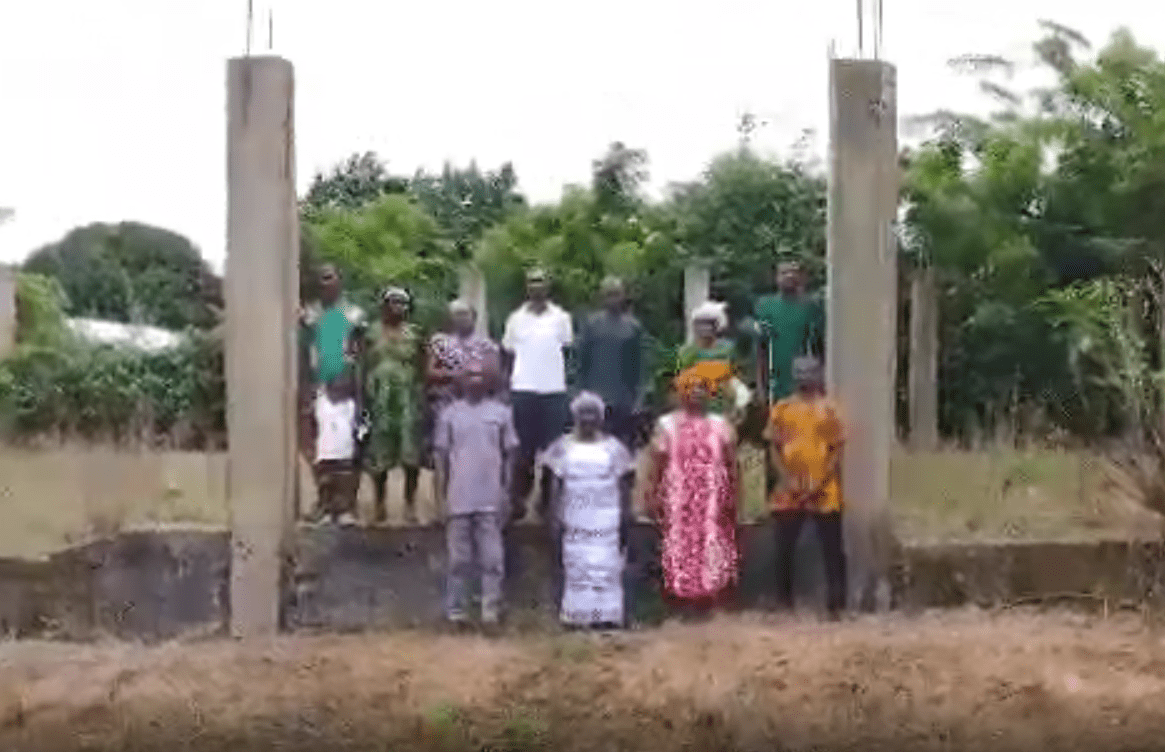
    In the spring of 2025, Mennonite Men was contacted by Matthew Krabill of Mennonite Mission Network, who is serving in Ghana, inquiring about JoinHands grants for a Ghanaian congregation seeking to build a place of worship. After receiving a JoinHands grant application for the Santramozorh Mennonite Church, Mennonite Men’s JoinHands committee engaged via email and Zoom in dialogue with Ghanaian pastor Francis Kwame Dzivor and with Krabill. What an honor it has been to hear stories and learn about this community’s worship setting, as well as to receive photos and videos from Ghana. We are humbled to learn that this community often worships outdoors under a large tree or in a bamboo structure open to the elements—a stark contrast to the large and comfortable indoor spaces where many of us worship here in the United States.

    Photo: members of the Santramozorh Mennonite Church next to previously erected pillars that will support the new church’s roof. (Matthew Krabill)

    At its October board meeting, Mennonite Men approved a grant for the Santramozorh Mennonite Church, a faith community of Ghana Mennonite Church in the eastern part of the country. Given Mennonite Men’s policies that limit the percentage we can give relative to a project’s total cost, this congregation is still seeking additional funding sources. We invite you to pray for Ghana Mennonite Church, particularly the Santramozorh congregation, Pastor Francis Kwame Dzivor, and their continued fundraising efforts to complete this building project. If you would like to inquire about additional ways to give, please email krabillm@tsinet.org to reach Matthew Krabill.

    We thank all who donate to Mennonite Men’s JoinHands ministry, which helps congregations with limited resources purchase or create secure spaces for worship. May God’s kin-dom flourish throughout the world, including among our brothers and sisters in Ghana.


  • My Corner of the World

    My Corner of the World

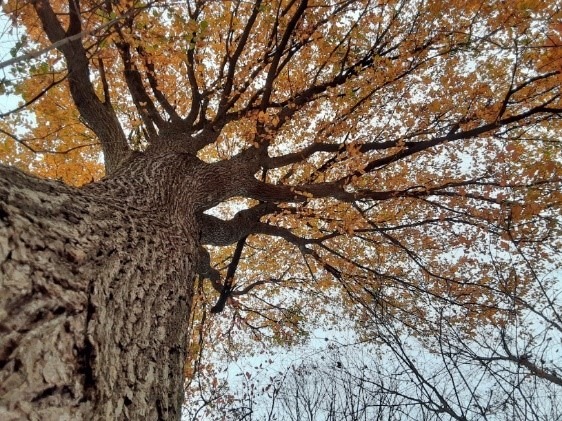
    I wonder about this piece of land.

    What was it like before the European’s

    brought the axe and plow to alter forever

    the landscape of what was.

    Located in a transitional region between

    the eastern woodlands and the sweeping

    western prairies, was it densely wooded

    with maples, oaks and elm, or an open

    space with mixed grasses and wild

    flowers waving in the summer breezes?

    As a young man I knew it as a fertile

    field with rows of com, soybeans or

    waving heads of wheat, but dreamed of

    what it was before inspired by the

    arrows heads scattered in the soil, a

    reminder of the peoples who called this

    place home before me.

    So I made a choice and I chose to

    envision a forest. In the chill of early

    spring I set about with spade and

    seedlings to see if this vision could be

    fulfilled, row upon row of seedling, oak,

    tulip, pine, sycamore and locust gently

    pressed in slits in the soil between the

    decaying rows of last years corn.

    For many years I was not near to observe

    the slow evolution of this space, but

    visits revealed that change was taking

    place. Slowly what I had envisioned

    began to emerge, first saplings, then

    small trees along with nature’s natural

    repair of shrubs, briars, and other plants

    of the emerging ecosystem.

    Today, some fifty years past, as an old

    man, I stroll through this space with

    wonder at what I behold, a thick young

    forest of trees tall and straight in their

    search for light.

    Is it as it was long ago, I will never

    know, but I am graced and blessed by

    what is now and thankful for the vision

    of my youth.

    Steve Ramer

    November 2023


  • A Place of Welcome in South Philadelphia

    A Place of Welcome in South Philadelphia

    When I arrived at the Indonesian Community Bazaar in South Philadelphia, I was greeted with warm smiles, a cold Thai tea, and a plate of delicious food. Members of Indonesian Light Church ushered me with excitement into the tent where they were selling home cooked food. I was there to present a grant check on behalf of Mennonite Men’s Join Hands program that helps congregations purchase their first church building. I was also being welcomed into their circle of hospitality.

    After the check presentation, Pastor Hendy Matahelemual invited me to tour the nearby building they hope to soon call their own. Since early 2024, Indonesian Light Church, a Mosaic Mennonite Conference congregation, has been renting this South Philadelphia church building on a month-to-month basis with the intent to purchase. Thanks to faithful giving and tireless fundraising—like the bazaar—I learned they are nearly at their down payment goal and expect to close by the end of September 2025.

    Indonesian Light is part of a large and growing Indonesian community in South Philadelphia. Many members are Chinese-Indonesian Christians, who faced persecution in Indonesia and sought asylum in the United States beginning in the late 1990s. Today, Christian and other minority groups in Indonesia continue to feel unsafe, and many still emigrate seeking refuge.

    Pastor Hendy explained how vital community is for those who arrive here: “Community is a huge part of Indonesian culture. When Indonesians move here, they search out a church community. In church you get connection, the community holds you accountable, and the pastor and community can vouch for you.”

    That spirit of welcome is lived out daily in the congregation. Members help newcomers find housing, jobs, and healthcare. Once established, those who were welcomed become welcomers in turn. “It’s organic,” Pastor Hendy said. “You don’t have to ask, they just do it.”

    Though recent anxieties around immigration have affected many members and so the congregation continues to lean into hope and hospitality. Their new space has already allowed them to double in attendance, share worship space with a Hispanic congregation, and host weekly AA and NA groups.

    Indonesian Light Church embodies what it means to be a welcoming community of faith—rooted in culture, strengthened by Anabaptist values, and open to the Spirit’s leading. I left filled with good food and encouraged by seeing their joy, hope, and hospitality flourishing in the city of brotherly love.

    If you’d like to learn more about or contribute to Mennonite Men’s JoinHands grant program, visit MennoniteMen.org/JoinHands.


  • Navigating Boys’ Rites of Passage: Anabaptist Insights from Follow Jesus 2025

    Navigating Boys’ Rites of Passage: Anabaptist Insights from Follow Jesus 2025


    The Follow Jesus 2025 denominational gathering in Greensboro, North Carolina, was an incredibly rich opportunity to interact with a wide swath of people from Mennonite Church USA. I am still riding the wave of gratitude for having been able to attend and to co‑present a workshop along with Co‑Coordinator Steve Thomas and Mennonite Men board member (and pastor) Phil Schmidt.

    One of our workshops was called “Boys’ Rites of Passage: Anabaptist Perspectives.” Despite the small room size, over 30 people attended, including men and women of various ages and geographic regions, as well as high school and college students.

    Mennonite Men has been asked by parents what we, as an organization, can offer to support boys who are coming of age in ways that are rooted in Anabaptist Christian faith and theology.

    Steve, Phil, and I began the workshop by each sharing our own personal experiences participating in Men’s Rites of Passage (MROP) retreats as adults—a five‑day gathering organized by Illuman, which was started by Franciscan priest Richard Rohr. The bulk of the workshop was spent dialoguing about how to support boys as they come of age.

    The in‑person exchanges during the workshop were informative and at times vulnerable, stretching us all to think deeply and share honestly about the real challenges boys face.

    The most fruitful aspects of this workshop included direct input from attendees. Each table in the room had two questions written on sheets of paper: (1) How are boys already being initiated? (2) What might be particularly Anabaptist about boys’ rites of passage? Folks were given time to reflect, then share aloud with others at their table, before we invited people to share with the whole room. Looking at what was shared, something stood out: our Anabaptist Christian values and intentions appear strikingly different from many of the ways boys are otherwise initiated in everyday situations.

    Before attendees left the session, we asked them to fill out slips of paper about how Mennonite Men staff and board could be of service regarding boys’ rites of passage from Anabaptist Christian perspectives. We were grateful to collect responses from 23 attendees. Below is a table showing the percentage of attendees in favor of several possible actions Mennonite Men could take.

    We left the gathering with new clarity: people do want to see Mennonite Men take action in specific ways to support boys’ rites of passage as Anabaptists, and we now have data on which to base these actions.

    The most requested service was to offer in‑person weekend experiences or a series of events that could help prepare adults and boys for rites of passage. This idea is encouraging, and we hope to lean into this request. Creating and posting digital materials on our website related to boys’ rites of passage was the second most requested service. Other actions generated positive responses from about half of the attendees.

    Mennonite Men now has concrete action items to work with and is beginning to discuss possibilities. Preparing for this work will take more input, as well as resources to do the work.

    To get started, we are offering an online Zoom meeting for folks who want to connect about boys’ rites of passage from Anabaptist Christian perspectives. The first Zoom meeting will be on Thursday, September 25, from 8:00 to 9:00 p.m. Eastern Time. To register for this free gathering, complete a short registration form at: us02web.zoom.us/meeting/register/kNwKon01Rp6p2naMJn3FCg.