
Collaboration among organizations brought energy and encouragement to potentially challenging ecological work on the Mennonite Central Committee campus in Akron, PA.
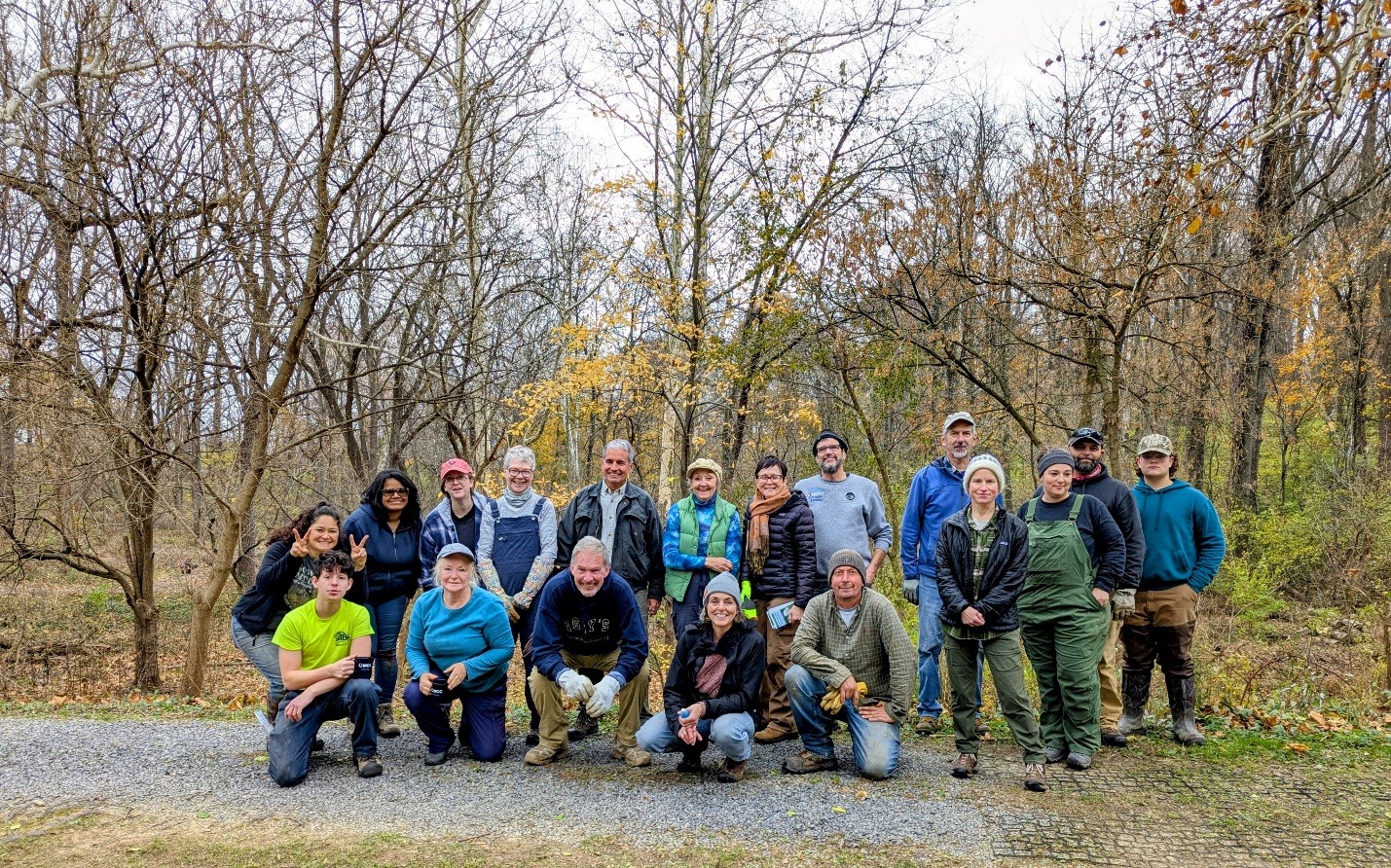
MCC partnered with Mennonite Men and the nonprofit Let’s Go 1-2-3 for a creation care event in mid-November. A group of 20 people gathered to learn from two experts on the topic of woodland restoration and invasive plant removal using the MCC Akron campus woodland as a model. The weather was beautiful, and spirits were high.
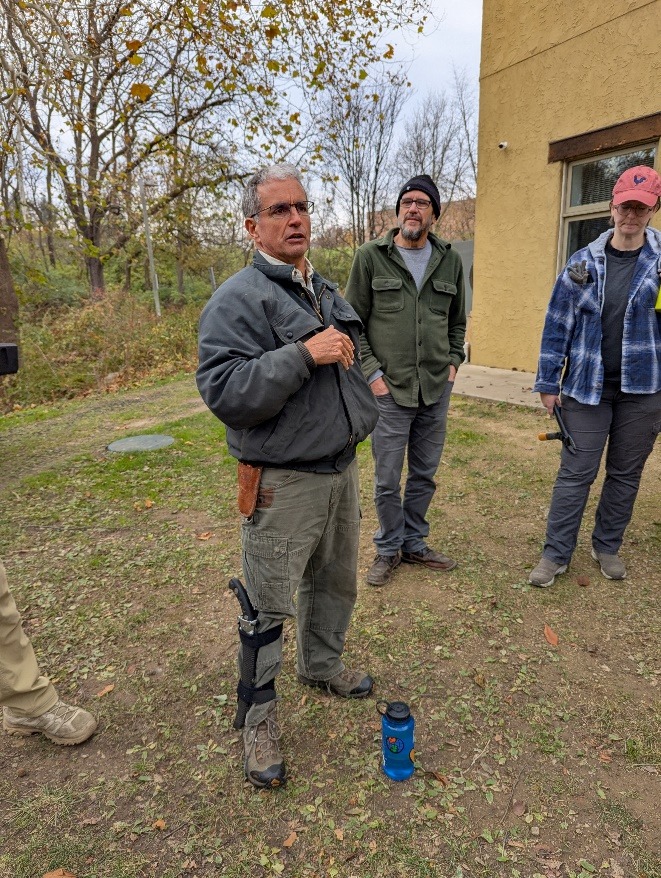
Thomas, an urban forestry liaison in Goshen, Indiana, and co-director of Mennonite Men, represented the group and their work around the globe. Steve had been in communication with MCC since 2022 concerning the many invasive plants that had taken over the rear woodland and how our organizations can partner to educate the greater community on the topic of woodland restoration. Woodlands play a significant role in the health of the ecosystems in the Northeast.
Lydia Martin represented Let’s Go 1-2-3, a small nonprofit in southeastern Pennsylvania, whose mission is to encourage youth and families in Philadelphia and Lancaster to participate in outdoor and nature-based experiences with a goal of long-term connection to the natural environment. Their programing and education are free in order to help remove barriers to outdoor experiences. Lydia and her husband Doug own Hidden Valley, a 7-acre restored woodland, wetland and meadow in southern Lancaster County which has been a labor of love and model of wildlife habitat restoration for the past 15 years. Lydia also served with various conservation organizations and currently serves as an ecological design consultant for MCC’s grounds as needed.
After networking and donuts on the MCC Veranda, both leaders shared information on the work of their respective organizations. The group then moved down to the woodland to learn to identify the main invasive plants choking the MCC woods: multiflora rose, shrub honeysuckle, Oriental bittersweet vine and English ivy. Techniques for removal were shared with the group.
In 2022, MCC received a grant from the Lancaster Sierra Club through the Huplits Foundation to remove much of the larger invasive multiflora rose, shrub honeysuckle, and Asian bittersweet vine, some of which were 8 feet tall. While native canopy trees like sycamore and black walnut were still standing strong, the rest of the area, including wetland, had been choked out by these three species. 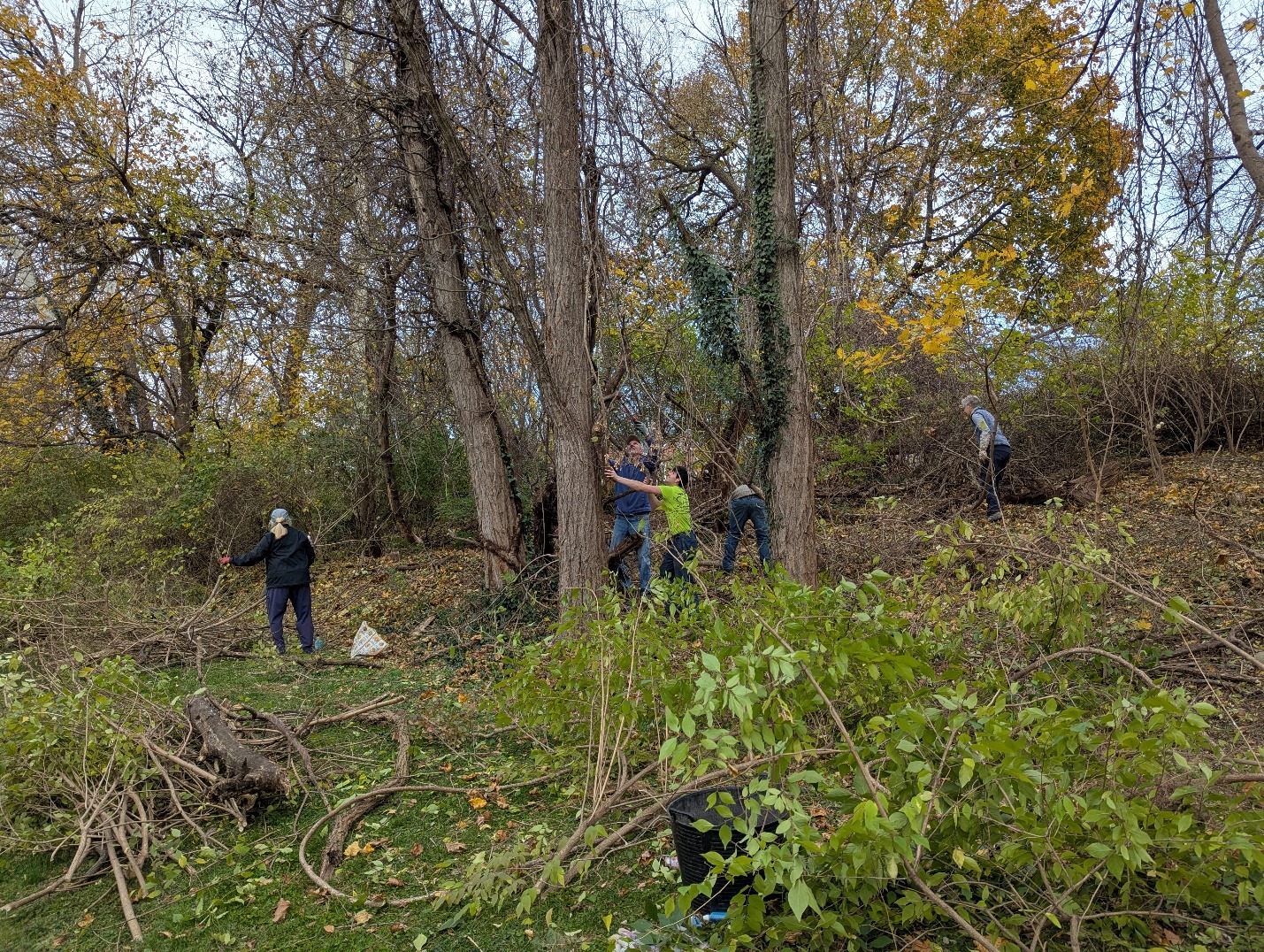
Now several years later, smaller invasive shrubs which were previously missed, began being cleared out by groups of chatting volunteers, opening more areas for native tree replacements and overseeding. Clipping these small shrubs off at the base and dabbing the fresh cut with a focused herbicide in the fall removes the invasive plant while not disturbing the surrounding ground.
While woodland work can be daunting, participants were reminded again of the satisfaction of bringing ecological health to an area like this one. Visitors from all over the world walk the MCC woodland loop yearly. Each person who walks through the woodland experiences a bit of transformation. Each of the participants involved in the November creation care event will take what they learned on the MCC campus back to the land they are stewarding personally, as well as teach others.
Tannis Hudock, a 16-year-old who participated with his parents, took the skills he learned as well as the free dauber offered to participants at the end of the event, and immediately began removing invasive plants on his grandparents’ woodlot. His father Tyler, who manages large acreage on a local wildlife refuge, was interested in the techniques applied to small lots while offering advice on setting up wildlife cameras to observe the animals and birds making use of the area. Other participants learned skills and inspiration to apply to other local projects, including the Akron Mennonite Church’s Nature Preserve and the Lancaster Cemetery project in the city of Lancaster.
Native replacements will continue to be planted to fill in and add biodiversity. Since much of the area is wetland, black gum trees and white swamp oak were selected as the main replacement canopy trees. Serviceberries and pawpaws were planted in the food forest. American hornbeam (Carpinus carolinana) has been added to the current understory since they are shade tolerant and enjoy high moisture levels. Other trees/shrubs introduced include sweet gum, yellowwood, big leaf magnolia, witchhazel, several viburnum species, pagoda dogwood and others.
As biodiversity builds and matures in the future, those involved in this project expressed interest in continuing to watch the MCC woodland come to life in years to come.
Katrina Lefever, MCC Sustainable Landscape Coordinator