Category: JoinHands

  • A Men’s Organization for God’s Shalom

    A Men’s Organization for God’s Shalom

    Mennonite Men—as the men’s organization of Mennonite Church USA and Mennonite Church Canada—includes all persons who identify as men in these church bodies. Our mission is engaging men to grow, give, and serve as followers of Jesus for God’s shalom.


    We promote an Anabaptist way for men that focuses on following Jesus, forming community, and building peace with a model that is more whole and life-giving than our culture’s dominant version of masculinity. From our Christian faith perspective based on the way of Jesus, we seek to engage in men’s work that affirms men, supports their personal growth, forms healthy relationships, transforms social problems, and cares for the Earth—all to bring about God’s shalom. We do this by providing events and resources for men, participating in social action, and funding building projects for new churches and tree planting for climate action.


    Our purpose is to enjoy and extend God’s abundant life. This is the why of our life and work. We believe that God intends for us to live life with individual and collective well-being. We are meant to enjoy the gifts of this life not just for ourselves but also to extend them to others. We experience this together and have meaningful, life-giving work as we seek the following ten aims.


    1. Respecting themselves and all people as beloved children of God
    All people are beloved children of God created in the Divine image. Because all people are created in God’s image, all are God’s beloved regardless of culture, creed, or deed. By respecting one another, we honor our God-given identity and dignity. This truth influences how we look at and relate to others and is the basis for living in love, nonviolence, and peace.

    2. Following Jesus, the image of God and model human
    Jesus revealed in the flesh what God is like and how to be fully human. We follow his model for how to be men—expressing tenderness, confronting wrongs, feeling grief, respecting all genders, having close friends, crossing social divides, caring for the marginalized, resisting the use of force, serving rather than dominating, and embracing all with love.

    3. Becoming strong, loving, and wise in the Spirit
    As we realize our identity as God’s beloved children, follow the way of Jesus, and are formed by the Spirit, we become strong, loving, and wise. We value these traits and seek to be men of integrity. And as we mature in character, our gendered distinctions diminish. We become more alike than different, reflecting our true selves in the image of God.

    4. Practicing love across the range of our relationships
    Satisfying our longing for love, we embrace God’s unconditional love for us and extend this to others. We express love in affection, care, and service and more fully experience love in empathy, vulnerability, and mutuality. In receiving and giving love we are fully alive. We believe living in love brings about healing, peace, and joy.

    5. Using power with and for rather than over and against others
    We recognize that power coming to us from various sources can be used to dominate, control, or violate others. In a culture where men too often use their power over and against others, we follow the way of Jesus, using power with and for others. Rather than exploiting power to (seemingly) benefit ourselves, we use power to serve the world’s collective well-being.

    6. Sharing resources with generosity to meet human needs
    We acknowledge that everything is ultimately God’s and that we are stewards of what we have. Aware of greed and that what we take can take us, we are not tight-fisted, clinging to things, but openhanded, freely sharing our resources with others. As God has been generous toward us, we are generous toward others, so we all have enough and more to experience God’s abundance.
    7. Standing with marginalized people for diversity and inclusion
    Against cultural supremacy and domination where some groups are excluded and oppressed based on difference, we embrace diversity—believing all people are created in the Divine image and are part of one human race with rich expressions of manifold differences. Honoring the dignity and equality of all people, we practice loving inclusion so all may fully participate in society.

    8. Transforming oppressive systems for freedom and justice
    We recognize that God’s shalom requires social justice—the public expression of love and right ordering of societal relationships. We deconstruct patriarchy, sexism, racism, classism, and other social systems that privilege some and oppress others. We work to transform systems like these to establish freedom and justice for all in our global village.

    9. Relating to all creatures as kin in the community of creation
    Aware that we are not above but part of the natural world, we take our place as members in God’s community of creation, and, as stewards, we serve and protect its well-being. We recognize that all living things are our kin and play an important part in an interconnected web of life. We all live together in ways where all resources, plants, and animals flourish in a life-giving balance.
    10. Caring for Earth to sustain its beauty, biodiversity, and abundance
    In response to environmental degradation and the climate crisis, we protect and restore our planet’s ecosystems upon which all life depends. We care for the Earth, manage resources sustainably, and live in ways that preserve the beauty, biodiversity, and abundance our Creator intended not only for ourselves but also for the global community and future generations.


    As we do these things in the power of the Spirit, we live into God’s shalom—a peaceable order with freedom, security, and justice for all, and well-being throughout the community of creation from generation to generation. Aligning ourselves with God’s great project of establishing shalom, we realize our lives matter and that we are part of something bigger than ourselves. Knowing and serving this gives our life focus, meaning, and joy.


    Our approach to men’s work

    Because men historically have been largely responsible for constructing patriarchy and because we continue to benefit from systems that privilege males, men have a responsibility for the transformation of these systems. Following the Appreciative Inquiry model for social change, we approach this and other social problems from within a positive framework. The highest forms of cooperation depend upon not a push but an invitation, calling people to respond more from aspiration than confrontation to bring about social change. Blaming, scolding, and shaming people tend to provoke resistance rather than cooperation and mutual growth.


    We promote what we’re for as we denounce what we’re against. To transform patriarchy, for example, we focus on God’s shalom, which calls us to build respect, equity, and justice for all genders. While dismantling is part of constructive work, we want to focus on a vision of God’s shalom and to practice its values for changing ourselves and society.

    For knowing where and how to engage in our work for social change, we seek a posture of listening and learning, especially toward marginalized and oppressed people.

    Motivating men to be their best selves for a better society, we seek to inspire action with vision. As we do so, we call forth positive change for greater well-being with abundance, freedom, love, and justice for all—the fruits of God’s shalom.

  • Mennonite Men board members take Flat Oak accompaniment training

    Mennonite Men board members take Flat Oak accompaniment training

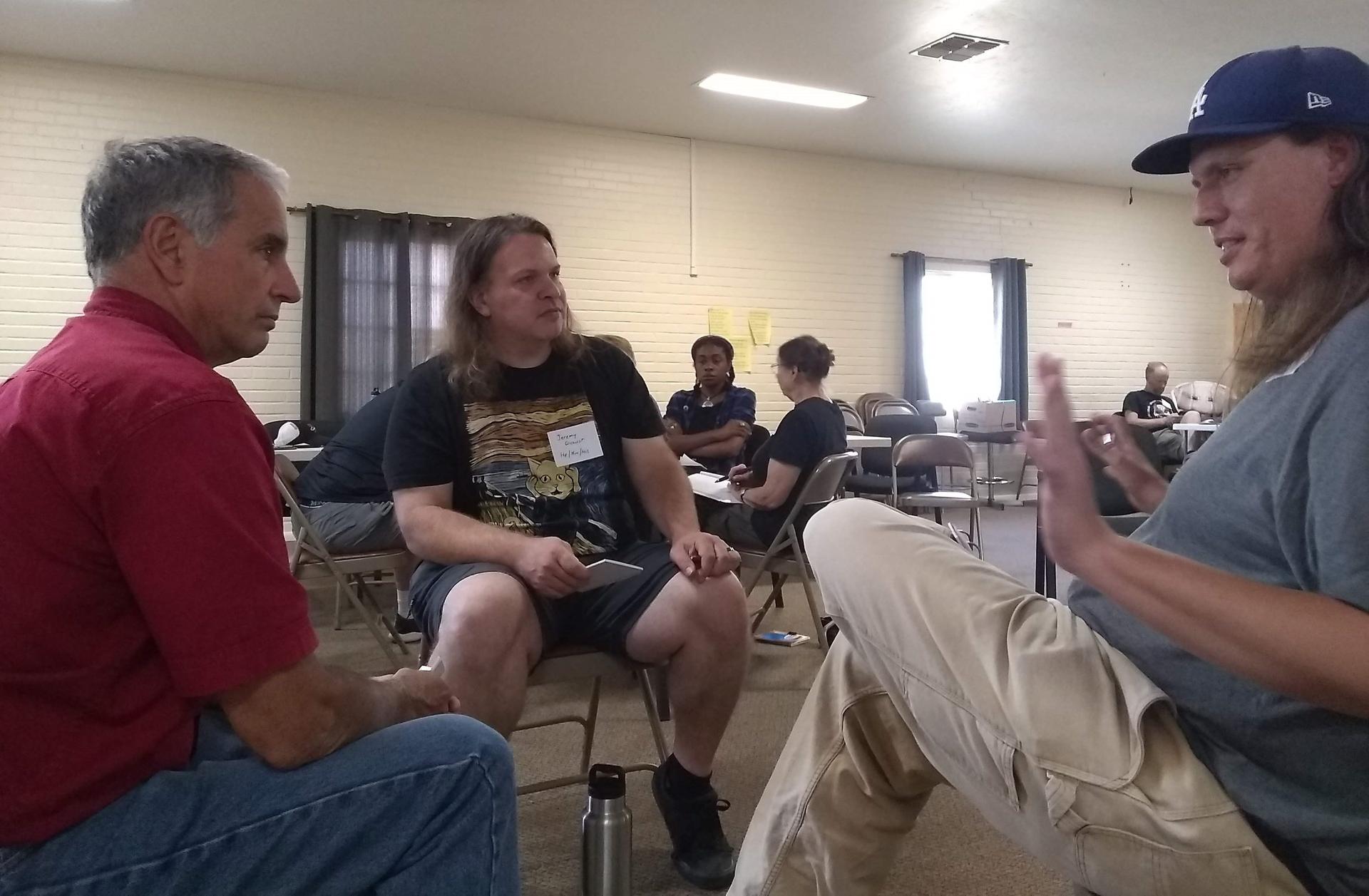
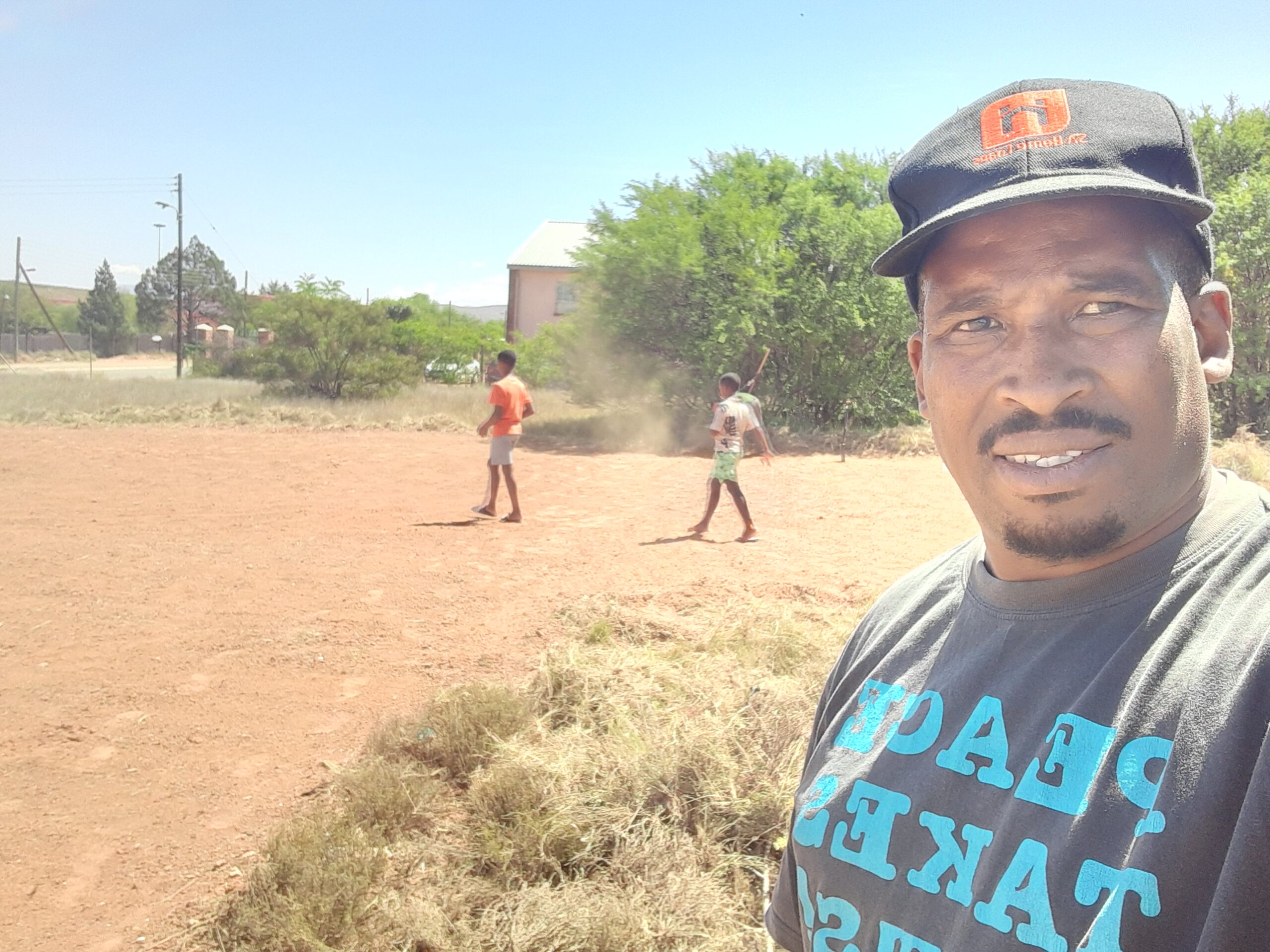
    ​In late September, Mennonite Men board members Jon Zirkle, Doug Amstutz, and US Coordinator Steve Thomas participated in accompaniment training at Shalom Mennonite Fellowship in Tucson, Arizona, at the invitation of the Coalition to Dismantle the Doctrine of Discovery.

    The training, provided by Community Peacemaker Teams, prepared participants to to join the Coalition’s work at Oak Flat by serving as interns alongside trained CPTers while camping at Oak Flat, praying with/on the land, and traveling with and taking direction from Apache Stronghold leaders. Tim Nafziger, a volunteer with the Coalition with strong ties to CPT, attended as support staff and Deborah Yoder was the Coalition staff person on the ground.

    ‘This CPT training, shared Thomas, ‘was a first step in exploring a partnership of engaging men in the work of accompanying Indigenous people in pursuing justice, reparations, and creation care.’

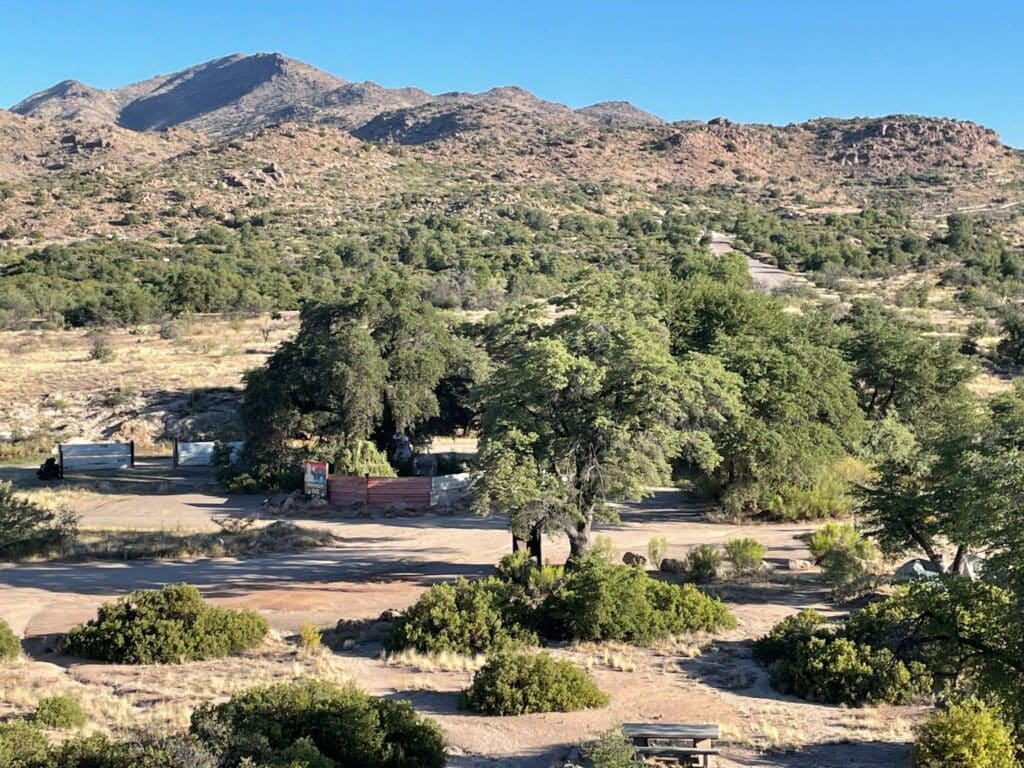
    Photos: (above) Steve Thomas, Jeremy Gilchrist, and Theo Kayser during small group discussions (photo taken by Deborah Yoder); (below) Flat Oak, Arizona (photo courtesy of Community Peacemaker Teams).

    Apache Stronghold is a group led by the San Carlos Apache and their allies. They are engaged in religious and legal efforts to defend their sacred site of Chi’chil Biłdagoteel (Oak Flat) from being destroyed by a multinational copper mining company.

    There were 14 total participants from across North America who followed the training curriculum provided by two CPT trainers, Julie Brown and Rachelle Friesen. During the training participants were vulnerable in their sharing as they talked and worked through various exercises focused on team building, exploring personal comfort zones, finding creative ways to break the pillars of White Supremacy, and recognizing privilege and leveraging it. It was a fulfilling experience to see so many dedicated individuals invested in this work.


  • Meaning

    Meaning

    Excerpted from Living That Matters: Honest Conversations for Men of Faith by Steve Thomas and Don Neufeld. Used by permission of Herald Press. All rights reserved.

    The beliefs, values, and behaviors we associate with being a man—collectively known as masculinity—vary widely. Sometimes they support us in developing healthy emotions and relationships, and other times they undermine us. Both parents and society influence boys according to which of the expressions of masculinity they throw their weight behind. The resulting messages greatly affect a boy’s understanding of what it means to live as a male. Male children and youth then accept these characteristics as their own in different ways and degrees, consciously or unconsciously. Living into these creates further meaning for them.

    In the past half century, what it means to be a male in North American society has undergone an overhaul. Old assumptions and beliefs about male dominance and privilege have been directly challenged by women seeking equity and by marginalized people who have exposed injustices perpetrated especially by white male power.

    Globalization has also brought considerable change through evolving social and economic trends. This change has blurred once-clear lines about masculine definition and behavior. One outcome for men is what might be called a ‘loss of job description.’

    Read the full reflection in Living that Matters: Honest Conversations for Men of Faith, which serves as a men’s guide for conversation and reflection and includes 70 topics, for use by individuals or groups. Order Living that matters: Honest Conversations for Men of Faith HERE.

  • New partnerships on two new international church building projects

    New partnerships on two new international church building projects


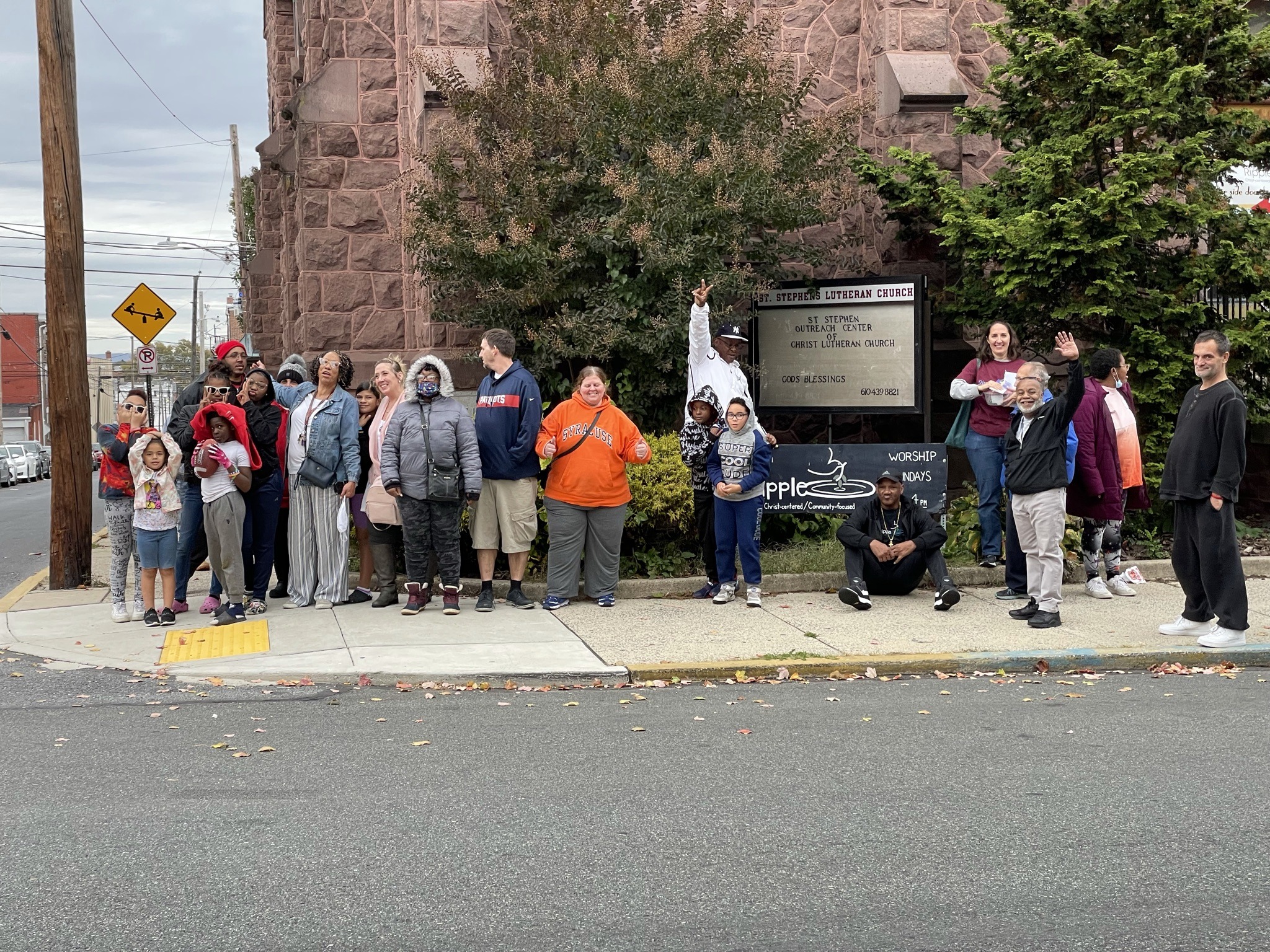
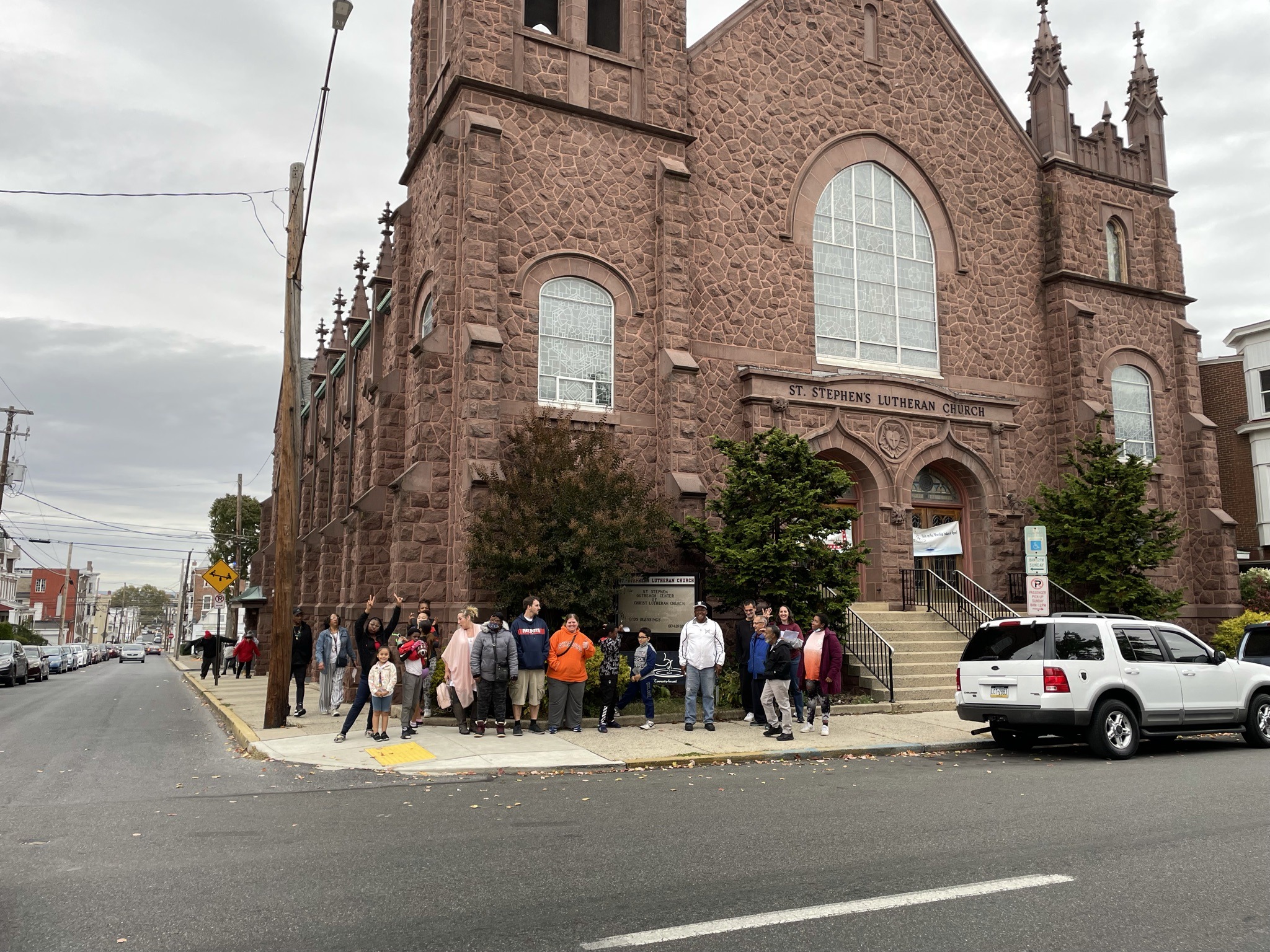
    Our last JoinHands grant helped Ripple Church, a new Mennonite congregation of Mosiac Mennonite Conference, to purchase an existing church building for their meeting place and community center in Allentown, Pennsylvania. This dynamic congregation is active in their neighborhood as they provide ministries for children and youth, meal service, and a place of belonging. When I presented our $40,000 JoinHands grant to this church I was impressed with their diversity, level of sharing, and inclusion of people from within their community.

    Our next JoinHands grants will go to Mennonite building projects in Burkina Faso and Columbia. Our first is for Iglesia Menonita Caminando En Esperanza in Bogota, Colombia—a six-year-old church plant in a very large borough in Bogotá, Colombia with over 1,200,000 people. Thanks to offerings and a loan from the National Colombian Mennonite Church, they purchased a two-story building. Previously paid rent is now applied to the new property. The church is renovating this building for church gatherings, Christian education, and store front shops to sell their baked goods and rent for income to support their ministries. In addition to the grant we will make, this church invites volunteers from Canada and the US to assist with various repair and remodeling work. Contact me if you are interested in volunteering to work at this project.

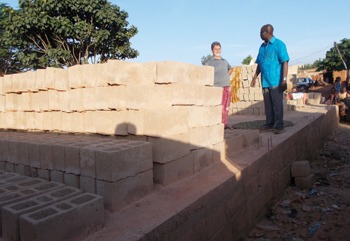
    Our second grant will go to Kodeni Evangelical Mennonite Church in Kodeni, Burkina Faso. This church plant has outgrown the small building it was using. Another Mennonite church bought land for this congregation. Members of Kodeni have put a lot of work and sweat into the project by making their own concrete blocks (shown to the right) and a sister Mennonite church has helped with building the walls. With good relationships with their predominately Muslim neighbors, Muslim youth have also helped with construction—a remarkable illustration of Christians and Muslims living together in community. Our grant will assist the church to complete their building project.

    To make these grants, we need to raise $13,800. Please consider contributing to these projects. Learn more about JoinHands and opportunities to give by visiting mennonitemen.org/joinhands or by emailing US Coordinator Steve Thomas, SteveT@mennonitemen.org.


  • Church building provides ongoing community ministry

    Church building provides ongoing community ministry


    Throughout 2020 and 2021, when the effects of COVID were hitting the US and exposing glaring inequality across the country, many churches were stepping in to meet needs in their communities.


    Centro de Albanza, a small Latino congregation of Mosaic Mennonite Conference, offered its facilities in South Philadelphia to meet the new needs of their community. The congregation, along with several local agencies using their space, provided Covid tests and assisted with ID card registration. They also provided space and supervision for kids taking virtual classes whose parents needed to work and didn’t feel comfortable leaving their kids at home alone.


    The congregation received a grant from Mennonite Men’s JoinHands program in 2020 to help renovate the 160-year old building. The grant helped replace a leaky roof, install more efficient windows, and generally allowed the congregation to continue offering their building as a place of ministry and outreach for the community.

    ‘Its definitely our priority is to share the Gospel and have activities related with discipleship,’ said pastor Fernando Loyola. ‘We have two other churches that share the building, one is Indonesian and the other is Burmese.’


    Together the three congregations continue to serve their community and make the word of God known in South Philadelphia. To learn more about assisting congregations in purchasing or renovating their first church building, visit mennonitemen.org/joinhands.


  • Church building grant to assist refugee ministry

    Church building grant to assist refugee ministry


    In late December Mennonite Men completed its fundraising for a $40,000 grant for Omaha Chin Christian Church in Omaha, Nebraska. With the release of these funds, the congregation will be able to move forward with their church building project on the outskirts of the city.


    A member of Central Plains Mennonite Conference of MC USA, Omaha Chin Christian Church is one of an increasing number of Chin Christian communities in North America. These communities, who have roots in Myanmar, are finding their way into MC USA and MC Canada conferences.

    This congregation is connected to a large population of Chin immigrants in Omaha and has a special ministry of assisting people navigate a challenging new life in North America and find a home in the Anabaptist family. Many folks in this population have come from refugee camps and have been marginalized or exiled from their country. As the congregation continues to grow and reach more Chin people in Omaha, the church facility they plan to acquire will not only provide a space of their own for worship but will also offer a place for community activities to honor and celebrate their culture.

    ‘We previously met in a rented space and this has left the church feeling like they are not rooted,’ shared Ngun Lian Mawi, pastor of the 70-member congregation. Leaders hope that their own building will be a catalyst for unity growth, both numerically and spiritually.

    Omaha Chin Christian Church is the 93rd congregation to receive a JoinHands grant from Mennonite Men. Nearly 2.5 million has been granted since the program begain in 1985. If you or your congregation are interested in contributing to our next campaign, visit mennonitemen.org/joinhands.

    .


  • JoinHands grant to provide stability to urban Pennsylvania church

    JoinHands grant to provide stability to urban Pennsylvania church


    Since its beginning as refuge for those distanced by the church, the group that turned into Ripple Church has kept its focus on caring for its neighborhood and the vulnerable living there. Its community-

    focused approach means Ripple provides a community of support and place of worship for our neighbors of whom many struggle with addiction, mental illness, trauma, and abuse which is often further complicated by isolation, homelessness, and incarceration.


    Ripple has met in five different locations in the city of Allentown, Pennsylvania. In each new location, the congregation needed to adjust its rhythms to accommodate the new space and neighborhood. With each move, valuable relationships were lost and leadership development was hindered.


    In 2018 the congregation moved into St. Stephens Outreach Center owned by Christ Lutheran Church (CLC) in Allentown. As the relationship between the two congregations grew, so did the mutual idea of a permanent space to grow roots and become a stable presence in the neighborhood. CLC

    offered ownership of the building for a largely reduced price as a way to support Ripple’s continuing ministry.


    Mennonite Men’s next JoinHands grant will assist Ripple Church, a Mennonite congregation of Mosiac Mennonite Conference, to purchase this building. Ownership of the building will provide stability for this growing congregation and allow them to put down permanent roots in their neighborhood where they currently offer ministries for children and youth, sit down meals each Sunday for those attending, a clothing closet with hygiene/food pantry, to go meals twice a week, a community garden, Bible studies, and a community of belonging for members who are often isolated. Church leaders state, ‘Purchasing this building will give the church a permanent home and provides a safe location downtown for many people who are not welcomed in other areas of the city.’


    To assist this congregation in purchasing this building in Allentown with a JoinHands grant, Mennonite Men needs to raise $40,000. To learn more about JoinHands grants or to make a gift, visit mennonitemen.org/joinhands.


  • Angolan Church Completes Roof Project

    Angolan Church Completes Roof Project

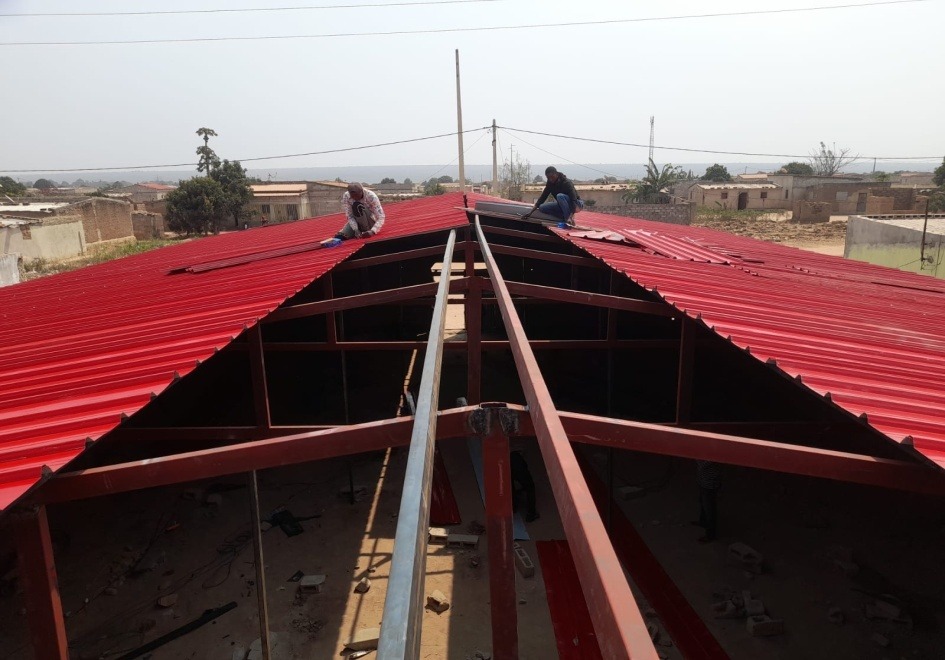
    Construction work on a new Angolan Mennonite-Brethren church building was recently finished, giving the congregation a permanant meeting space for the first time. The Galilee Parish of Calunga, part of the Igreja Evangélica Irmãos Mennonitas em Angola (Evangelical Church of Mennonite Brethren in Angola) had been meeting in an airport hanger while during construction. A recent JoinHands grant of $10,000 from Mennonite Men assisted the congregation in constructing a roof for their unfinished building.


    The IEIMA, along with several other Mennontie Brethren Church groups in the country, resulted from the interaction of Angolan refugees in Congo with Mennonite ministries in that country following conflict in the Democratic Republic of Congo in the 1980s.


    In a recent letter to Mennonite Men, the pastor, Maiala Kibango, writes that, ‘The conclusion of this work brought much joy and is a great benefit for the community in general and this congregation in particular…[We give] thanks to you for all your efforts, and sacrifice in having helped us financially to accomplish this work, which seemed difficult but today has become a reality. Our gratitude to all the AIMM (Africa Inter Mennonite Mission) team and to all international partners who have thought of IEIMA and of the Mennonites of Angola in general.’


    The JoinHands Mennonite Church Building Program, we provide grants to help new congregations acquire their first church building. Mennonite Men has given over 2 million dollars to new congregations for this purpose. We invite individuals and congregations to give to JoinHands. We especially ask churches pursuing building projects to give as a way of sharing resources and serving ‘fair balance’ with congregations in need.
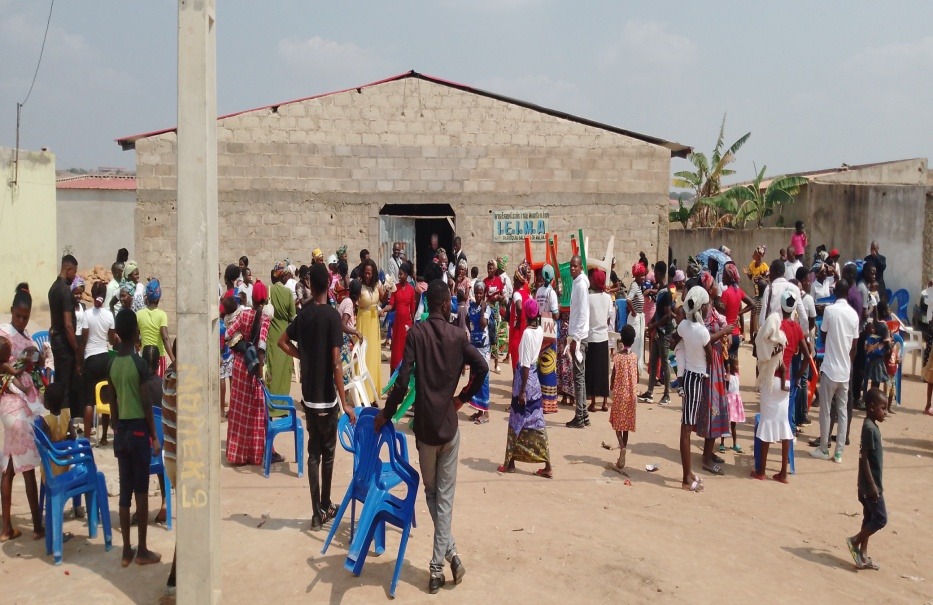

    Paul wrote in his appeal to churches,’I do not mean that there should be relief for others and pressure on you, but it is a question of a fair balance between your present abundance and their need, so that their abundance may be for your need, in order that there may be a fair balance (2 Corinthians 8:13-15).’

    Help us accomplish this fair balance. We can extend grants only as donors give to this program. Find more information at https://mennonitemen.org/joinhands.


  • Church renovation tithes offer opportunity to help other congregations build

    Church renovation tithes offer opportunity to help other congregations build

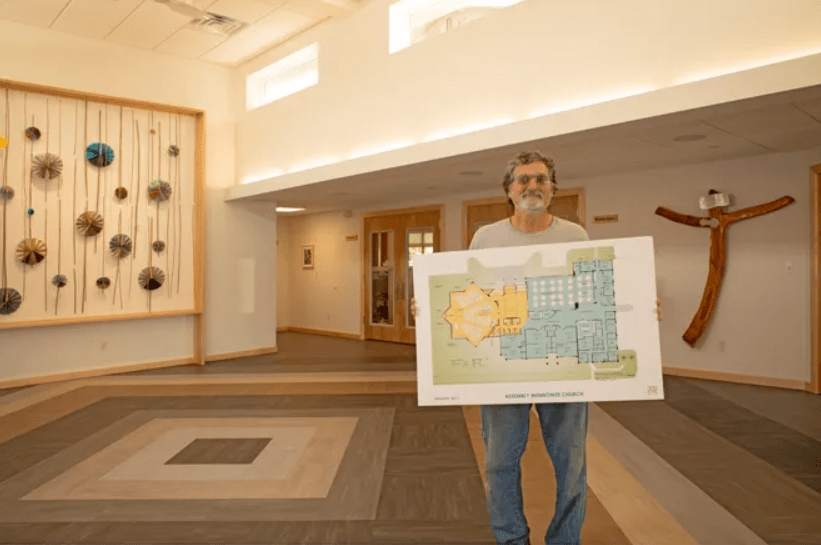
    In 2019, Assembly Mennonite Church in Goshen, IN completed a building expansion project to meet the needs of their growing congregation. Early in the project, the congregation decided to tithe a portion of the funds being spent on the project to JoinHands, a program of Mennonite Men that assists congregations build or buy their first place of worship.


    ‘We feel it’s the right thing to do, for more established congregations to help the newer ones,’ said Steve Thomas, U.S. Coordinator for Mennonite Men. As a result, the tithe benefited Mara Christian Church, a growing congregation composed mostly of people who moved to the U.S. from Myanmar (formerly Burma), now owns the church building it had rented. The JoinHands grant the church received made that transformation possible.


    Members of the North Carolina congregation are ‘thinking about their lives as people of God. The spiritual vitality there is good for others to see,’ Thomas said. He added that Mara Christian Church members invested a good deal of ‘sweat equity’ in renovating the church building it purchased. Those who receive JoinHands grants ‘often are people without a history of power and privilege,’ Thomas said. ‘Often, they’re people coming from a situation of real need.’

    Assembly Mennonite made the decision to think beyond themselves during the building project out of their understanding of financial stewardship. The congregation had earlier received a church loan from Everence that was aimed at aiding younger churches, so members of the congregation felt it important to pass on that benefit now that their congregation had reached a level of maturity.


    Mennonite Men invites other established congregations to consider sharing a portion of building project expenses with newer congregations through the JoinHands program. More details can be found at https://mennonitemen.org/joinhands.


  • Two international church-building grants approved

    Two international church-building grants approved


    At its March meeting the board of Mennonite Men approved two international grants for applicants to the JoinHands program, which assists new congregations aquire their first church building. The two grants were awarded to congregations in Angola and the Democratic Republic of Congo.
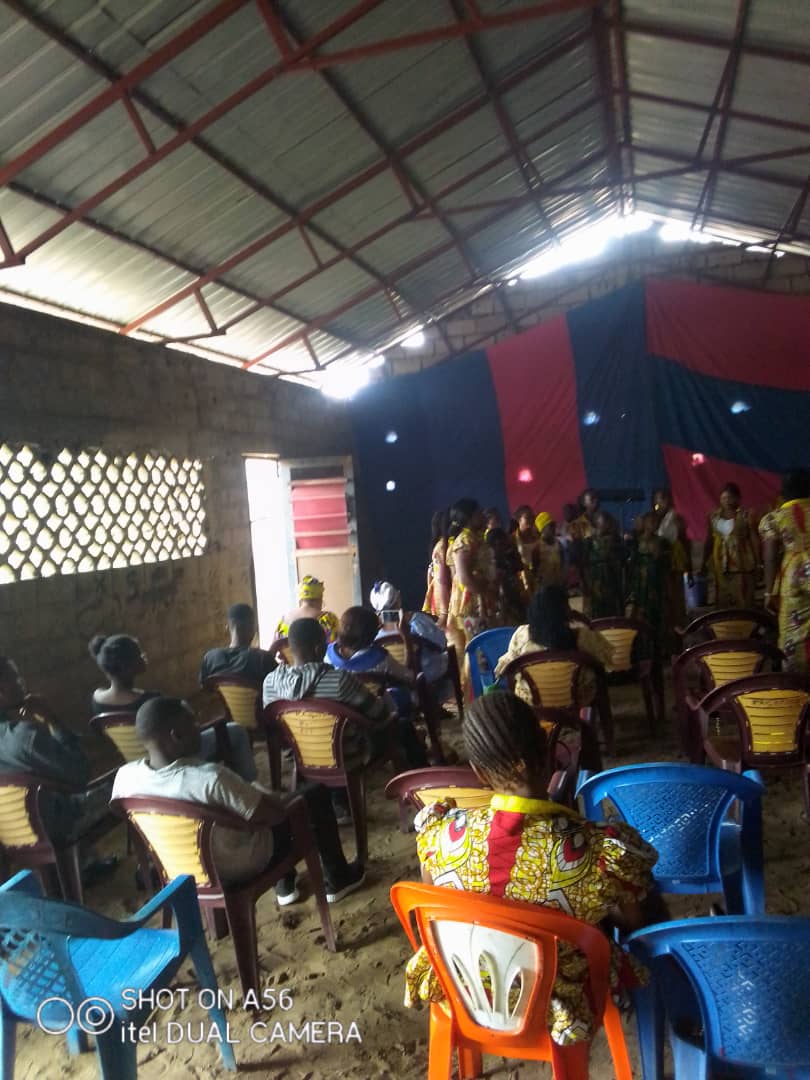
    Fundraising for the two projects, with a combined cost of $14,000, will begin this summer. Contributions of $10,000 will assist the congregation in Angola construct a roof for their unfinished building (pictured). This group currently meets inside their church walls under a temporary roof.

    $4,000 will complete the construction of a church building in Kinshasa DR Congo. Members of the congregation in Kinshasa continue to meet for worship in an airport hangar until they complete their building.

    Mennonite Men continues to raise funds for the grant approved in 2021 for Hmong Mennonite Church in Westminster Colorado. Approved grants are awarded to congregational projects once the full amount has been raised. For more information on contributing to or applying for a JoinHands grant, visit mennonitemen.org/joinhands