By Steve Thomas
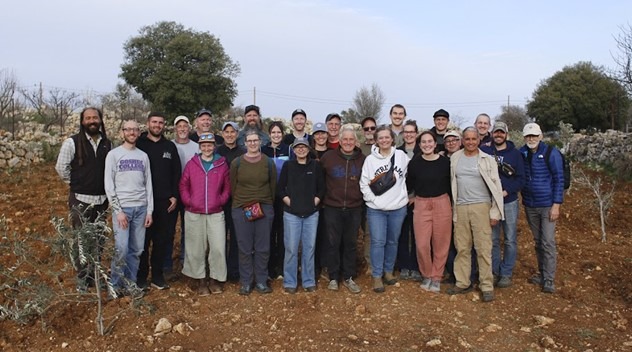
We’re back from Palestine and Israel – just eight days before the US bombed Iran. From February 2–20, a delegation of 25 people from the U.S. and Canada traveled to the region as a learning, peace, and tree planting mission. This trip was a joint initiative of Mennonite Men and the Mennonite Palestine-Israel Network (MennoPIN) with three Mennonite Action staff.
Before we left, someone asked me: “What will you actually do, and what good can it possibly do?”
I told them that, among other things, we were going to plant trees and plant for peace. It sounded small, given the scale of the conflict. But after spending 18 days seeing various sites, listening to Palestinians, and planting with farmers, I have a better answer.
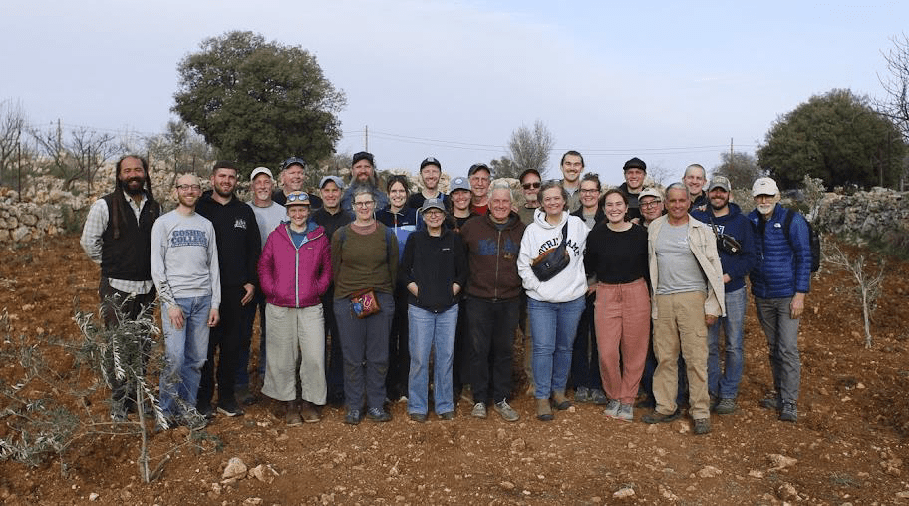
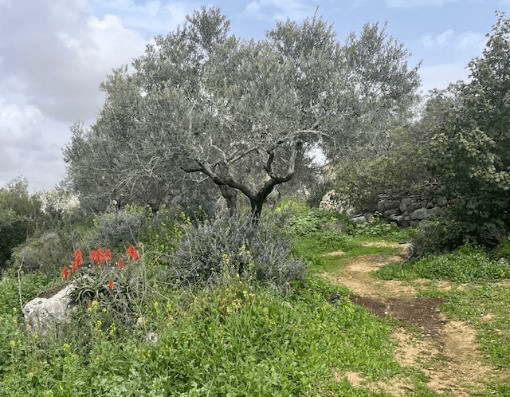
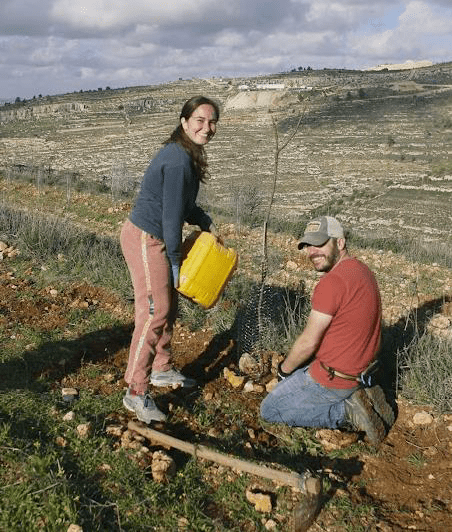
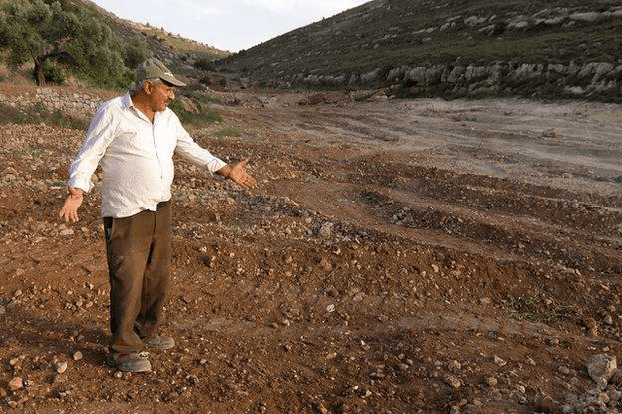
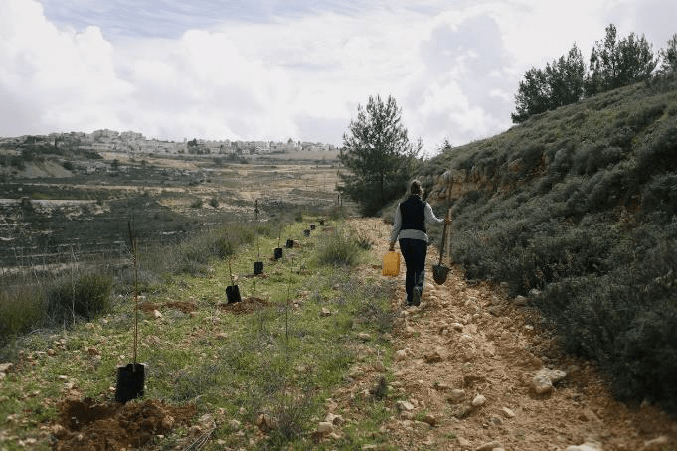
Top left credit Holly Harris, top middle credit Steve Thomas, top right credit Steve Thomas, bottom right credit Holly Harris, bottom left credit Daniel Silas Adamson (Standing in his lost orchard at Tent of Nations, Daher Nassar points out the scarred earth where the military bulldozed 1,500 of their trees)
Identity of the Land
In Palestine, an olive tree isn’t just agriculture; it’s an ancestor. Some of these trees have been tended by the same families for over 1,000 years. They are the backbone of the economy and the heart of Palestinian identity. Yet, over a million of these trees have been destroyed by Israeli forces: a calculated move to strike at Palestinians don’t replant or they leave, Israel can claim “empty land” as state land.)
We planted trees at Tent of Nations and Sarras Farm. As followers of Jesus, these families are committed to nonviolent resistance, yet they live under the constant shadow of demolition orders or having their land confiscated. In the West Bank Israelis destroy Palestinian homes and infrastructure and then require residents to pay for the bulldozer work. Since 1967, Israel has confiscated more than 750,000 acres of land from the 1.5 million acres comprising the West Bank and Gaza and the rate of current land theft is increasing.
More Than Just Saplings
So, what good did we do? As we planted trees and listened to Palestinians, we realized the “good” wasn’t just in the soil—it was in the solidarity.
- Supportive Solidarity: Palestinians enduring the hardships of Israel’s occupation reported feeling “seen” and supported by our presence, sharing that our solidarity provided encouragement amid pervasive violence and insecurity. They expressed gratitude knowing that some Americans oppose U.S. military support for Israel’s actions. While we offered solidarity, we were moved by the Palestinians’ profound hospitality, loving spirit, and resilient resistance to oppression. Their example of nonviolent love in the face of violence offered us a powerful lesson.
- A Protective Presence: An international group of observers with cell phones can have a deterrent effect. In one remote Bedouin village surrounded by hostile Israeli settlements, children stay inside for safety. When our international group arrived, the atmosphere shifted. For two hours, the children came out to play in the sun, safe because “outsiders” were watching.
- Economic Lifeblood: With tourism gutted by the war, we were often the only customers in Palestinian shops and restaurants. Between tree contributions and local spending, our group injected over $80,000 (including a $15,000 grant from Schowalter Foundation) into a suffocating economy. For example, we bought art from a woman in a refugee camp whose daughter had been killed by a tear gas canister shot into their home by Israeli soldiers. That money wasn’t just a transaction. It was a lifeline.
- Holding the Ground: Under local law, “empty” land is far easier to confiscate. By helping the Nassar and Sarras families plant their open terraces, we helped them claim their right to stay. We also left behind $14,000 for other Palestinian farmers to continue this work long after we departed.
The Lesson of the Olive Tree
We went to provide support. While we encouraged them, they inspired us: we witnessed them following the way of Jesus’ nonviolent love in a world of staggering violence and oppression. Read more about this in next month’s issue of Engage.
We’re back now, but we aren’t the same. We went to “come and see,” and now we “go and tell.” Our group of 25 has returned as witnesses, joining a growing chorus of voices demanding a stop to violence and oppression and calling for justice and peace.
What good can we do? We can refuse to let our neighbors be invisible. We can plant a tree today so someone else can eat tomorrow. And we can stand in the gap until the bulldozers stop.
For more information and inspiration…
Video of Tent of Nations refusing to be enemies Video of Tent of Nations
Video of settler attacks on Palestinian farmers and their olive trees Video of singing at Sarras Farm
Testimony of lawyer for Tent of Nations
Planting trees and working for peace in Palestine Tree planting as resistance
Video of Sarras Farm hosting tourists to fend off settlements