
Tag: Stories

  • Why Trees?

    Why Trees?

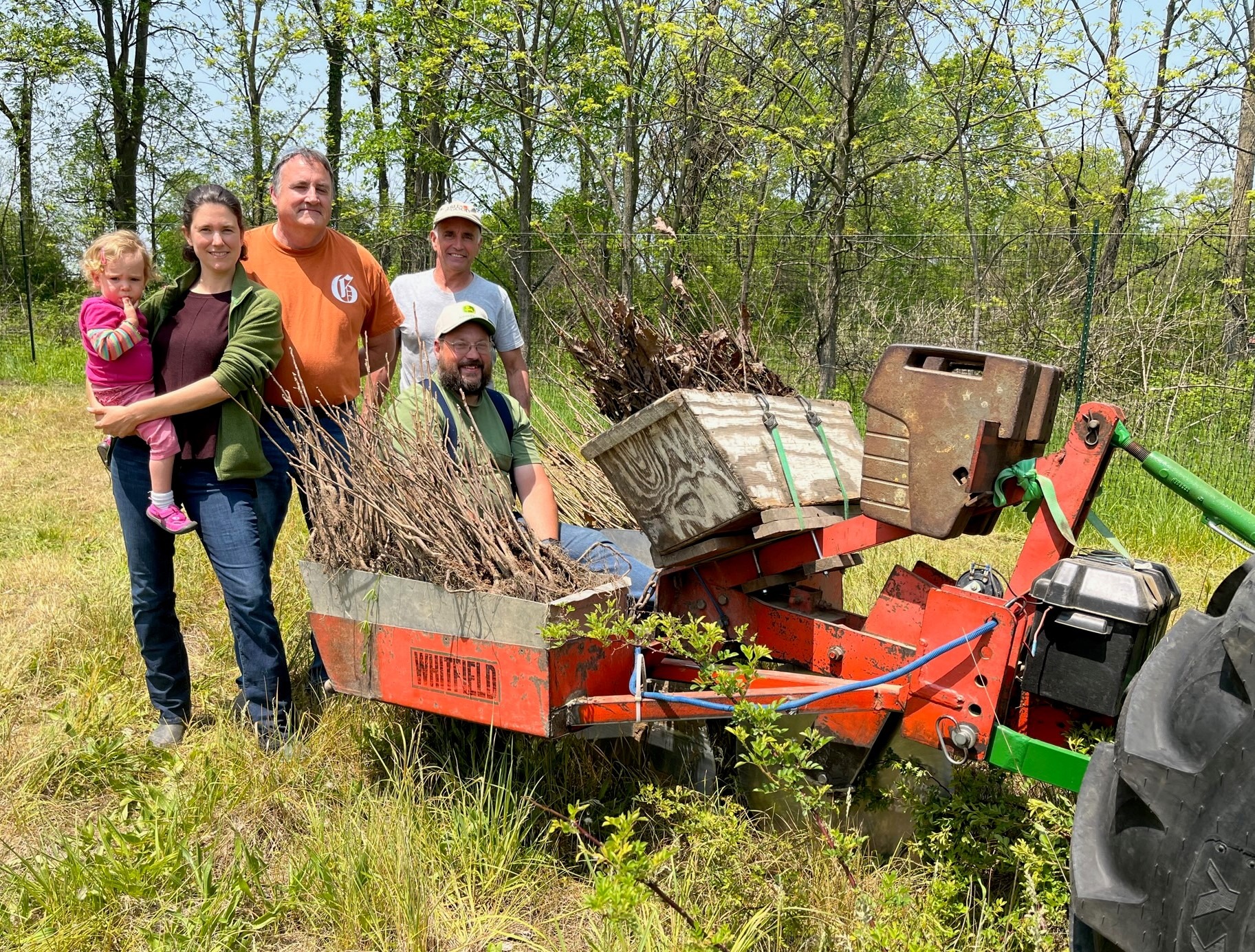
    In the spring of 2023, my spouse Anna Ruth Hershberger and I planted 6500 trees on the north side of Goshen Indiana. A JoinTrees grant from Mennonite Men helped with purchasing and planting these native seedlings. After our tree planting it did not rain for 3 weeks and the temperature hit 90 degrees many days during that time period. Talk about stress.

    We were blessed to have a faith community, friends and family during this time. Clay Bottom Farms let us borrow their tractor. A good friend lent us a trailer which we could load a 300 gallon tote of water on. Five evenings a week we watered. Volunteers from our church’s youth group, a next door neighbor, family, friends, ages ranging from 8 years old to 79 all helping us. Thanks to this group and Steve Thomas, who I consider to be my tree mentor, the tree seedlings made it through the drought with 90+ percent of them surviving.

    Photo: Anna Ruth Hershberger and Darren Miller and daughter Iona, Steve Thomas with Mennonite Men, and forester Michael Denman.

    When I was a teenager growing up on a farm in central Illinois my father’s hobby for those years seemed to be planting trees. Our family planted trees on our farm, at church, at a cemetery and at the local elementary school where my father served on the board. My job was to water them week after week after week. Did I enjoy this job? Not really. At this stage of life I wanted to get done as soon as possible and sneak away to play baseball. However watering and working with trees as a youth did plant a seed in me that grew into a love for nature and a love for planting trees as an adult.

    My professional career for the last 30 plus years has been supplying stains and varnishes to the cabinet and furniture industry. I worked closely with Amish communities mainly in Indiana but also in Ohio, Pennsylvania and Illinois. People often ask, ‘Can you build furniture?’ The answer is no. I cannot build it, but I can make it look beautiful. However, to build beautiful furniture, trees need to be cut down for lumber to make furniture. This industry has provided me with a weekly paycheck for many years.

    One of my favorite Psalms is 24.1. It starts with, ‘The earth is the Lord’s and all that is in it’. For me these words are powerful and need respect. I believe a responsibility of mine as a Christian is to help care for God’s creation and not just take from it. Try to leave it the same or a little nicer for the next generation. It only seems right to me to plant trees and help replace at least a part of all the trees that I have supplied stain and finish for over the years.

    My family is another reason I am planting trees. Anna Ruth has worked with Anabaptist Climate Collaborative and caring for the environment is important to her. Through her and by watching how she loves and cares for the earth has rubbed off on my life. I also have two daughters who I want to pass on a love of nature to.

    Why plant trees now? For some it may be climate change. For others from the furniture industry it may be to have lumber for their children to have future cabinet shops. I have Amish friends who have converted 50 and 60 acres of agricultural land into natural habitat for deer hunting. For me, I plant trees to care for God’s creation. The reason doesn’t really matter, as long as people are planting more trees. If anyone has interest in planting trees contact Mennonite Men and help them reach their goal of planting 1,000,000 trees by 2030.


  • Guys Growing Through Gaming

    Guys Growing Through Gaming

    ‘There are good ships and wood ships, and there are ships that sail the sea,
    but the best ships are friendships, and may they always be.’ – Irish Toast


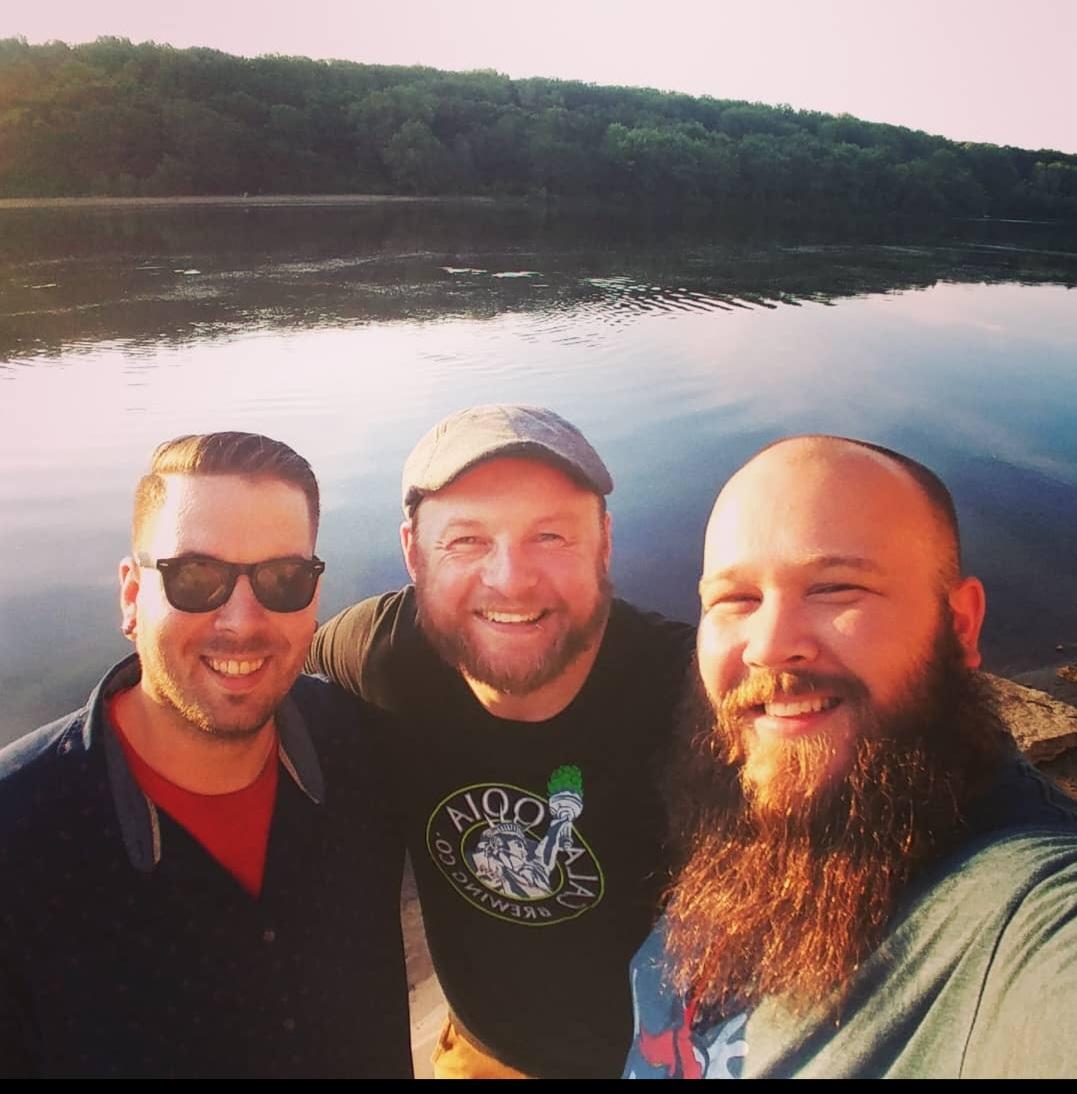
    What does every journey require? A crew. A team with a shared sense of purpose and trust. A group of people you can trust enough to show vulnerability in order to be held accountable. In working with boys and men, I see them struggling with finding their crew. Historically this crew would be found in church, on an athletic team, or maybe through work. As society has evolved, so have the places in which boys and men find their crews. Looking for friends to connect and develop meaningful relationships with other men. I am proud to say I found my crew in Kevin (aka KK, pictured left) and Brandon (pictured right). This is our story of how we have remained connected for over 10 years, adapting to the pandemic by using video games as a tool to regularly check in, encourage one another, and hold each other accountable.


    Our origin story, according to KK:

    ‘Three friends met and reconnected serendipitously amidst major life changes. We have remained friends for more than 10 years and have seen one another through career changes, devastating breakups, and difficult divorces. We have helped one another grieve and celebrate, and we’ve never done it perfectly which is why we’ve lasted this long.’

    The three of us met while I was living in Oregon. Brandon and I met working with homeless youth. KK and I met through a mutual friend. In 2019 Brandon and KK graciously agreed to join me on a life changing journey to return to the Midwest. Not many friends would give up a week of their summers on a 2000+ mile road trip to Indiana, of all places. KK wasn’t even for sure coming until the last possible moment and he always reminds us, ‘I put my own job on the line.’ As he only got his shifts covered the morning we left.

    Long story short, we made it to Indiana, but of course the journey came to an end and they both returned home to Oregon. Less than a year later we found ourselves amidst a ‘2 week global shut down’. Reconnecting over Zoom, laughing became crucial to overcome the uncertainty and loneliness, and we discovered that checking in with one another helped. So in April of 2020, when the shutdown moved from a short break to indefinitely we each decided to buy an Xbox and began playing weekly. Now the point was never about excelling past a mediocre skill level, and I’m proud to say that in just over 4 years, with hundreds of hours of playing together, we have remained true to that commitment.

    The point was always to remain connected and be a lifeline for one another. On any given week no topic is off limits – from politics, terrible dad jokes, and new hobbies we either started or wanted to start. To what came out during our recent therapy sessions or how our medication is affecting us. In those 4+ years we have only missed a few weeks of killing zombies and losing to 12 year olds. So if you’re of the mindset that video games are solely for kids and immature adults, I will let Brandon explain why we do it:


    ‘Playing video games is just an activity to keep our hands busy and engage in something together. We use gaming to have a shared purpose and to practice teamwork. Win or lose, we do it together. I think it continues to work because we sincerely want to be better versions of ourselves. Talking freely, calling each other out, asking for help, and sharing what we have learned for ourselves in hopes that it might help someone out. Knowing that we are on the same page when it comes to destigmatizing mental health is critical in building that sense of trust with one another.’


    Men tend to communicate with one another ‘side to side’ by ‘participating’ in shared passive activities – like watching sports or fishing for example. These often result in shallow relationships involving no sense of intimacy. Yes I said intimacy, because I believe that is what men are actually seeking in partners and friends, but those same gender norms have led us to understand intimate as strictly romantic or sexual. Intimacy to me means being truly seen and heard by someone else, without fear of judgment or ostracization. Outdated gender norms have placed restrictions on the ways in which men are allowed to communicate with each other, so it is important that all forms be accepted so long as they involve that desire for intimacy.


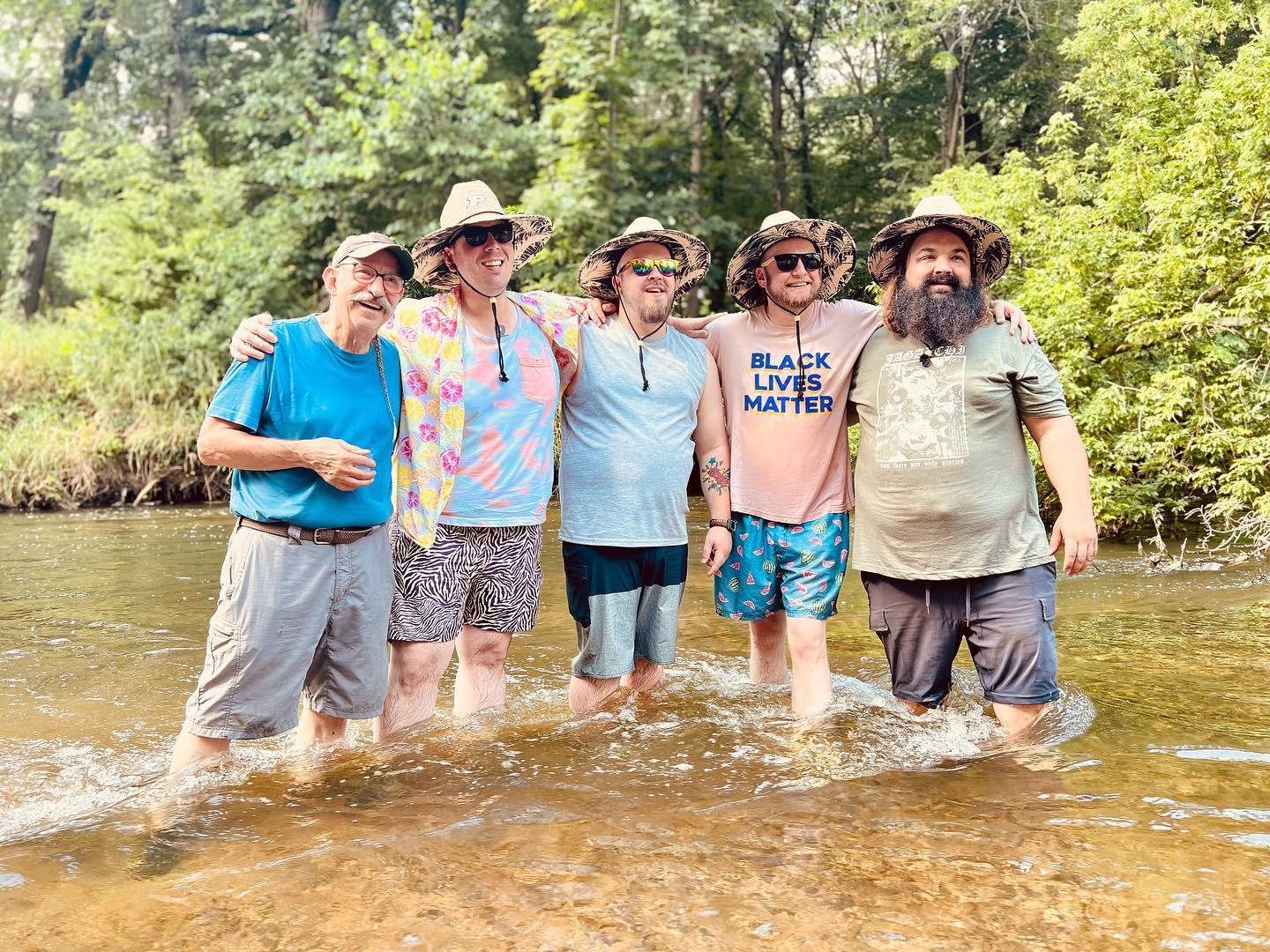
    That original trip also introduced them to new crew members – Brent (yellow sunglasses) and Scott (far right in the river). While Brent is not much of a gamer, his brother Scott wanted to be and he was also seeking connection and the support of male friends. The only issue was the cost of a new Xbox, so we agreed to pitch in and help. Thus our team of 3 weekly gamers became 4, and we continue to play (albeit at a mediocre skill level). KK points out:

    ‘This weekly game night continues to allow us to open up and to be vulnerable with one another. This has helped me avoid isolating myself when it has felt so tempting. These guys have been there for me through all of it, and I am fortunate enough to have them in my life to look up to and to help me strive to be a better person. Without any shame I am proud to say I love them and I know they feel the same for me. It’s important for men to have healthy connections where they can communicate and open up about their feelings.’

    Thanks to that first trip in 2019, we have spent a week together each summer, building on the intimacy we curate each week. We really are a crew, there to support one another through the journey. I feel out of sorts the whole week and recognize how important our relationship is to my mental health and general well being.


  • Sharing Spaces: Walnut Hill’s Legacy of Hospitality

    Sharing Spaces: Walnut Hill’s Legacy of Hospitality


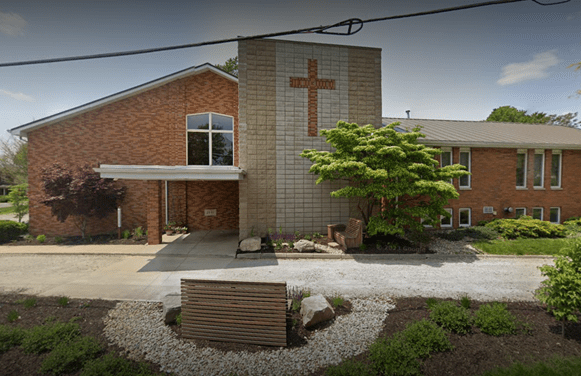
    In 1956, Walnut Mennonite Church in Goshen, Indiana was a brand-new church plant born from North Goshen Mennonite Church. 33 years later, after a fire destroyed part of its building, North Goshen welcomed Walnut Hill back into their space, for free, for two years until reconstruction was complete. Area congregations with Indiana-Michigan Mennonite Conference also helped Walnut Hill rebuild after its crisis with their generous financial support.

    These were gifts that Walnut Hill never forgot, and ones which they determined to pass along when they could.


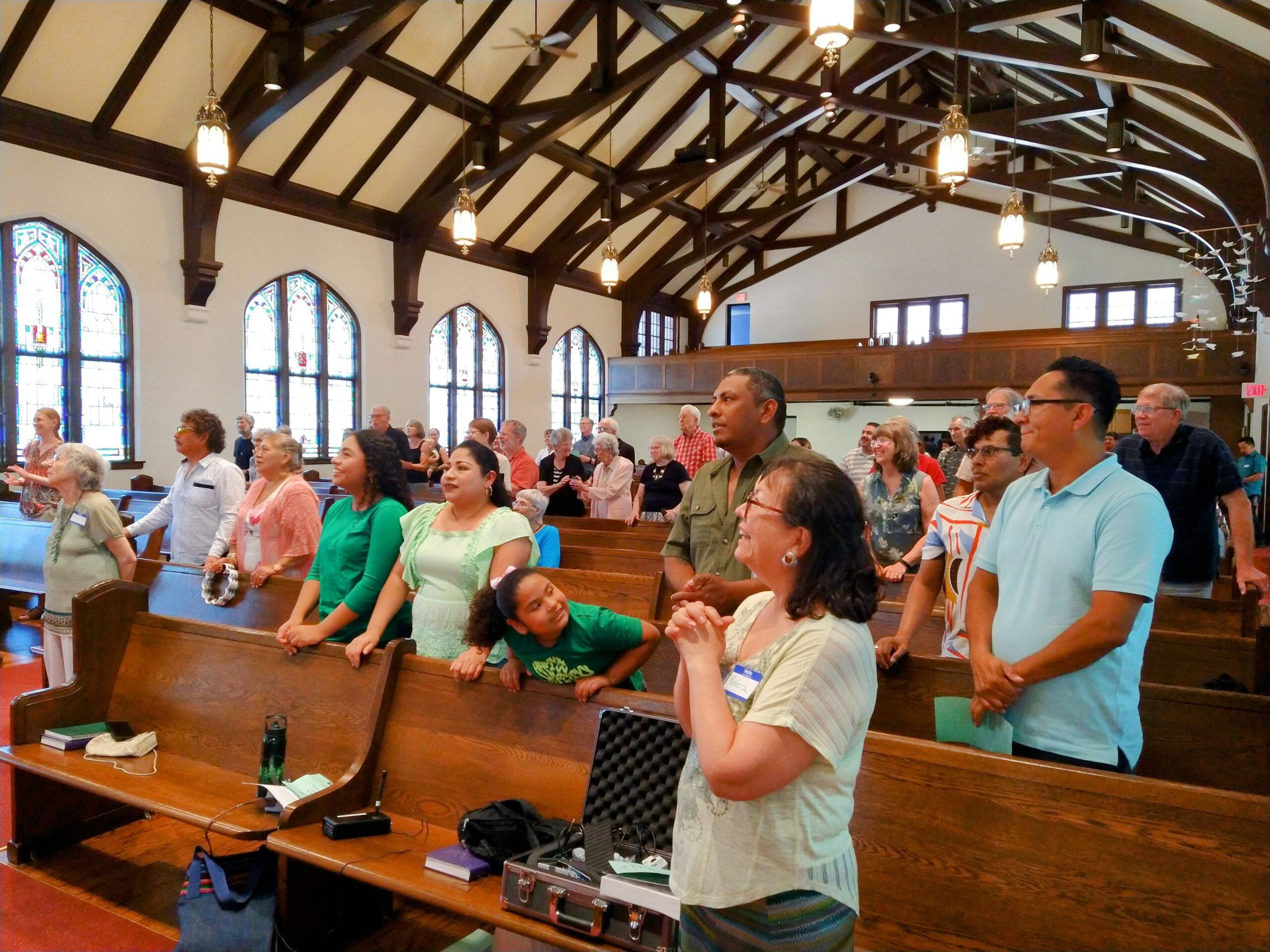
    Over the years, Walnut Hill has hosted various groups including crafting groups, Al Anon, Alcoholics Anonymous, and Music Together, and more recently Jail Ministry of Elkhart County and the Repair Network (Mennonite churches connected to the Coalition to Dismantle the Doctrine of Discovery). Then in 2021, it opened its doors to another congregation. A small, Latinx church—the Goshen Seventh Day Adventist Church, was seeking a space to meet. With little hesitation, in large part due to how North Goshen had treated them, Walnut Hill became the home for the Goshen Seventh Day Adventist church.

    The arrangement worked quite well, so well in fact, that in 2024, when Goshen Haitian Church needed a place to meet, Walnut Hill was ready to welcome them into their space, too. And none of the groups or churches using Walnut Hill’s space is ever charged a fee. This is Walnut Hill’s way of paying forward the generosity it received. The actual building costs are kept low by using solar panels and other energy-efficient features.


    Scheduling-wise, it’s worked well as one meets on Saturday and the other on Sunday afternoon while Walnut Hill meets on Sunday morning. And the congregations are slowly getting to know each other, which benefits Walnut Hill as they are a largely homogeneous congregation. Not only does it allow Walnut Hill a way of growing community with two racially marginalized groups in the local community, but it expands their understanding of the different denominations locally, too.


    Both the Latinx population in Goshen, and the growing Haitian community, face certain challenges that Walnut Hill is becoming more familiar with and seeks to minister to.


    It’s a mutually beneficial arrangement that Walnut Hill is glad to be part of.


  • Tree-plantings bring eco-joy to MDS homes

    Tree-plantings bring eco-joy to MDS homes


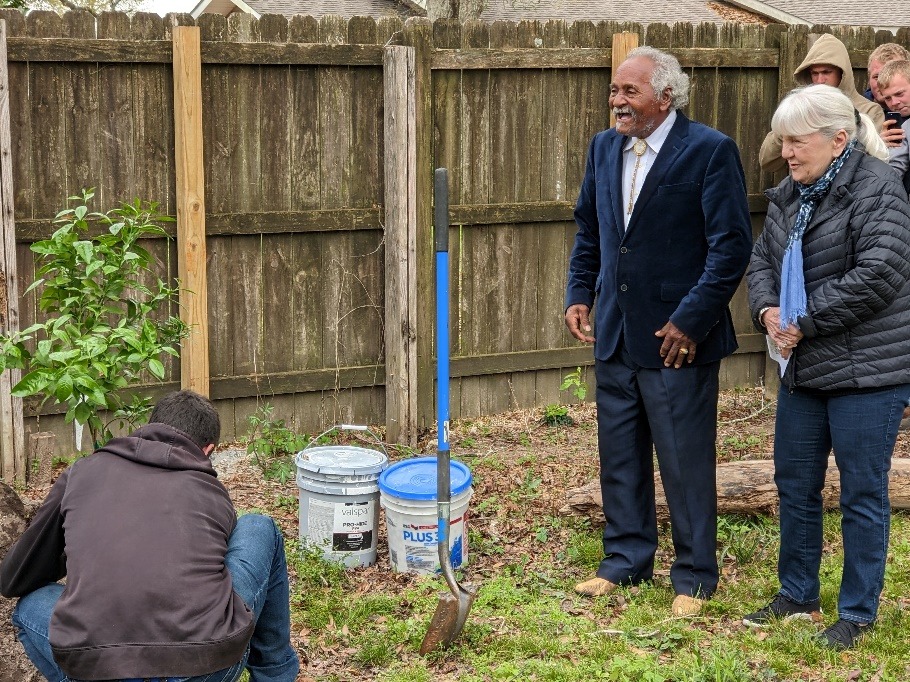
    As homeowner Wilford Miller watched a tree-planting ceremony in the yard of his home built by Mennonite Disaster Service (MDS) volunteers, his smile said it all.

    Miller, a resident of the town of Iowa, Louisiana, had spent month after month recovering from flooding that struck his home and ruined his property. In February, along with his new home, Miller received a young orange tree, planted by volunteers in his yard.

    The tree is the fruit of a partnership between MDS and Mennonite Men, who have agreed to purchase trees for homes newly built or repaired by MDS volunteers. This is one of eleven tree plantings Mennonite Men assisted with in the last year.

    ‘It’s delightful to see the joy this tree brings to the homeowner,’ said Steve Thomas, who coordinates the JoinTrees tree planting program for Mennonite Men.

    Karla Friesen, who coordinates the tree planting program for MDS, said she hopes to grow the effort even more. ‘We think this is a great way to help the communities replace damaged trees, enhance the home, and support the ecosystem after a disaster,’ she said.


  • Living a Life That Matters: Reflections from Goshen College Men’s Retreat

    Living a Life That Matters: Reflections from Goshen College Men’s Retreat


    In patriarchal culture males are not allowed simply to be who they are and to glory in their unique identity. Their value is always determined by what they do. In an anti patriarchal culture males do not have to prove their value and worth. They know from birth that simply being gives them value, the right to be cherished and loved.

    -bell hooks
    ‘The Will to Change: Men Masculinity and Love’


    How do we, as men, live a life that matters? More importantly, how do we set a good example for future generations on how to answer this question. A first step is to reflect on how a patriarchal society assigns value to us, and then taking it a step further to reflect on how it impacts the value we assign to ourselves. After 12 years and hundreds of hours of facilitating challenging conversations on this topic, I believe it is clear value is assigned based on what men can provide or produce. Which in and of itself is not wrong, just shortsighted. I would argue that the very patriarchal culture that overwhelmingly benefits men in our society, simultaneously uses the concept of the ‘man box’ to prevent us from showing up for ourselves. Unpacking this ‘man box’ has shown me a way to expand how men find their sense of value, and thus begin to really discover how they define what matters to them.

    Doing this work with college men comes with a lot of barriers so I began reflecting on ways to overcome them. I realized that my male colleagues and I had not taken the opportunity to do this work together in order to better role model the lessons we were trying to get across. Thus I began looking for other resources to help us in doing that, and luckily I had become familiar with Menno Men a couple of years ago. I reached out and Steve Thomas was more than willing to develop a small retreat just for us.

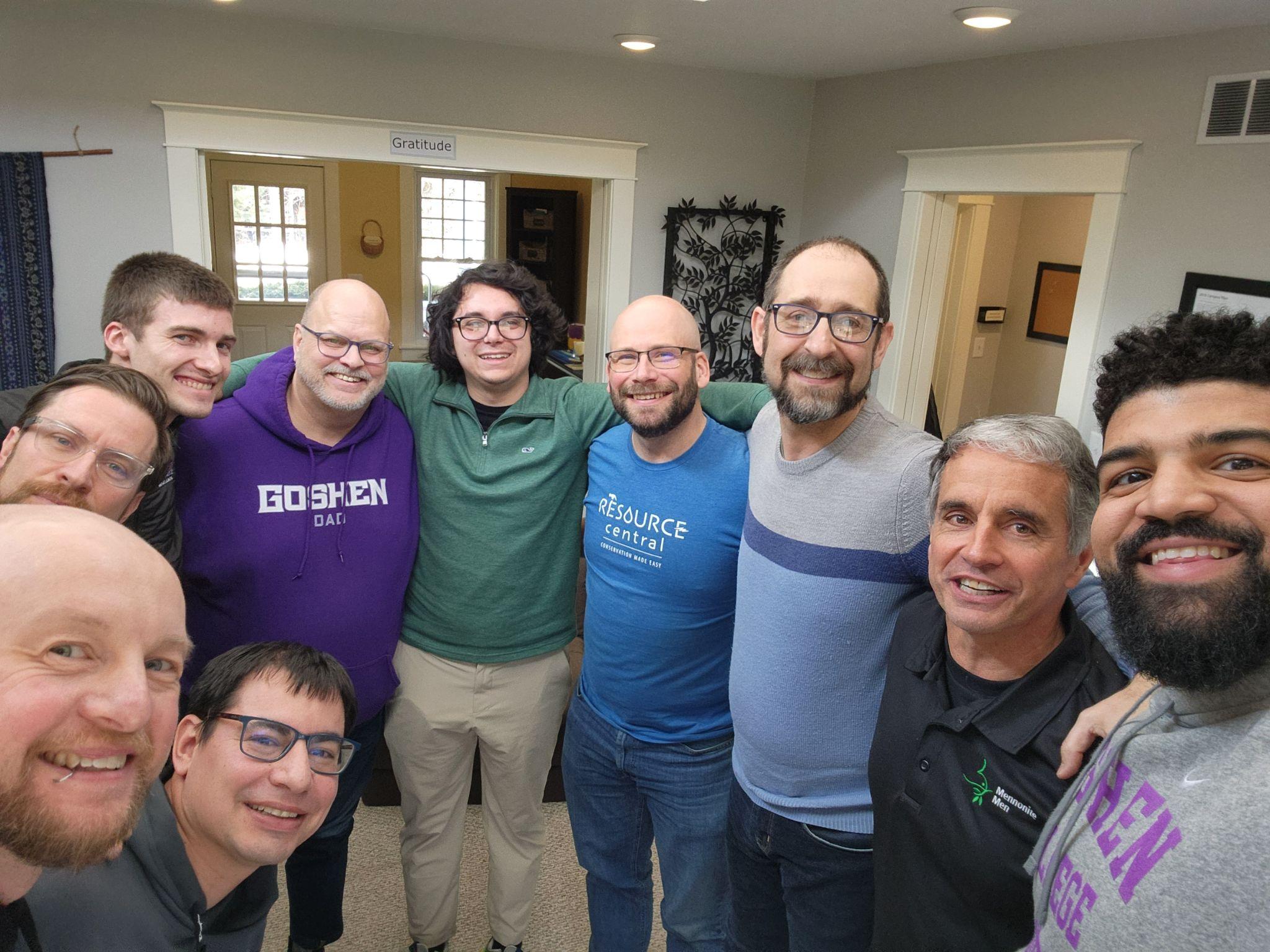
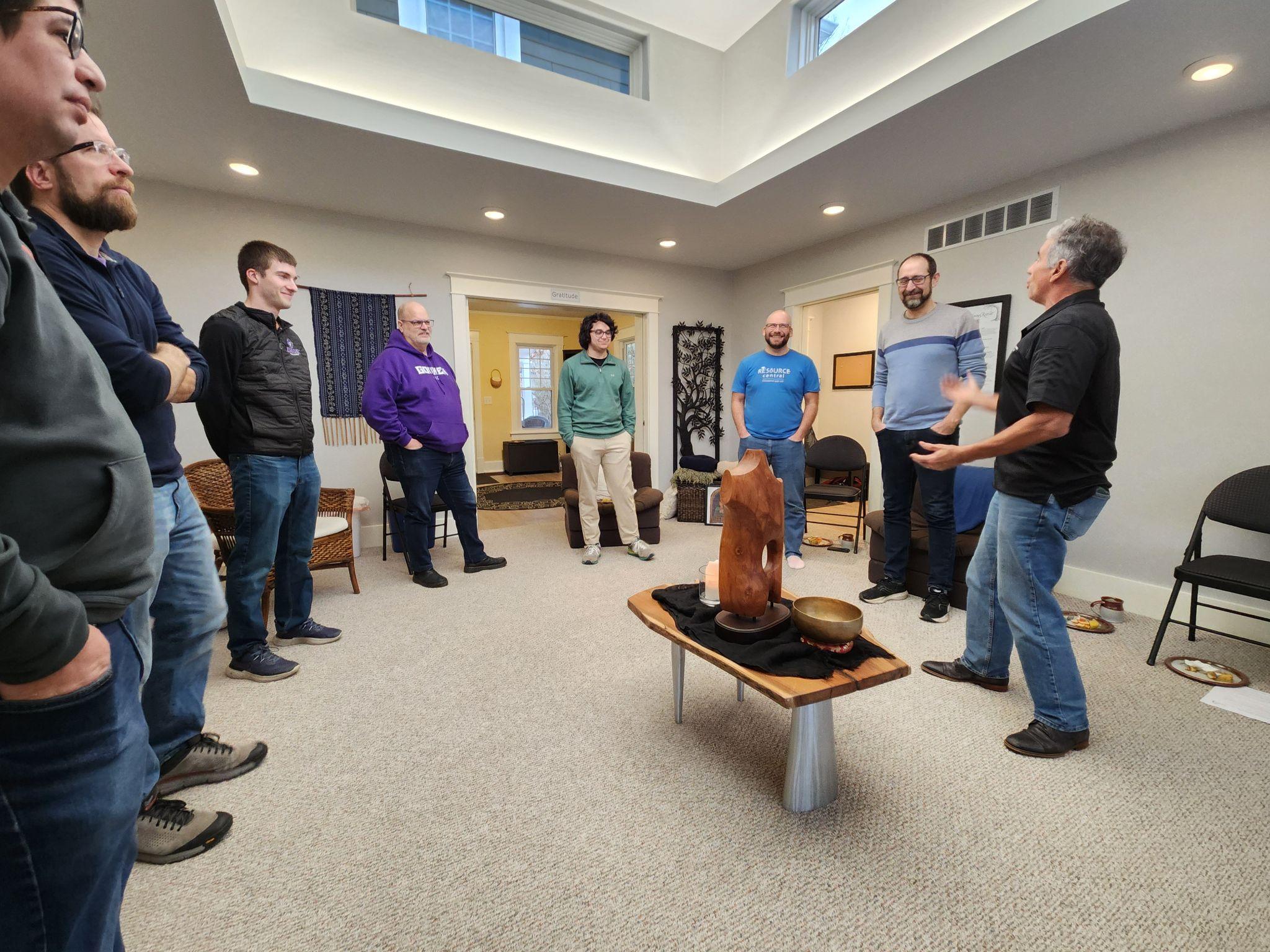
    Steve and I spent some time shaping an existing workshop to help us answer the question, ‘How does one live a life that matters?’ We spent the Saturday morning unpacking our own man boxes and envisioning how our campus could better support our students in this regard. The conversation was both challenging and supportive. It is important to acknowledge that we did not walk away with ‘the’ answer, as this work is never ending and always evolving.

    We all recognized this was not the end of the conversation as there are countless intersectional facets of the ‘man box’ to unpack, race being one. Jesse shared how that informed his decision to attend:

    ‘During our discussion, I had some questions about how men, especially men of color, are impacted (or not) by this work. I usually find myself surrounded by white men, Mennonites, or Latino/Hispanic individuals, so I wanted to gain insight into their perspectives on our current world, as well as their struggles and triumphs men face.’

    This gathering took place on February 3rd, 2024 at the Pathways Retreat Center in Goshen, and we are looking forward to continuing them on a semi-regular basis. This work is hard, but the immeasurable support of Steve Thomas, Pathways Retreat, and Mennonite Men makes it so much easier.


  • Shared Spaces, Shared Hearts: Casa Betania in Newton

    Shared Spaces, Shared Hearts: Casa Betania in Newton

    There had long been a desire for a Hispanic Mennonite Church in Newton, Kansas. Finally, in March 2008, four Hispanic Mennonite women started leading services, while Western District Conference (WDC) helped search for a church planter. In June, Jaime Cazares arrived in Newton with his wife Suhelen. Several WDC Newton churches helped with financial support during the first years. First Mennonite Church of Newton offered a recently purchased house next to the church as a place for the new church to gather throughout the week. Children and youth of Casa Betania were welcomed into First Mennonite’s programs. When the church outgrew the living room, First Mennonite offered a large double classroom on the lower level, for the church’s Sunday gatherings. Eventually, Casa Betania requested using the sanctuary for their worship service, and moved their service time to Sunday afternoon.

    Throughout this time, First Mennonite’s spacious kitchen has been utilized by Casa Betania for meals and celebrations, as well as for making tamales and burritos for fundraisers. At times Casa Betania has prepared fundraising meals and served Wednesday night meals for both congregations. The intersection has been much more than facilities. The Wednesday meals and activities provide a time of interaction together. Early on, a few First Mennonite members with Spanish capability began participating regularly in Casa Betania. Linda Shelly, Latin America Director for Mennonite Mission Network, worships with both congregations and is available for simultaneous interpretation into English for non-Spanish speaking friends of Casa Betania. First Mennonite has included Casa Betania children and youth in scholarship programs for Camp Mennoscah and Mennonite colleges. And some of the youth have participated in First Mennonite’s youth group and mission trips. Both youth and adults have joined together in MDS trips. Occasionally, the two congregations have a joint worship service meeting either in the afternoon or the morning.


    Both congregations consider it a blessing to share space and get to know brothers and sisters of different cultures.


  • Houston congregation realizes its dream of owning a building

    Houston congregation realizes its dream of owning a building


    In March, 2024, the board of Mennonite Men approved a $40,000 JoinHands grant for the Chin Emmanuel congregation in Houston, Texas. The congregation recently shared this background and note of thanks to JoinHands supporters.

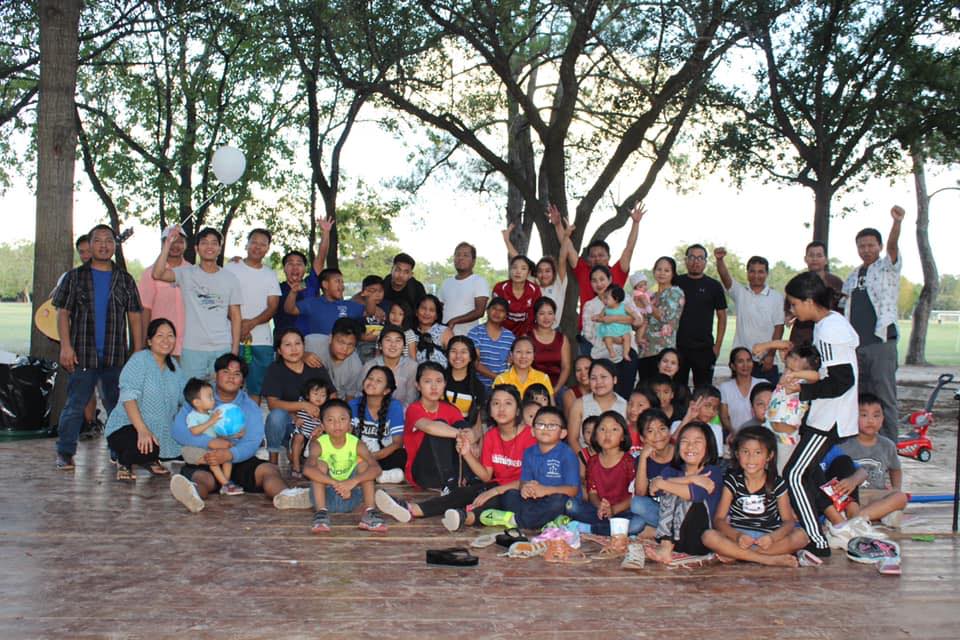
    ‘Chin Emmanuel Baptist Church was founded in February 12, 2012 in Houston, Texas by refugees from the Chin community in Myanmar, fleeing from ethnic and religious persecution.

    Pastor Simon Tlumang brought together a small group, which soon grew into a flourishing congregation of more than 200 people.

    In 2013, looking for a denominational home, Chin Emmanuel Baptist Church joined the Western District Conference and Mennonite Church USA because of theological and personal connections with the Mennonites. Chin Emmanuel Baptist Church has been a regular participant in the Texas MCC Sale, Western District Conference, and other denominational ministries since they found a Mennonite home.

    After years working as a community to help refugees settle, establish roots in their new community, care for children growing up in a new culture, and find ways to fit into the American economy, in 2023 Chin Emmanuel Baptist Church decided it was rooted enough to purchase a church building together.

    All the members and pastor Simon Tlumang appreciate Mennonite Men’s help in making this dream of a church home a reality.’


    This young Houston congregation, like the Chin community in Omaha which recently recieved a JoinHands grant, was founded by refugees from the Chin community in Myanmar fleeing from ethnic and religious persecution, and has found a home in Mennonite Church USA. Flourishing with more than 200 people, this Chin congregation is helping refugee families adjust to life in a new land and foreign culture.

    They found a former church building in need of renovation that will meet their needs for worship services and community ministry. We now need to raise funds to make this $40,000 grant.


  • MC USA files new amicus brief in support of Apache-Stronghold

    MC USA files new amicus brief in support of Apache-Stronghold


    The Mennonite Church USA Executive Board and MC USA’s Pacific Southwest Mennonite Conference filed an amicus brief on April 25, 2024, in support of Apache-Stronghold’s petition for a new full-court hearing on the potential destruction of Oak Flat, a sacred Indigenous site in Arizona.

    Mennonite Men along with 18 additional churches and organizations also signed on as amici curiae, or friends of the court, including Mennonite Mission Network and numerous MC USA-affiliated congregations.

    Oak Flat is a sacred Indigenous site known to Apaches as Chi’chil Bildagoteel. It has been at the heart of a 20-year struggle by Apache and other Southwestern Indigenous peoples to prevent the federally owned site from being given to Resolution Copper, a Phoenix-based affiliate of British-Australian mining companies, Rio Tinto and BHP Billiton, for a new copper mine.

    In March 2024, a rare “en banc” panel of 11 judges from the Ninth Circuit Court of Appeals ruled in Apache-Stronghold v. United States that the federal government can transfer the sacred Oak Flat site to Resolution Copper. Apache-Stronghold, a non-profit Apache-led organization, appealed the decision and petitioned the court, arguing that “the en banc court got it wrong and that this error warrants a full court review.”

    The amicus brief supports Apache-Stronghold’s position as a right to religious freedom under the Religious Freedom Restoration Act of 1993 (RFRA). It draws from a previous amicus brief that was filed on behalf of MC USA and the Pacific Southwest Mennonite Conference in 2023. The new brief, however, focuses on the court’s expressed concern that ruling for the Apache-Stronghold would create a “slippery slope” for future RFRA claims about federal land, according to Eric N. Kniffin of Kniffin Law PLLC, Colorado Springs, Colorado, who wrote the new brief.

    “In this case, the Apache have an unparalleled historical connection to Oak Flat … and the government act they challenge would unquestionably destroy this sacred site,” writes Kniffin in the brief. “These characteristics are relevant to the RFRA analysis and would help courts, in appropriate cases, distinguish between the Apache’s RFRA claim here and other religious groups seeking access to federal land.” He notes that the Western Apache have been making pilgrimages to this spot since before the Mennonite tradition was founded in Switzerland in 1525 and even before William of Normandy invaded England in 1066.

    “Mennonites resonate with the Apache’s attachment to Oak Flat,” wrote Kniffin in the brief. “Like the Apache, caring for creation and receiving care from God’s natural world is woven into the Mennonite faith, from its heritage in rural farming to its practice of planting peace gardens at the sites of urban gun violence. Both traditions know God tends us through creation.”

    The brief also references the long support for Apache Stronghold offered by Mennonites who have ‘made the pilgrimage to Oak Flat to pray and learn – from the land and from Apache Stronghold.’ Several leaders of Mennonite Men attended a training offered by Community Peacemaker Teams and the Coalition to Dismantle the Doctrine of Discovery in 2023 and expect to be available for future presence and action in the region.


    Mennonite Church USA is an Anabaptist Christian denomination, founded in 2002 by the merger of the Mennonite Church and the General Conference Mennonite Church. Members of this historic peace church seek to follow Jesus by rejecting violence and resisting injustice. MC USA’s Renewed Commitments state the following shared commitments among its diverse body of believers: to follow Jesus, witness to God’s peace and experience the transformation of the Holy Spirit. Mennoniteusa.org

    Link for the amicus brief:
    https://www.mennoniteusa.org/wp-content/uploads/2024/05/Amicus-brief.pdf

  • Reba Place Fellowship Growing Communal Responses

    Reba Place Fellowship Growing Communal Responses


    Reba Place Fellowship (Evanston, IL), an intentional Christian Community in the Anabaptist tradition, has been sharing life and finances since 1957. Expenses such as utilities, fuel, public transportation are paid from our ‘common purse.’ These expenses are paid or reimbursed from a central bookkeeping office. While sharing our expenses, members in recent years have been looking for responses to environmental changes.

    Thus, a group of RPF members gather periodically for ‘Eco conversations.’ A goal of this group is to identify projects or actions the RPF community can take in response to climate change. Criteria for actions include identifying areas of focus (housing, energy use and production, soil conservation and food production, advocacy) as well as identifying actions implementable at different levels (individuals, small groups, the community as a whole, government policy). We see potential for an effective and measurable strategy for corporate action by partnering to plant trees.

    Hence, in the past year, RPF members developed a proposal to work with the JoinTrees initiative of Mennonite Men to offset our transportation emissions going forward. RPF members already record their fuel expenses, both as individuals and businesses. Research identified formulas for equating a) gallons of fuel purchased into b) gallons of fuel consumed to c) metric pounds of carbon emissions to d) carbon absorbed by mature trees to e) cost of planting new trees to f) estimated annual financial contributions to off set carbon emissions. As we discussed the proposal with our members, we developed a number of ways of calculating gallons of fuel purchased in order to accommodate the various preferences of how individuals do their recordkeeping. Even with agreement about corporate action, individual variety of habits need to be recognized and respected.

    This proposal focuses upon vehicle fuel consumption and airline travel. Our research determined that train transportation is highly efficient in regards to emissions attributable to individuals. Also, public local transportation seemed too difficult to systematically collect. Airline transportation, however, is a high-emissions form of transportation. Many airlines now publish CO2 emissions for individual trips at the time of ticket purchases. Otherwise, formulas are readily available to calculate airline emissions for trips based upon departure and destination information.

    Reba Place Fellowship chose to work with Mennonite Men for a number of reasons. One member researched a number of organizations engaged in tree planting. Mennonite Men proved to be more responsive, accessible, informative than larger and older organizations. Mennonite Men also engages in on-going sustainable forestry programs, recognizing the need for maintaining as well as planting trees, training foresters, and paying attention to the context in the selection of appropriate trees to plant. Additionally, Mennonite Men works with many world-wide partners that members of Reba Place Fellowship also are invested in. Hence, working with Mennonite Men leverages work in Latin America, the Democratic Republic of Congo, and Hungry World Farm in Tiskilwa, Illinois, in which members of RPF are already invested.

    While we recognize arbitrary judgments in our formulas of calculation, it is important that we develop tools which continually educate us about our individual and collective practices, and base our contributions to Mennonite Men on actual consumption. We not only want to offset our carbon emissions; we also want to change our ongoing patterns of consumption. We will continue to wrestle with what we contribute to ongoing ‘tree maintenance.’ More significantly, we recognize that while human-caused carbon emissions have been increasing since the start of the industrial revolution, the most rapid escalation of rate and total quantity of emissions has occurred in our own lifetimes, and that of our community. How, then, do we address previous carbon emissions we, ourselves, have contributed to the environment? Natural gas consumption emissions may be a next step for us to track and seek to offset.

    Hence, tools that track our actual consumption encourage changes of behavior, which, by God’s grace, may also lead to changes of heart, mind, and spirit. It is not in our capacity alone to stop global warming or heal the earth. Rather, through tangible repentance, we draw closer to God’s heart for shalom with the earth and our future generations. Prayerful action unites us with God at work in our world. This is our hope. May it be so!


  • The Road Ahead: Living That Matters for Men in Early and Middle Years

    Location:
    The Hermitage, 11321 Dutch Settlement Rd, Three Rivers, MI 49093

    Date:
    Friday November 8 and Saturday November 9, 2024. Friday dinner (silent) at 5:30pm optional, though official gathering starts at 6:30pm. Retreat ends at 4pm on Saturday.

    Cost:
    Suggested donation range of $120-150. (Includes room, meals, and Living that Matters: Honest Conversations for Men of Faith)

    Registration:
    See form below. Register by October 31. If you can’t register in time but want to see if there’s still space, contact Jon Zirkle directly at jonz@mennonitemen.org. Limited to the first 9 registrations. All overnight spaces are individual rooms, though cabins in the woods are available upon request (limit 2).