Tag: JoinMen

  • Malleable Men: A Mennonite Men Retreat at Camp Friedenswald

    By: Jon Zirkle

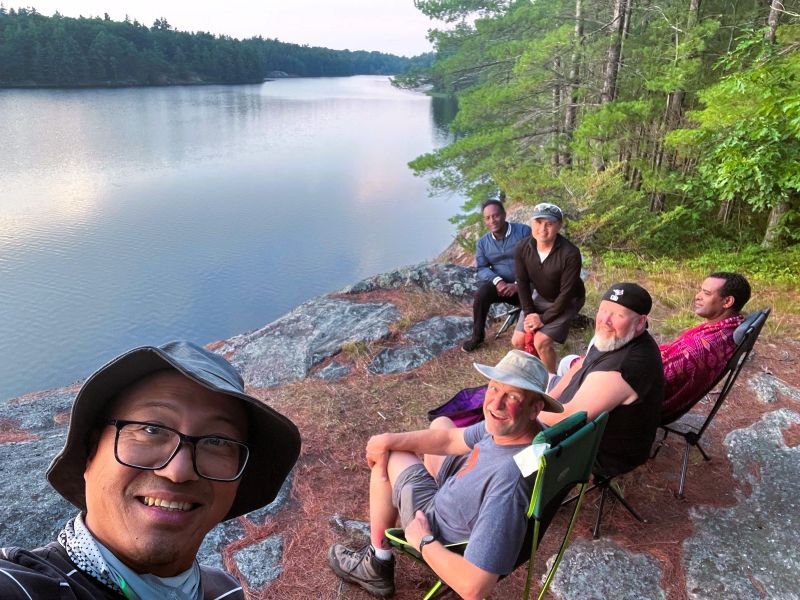
    On the first full weekend of March, twenty-eight men gathered at Camp Friedenswald in southern Michigan for a Mennonite Men retreat. The COVID-19 pandemic and other reasons had led to a pause in this annual retreat for several years, and many celebrated its return. Rarely, if ever, had this retreat been offered in the spring during the Lenten season. One never knows if early March in the Midwest could bring snowstorms, thunderstorms, or heavy rain, all capable of canceling a retreat. But despite a nearby tornado on Friday afternoon, weather did not cancel this long-anticipated gathering. Praise God!

    The theme, Becoming Malleable Men: Practicing Faith and Being Formed, was shaped largely by Mike Martin, Executive Director of RAWtools. Unfortunately, Mike came down with the flu days before and was unable to travel from Colorado. Nonetheless, gifted camp staff and his already-prepared content allowed the retreat to proceed, one where we truly practiced malleability together. All arrived safely, even those coming from as far as Wisconsin and Colorado.

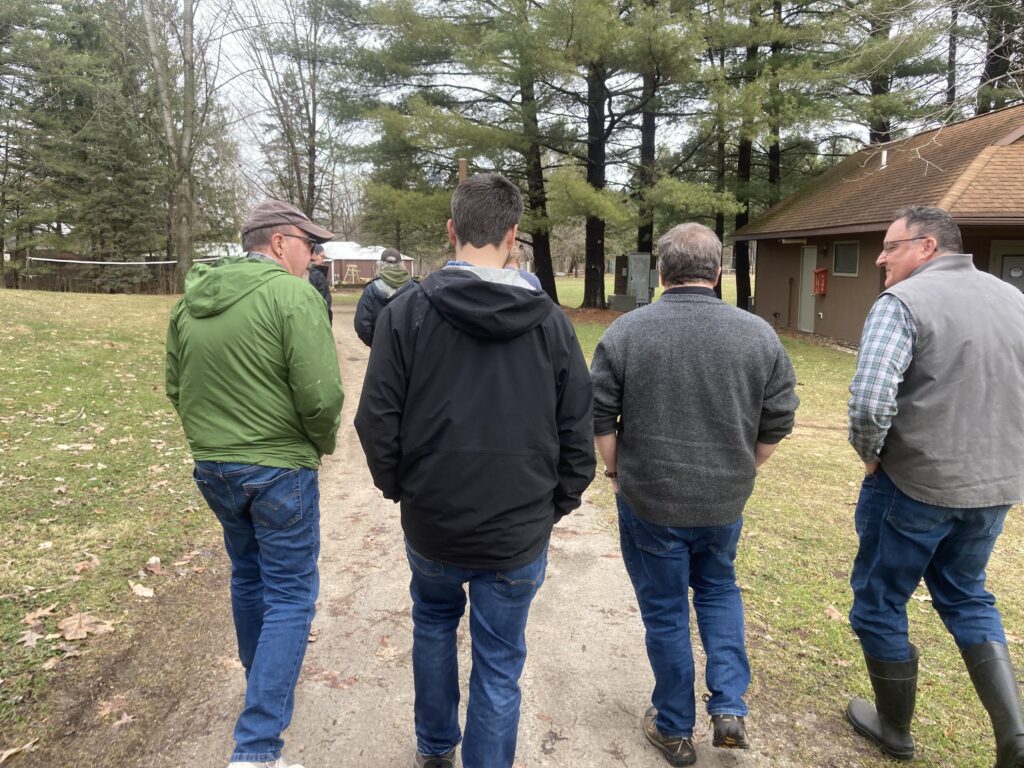
    Throughout the weekend, God’s creation provided rich symbolism for unpredictability, beauty, and adaptability. Heavy rain and thunder on Friday night moved our campfire indoors, where the fireplace and acoustics drew us together beautifully for prayer and singing. Several men jumped into icy Shavehead Lake on both Saturday and Sunday morning, a real bonding experience. Saturday’s mild weather allowed a hike to see thousands of young native trees planted through a Mennonite Men JoinTrees grant, and camp staff Amy Huser and Jonathan Fridley shared about land management and creation care.

    Saturday afternoon was a highlight for many. Optional activities included disc golf, cutting invasives, archery, forging metal, and chopping wood as service to camp. The evening closed with popcorn and fireside singing at Mosquito Hollow, a long and beloved camp tradition.

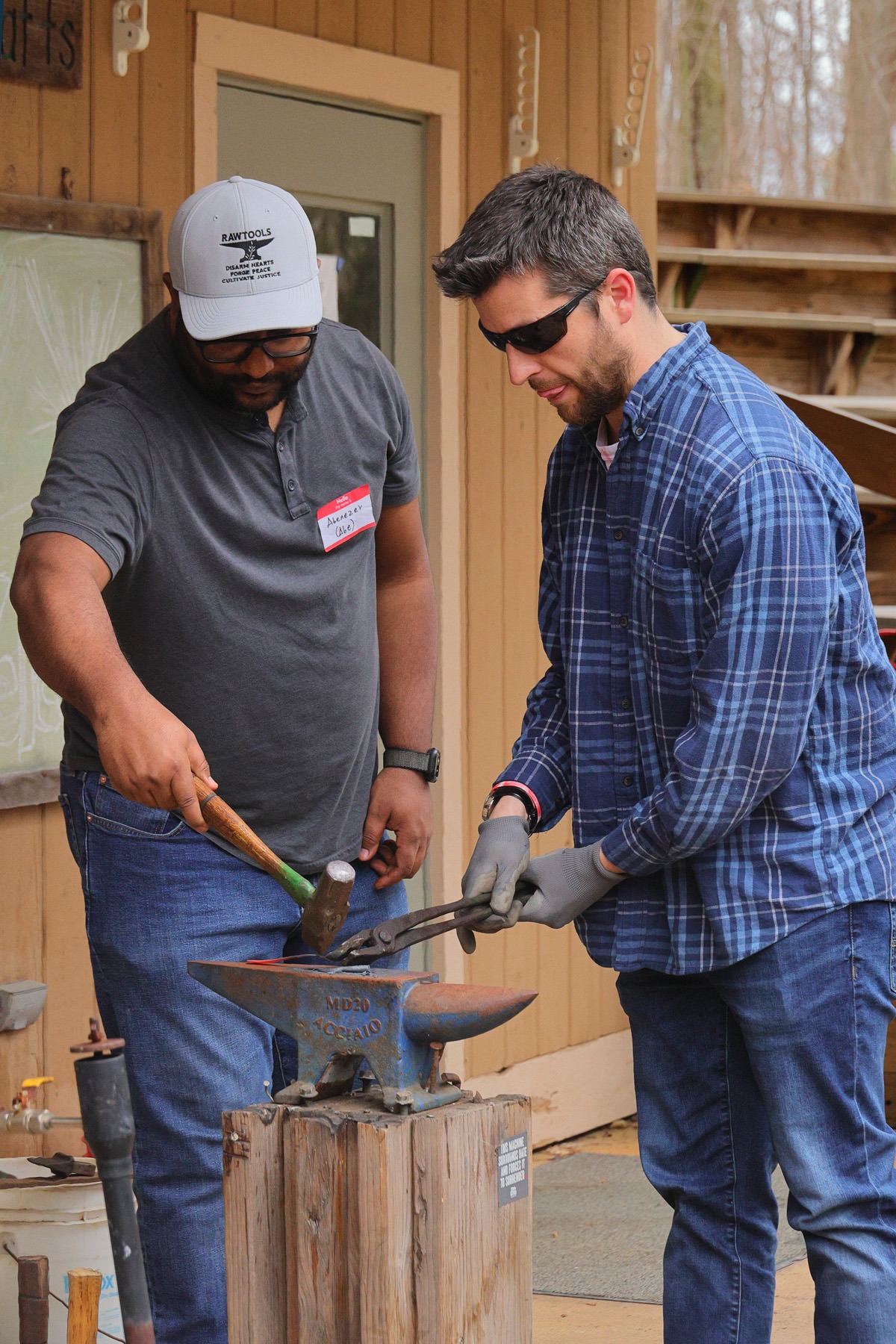
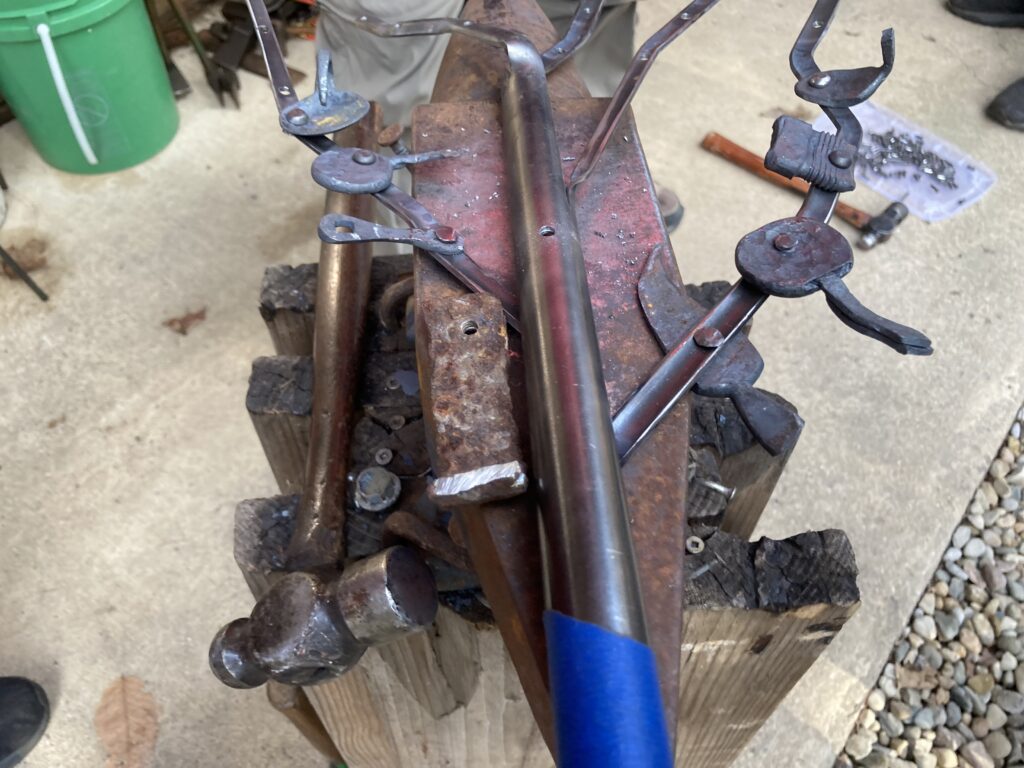
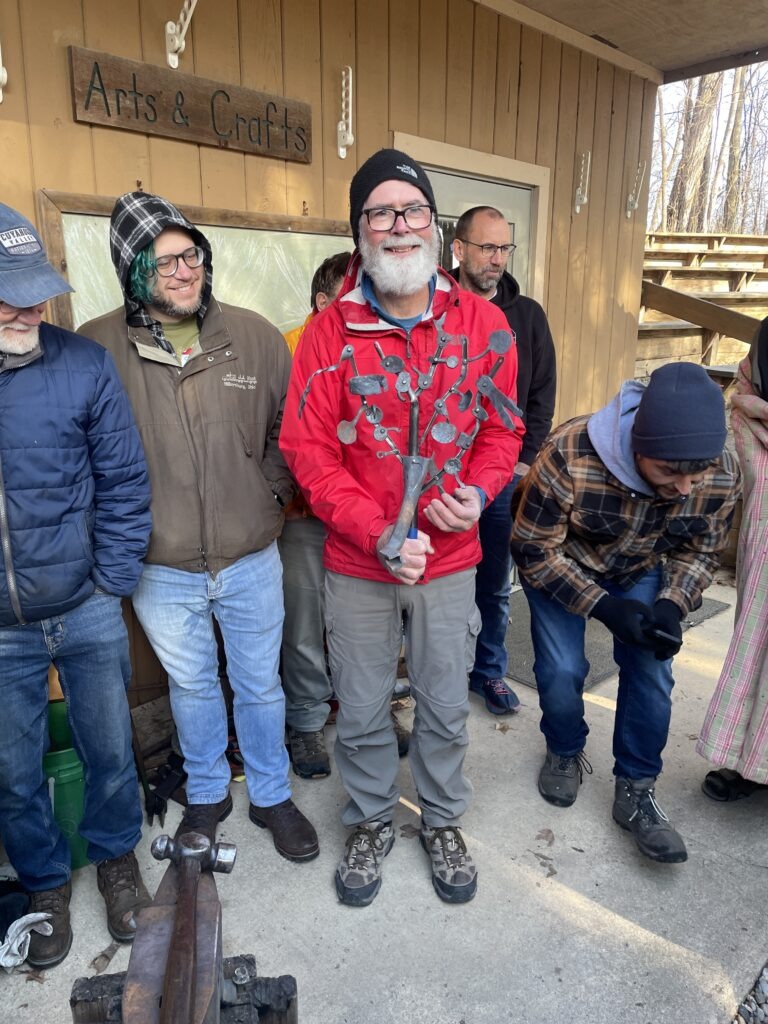
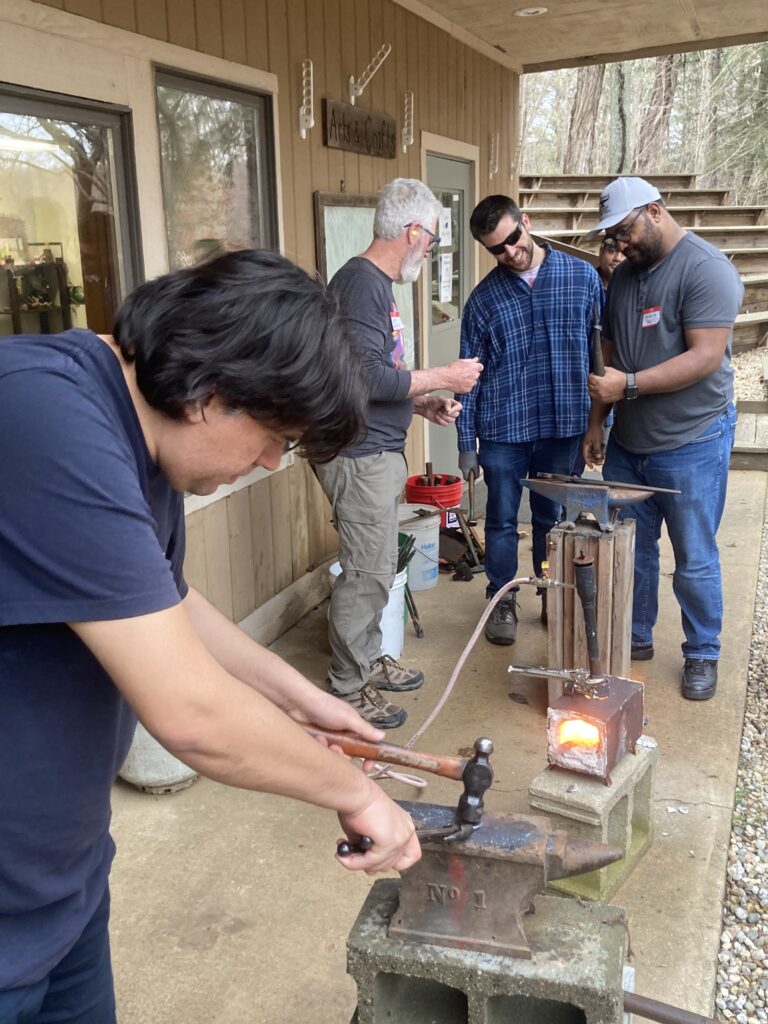
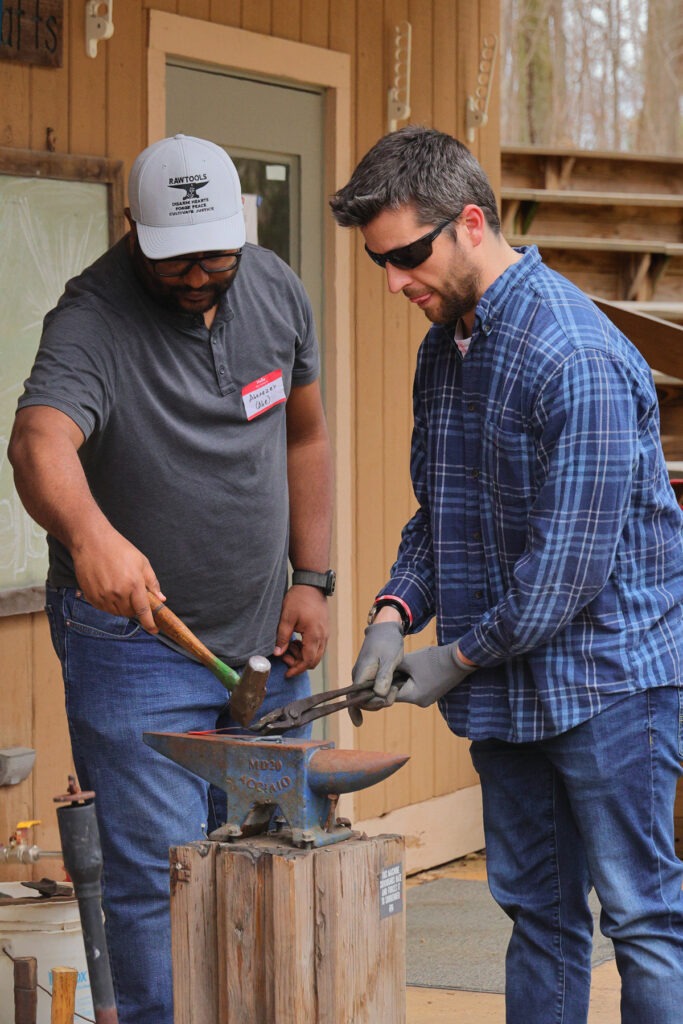
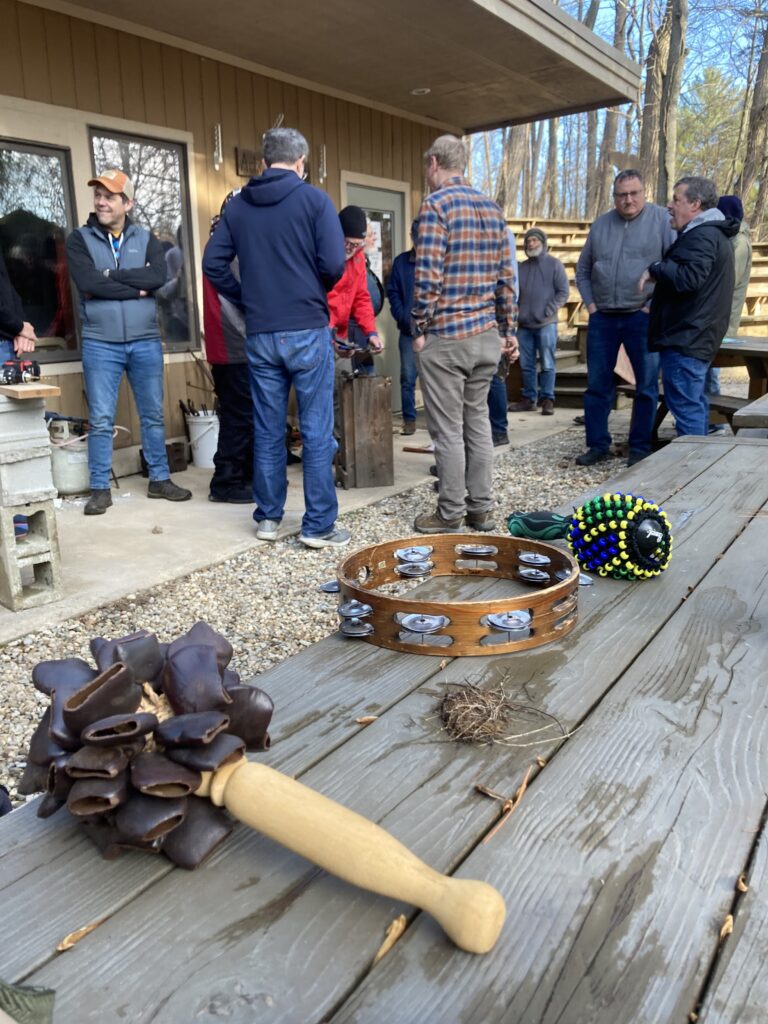
    A focal point of the weekend was forging metal pieces brought from home alongside decommissioned weapon parts from RAWtools’ peacemaking programs. Volunteers Jerry Martin and Abenezer Dejene guided us as we worked in pairs, each altering their partner’s forged piece in some way. Letting others shape our work physically teaches us to learn from one another rather than compete for control.

    On Saturday night, we forged in the dark by headlamp, then reflected in small groups. Mike Martin’s words have stayed with me: “The transformation I see at the anvil has so much carry-over into our transformation throughout life. It connects to conflict and harm and repair and reconciliation. We have plenty of good things that have shaped us as well.”

    Sunday morning brought bird watching led by college student Peter Moser, then outdoor worship in glorious sunshine. We sang hymns as we attached our forged pieces to a tree-like sculpture, left at camp as a lasting memory of our gathering. We ended in a prayer circle, new bonds formed.

    Abenezer put it well: “At the Mennonite Men’s retreat, I had an opportunity to fellowship with other men from diverse walks of life. We shared stories about the individuals who have influenced our lives, and took part in forging a piece of gun into something beautiful. The retreat provided a chance to test whether I had forgotten my blacksmithing skills and to reflect on my malleability as one shaped in the likeness of Christ. The fellowship and experience at the Mennonite Men’s retreat were a time of learning and reflection on how we can be shaped to serve others.”

    A question many often ask: do men really need to gather?

    My answer: yes! As brothers and participants in God’s kin-dom, we need each other. Our stories matter. This was echoed by male retreat participants in their evaluation forms. They noted that the vulnerable sharing, small group time, singing, and sharing aloud “I Am From” poems we wrote were the highlights of the weekend.

    Frankly, it’s rare to find sacred spaces where male sharing is deep and personal, where there is trust and respect even when our male experiences and realities differ. Building trust, becoming malleable, and listening well to one another takes practice. We can look to biblical stories of Jesus and the disciples for examples.

    These are challenging times for men in the US, in Canada, and all over the world. I hope you find other men to connect with, be it one-on-one for coffee, in a small group, or at a retreat. Stay tuned for the next Mennonite Men retreat, or reach out if you want to organize a retreat in your neck of the woods.

    Photos by Jon Zirkle and Camp Friedenswald

  • Confronting Israel’s Occupation of Palestine

    Confronting Israel’s Occupation of Palestine

    By Steve Thomas

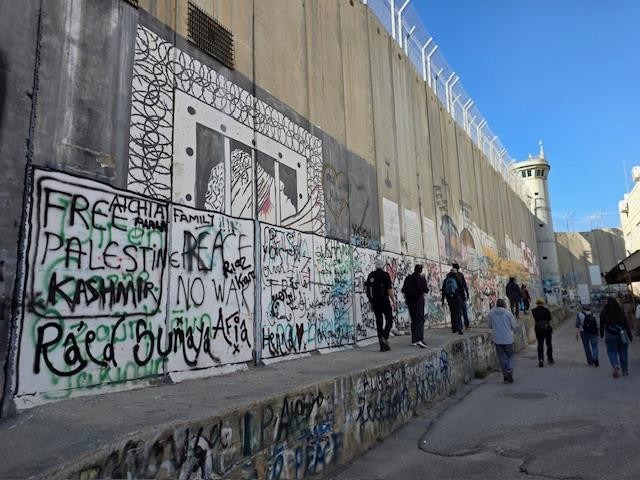
    Photo credit: Steve Thomas

    Our joint peace and tree-planting delegation of 25 people, representing Mennonite Men and the Mennonite Palestine-Israel Network, recently returned from Palestine. We heard firsthand reports of the brutal reality of Israel’s occupation: a history of ethnic cleansing, concentration of families into refugee camps, random acts of violence to terrorize Palestinians, the demolition of homes and schools, the seizure of farmland, the choking restriction of movement. All of this is designed to make life miserable, to push Palestinians off their land or to provoke resistance so Israeli military can unleash greater violence against them.

    Illegal Israeli settlements and outposts are spreading like a cancer across Palestinian land. While we could not enter Gaza, we are acutely aware of the horrific genocide occurring there since October 7, 2023. Despite this suffering, we were deeply moved by the resilient spirit of the Palestinians we met and the creative, nonviolent ways Christian and Muslim peace organizations continue to resist.

    Why This is Our Concern

    Our delegation’s mission aligns directly with the aims of Mennonite Men: “standing with marginalized people for diversity and inclusion” and “transforming oppressive systems for freedom and justice” as we seek to “live into God’s shalom.”

    As Americans and Mennonites, we cannot remain silent for several reasons:

    • Complicity: Our tax dollars enable the occupation through billions in military aid.
    • Connection: Many Israeli settlers and soldiers are U.S. citizens who were recruited by Israel.
    • Theology: “Christian Zionism” in U.S. churches endorses Israel’s occupation in God’s name.

    Greater actions of political witness, accompaniment, boycott, and divestment could influence the United States government to withdraw its military support for Israel. This would drastically limit Israel’s ability to continue its oppression and expansion in Palestine.

    The Expanding Occupation and “Greater Israel”

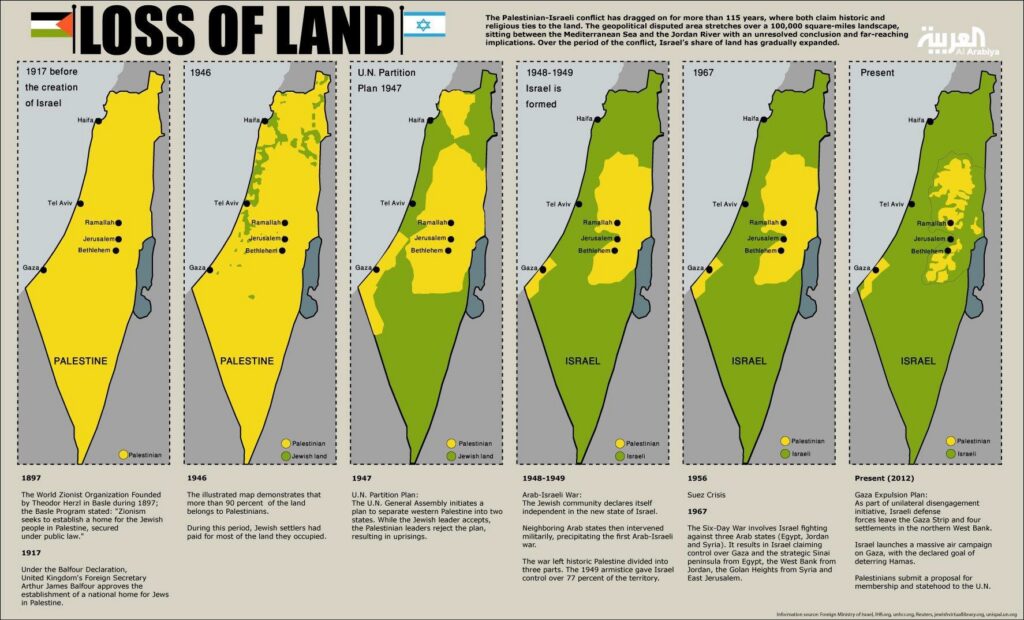
    Maps of the region illustrate a devastating loss of Palestinian land. Since 2012, settlement expansion has accelerated; today, over 350 illegal settlements and outposts house more than 700,000 Israelis on stolen land according to international law.

    Source: Palestine Portal

    There is a growing fear that this expansion will not stop at Palestine’s borders. During our return flight, an Arab Christian shared with me the widespread fear among Jordanians that Israel intends to invade Jordan, citing Israel’s invasion of southern Lebanon and the “Greater Israel” plan. This vision, originally mapped by Theodor Herzl, encompasses not only Israel, the West Bank, and Gaza, but also Jordan, Lebanon, and parts of Syria, Iraq, Egypt, and Saudi Arabia.

    This “Greater Israel” ideology relies on a literal interpretation of biblical covenants (such as Genesis 15:18–21) for a Jewish state stretching from the Nile River in Egypt to the Euphrates River in Iraq. This is no longer a fringe idea:

    • Prime Minister Benjamin Netanyahu expressed strong support for this vision last August.
    • US Ambassador Mike Huckabee recently suggested it would be “fine if they [Israel] took it all.”

    Confronting the Roots: Zionism as Colonialism

    To achieve peace, we must confront the underlying Zionist ideology. Dr. Mazin B. Qumsiyeh explained to our group that Zionism drives displacement-based settler colonialism like the colonization of the Americas. This confronts us with our history and also calls us to act in solidarity with with Indigenous peoples in pursuit of justice.

    We also met with Dr. Munther Isaac, a Palestinian pastor and theologian known for his “Christ in the Rubble” message. Isaac defines Jewish Zionism and Christian Zionism as ideologies of supremacy and racism that dehumanize Palestinians. His research highlights several critical points:

    • Tribal Deity: Zionism makes God a “racist tribal deity” favoring one ethnic group over others.
    • Bad Theology: It falsely equates the modern secular State of Israel with biblical Israel.
    • Tool of Empire: Zionism serves as a colonial project and a tool of Western empire, using “divine mandate” to sanctify ethnic cleansing, political crimes, and apartheid.
    • Call to Repentance: Isaac calls for Christians to repent for their complicity in the “genocidal project” in Gaza and proposes an alternate theology where the Holy Land is “God’s Land”—intended to be shared by all, not possessed exclusively by one (illustrated in photo below).

    On February 15, worshipping in a church in Bethlehem, we sang God of Grace and God of Glory. Let these words be our prayer and our call to action against the “warring madness” of our time:

    “…Grant us wisdom, grant us courage, lest we miss thy kingdom’s goal, lest we miss thy kingdom’s goal.”

    Postscript

    The day after I completed this report in February, the United States, together with Israel, bombed Iran. This, like Israel’s war in Gaza, violates international law and has unleashed violence against countless innocent lives. With world attention focused on the larger region, Israeli settlers and soldiers have escalated violent aggression against innocent Palestinian communities.

    Photo credit: Omar Al-Qattaa/AFP

    For more…