Author: Brook Musselman

  • From Rented Rooms to Rooted Community

    From Rented Rooms to Rooted Community

    By Jon Zirkle

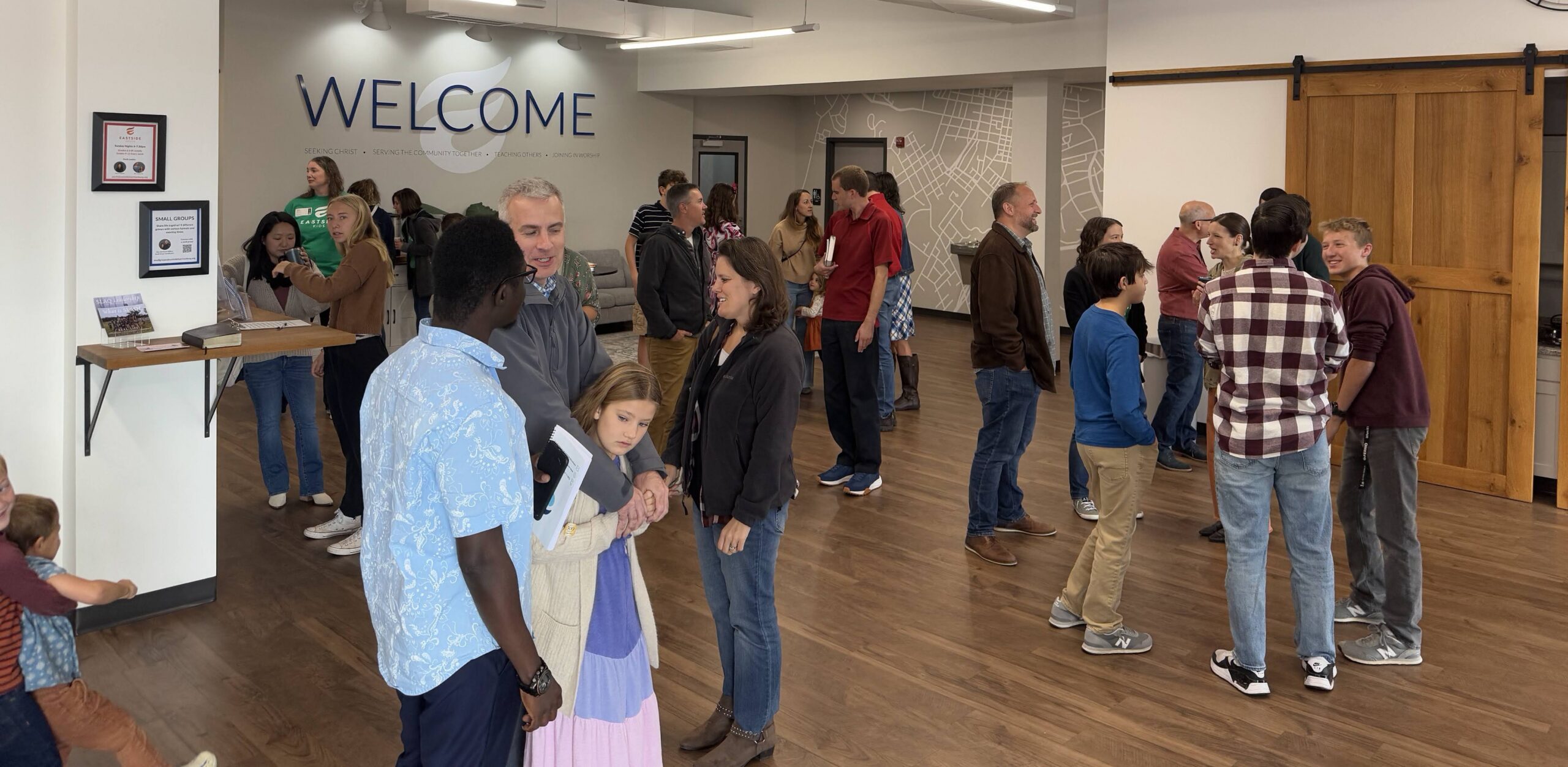
    On Sunday March 15, Eastside Church in Harrisonburg, VA celebrated its 16th anniversary as a congregation.  While on a Mennonite Men visit to Virginia, I had the pleasure to see the building firsthand and later had a conversation with one of the pastors about Eastside past and present.

    For many years the congregation rented worship space, and as many can attest, renting worship space can present some challenges and constraints.  “I don’t know what we would have done during COVID if we were still worshipping in a school,” said pastor Peter Eberly.

     In November 2021 Eastside Church moved into its current building, having raised enough money to purchase the building and secure a loan.  Among several sources of funding, Mennonite Men’s JoinHands program awarded the congregation a $40,000 grant, representing about 10% of the funds Eastside needed to make the purchase possible.  Skipping ahead to 2026, the congregation just paid off one of its loans this week, perfect timing for a celebration. 

    I asked pastor Peter Eberly what impacts the new building has had on the life and mission of the congregation.

    “First of all, our current church building’s location is near a busy intersection.  I estimate that 25% of our current congregation has started attending since we moved into this space.  People see our sign when driving by and decide to check us out,” said Eberly.

    Current attendance at Eastside is approximately 200 people on a given Sunday.  Pastor Eberly noted the remarkable variety of groups and activities now filling the building.

    “Upstairs we have two tenants who pay rent to use space.  On Friday nights, we have over 100 college students come to use our space through Young Life.  On Saturday we have a training for Isaiah 1:17 House, an organization providing physical and emotional support for children awaiting foster placement.  On Sunday mornings we have Haitian folks who come for worship, and after the service many of them stick around for prayer.  All of this is possible because we have space,” says Eberly.  

    I could tell from our conversation that Eastside is a unique congregation and has taken deliberate action to meet people on their faith journey and articulate an Anabaptist commitment.  I could also sense this when reading about them on their website, which states:

    We are firmly in the Anabaptist tradition, but do not find our value or identity within denominationalism. We strive to translate Anabaptist faith to this generation by lowering cultural hurdles, speaking God’s truth to political powers and setting our sights on the Kingdom of God. 

    Join us in praying for Eastside Church and for congregations throughout the U.S., Canada, and around the world who are trying to build their ministry, live out their faith as followers of Jesus, and secure a safe place for worship.

    Mennonite Men’s JoinHands grant program continues to accept applications for new Anabaptist congregations pursuing the purchase their first worship space.  We hope to receive applications from congregations in 2026, and also want to raise additional funds to bolster this ministry program.  Access to funding for purchasing a building can be challenging for new congregations, and we want to help, continuing Mennonite Men’s long tradition of helping grow the church.  To learn more or to donate to this ministry, visit https://mennonitemen.org/joinhands/ today. 
  • What good can we do?

    What good can we do?

    By Steve Thomas

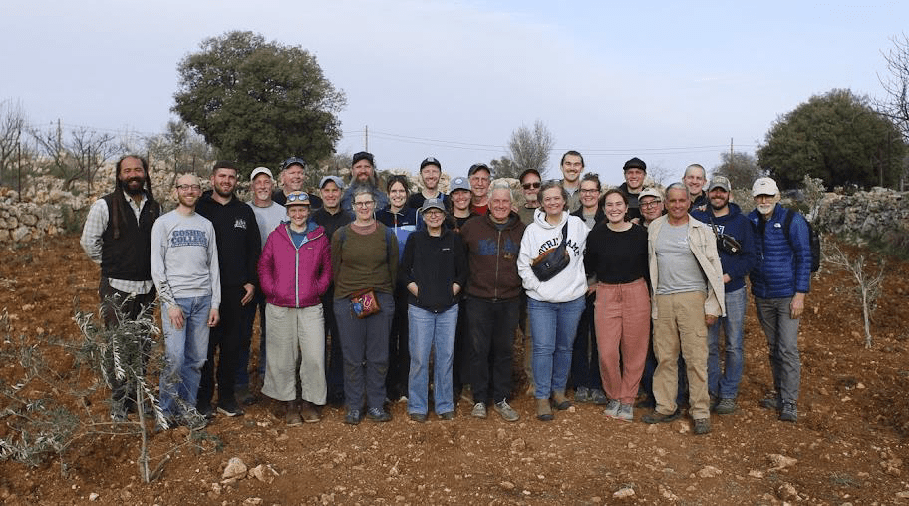
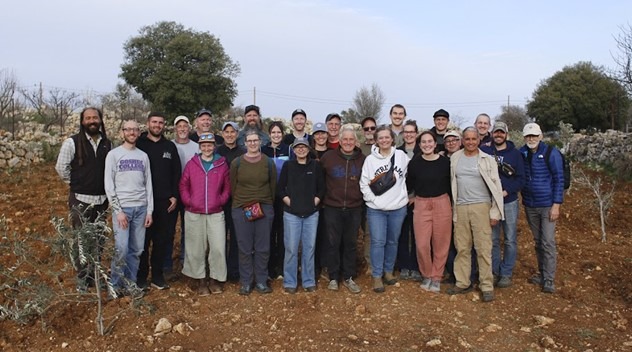
    We’re back from Palestine and Israel – just eight days before the US bombed Iran. From February 2–20, a delegation of 25 people from the U.S. and Canada traveled to the region as a learning, peace, and tree planting mission. This trip was a joint initiative of Mennonite Men and the Mennonite Palestine-Israel Network (MennoPIN) with three Mennonite Action staff.

    Before we left, someone asked me: “What will you actually do, and what good can it possibly do?”

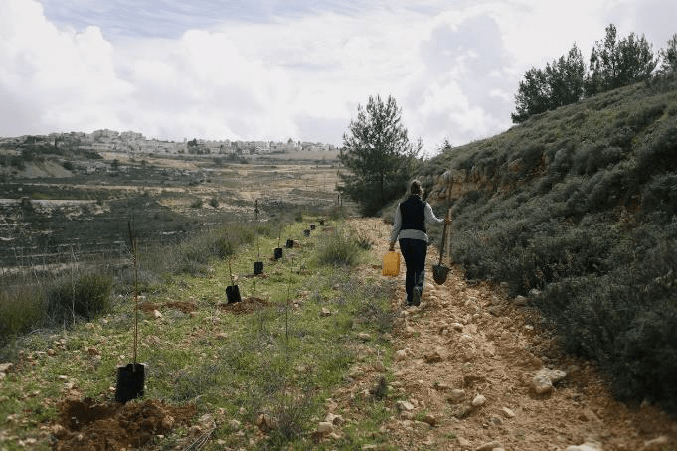
    I told them that, among other things, we were going to plant trees and plant for peace. It sounded small, given the scale of the conflict. But after spending 18 days seeing various sites, listening to Palestinians, and planting with farmers, I have a better answer.

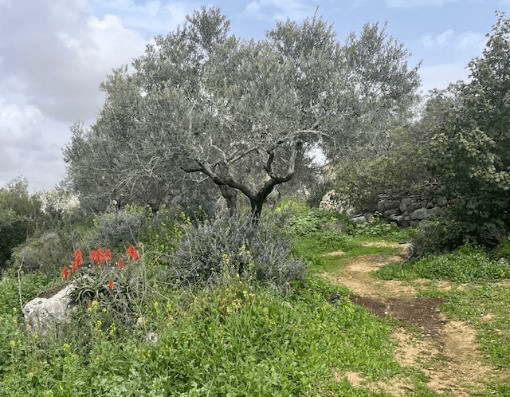
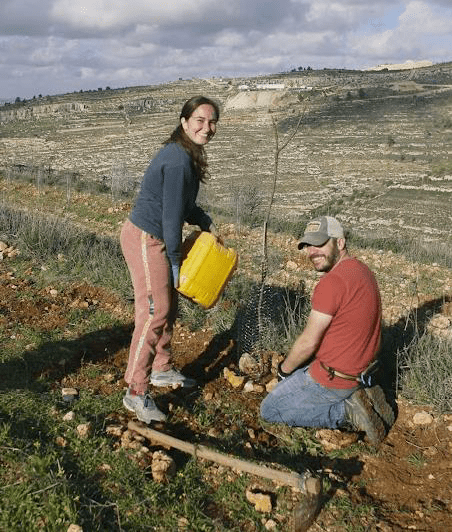
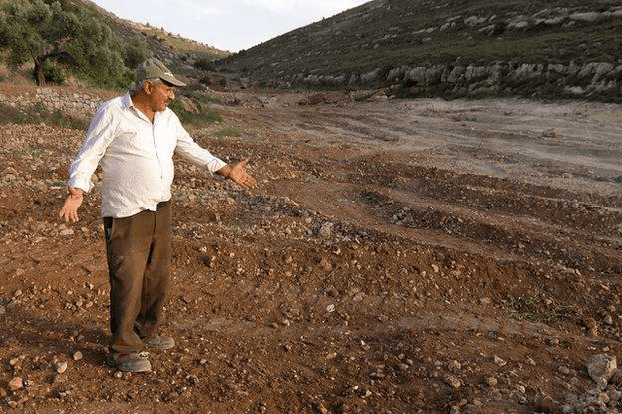
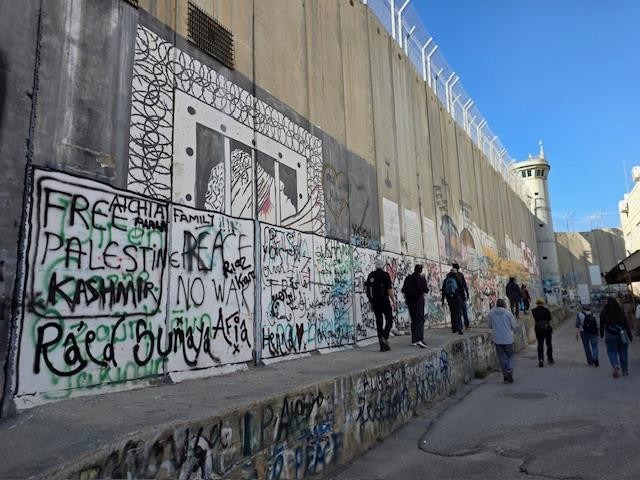
    Top left credit Holly Harris, top middle credit Steve Thomas, top right credit Steve Thomas, bottom right credit Holly Harris, bottom left credit Daniel Silas Adamson (Standing in his lost orchard at Tent of Nations, Daher Nassar points out the scarred earth where the military bulldozed 1,500 of their trees)

    Identity of the Land

    In Palestine, an olive tree isn’t just agriculture; it’s an ancestor. Some of these trees have been tended by the same families for over 1,000 years. They are the backbone of the economy and the heart of Palestinian identity. Yet, over a million of these trees have been destroyed by Israeli forces: a calculated move to strike at Palestinians don’t replant or they leave, Israel can claim “empty land” as state land.)

    We planted trees at Tent of Nations and Sarras Farm. As followers of Jesus, these families are committed to nonviolent resistance, yet they live under the constant shadow of demolition orders or having their land confiscated. In the West Bank Israelis destroy Palestinian homes and infrastructure and then require residents to pay for the bulldozer work. Since 1967, Israel has confiscated more than 750,000 acres of land from the 1.5 million acres comprising the West Bank and Gaza and the rate of current land theft is increasing.

    More Than Just Saplings

    So, what good did we do? As we planted trees and listened to Palestinians, we realized the “good” wasn’t just in the soil—it was in the solidarity.

    • Supportive Solidarity: Palestinians enduring the hardships of Israel’s occupation reported feeling “seen” and supported by our presence, sharing that our solidarity provided encouragement amid pervasive violence and insecurity. They expressed gratitude knowing that some Americans oppose U.S. military support for Israel’s actions. While we offered solidarity, we were moved by the Palestinians’ profound hospitality, loving spirit, and resilient resistance to oppression. Their example of nonviolent love in the face of violence offered us a powerful lesson.
    • A Protective Presence: An international group of observers with cell phones can have a deterrent effect. In one remote Bedouin village surrounded by hostile Israeli settlements, children stay inside for safety. When our international group arrived, the atmosphere shifted. For two hours, the children came out to play in the sun, safe because “outsiders” were watching.
    • Economic Lifeblood: With tourism gutted by the war, we were often the only customers in Palestinian shops and restaurants. Between tree contributions and local spending, our group injected over $80,000 (including a $15,000 grant from Schowalter Foundation) into a suffocating economy. For example, we bought art from a woman in a refugee camp whose daughter had been killed by a tear gas canister shot into their home by Israeli soldiers. That money wasn’t just a transaction. It was a lifeline.
    • Holding the Ground: Under local law, “empty” land is far easier to confiscate. By helping the Nassar and Sarras families plant their open terraces, we helped them claim their right to stay. We also left behind $14,000 for other Palestinian farmers to continue this work long after we departed.

    The Lesson of the Olive Tree

    We went to provide support. While we encouraged them, they inspired us: we witnessed themfollowing the way of Jesus’ nonviolent love in a world of staggering violence and oppression. Read more about this in next month’s issue of Engage.

    We’re back now, but we aren’t the same. We went to “come and see,” and now we “go and tell.” Our group of 25 has returned as witnesses, joining a growing chorus of voices demanding a stop to violence and oppression and calling for justice and peace.

    What good can we do? We can refuse to let our neighbors be invisible. We can plant a tree today so someone else can eat tomorrow. And we can stand in the gap until the bulldozers stop.

    For more information and inspiration…

    Video report of our trip

    Video of Tent of Nations refusing to be enemies Video of Tent of Nations

    Video of settler attacks on Palestinian farmers and their olive trees Video of singing at Sarras Farm

    Testimony of lawyer for Tent of Nations

    Planting trees and working for peace in Palestine Tree planting as resistance

    Video of Sarras Farm hosting tourists to fend off settlements

  • Confronting Israel’s Occupation of Palestine

    By Steve Thomas

    Photo credit: Steve Thomas

    Our joint peace and tree-planting delegation of 25 people, representing Mennonite Men and the Mennonite Palestine-Israel Network, recently returned from Palestine. We heard firsthand reports of the brutal reality of Israel’s occupation: a history of ethnic cleansing, concentration of families into refugee camps, random acts of violence to terrorize Palestinians, the demolition of homes and schools, the seizure of farmland, the choking restriction of movement. All of this is designed to make life miserable, to push Palestinians off their land or to provoke resistance so Israeli military can unleash greater violence against them.

    Illegal Israeli settlements and outposts are spreading like a cancer across Palestinian land. While we could not enter Gaza, we are acutely aware of the horrific genocide occurring there since October 7, 2023. Despite this suffering, we were deeply moved by the resilient spirit of the Palestinians we met and the creative, nonviolent ways Christian and Muslim peace organizations continue to resist.

    Why This is Our Concern

    Our delegation’s mission aligns directly with the aims of Mennonite Men: “standing with marginalized people for diversity and inclusion” and “transforming oppressive systems for freedom and justice” as we seek to “live into God’s shalom.”

    As Americans and Mennonites, we cannot remain silent for several reasons:

    • Complicity: Our tax dollars enable the occupation through billions in military aid.
    • Connection: Many Israeli settlers and soldiers are U.S. citizens who were recruited by Israel.
    • Theology: “Christian Zionism” in U.S. churches endorses Israel’s occupation in God’s name.

    Greater actions of political witness, accompaniment, boycott, and divestment could influence the United States government to withdraw its military support for Israel. This would drastically limit Israel’s ability to continue its oppression and expansion in Palestine.

    The Expanding Occupation and “Greater Israel”

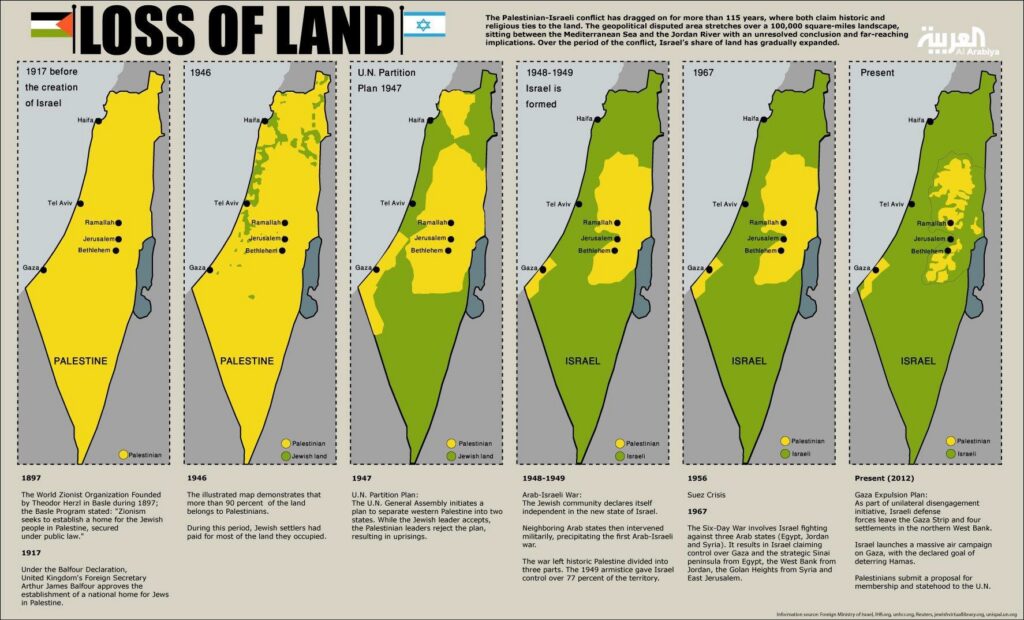
    Maps of the region illustrate a devastating loss of Palestinian land. Since 2012, settlement expansion has accelerated; today, over 350 illegal settlements and outposts house more than 700,000 Israelis on stolen land according to international law.

    Source: Palestine Portal

    There is a growing fear that this expansion will not stop at Palestine’s borders. During our return flight, an Arab Christian shared with me the widespread fear among Jordanians that Israel intends to invade Jordan, citing Israel’s invasion of southern Lebanon and the “Greater Israel” plan. This vision, originally mapped by Theodor Herzl, encompasses not only Israel, the West Bank, and Gaza, but also Jordan, Lebanon, and parts of Syria, Iraq, Egypt, and Saudi Arabia.

    This “Greater Israel” ideology relies on a literal interpretation of biblical covenants (such as Genesis 15:18–21) for a Jewish state stretching from the Nile River in Egypt to the Euphrates River in Iraq. This is no longer a fringe idea:

    • Prime Minister Benjamin Netanyahu expressed strong support for this vision last August.
    • US Ambassador Mike Huckabee recently suggested it would be “fine if they [Israel] took it all.”

    Confronting the Roots: Zionism as Colonialism

    To achieve peace, we must confront the underlying Zionist ideology. Dr. Mazin B. Qumsiyeh explained to our group that Zionism drives displacement-based settler colonialism like the colonization of the Americas. This confronts us with our history and also calls us to act in solidarity with with Indigenous peoples in pursuit of justice.

    We also met with Dr. Munther Isaac, a Palestinian pastor and theologian known for his “Christ in the Rubble” message. Isaac defines Jewish Zionism and Christian Zionism as ideologies of supremacy and racism that dehumanize Palestinians. His research highlights several critical points:

    • Tribal Deity: Zionism makes God a “racist tribal deity” favoring one ethnic group over others.
    • Bad Theology: It falsely equates the modern secular State of Israel with biblical Israel.
    • Tool of Empire: Zionism serves as a colonial project and a tool of Western empire, using “divine mandate” to sanctify ethnic cleansing, political crimes, and apartheid.
    • Call to Repentance: Isaac calls for Christians to repent for their complicity in the “genocidal project” in Gaza and proposes an alternate theology where the Holy Land is “God’s Land”—intended to be shared by all, not possessed exclusively by one (illustrated in photo below).

    On February 15, worshipping in a church in Bethlehem, we sang God of Grace and God of Glory. Let these words be our prayer and our call to action against the “warring madness” of our time:

    “…Grant us wisdom, grant us courage, lest we miss thy kingdom’s goal, lest we miss thy kingdom’s goal.”

    Postscript

    The day after I completed this report in February, the United States, together with Israel, bombed Iran. This, like Israel’s war in Gaza, violates international law and has unleashed violence against countless innocent lives. With world attention focused on the larger region, Israeli settlers and soldiers have escalated violent aggression against innocent Palestinian communities.

    Photo credit: Omar Al-Qattaa/AFP

    For more…